The team sheet that sparked panic
The pre-match team sheets dropped at exactly 2:00 PM today. The reaction across North London was immediate anxiety.
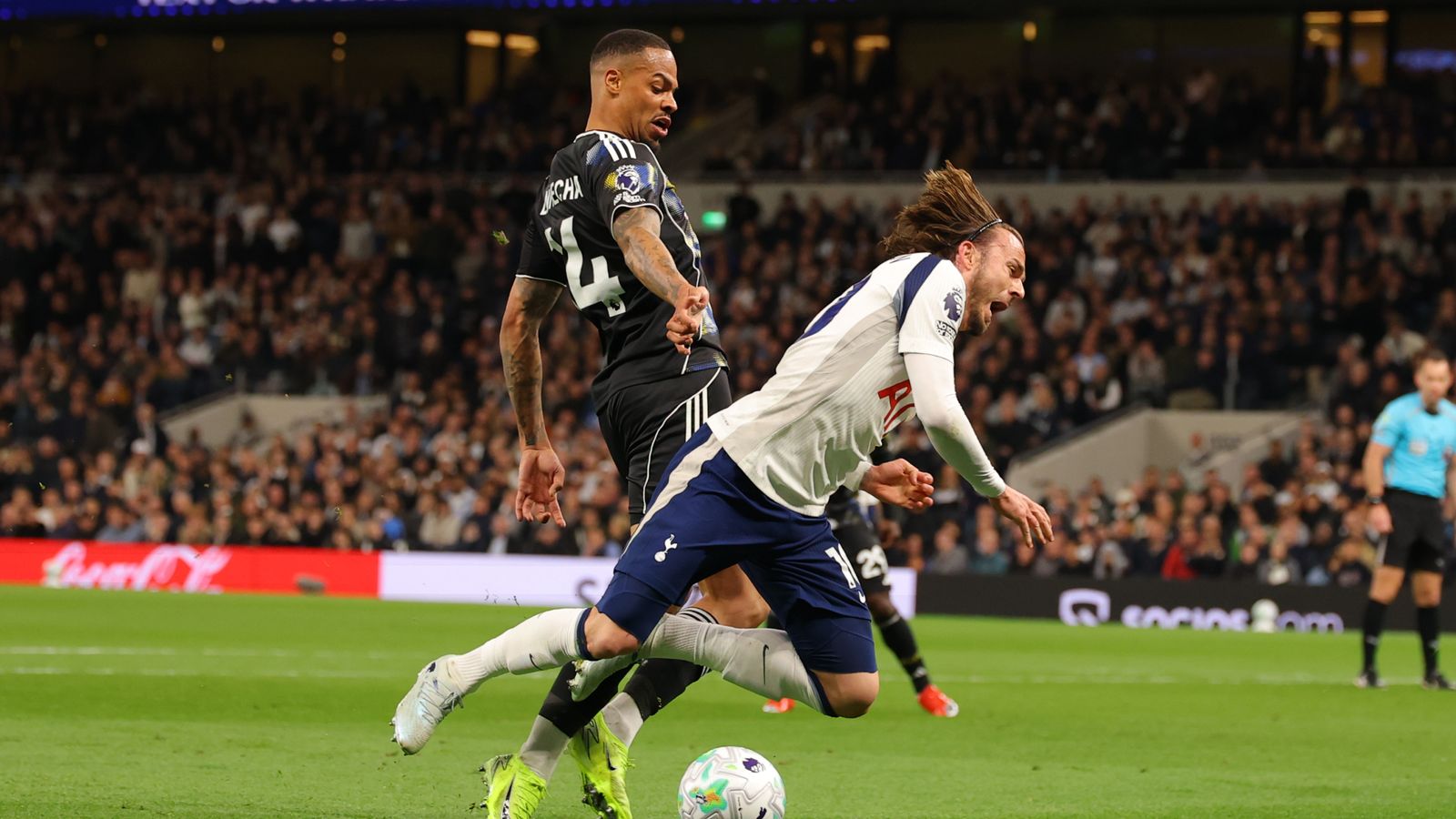
The news that Xavi Simons would start while James Maddison dropped to the bench felt like a massive shock to the system. You do not simply bench your primary creative outlet in late April. Not when the margins for error in the league table have completely vanished.
But this was not a standard rotation block. This was a calculated structural shift.
For months, Tottenham have looked entirely predictable in possession. They dominated the ball but struggled to break down organized defensive blocks. The buildup play had become stale, slow, and overly reliant on wide overloads that opposing managers figured out weeks ago.
Maddison operates as a traditional possession hub. He wants the ball played directly to his feet. He takes a touch, slows the game down, and surveys the pitch.
Against a low block, that methodical approach has value. Against a high-intensity pressing machine like Brighton, it is an absolute disaster. Taking an extra touch in the central third usually results in an immediate turnover.
Simons offers an entirely different athletic profile. He does not wait for the game to come to him. He forces the issue.
He picks up the ball on the half-turn and drives immediately at the opposition. He bypasses the midfield press through sheer kinetic energy rather than intricate passing triangles.
A tactical disaster in the first half
The opening 45 minutes validated every fear the fanbase harbored. Brighton were incredibly disciplined.
They deployed a man-to-man marking system across the middle of the park that completely neutralized Tottenham’s double pivot. Every time a Spurs defender looked up, there were no passing lanes available. The visitors compressed the pitch brilliantly.
Fabian Hürzeler deserves massive credit for his tactical blueprint today. He recognized that Tottenham’s center-backs are uncomfortable when forced onto their weaker feet.
Brighton angled their pressing runs perfectly. They completely shut down the left-sided passing lanes, forcing the ball into the congested right channel.
This brings us to a glaring tactical failure that cannot be ignored. The build-up mechanics employed by Tottenham today were entirely broken from the very first whistle.
The center-backs consistently dropped too deep to receive the ball from the goalkeeper. This created a massive chasm between the defense and the midfield pivot.
Brighton recognized this spacing error immediately. They pushed their forwards right to the edge of the penalty area, cutting off the short passing options and forcing long, inaccurate distribution.
For over an hour, the defenders looked completely terrified in possession. They continuously passed the ball directly into Brighton's central pressing traps instead of utilizing the wide channels.
One sequence in the 54th minute perfectly summarized the dysfunction. The ball was cycled harmlessly between the center-halves four times before a panicked clearance went straight out for a throw-in.
They stubbornly refused to vary their angles. They ignored the overlapping runs of the fullbacks. They played straight into the opposition's hands over and over again.
A better opponent would have punished this structural incompetence long before the halftime whistle. Relying on chaotic recovery runs to bail out terrible passing decisions is an unsustainable model for a team chasing elite status.
Spurs were incredibly lucky not to be trailing early in the second half. The crowd grew restless. The murmurs in the stadium morphed into audible groans.
Every backward pass was met with heavy frustration. The game was stuck in a grinding stalemate. Tottenham lacked the off-ball movement required to drag Brighton’s defenders out of their established zones.
The moment of absolute chaos
Then came the moment that shattered the tension. The stadium clock hit the 77th minute.
The ball broke loose in the transition phase. Simons found a rare pocket of space between the midfield and defensive lines.
He did not look for a lateral pass. He did not slow down to organize the attack. He took one aggressive touch out of his feet and unleashed a shot.
It was violent, direct, and completely unforgiving. The incredible strike put Tottenham ahead and completely rewrote the narrative of the afternoon.
Sky Sports commentators captured the raw emotion of the sequence in real-time, labeling the moment as
"Unstoppable, majestic!"
The scoreboard flipped to 2-1. The relief inside the ground was deafening.
That single swing of a right boot justified the pre-match gamble. It provided the exact type of chaotic breakthrough that a structured passing system simply cannot generate against a set defense.
The implications of this match extend far beyond a single victory. We are staring down the final weeks of the 2025/26 campaign.
The Maddison dilemma and the final run-in
The race for Champions League qualification is a brutal war of attrition. Teams do not survive April and May purely on aesthetics.
They survive on tactical adaptability and moments of ruthless execution. The Maddison dilemma is now the most fascinating storyline at the club.
What happens to a high-profile player when the data suggests the team functions better without him?
Modern Premier League matches are won in the transitions. You either play quick one-touch combinations to break the lines, or you carry the ball through heavy contact.
Simons carries through contact. He embraces the physical reality of the central zones. He disrupts defensive shapes by running directly at the center-backs.
Maddison relies on drawing fouls when heavily pressured. That dependency kills attacking momentum and allows the opposition to reset their defensive shape during the resulting free-kick.
You cannot play slow, methodical football against teams fighting for European spots or relegation survival. The intensity of the league simply does not allow it anymore.
Look across the top half of the table right now. The teams succeeding are the ones capable of shifting gears instantly.
The era of pure positional play dominating every single match is fading. We are seeing a return to dynamic, chaotic transition football.
Teams are defending tighter, pressing harder, and punishing mistakes with ruthless efficiency. If your midfield lacks ball-carriers who can break lines through dribbling, you get suffocated.
Looking ahead to the remaining fixtures, the blueprint is now clear. Tottenham face a brutal stretch of games against highly athletic, transition-heavy opponents.
They cannot afford to revert to the stagnant possession game that plagued them throughout March. They need the directness that Simons provides.
The coaching staff has a massive decision to make. Do they reintegrate Maddison and risk slowing down the attack again?
Or do they ride the hot hand and let Simons dictate the tempo for the remainder of the season?
The Prediction
The data from this match is undeniable. The team looked infinitely more dangerous when they abandoned the slow buildup and attacked with vertical speed.
Even when the passing was atrocious, the threat of Simons running with the ball forced Brighton to drop their defensive line five yards deeper in the final twenty minutes. That created the space needed to win the game.
My prediction is straightforward. Tottenham will secure their top-four finish.
They will do it entirely because this tactical switch arrived at the exact right moment. The introduction of Simons as the primary central threat adds a layer of unpredictability they desperately lacked.
Maddison will spend the majority of the final run-in watching from the sidelines. He might get minutes in cup games or as a late substitute, but his time as the undisputed starter is over for now.
This Brighton victory was ugly, flawed, and terrifying for large stretches. The defensive buildup issues are a massive red flag that must be addressed in the summer transfer window.
But they survived. They found a way to win a game they would have absolutely lost two months ago.
Football at this level is a ruthless meritocracy. Reputations do not win points in late April. Production does.
Xavi Simons produced when the system completely failed around him. He took responsibility for a broken phase of play and solved the problem himself.
That is the exact profile of a player you build a midfield around. Tottenham have their mandate for the rest of the season. The Simons era has officially started.
Read Next
- Brentford are drawing their way out of European contention
- Chelsea are in full-blown crisis mode after the Manchester United disaster
- Eddie Howe is running out of road at Newcastle
- Tottenham are physically and mentally cracking under the relegation pressure
- 🇳🇱 Netherlands World Cup 2026 — Oranje Hub
- 🏆 Europa League Final 2026 — Full Coverage Hub