The psychological weight of the whistle
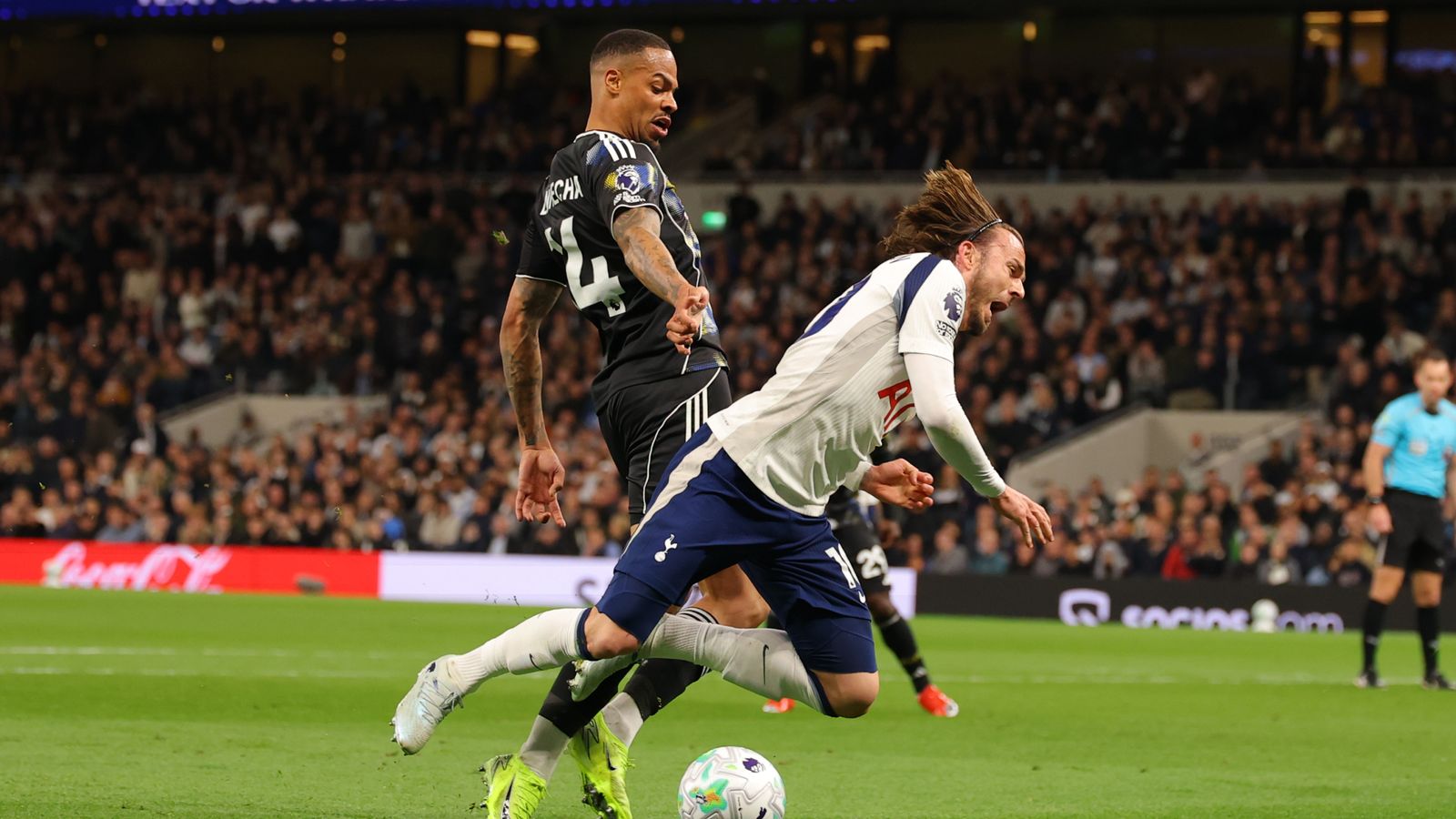
James Maddison's recent comments about referees being scared to intervene are not just post-match sour grapes. They highlight a structural breakdown in how the modern game is managed on the pitch. When the referee hesitates, the players hesitate, and the entire rhythm of a high-pressing system fractures.
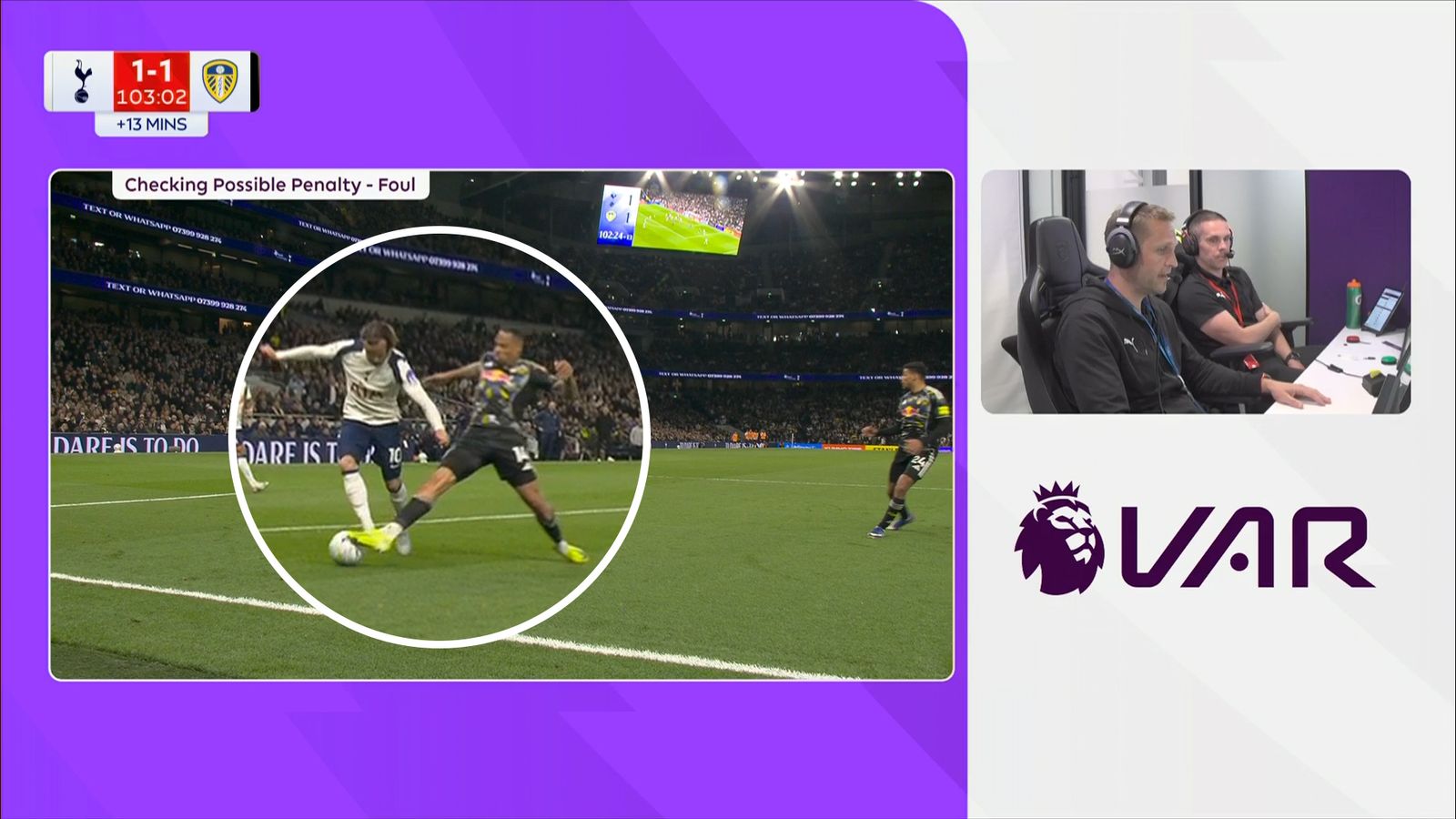
The fallout from that recent Leeds penalty drama is still hanging heavily over the league. We are seeing a distinct drop in early yellow cards for tactical fouls across the board. Referees are clearly relying on the safety net of Stockley Park, terrified of making a subjective call that gets dissected endlessly on Monday Night Football.
For a team that relies on rapid transitions and high-intensity counter-pressing, this officiating paralysis is an absolute nightmare. You cannot execute a synchronized press if you are second-guessing whether a physical challenge will be penalized or waved on. The threshold for a foul has become a completely moving target.
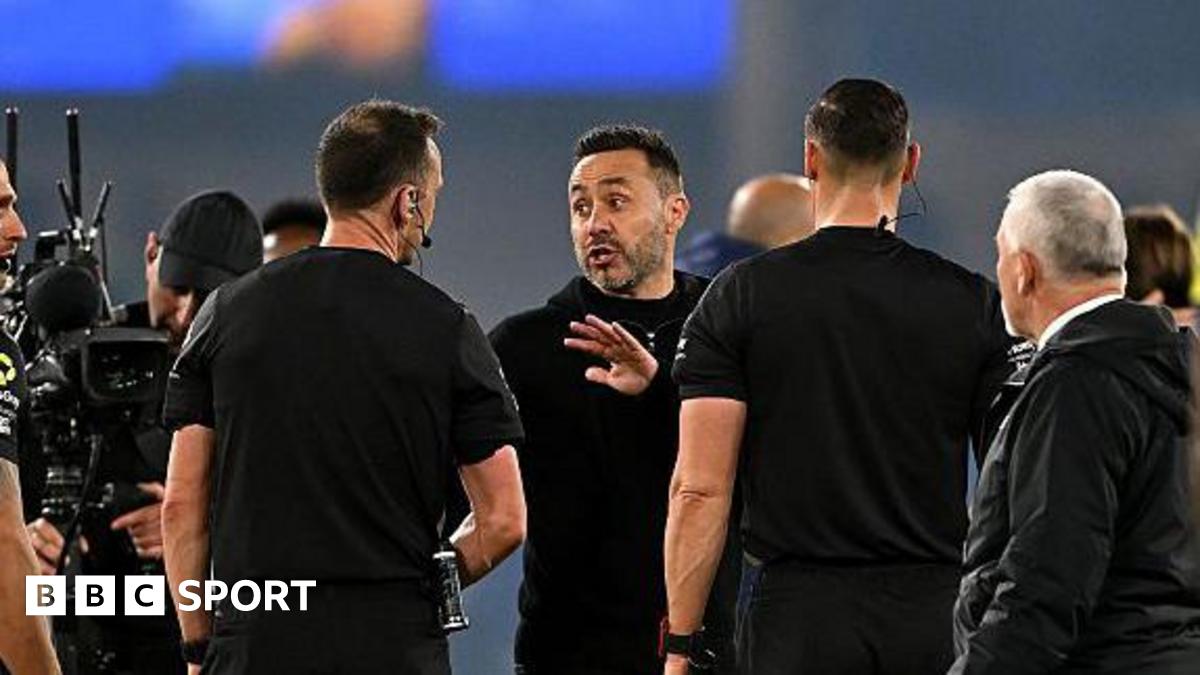
"Officials are petrified to make decisions."
As Sky Sports reported, Maddison's frustration is boiling over. But the truth is, this tactical ambiguity is exactly what their opponents will try to exploit this weekend.
Maddison's dilemma in the half-spaces
Maddison is not just a luxury player; he is the central nervous system of this attacking unit. His ability to receive the ball on the half-turn in heavily congested areas is elite. But when the refereeing threshold allows defenders to constantly nibble at his ankles without consequence, his effectiveness plummets.
We saw this exact scenario play out last month. Defenders realized early on that cynical, rotating fouls were going unpunished by hesitant officials. Maddison was repeatedly brought down just as he accelerated out of a tight space. It completely neutralized his ability to dictate the final third.
Expect Newcastle to target him mercilessly from the opening whistle. They will designate Bruno Guimarães to track his movements into the left half-space, applying intense physical pressure the moment he receives a pass. It is a dark art, but highly effective when permitted.
Where the spaces will open up
The midfield battle is where this game will be won or lost. Spurs have consistently struggled when forced into a low block, completely abandoning their front-foot identity. Their rest-defence has looked incredibly suspect for months.
When Yves Bissouma drops between the center-backs, the distance between the midfield pivot and the attacking band stretches out. This creates a massive void in the central channels. It is exactly the kind of space a player like Anthony Gordon exploits with rapid, line-breaking runs.
Maddison will need to operate slightly deeper than usual to bridge this gap. If he stays pinned high against the opponent's defensive line, he isolates himself and forces Destiny Udogie into risky, inverted runs. We saw this exact failure in their build-up play three weeks ago, and the resulting turnovers were brutal.
The pressing triggers
Watch how Newcastle sets their pressing traps. They will intentionally funnel possession toward Micky van de Ven on the left side. Once the ball is played out wide, the near-side winger will instantly jump, shutting down the passing lane to the inverted fullback.
This is a highly coordinated trap designed to force a long, low-percentage clearance. If Spurs try to play through it, they risk losing the ball right on the edge of their own penalty area. The data backs this up. Their progressive pass completion drops by nearly 15% when pressed in these specific wide zones.
To counter this, Son Heung-min has to drop deep and offer a quick bounce pass. It is a grueling, thankless role that demands constant lateral movement across the forward line. If the striker stays static, the entire build-up structure simply collapses under pressure.
The evolution of the low block
To understand how this match will unfold, you have to look at the defensive evolution of the league this spring. The low block is no longer just a desperate survival tactic for bottom-half teams. It has become a sophisticated, highly organized trap designed to bait attacking over-commitment.
Teams are sitting deeper, compressing the space between the lines to an absolute minimum. They are daring attacking midfielders to try and thread impossible passes through a thicket of legs. When the inevitable turnover happens, the transition counter-attack is terrifyingly fast.
The counter relies on one or two direct, vertical passes exploiting the vast acres of space behind a high line. This is where the lack of defensive midfield discipline gets punished severely. If the holding midfielder gets caught ahead of the ball, the center-backs are completely exposed.
The anatomy of a breakdown
Look at the underlying data from their last three away fixtures. The opposition has consistently registered over 2.5 expected goals entirely from transition moments. It is a staggering statistic that highlights a fundamental structural flaw in the defensive setup.
The issue stems from a broken rest-defence. When the fullbacks invert and push high into the midfield, they entirely vacate the wide areas. If possession is lost centrally, there is absolutely no cover out wide on the flanks.
The center-backs are forced to split wide to cover the channels, opening up a massive highway straight down the middle of the pitch. It is baffling that the coaching staff has not addressed this glaring vulnerability. At some point, pragmatism has to override tactical idealism.
The role of the inverted fullback
The modern obsession with inverted fullbacks has reached a tipping point here. Yes, it provides numerical superiority in the central midfield during the build-up phase. But against a disciplined, narrow defensive block, that central overload quickly becomes redundant.
When both fullbacks step inside, the attacking shape becomes incredibly narrow and congested. You end up with five players occupying the same vertical channels, constantly tripping over each other. It makes defending incredibly easy for a compact opposition.
What this team desperately needs right now is natural, chalk-on-the-boots width. Someone who can hug the touchline, stretch the defensive line laterally, and create gaps in the half-spaces. Without that stretching run, the attack is predictable and entirely blunt.
The burden on the center-backs
Operating in this tactical setup requires center-backs to act like playmakers, and that is a massive ask. Van de Ven and Cristian Romero are expected to break the first line of the press with vertical passes. When the midfield movement is stagnant, they are forced to hold onto the ball far too long.
This hesitation is exactly what the opposition wants. It allows the pressing forwards to close the angle and force a rushed clearance or a dangerous square pass. We saw Romero get caught in possession twice last week because his midfield options were completely man-marked out of the game.
If the center-backs cannot confidently step into midfield and deliver accurate passes, the entire build-up phase breaks down. They cannot simply hit long diagonals all afternoon and hope Son wins a foot race. The precision has to be absolute.
Set-piece vulnerability and the aerial mismatch
Let's not ignore the glaring weakness on set-pieces. Defending corners has looked like a chaotic scramble rather than a rehearsed defensive system. The awkward mix of zonal and man-marking has created endless confusion, with players consistently dropping assignments.
Newcastle knows this perfectly well. They will relentlessly target the back post with out-swinging deliveries, aiming to isolate Alexander Isak against a physical mismatch. We have seen this exact routine succeed time and time again this season against poorly organized defenses.
If the refereeing is as timid as Maddison suggests, expect a barrage of physical grappling in the penalty box during these dead-ball situations. Attackers will use every dark art available to block runners and create space. If the officials are too scared to intervene, this will easily be the deciding factor.
The final third inefficiency
Despite dominating possession in recent weeks, the quality of chances created has been remarkably low. The attacking output is heavily inflated by speculative, low-percentage shots from outside the box. They are not penetrating the penalty area with enough frequency or purpose.
The wingers are cutting inside far too early, dragging defenders into the very spaces the midfielders are actively trying to occupy. It creates a congested, static attacking shape that is incredibly easy to defend against. There is a desperate need for genuine, overlapping runs.
Overlapping runs from the fullbacks are the obvious solution, but they leave gaping holes in transition defense. It is a tactical catch-22 that the manager has completely failed to solve. Commit men forward and risk the counter, or stay compact and struggle to break down the block.
The midfield engine room
The double pivot has to dictate the tempo of the entire match. If they get bypassed easily in the opening exchanges, the entire structure shatters. They need to be aggressive in their defensive duels and precise in their distribution when under severe pressure.
We need to see a return to the quick, one-touch passing sequences that defined their early-season form. Taking too many touches in central areas simply invites unnecessary pressure. It allows the opposition to set their defensive shape and organize their pressing traps effectively.
The movement off the ball has to be significantly sharper. Midfielders must constantly offer passing angles, creating triangles and overloads all over the pitch. If they stand still waiting for the ball to arrive, they will be swallowed up by the press.
What to watch for
Pay close attention to the first fifteen minutes. The intensity of the initial press will tell you exactly what kind of game this is going to be. If the front line sits off and allows easy possession, it will be a long, frustrating afternoon for the home fans.
Watch the early interactions with the referee. If cynical, tactical fouls go unpunished early on, expect the physicality to ramp up quickly. The team that adapts fastest to the official's unwritten threshold will have a massive tactical advantage.
The use of substitutes will also be fascinating to track. Bringing on fresh legs to sustain the high press, or shifting to a more conservative back five to protect a lead. The managerial chess match on the touchline will dictate the final twenty minutes.
The Prediction
This is not going to be a classic, free-flowing game of football. The tactical stakes are far too high, and the recent officiating controversies will definitely influence the tempo. Expect a disjointed, stop-start affair dominated by midfield battles and set-piece scrambles.
Both teams have glaring defensive vulnerabilities that the other is well-equipped to exploit. It will come down to which side can minimize their structural flaws while maximizing their transition opportunities. The margins are incredibly tight heading into the weekend.
Ultimately, the lack of clinical finishing in the final third will cost Spurs dearly. They will dominate the ball but completely fail to convert that possession into high-quality chances. Newcastle will soak up the pressure, target the set-pieces, and strike ruthlessly on the counter. Newcastle takes this 2-1, and the fallout over the officiating will only get louder.