For exactly 41 years, the Scottish Premiership trophy has lived exclusively within the city limits of Glasgow. Heart of Midlothian were minutes away from breaking the longest-running duopoly in European football.
Then the screen flickered, the lines were drawn, and the drought continued.
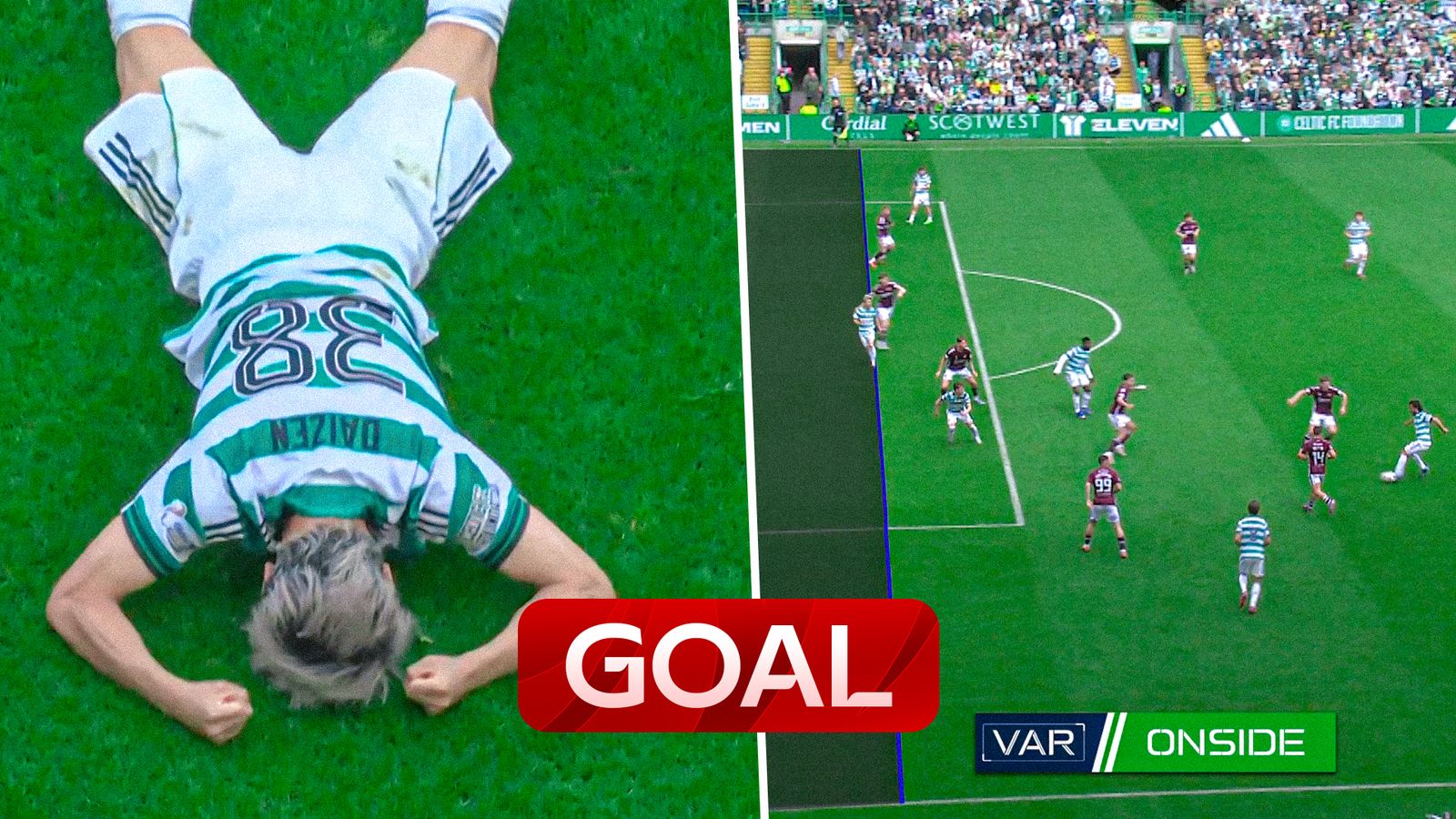
Celtic beat Hearts to the title after a VAR review overturned an on-field offside call. The decision allowed Celtic to leapfrog the Edinburgh side at the summit, as Sky Sports confirmed in their post-match coverage. It is a brutal, modern conclusion to what has been a historic title race.
The margins were nonexistent. An assistant referee raised a flag. A video assistant in a Glasgow industrial estate checked the angles. A goal was awarded. Celtic take the trophy. Hearts take nothing.
The anatomy of a four-decade anomaly
To understand the weight of this single VAR decision, you have to look at the historical data. No team outside Celtic and Rangers has won the Scottish top flight since Sir Alex Ferguson’s Aberdeen in 1985.
The financial disparity makes a non-Old Firm title statistically improbable. Last season, Celtic reported revenues exceeding £119 million. Hearts operate on roughly a fifth of that.
Over the last decade, the average points total required to win the Scottish Premiership sits at 92 points. For a non-Old Firm team, accumulating that many points means effectively winning every single match against the bottom ten teams, while securing at least draws against the Glasgow giants.
Hearts managed this grueling pace. They defied underlying metrics that suggested a title challenge was impossible. Most teams breaking into the top two rely on a sudden collapse from one of the big two. This year, Hearts actively took points off them.
They arrived at this decisive fixture sitting above Celtic in the table, a scenario completely absent from modern Scottish football data models. Celtic needed a win to leapfrog them. Hearts needed to survive.
The tactical stalemate
Before the VAR intervention, Hearts had executed a defensive masterclass. They restricted Celtic to low-probability shots from outside the penalty area. Over the first 85 minutes, Celtic's xG accumulated to just 0.74, well below their season average.
Hearts utilized a mid-block that aggressively pressed the central passing lanes. They forced Celtic's center-backs to distribute the ball wide, entirely neutralizing the midfield pivots. It was a strategy built on discipline and physical endurance.
When the decisive pass was finally played through the Hearts defensive line, it broke 85 minutes of flawless organization. The offside trap was sprung, but the margin was microscopic.
The intervention that decided a season
VAR was introduced to the Scottish Professional Football League in October 2022. Its stated aim was to eliminate clear and obvious errors. In its first full season, it averaged 0.38 overturns per match. This means an intervention happens roughly once every three games.
Offside is treated differently. It is not subjective. It is presented as a binary factual decision. You are either offside or you are not. But the reality of frame rates and line-drawing creates a gray area.
The SPFL uses a camera system operating at 50 frames per second. That means there is a 0.02-second gap between each frame. A sprinting forward can cover up to 20 centimeters in that gap.
When the pass was played, the margin between the Celtic attacker and the Hearts defender was invisible to the naked eye. The on-field assistant flagged for offside. Play stopped. The title, at that exact moment, belonged to Hearts.
The subsequent VAR review stripped the emotion from the stadium. This is the darkest flaw in modern football. We are trading the raw emotion of the sport for the illusion of perfect accuracy.
A multi-minute delay to check a toe offside ruins the stadium experience. It turns paying match-going fans into secondary consumers, waiting for a television graphic to tell them how to feel. Fans stood in silence while operators manually plotted reference points on a pixelated screen. The geometry favored Celtic. The on-field call was overturned. The goal stood.
Comparing the underlying metrics
Did Celtic deserve to win the league over 38 games? The numbers say yes.
Celtic consistently generate an expected goals (xG) tally of over 2.5 per game. They dominate possession, averaging above 65 percent in domestic fixtures. They pen teams in. Their attacking output is relentless, designed to overwhelm low blocks.
Hearts played a different game this season. They over-performed their xG by a significant margin. If we look at their expected points (xPts) model, Hearts should be sitting a clear 15 points behind Celtic.
They defied the math, relying on clinical finishing and exceptional goalkeeping. Their save percentage was the highest in the division. From a purely analytical standpoint, Celtic’s underlying numbers were always going to catch up.
They create more high-danger chances. But football is played on grass, not on spreadsheets. Hearts had executed their game plan perfectly until the final, fateful VAR check.
The history of late heartbreak
Scottish football is no stranger to dramatic final days. The 2002-03 season saw Rangers win the title on goal difference, beating Celtic by a single goal over the entire campaign.
In 2005, Celtic lost the title in the closing minutes against Motherwell, handing the trophy to Rangers in what became known as Helicopter Sunday.
But those moments were decided by players on the pitch. A late goal. A missed penalty. A defensive slip.
This year feels fundamentally different. The decisive action was taken by an official sitting in a video room miles away from the stadium. It removes the human error from the pitch and replaces it with a technological mandate.
The financial gulf
The wage disparity makes this title race even more staggering. Celtic's player wage bill is estimated at around £60 million annually. Hearts operate closer to £12 million. Every point Hearts earned this season cost them exponentially less than it cost Celtic.
This financial over-performance is rarely sustainable. Teams like Leicester City in 2016 or Lille in 2021 managed it once before their squads were dismantled by wealthier clubs.
Hearts face the exact same threat. Their key players, who delivered an 80-point season, will now be targeted by English Championship sides offering double the wages.
The fallout of the overturned flag
The psychological damage for Hearts will be immense. Building a squad capable of challenging the Old Firm takes years of careful recruitment and wage management.
They hit the mythical 80-point threshold required to make the Glasgow clubs nervous. They did everything asked of them. To lose it not to a moment of magic from a Celtic player, but to a millimeter-tight geometry check, is a bitter pill.
For Celtic, the record books will only show another title victory. They leapfrogged Hearts when it mattered. They secured the trophy. The method of delivery will fade from the official narrative.
But the data tells a different story. It shows a league that was closer than it has been in four decades. It shows a non-Old Firm team matching a financial juggernaut blow for blow.
The cold reality of technology
We are told VAR provides accuracy. In this instance, it provided the correct technical outcome according to the rulebook. The offside lines do not care about romantic narratives or 41-year droughts.
Yet, it is impossible to ignore the critical flaw in the system. Football is a game of continuous flow and sudden, explosive joy. VAR interrupts both.
The broader data on VAR in Scotland reveals a troubling pattern of delays. The average time taken for an offside review involving line drawing currently stands at two minutes and 14 seconds. In a high-stakes match, that delay feels like an eternity.
When Celtic scored, there was no wild celebration. There was only anxiety. Players looked at the referee. The referee touched his earpiece. The fans waited.
A title was won, but the moment was lost. The statistical probability of a Hearts title win was always low. The financial metrics dictated a Celtic victory. In the end, it was a 50-frames-per-second camera that enforced the status quo.
Celtic are champions. Hearts are broken. And the Scottish Premiership remains firmly anchored in Glasgow, secured by the narrowest, most scrutinized margin in its history.
Read Next