The Anatomy of a 99th-Minute Winner
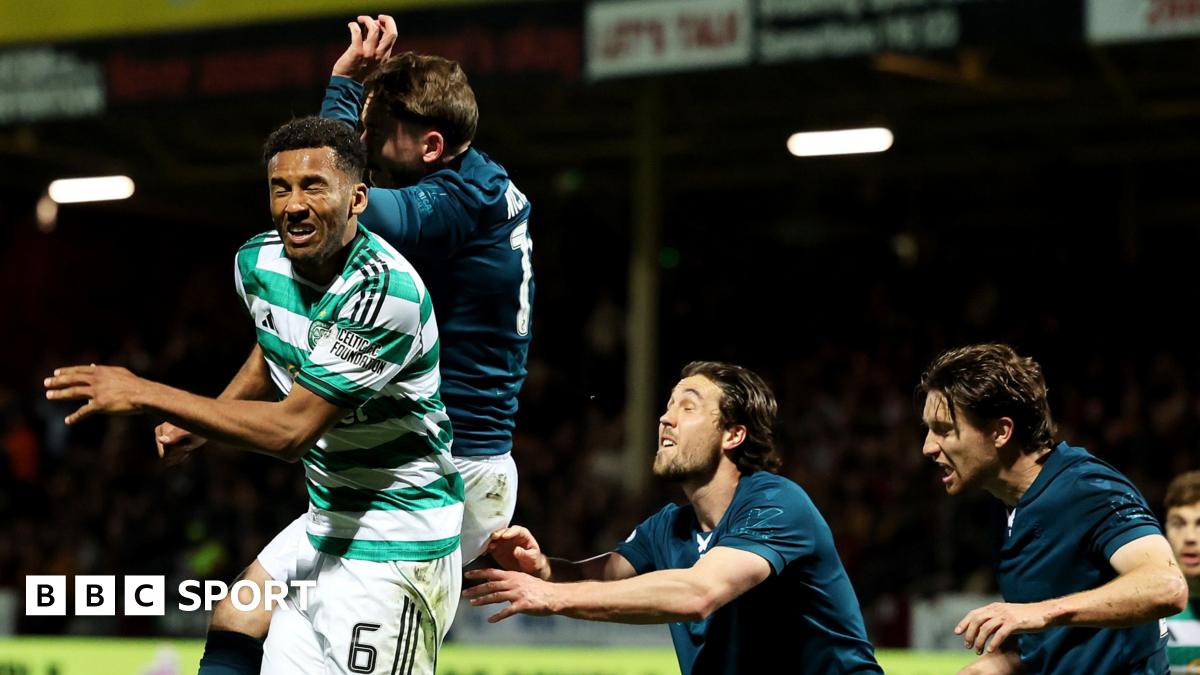
The clock read 98 minutes and 42 seconds when the sequence began. By the time the ball hit the net, the Scottish Premiership had completely fractured. Celtic converted a penalty in the 99th minute to secure a victory over Hearts. That single kick guarantees the championship will be decided on Saturday.
You do not see title races go to the wire in Scotland anymore. You definitely do not see them saved by a whistle blown when fans are already halfway to the parking lot.
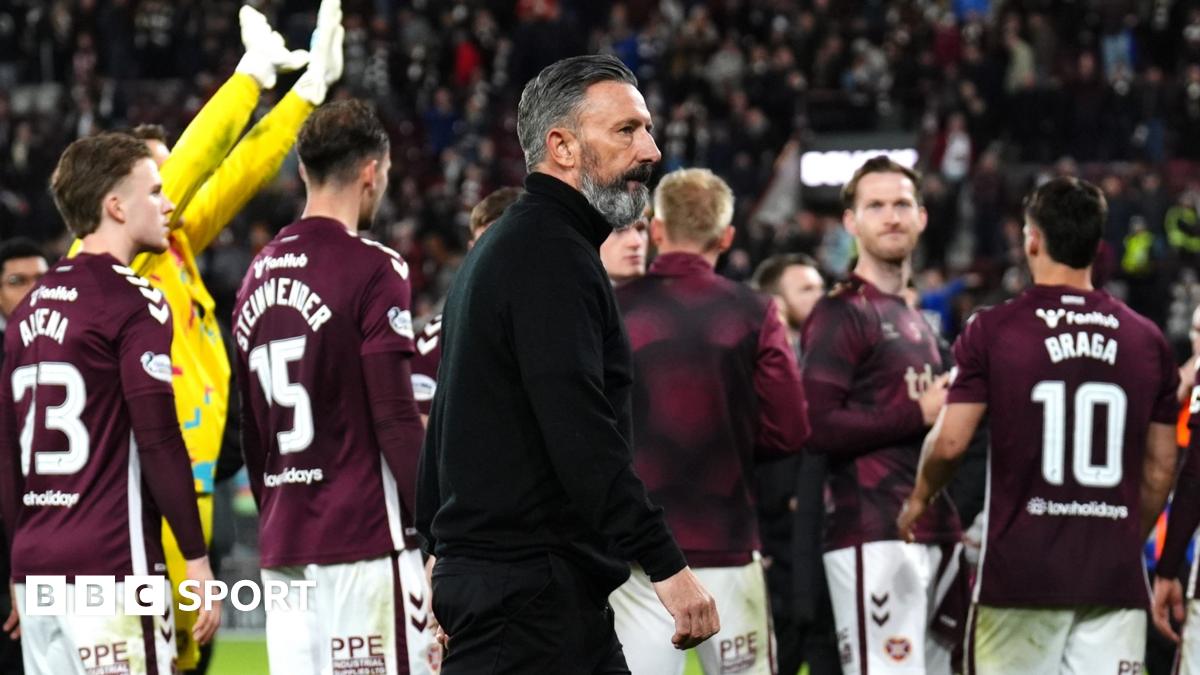
Hearts head coach Derek McInnes was furious in the aftermath. He labeled the penalty decision "disgusting" in his post-match comments, and delivered a stark assessment of the situation:
"We are up against everybody."
Those are heavy words. Managers get fined for less. But if you look at the raw timeline of the match, his anger is completely logical.
Why Stoppage Time Changes the Math
Modern football is getting longer. The directives introduced over the last few years to curb time-wasting have radically altered match lengths. A standard game is supposed to be 90 minutes. Adding nine minutes of stoppage time extends the physical output by exactly 10 percent.
That extra 10 percent is where tactical structures collapse. Defensive blocks that are impenetrable at the 70-minute mark turn into porous, panicked messes. Players are running on empty. Lactic acid build-up degrades decision-making.
When a team defends deep for a full match, the sheer volume of defensive actions takes a toll. Clearances fall shorter. Tackles get lazier. A trailing leg catches an attacker. The referee is forced to make a massive call in an atmosphere built entirely on tension.
This is the mathematical reality of high-possession teams playing against low blocks. If you camp outside a penalty area for 30 minutes, eventually the ball will bounce favorably. Celtic simply kept rolling the dice until the numbers came up.
The Disgust of Derek McInnes
Let us look closely at McInnes' reaction. Calling a decision "disgusting" is a calculated move. It pulls all the media focus onto the officials. It protects his players from any criticism regarding their late defensive lapse.
Saying his team is "up against everybody" feeds directly into a long-standing grievance among Scottish clubs. There is a deep, historical belief that the league's biggest clubs receive preferential treatment late in matches.
The data on this is notoriously noisy. Parsing out referee bias from the simple fact that dominant teams spend more time in the opponent's box is mathematically difficult. You get more penalties if you take more touches in the penalty area. That is a basic statistical truth.
However, a penalty awarded that deep into added time will always spark outrage. It looks terrible optically. It feels like the larger team being bailed out. McInnes is giving voice to a frustration felt by every fan outside of Glasgow.
The Tactical Failure Behind the Late Drama
Here is the critical observation that Celtic fans will not want to hear. Relying on a late penalty is a massive red flag. It points to a severe tactical failure in the preceding 98 minutes.
A team chasing a championship should be capable of dismantling domestic opposition through open play. Celtic struggled. Their final ball was lacking. Their attacking movement was stagnant. They needed an extreme stroke of luck to keep their title hopes alive.
If your forward line cannot score from open play against a team sitting deep, you are vulnerable. That is an empirical flaw. You cannot chart a course to a title by relying on stoppage-time penalties. It is statistically unsustainable.
This performance should deeply worry their coaching staff. They escaped with three points, but the underlying metrics of their attacking shape were remarkably poor. They looked out of ideas long before the penalty was awarded.
The Mathematics of a Penalty Kick
We need to discuss the raw math of the penalty itself. In professional football, a penalty kick carries an expected goals (xG) value of approximately 0.76. That means roughly 76 percent of penalties are converted.
When you are given a penalty in the first half, a miss is frustrating. You still have 45 minutes to correct the error. When you are given a penalty at the very end of a match, that 0.76 xG represents your entire season. The binary nature of the outcome is staggering.
The pressure on the penalty taker in that exact scenario is immense. Biomechanical studies on athletes show that heart rates spike significantly during high-stress, late-game set pieces. The technical execution must overcome a massive physical stress response.
Celtic's taker stepped up and delivered. That is a display of elite psychological control. However, the fact that the entire title race hinged on a single strike from twelve yards highlights how fine the margins have become.
If that kick hits the post, we are writing a completely different article. We are writing an obituary for a title challenge. Instead, the conversion rate held true, and the points were secured.
Evaluating the Points Distribution
Looking across the European leagues, the distribution of points earned after the 90th minute has become a critical metric. Teams that win titles consistently rank in the top percentile for late points gained.
It is a statistical marker of squad depth and physical conditioning. If you can maintain high-intensity attacking phases when the opponent is faltering, you will farm points late in matches.
However, there is a distinct difference between scoring from open play against a tired defense and relying on a referee's intervention. The former is a repeatable skill. The latter involves a high degree of variance and luck.
Celtic benefited from that variance against Hearts. You can argue they earned the luck through relentless pressure. But no data model would predict or advise relying on a late foul to win a football match. It skews the entire perception of the team's performance.
When you aggregate the expected points from all 38 matches, the data clearly penalizes teams that rely on late variance. Over a five-year rolling average, clubs that require more than three stoppage-time penalties to secure points rarely repeat as champions. The underlying performance metrics always regress to the mean. You can beat the math on a given Saturday, but you cannot beat it over a decade. Celtic are walking a dangerous statistical tightrope.
The 15-Year Wait for Saturday
This brings us to Saturday. The final day of the Scottish Premiership season. We have not seen a genuine, final-day title shootout in 15 years. You have to go back to the 2010-2011 season to find a comparable scenario.
For over a decade, titles have been secured weeks in advance. We are used to early coronations. We are entirely unaccustomed to the trophy being contested on matchday 38.
This completely alters the psychological preparation for the weekend. Players who are used to playing dead-rubber matches in May are suddenly thrust into a high-stakes environment. Nerves become the dominant variable.
Think back to the famous Helicopter Sunday in 2005. That kind of chaotic, shifting drama is what Saturday promises. The margin for error is absolutely zero.
A Counterintuitive Final Day Threat
There is a surprising finding hidden in historical final-day data. Teams that require massive emotional expenditures in their penultimate matches often underperform in the finale. The adrenaline dump is real.
Celtic will feel euphoric after snatching this win. That euphoria masks deep physical and emotional fatigue. They have two days to recover from a 100-minute war of attrition before playing the most important match of their careers.
Historically, teams riding the high of a late, controversial win often start their next match slowly. The emotional baseline drops. If they concede early on Saturday, the panic will be immediate.
The math for Saturday is stark. Every single point matters. Goal difference might even become a factor. The 2003 season was famously decided by a single goal. We could absolutely see margins that tight again.
Hearts will watch from the sidelines. McInnes will likely face a disciplinary hearing. But they played their part perfectly. They dragged the title race into the deep waters of stoppage time and exposed the flaws in the favorites.
The referee's whistle was a definitive sound. It broke Hearts, saved Celtic, and guaranteed that Saturday will be a chaotic, anxious spectacle. The Scottish Premiership table is a brutal, honest accounting of 38 games. Right now, it is entirely unresolved.
Read Next
- Celtic's 99th-minute penalty just set up the most toxic final day in years
- Derek McInnes is right to be fuming after that Celtic VAR gift
- Hearts furious as 99th-minute Celtic penalty drags title race to final day
- Celtic's Title Destiny: How a 99th-Minute Gift Sets Up a Hearts Showdown
- ⚽ Scottish Premiership 2025-26 — Celtic vs Rangers Hub