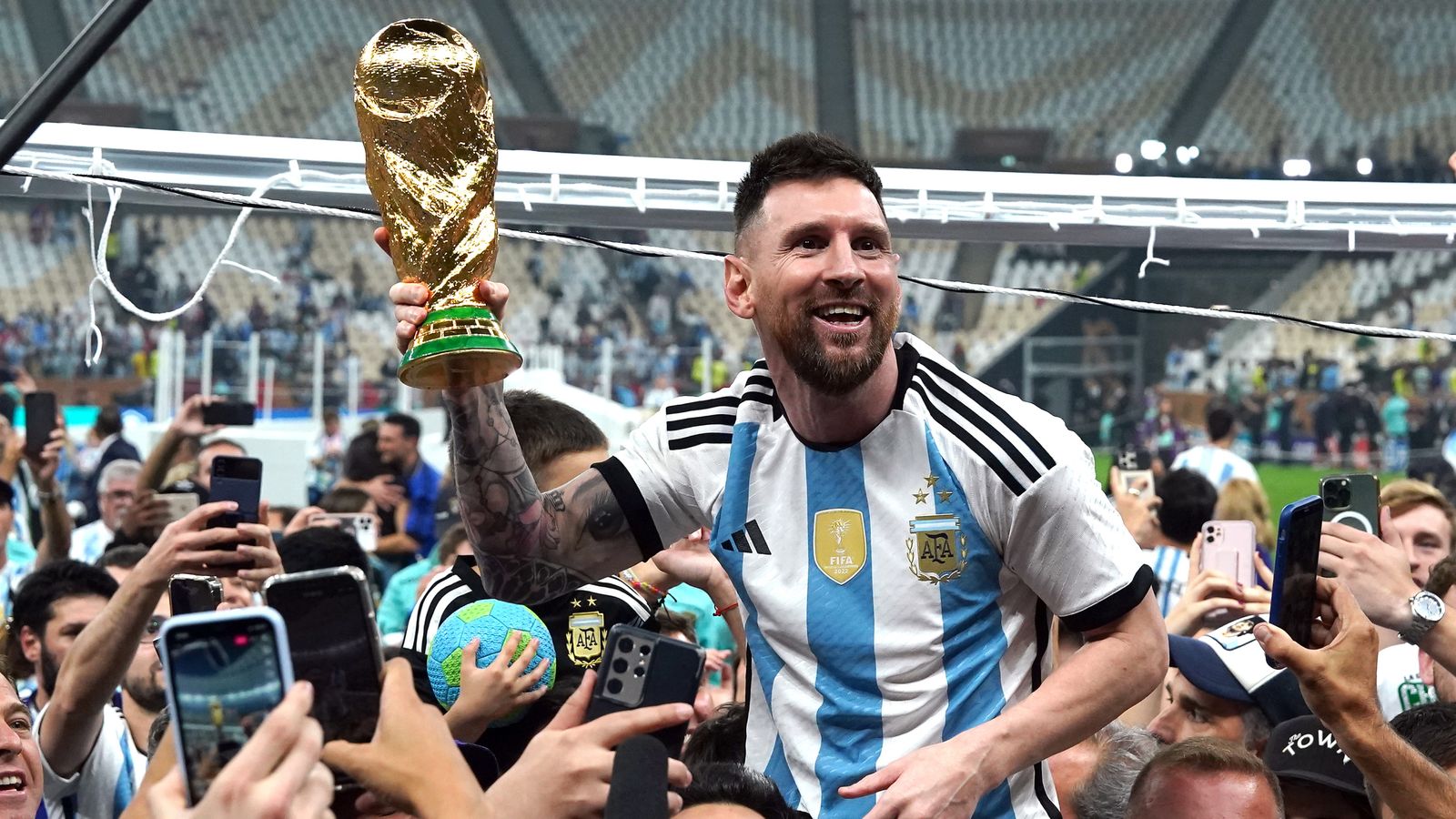
The Delusion of Qatar Nostalgia
Let's cut through the noise before the kickoff in Atlanta on June 11. If you think Lionel Scaloni is leading Argentina to another trophy, you are huffing pure, unadulterated copium. The beautiful narrative of Messi ending his career with a glorious MLS-adjacent victory lap is a fantasy, because international football is a cold, cynical game that does not care about your cinematic endings.
The hard truth is that the Argentina team arriving next month is a shadow of the relentless machine that conquered Doha in 2022. That team was built on a simple, brilliant tactical bargain of ten elite athletes running themselves into the ground to facilitate one genius. Four years later, the genius is older, the athletes are exhausted, and every elite manager in the world has figured out the blueprint to dismantle Scaloni's mid-block.
To understand why this title defense is doomed, look at the massive void left by Angel Di Maria's international retirement after the 2024 Copa America. Di Maria was the ultimate big-game cheat code who stretched defenses and scored in finals when opponents doubled Messi. Without him, Scaloni is stuck trying to fit square pegs into round holes, hoping that Alejandro Garnacho or Nicolas Gonzalez can suddenly develop world-class decision-making under intense pressure—which they cannot.
The Sputtering Engine Room
Let's talk about the midfield, because that is where Argentina actually won the World Cup. In 2022, the trio of Rodrigo De Paul, Enzo Fernandez, and Alexis Mac Allister was a perfect blend of violence and elegance that hunted in packs to feed Messi in transition. But look at where those three key players find themselves in May 2026.
Enzo Fernandez is the poster child for Chelsea's chaotic, multi-billion-pound identity crisis. Since his move to Stamford Bridge for a staggering 121 million euros, his development has completely stalled into a sluggish, heavy metronome who looks tactically lost. When you watch him get routinely bypassed by mid-table Premier League midfields, it bodes terribly for matches against high-pressing national teams.
Then you have Rodrigo De Paul, who is now 32 years old and showing the clear wear and tear of Diego Simeone's grueling Atletico Madrid system. He is still great at starting fights and yelling at referees, but his actual recovery speed has dropped off a cliff. If your tactical plan relies on De Paul covering the entire right flank to shield Messi's walking pace, you are begging for a track meet you cannot win.
Only Alexis Mac Allister enters this tournament in genuinely elite form, but he cannot carry a three-man midfield on his own. In the Copa America, we already saw signs of this unit struggling to control games against aggressive opponents. If Scaloni persists with his loyalty to this trio, Argentina will be choked out of possession by any European team that defends with a high line and quick horizontal shifts.
The 38-Year-Old Elephant in the Room
Now, let's address the sacred cow. Lionel Messi is the greatest to ever kick a ball, and disputing that is a fast track to looking like an idiot. But we are in 2026, and Messi is 38 years old, turning 39 during the knockout stages of this tournament. He has spent the last three years playing in Major League Soccer, a league that has the defensive intensity of a Sunday league game after three pints of lager.
You cannot prepare for the physical intensity of a World Cup by playing against Columbus Crew or Charlotte FC. The drop in competitive tempo is a real, undeniable factor that will catch up to Messi in the knockout rounds where athletes run 12 kilometers a game. In MLS, he can walk for 80 minutes and still win the game with a magic pass, but doing that at a World Cup is a luxury that actively destroys your team's defensive shape.
Scaloni's tactical dilemma is agonizing. If you play Messi, you are effectively defending with nine outfield players when out of possession. In 2022, Julian Alvarez and De Paul worked themselves to the bone to cover for this, but Alvarez has had a demanding club season under Simeone at Atletico, and De Paul's legs are fraying. If Scaloni benches Messi, he risks a national civil war; if he plays him, Argentina is incredibly easy to press out of the game.
We saw a preview of this tactical trap during their recent qualifiers. When opponents crowded the central passing lanes and forced Argentina to play wide, their attacks looked incredibly stagnant. Messi would drop deeper to get the ball, eventually operating in his own half, leaving Lautaro Martinez isolated up front. It is a formula that works against Bolivia or Peru, but it will be thoroughly exposed by Germany, France, or England.
The Golden Cage of Scaloni's Loyalty
Every great manager has a fatal flaw, and for Lionel Scaloni, it is his deep, almost familial loyalty to the men who won him trophies. This is the same trap that destroyed Vicente del Bosque's Spain in 2014 and Joachim Low's Germany in 2018. When you have achieved footballing immortality with a group of players, it is almost impossible to tell them that their time is up.
Look at the defensive line. Nicolas Otamendi is 38 years old and still somehow in the conversation for a starting spot. While Cristian Romero and Lisandro Martinez are world-class, Otamendi's presence in the squad represents a refusal to fully transition to a faster, modern defensive line. If Romero or Martinez picks up an injury or suspension, Argentina is one step away from defending elite wingers with a center-back who has the turning radius of a container ship.
This loyalty extends to the attacking options as well. Lautaro Martinez has had a phenomenal season for Inter Milan, but his international form has always been wildly streaky. When Lautaro goes through one of his cold spells, Scaloni has historically struggled to adapt, refusing to trust younger, more explosive profiles. The reluctance to integrate fresh blood means Argentina has no real Plan B when their patient, possession-heavy build-up gets smothered.
The Prediction: A Brutal Quarter-Final Reality Check
So, where does the road end? The bracket is going to be a minefield, and Argentina's lack of tactical flexibility will be their undoing. They do not possess the dynamic wing play to stretch modern low blocks, nor do they have the recovery pace to handle teams that transition at breakneck speed. The memory of their Qatar triumph has created an aura of invincibility, but that aura is going to shatter the moment they meet a top-tier European side.
My prediction is a brutal, eye-opening defeat in the quarter-finals. Picture this: a hot afternoon in New Jersey, Argentina facing a young, terrifyingly fast French side or a highly organized German team. Messi is swarmed by three midfielders every time he touches the ball, De Paul is chasing shadows, and Otamendi is left stranded in a 50-meter footrace against a winger who wasn't even born when Messi made his professional debut. It will be a sad, sluggish end to the greatest era in Argentine football history, but it is the only logical conclusion.
The fans will sing their hearts out, the pundits will cry about the end of an era, and Messi will finally walk away from the international stage. But do not say you did not see it coming. The signs are written in bold letters across Enzo's sluggish Chelsea performances, De Paul's Atletico mileage, and Messi's leisurely MLS strolls. Argentina's title defense is not a glorious march; it is a farewell tour that has lasted one album too long.
Read Next
- Forget the group stage, here are the real World Cup Round of 16 wars
- Why Argentina's World Cup title defense is doomed to fail
- Why Argentina's World Cup defense is destined for a massive reality check
- Dorival Junior is about to drive Brazil's golden generation off a cliff
- 🏆 World Cup 2026 — Full Coverage Hub
- 🇦🇷 Argentina World Cup 2026 — Defending Champions Hub