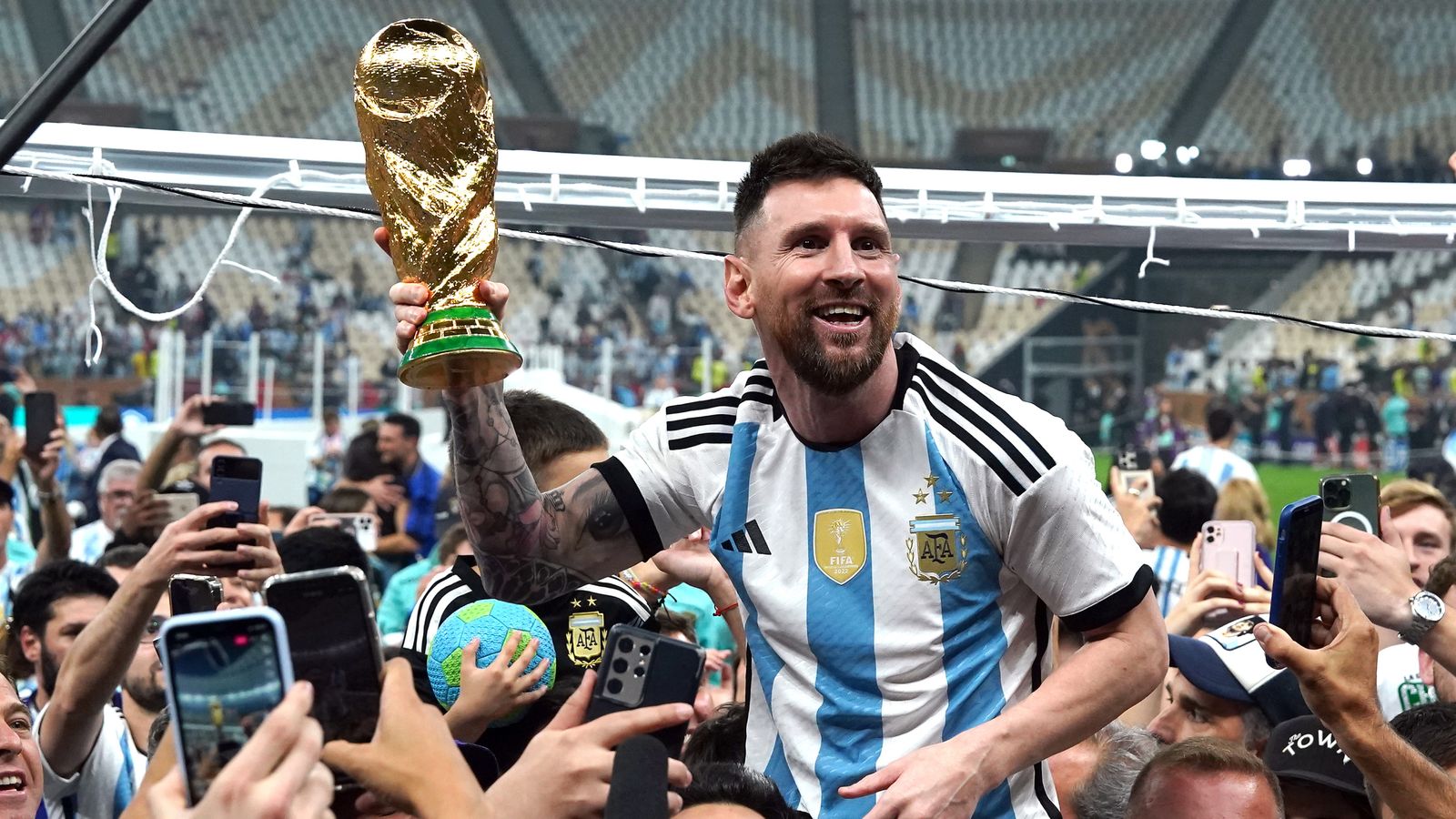
Pour yourself a double and pull up a chair, because we need to talk about the giant, blue-and-white striped elephant in the room. In exactly nineteen days, the circus rolls into North America, and everyone is already writing the screenplay for Lionel Messi lifting the trophy in East Rutherford. It is a beautiful, cinematic delusion that ignores a cold, hard footballing reality.
No country has successfully defended a men's World Cup title since Brazil managed it in 1962, back when players wore heavy leather boots and halftime refreshments consisted of a cigarette and a glass of brandy. Argentina is not breaking that curse. They are older, slower, missing their biggest big-game player, and heading straight into a meat grinder.
If you think Lionel Scaloni can just roll out the same hits from Qatar and walk away with a third star, you have been drinking too much of the Inter Miami Kool-Aid. Let us strip away the romance and look at the actual football, because this title defense is a car crash waiting to happen.
Messi in a Glass Case: The 38-Year-Old MLS Question
Let us start with the legend himself. Lionel Messi will be 38 years old when the knockout stages begin, and he has spent the last three years playing in a league where defending is treated as an optional weekend hobby. Strolling past MLS center-backs who move like modern art sculptures is one thing; trying to find space against William Saliba or Antonio Rüdiger is a completely different sport.
In Qatar, the entire Argentina system was built to accommodate Messi's physical economy, with Rodrigo De Paul acting as his personal bodyguard and running twelve kilometers a game to cover the gaps. That was four years ago. De Paul's legs have logged massive mileage at Atletico Madrid under Diego Simeone since then, and the physical tax of carrying a passenger in a modern high-pressing tournament has doubled.
If Messi cannot press, and he cannot run past elite fullbacks, he becomes a luxury playmaker who must produce absolute magic every time he touches the ball. But when the tournament reaches the quarter-finals and the spaces tighten, you cannot rely on a 38-year-old to pull rabbit after rabbit out of his hat while the rest of the team is running themselves into the turf. Scaloni is essentially gambling the entire tournament on the hope that Messi's left foot can defy the laws of biological aging one last time.
The Angel Di Maria Void is a Black Hole
Everyone talks about Messi, but the real cheat code of the Scaloni era was Angel Di Maria. When the lights were brightest, it was Di Maria who dragged Argentina over the finish line. He scored the lob that won the 2021 Copa America, he scored in the Finalissima, and he terrorized France for seventy minutes in the 2022 final before winning the penalty and scoring the second goal.
Di Maria retired from the national team after the 2024 Copa America, and his departure has left a massive, gaping hole on the wing that Scaloni cannot fill. Alejandro Garnacho has bundles of talent, but he is still a chaotic teenager who plays with his head down and lacks the tactical discipline to track back. Nico Gonzalez is a hard worker, but his finishing in the final third has often been comedic rather than clinical.
Without Di Maria's ability to stretch the pitch on the left wing and occupy two defenders, opponents are going to pack the center of the pitch and dare Argentina to beat them out wide. It is a tactical straightjacket that will choke their creative flow. You cannot replace a guy who has ice in his veins in cup finals with raw prospects who still get flustered by a standard physical tackle.
Chelsea Chaos and the Midfield Engine's Redline
The foundation of Argentina’s success in Qatar was a midfield trio that clicked like a Swiss watch. Alexis Mac Allister, Rodrigo De Paul, and Enzo Fernandez were relentless, technical, and possessed a telepathic understanding of space. Fast forward to 2026, and that engine room is showing some very serious rust.
Enzo Fernandez is the biggest worry here. Ever since his move to Chelsea, his career has been a rollercoaster of changing managers, tactical instability, and inconsistent fitness. He is no longer the hungry kid who broke into the team in Qatar; he is a player carrying the mental baggage of a massive price tag and a chaotic club environment that has clearly stunted his development.
Mac Allister has been outstanding for Liverpool, but he cannot carry the entire transition phase on his own. De Paul is still the emotional heart of this team, but his role as the designated enforcer is becoming harder to sustain as his physical attributes naturally decline. If Enzo cannot find his 2022 form, Argentina’s midfield will be overrun by athletic powerhouses like France or a rejuvenated Germany.
The Striker Duel and the Scaloni Last Dance
Up front, Scaloni faces a tactical headache that could easily turn toxic. Julian Alvarez completed a massive €95 million transfer to Atletico Madrid, but his development has stalled under the tactical constraints of Simeone's defensive system. He is no longer the tireless presser who created pockets of space for Messi; he looks like a striker caught between two completely different footballing philosophies.
Then you have Lautaro Martinez. Lautaro is a world-class goalscorer for Inter Milan, but his international career is defined by massive misses when the stakes are highest. Yes, he scored the extra-time winner to secure a 1-0 victory against Colombia in the 2024 Copa America, but his broader tournament record is littered with anxious finishes and dry spells that drive fans insane.
If Alvarez is out of form and Lautaro is battling his usual tournament demons, Argentina will struggle to convert their dominant possession into actual goals. Scaloni himself looks like a manager who has already reached his peak and is simply going through the motions. He tried to walk away in 2023 because of exhaustion, and this tournament feels less like a defense and more like a forced march to a predictable end.
This is not a slight on what Argentina achieved. Their run from 2021 to 2024 was one of the greatest eras of international dominance we have ever witnessed, a masterclass in team chemistry and tactical pragmatism. But football is a brutal sport that does not care about nostalgia or fairytale endings.
The squad that takes the pitch in June is a shadow of the one that conquered Lusail. When the pressure cooker of the knockout rounds begins, the lack of pace, the retirement of Di Maria, and the physical decline of their key players will finally catch up to them. The dream of a repeat will end in a quiet, frustrating exit in the last eight, leaving fans to finally accept that the golden era is over.
Read Next
- Argentina's World Cup defense is heading straight for a nightmare
- FIFA is about to ruin the best knockout round in World Cup history
- The bloated World Cup is a mess, but the Round of 16 will be pure cinema
- Forget the group stage, here are the real World Cup Round of 16 wars
- 🏆 World Cup 2026 — Full Coverage Hub
- 🇦🇷 Argentina World Cup 2026 — Defending Champions Hub