The shadow of the champions
You can feel the cold sweat setting in across north London. We are deep into April, the margin for error is effectively zero, and Manchester City are doing exactly what they always do. They are closing the gap.
They are turning the screw and transforming this title race into a grueling test of endurance. As Gary Neville flagged this week on Sky Sports, Arsenal must swim against the tide and hold their nerve. He is entirely correct.
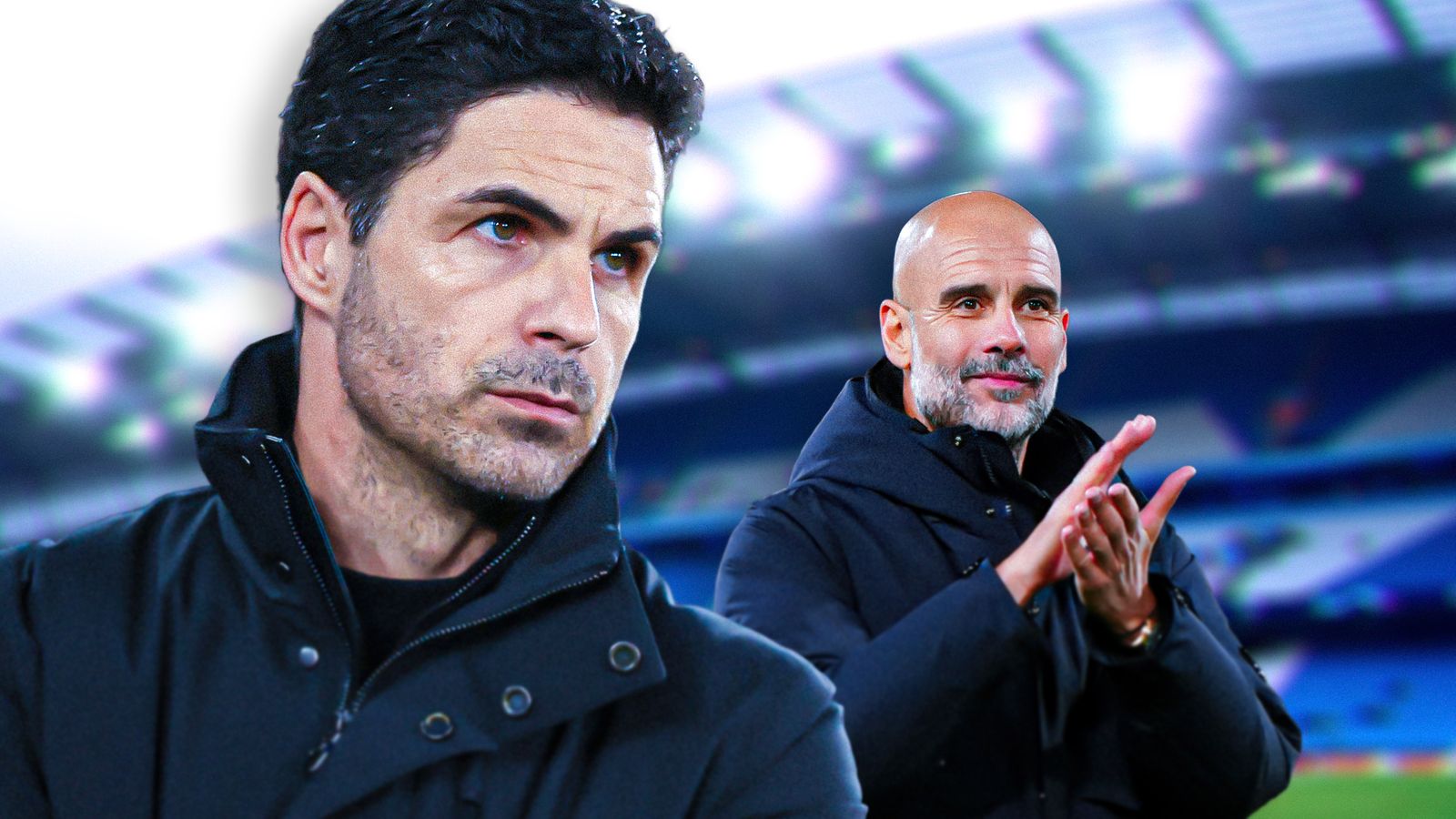
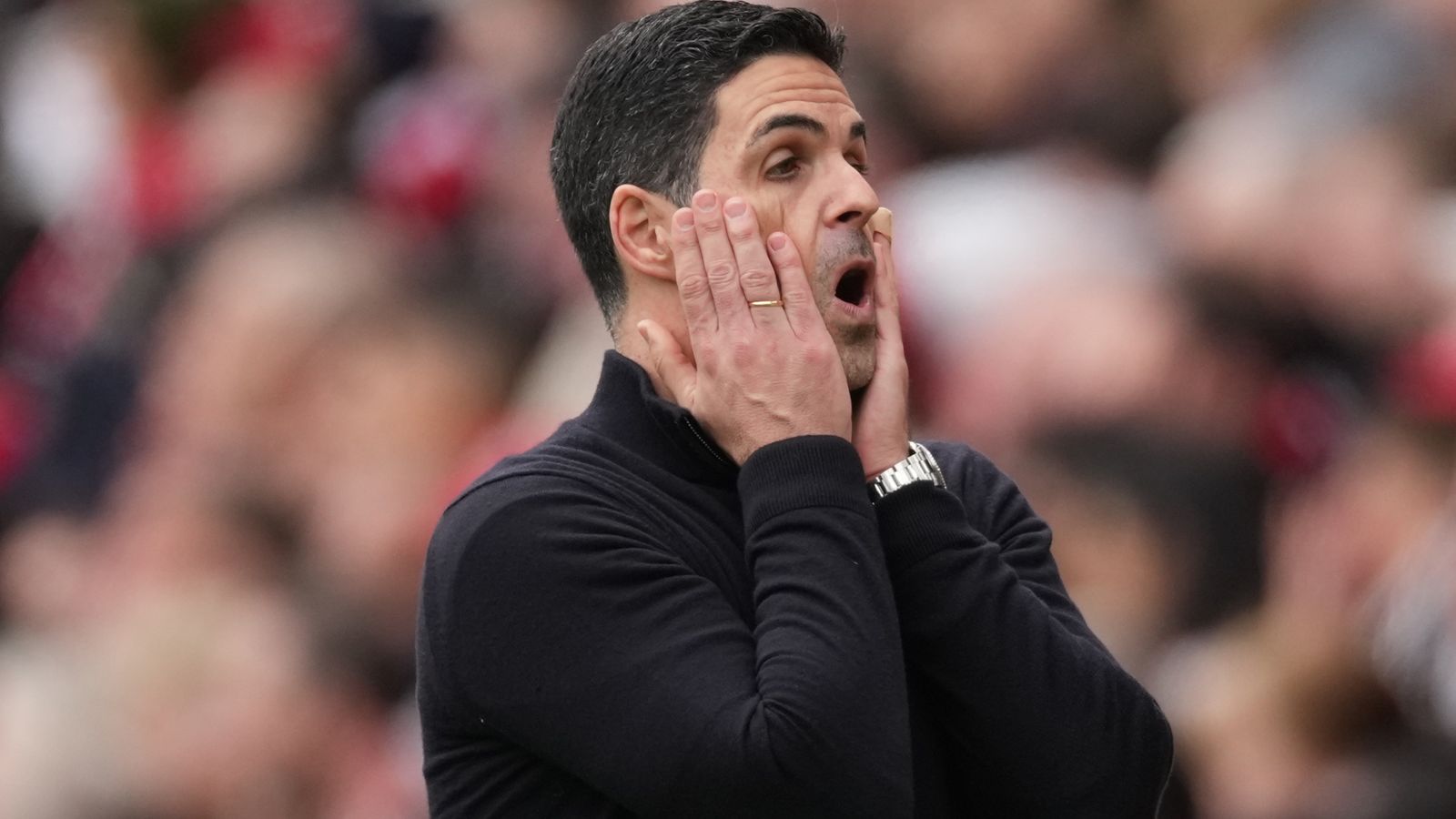
Tactical superiority means absolutely nothing if your legs turn to jelly when the Etihad crowd starts roaring. Mikel Arteta knows this better than anyone. He sat on the bench next to Pep Guardiola for years, watching this exact machine ruthlessly devour challengers.
Sunday is not just a football match. It is an exorcism. If Arsenal want to be champions, they have to walk into the belly of the beast and take the points.
The mid-block battlefield
Arsenal's defensive evolution over the past two years has been genuinely staggering. They no longer press with reckless abandon. Instead, Arteta has built a perfectly synchronized 4-4-2 mid-block.
Martin Odegaard and Kai Havertz act as the first line of defense. They do not sprint aimlessly at the center-backs. They sit on the passing lanes, specifically cutting off the angles into Rodri.
This is the first major tactical battleline. If Rodri gets on the ball facing forward, Arsenal will be dismantled. Odegaard's primary job on Sunday will be shadow-marking the Spanish midfielder while keeping pressure on Ruben Dias.
Behind them, Declan Rice and Thomas Partey will have to marshal the half-spaces. Phil Foden and Kevin De Bruyne will float into those pockets between the full-backs and the center-backs. Arsenal's wingers must drop deep to create a compact six-man defensive wall when City enter the final third.
City's structural manipulation
Guardiola is not going to just let Arsenal sit in a comfortable shape. He will actively try to deform it. Expect to see John Stones step out of the backline and invert into midfield alongside Rodri.
This creates a 3-2 buildup shape, designed specifically to overload Arsenal's two-man frontline. When Stones steps up, it forces an Arsenal midfielder to jump out of the defensive line to press him. Usually, that is Rice.
But the moment Rice jumps, he leaves a gaping hole behind him. That is exactly where De Bruyne makes his living. It is a terrifying trap.
Arteta has to decide how aggressive he wants to be. Does he instruct Rice to hold his position and let Stones have the ball? Or does he trigger a high press and risk leaving his center-backs exposed in one-on-one situations?
First phase build-up and Raya's test
Let us look closely at how Arsenal will actually try to play out from the back. Arteta is obsessed with control. He refuses to compromise on building from his goalkeeper.
David Raya's role is going to be scrutinized heavily. City will deploy a man-to-man high press, forcing Raya to hold onto the ball until the absolute last millisecond. He has to provoke the press and open up a passing lane.
The problem is that City's pressing intensity forces rushed decisions. Raya has occasionally shown a tendency to misplace clipped passes into the wide channels under severe duress. If he under-hits a pass to Bukayo Saka, City will instantly recover the ball 30 yards from goal.
Arsenal must find a way to create an artificial numerical advantage. Look for Rice to drop almost alongside the center-backs, forming a temporary back three. If City match that rotation, it creates a massive void in the center of the pitch for Odegaard to exploit.
The Saliba vs Haaland reality check
If Arsenal do get pushed deep, the game inevitably boils down to individual duels in the penalty box. Erling Haaland has looked somewhat isolated recently, but his gravity warps entire defensive structures. He pins both center-backs, creating space for late runners.
William Saliba and Gabriel Magalhaes have the physical profile to handle Haaland better than almost any partnership in Europe. Saliba matches his pace, while Gabriel matches his aggression. They have kept six consecutive away clean sheets, a remarkable defensive achievement.
But handling Haaland is only half the battle. The real danger comes from the secondary runners exploiting the space he vacates. This leads directly to a major concern about Arsenal's left side.
The glaring flaw on the left
For all of Arsenal's brilliance, their left flank remains a massive vulnerability. Whether it is Oleksandr Zinchenko stepping inside or Jakub Kiwior playing as a makeshift full-back, City will target that area relentlessly.
Zinchenko offers elite ball progression, but his defensive awareness in transition is shocking. He gets caught ball-watching far too often. If he starts on Sunday, Bernardo Silva will isolate him within the first five minutes.
Kiwior is defensively more robust, but he struggles horribly under a high press. City will angle their pressing triggers to force the ball onto Kiwior's weaker foot. They will dare him to play through the middle.
This is compounded by Gabriel Martinelli's recent form. His decision-making in the final third has been genuinely frustrating. He routinely ignores overlapping runs, opting instead to dribble into blind alleys.
In a match where Arsenal might only get three or four high-quality transition moments, they cannot afford Martinelli to waste them. He has to release the ball quicker. If he does not, Arsenal's counter-attacking threat is completely nullified.
The invisible work of Ben White
While the left side is a massive defensive concern, Arsenal's right flank operates with mechanical precision. Ben White has evolved into one of the most intelligent inverted full-backs in Europe.
He rarely wastes energy on overlapping sprints that do not lead to an immediate crossing opportunity. Instead, White manages the space behind Saka with ruthless efficiency. He constantly scans over his shoulder, ensuring that when Arsenal lose the ball, he is already positioned to delay the counter-attack.
Against City, White's ability to seamlessly drop into a back three alongside Saliba and Gabriel will be tested to its absolute limit. When Stones steps into midfield, White must decide whether to tuck inside and compress the central space or stay wide to monitor Doku.
This micro-decision making is where matches are won and lost. One wrong step from White, and De Bruyne will slide a pass right through the gap he leaves behind.
The Doku dynamic
Guardiola has a massive decision to make on his left wing. Does he start Jack Grealish for control, or Jeremy Doku for pure, unadulterated chaos? Given Arsenal's defensive solidity, I suspect he might lean toward Doku.
Doku is a terrifying isolated one-on-one threat. Ben White has been sensational defensively this season, but Doku stops, starts, and accelerates with a jerky rhythm that is almost impossible to time. White will need Saka to track back relentlessly and double-team the Belgian winger.
If Saka gets caught up the pitch cheating for a counter-attack, Doku will destroy White in space. This creates a tactical bind for Arteta. If he commits Saka to deep defensive duties, Arsenal lose their primary transition outlet.
City effectively pin Arsenal's best attacking player in his own defensive third without even touching the ball. It is a brilliant systemic trap designed to suffocate the opposition.
Transitioning out of pressure
When Arsenal do win the ball back, their exit routes will be intensely monitored. City's counter-press is furious. The immediate pass upon winning possession is the most important action on the pitch.
Arsenal usually look for Saka. Josko Gvardiol will be tightly assigned to him, looking to engage before he can turn. Arsenal cannot simply hit long balls and hope for the best.
Raya's distribution has to be flawless. He needs to bypass the first wave of City pressure by clipping passes directly into the chest of Havertz. The German forward can then lay it off to a surging Rice.
Havertz as the ultimate disruptor
Much of Arsenal's success will hinge on the chaotic presence of Havertz. He is not a conventional striker. He is a spatial disruptor who drifts into areas that make center-backs highly uncomfortable.
Dias wants a physical battle. He wants a striker he can grapple with. Havertz denies him that. He drops into midfield to overload Rodri, or pulls wide into the channels to drag Dias out of the center.
If Havertz can successfully pull City's defensive line out of shape, it creates enormous gaps for Arsenal's wide players. But this requires supreme timing. If he drops too early, City's midfield will swallow him up.
Substitutions and game state
Arteta has often been criticized for his rigid substitution patterns. He tends to wait until the 70th minute to make meaningful changes, regardless of the game state.
Guardiola is completely unpredictable in this regard. He might hook a struggling winger after 45 minutes or change his entire formation midway through the first half. Arteta has to be reactive and brave.
If Arsenal are trailing after an hour, throwing on Leandro Trossard for Martinelli is the obvious move. Trossard offers far superior ball retention in tight spaces. But if they are defending a lead, Arteta might need to deploy Takehiro Tomiyasu to completely lock down the vulnerable left flank.
The tactical chess match on the touchline will be just as intense as the physical battle on the pitch. Arteta cannot afford to freeze when Guardiola throws a curveball.
The set-piece battleground
Do not underestimate the impact of Nicolas Jover. Arsenal's set-piece coach has turned them into the most dangerous dead-ball team in the country. They crowd the six-yard box, block the goalkeeper, and attack the near post with vicious inswingers.
City will attempt to hold a higher line on free-kicks to catch Arsenal offside, but VAR margins are ruthless. A single mistake from a City defender dropping half a yard too deep could define the match.
Set pieces might be Arsenal's most reliable route to goal if they struggle to build through the center. With City scoring 14 goals in their last five league matches, Arsenal must maximize every single dead-ball opportunity.
Final verdict
This match is going to be suffocating. It will be played on a knife-edge, decided by microscopic tactical adjustments and split-second moments of individual brilliance or catastrophic failure. City have the pedigree, the home advantage, and the psychological edge.
Arsenal are a better team than they were last year. They are physically imposing, defensively elite, and tactically versatile. But the Etihad is a graveyard for title ambitions.
I expect City to ruthlessly exploit the space behind Arsenal's left-back and dominate possession in the second half. City will win the midfield battle, isolate the wide areas, and strike late.
Prediction: Manchester City 2-1 Arsenal.
Read Next