The ghosts of Budapest
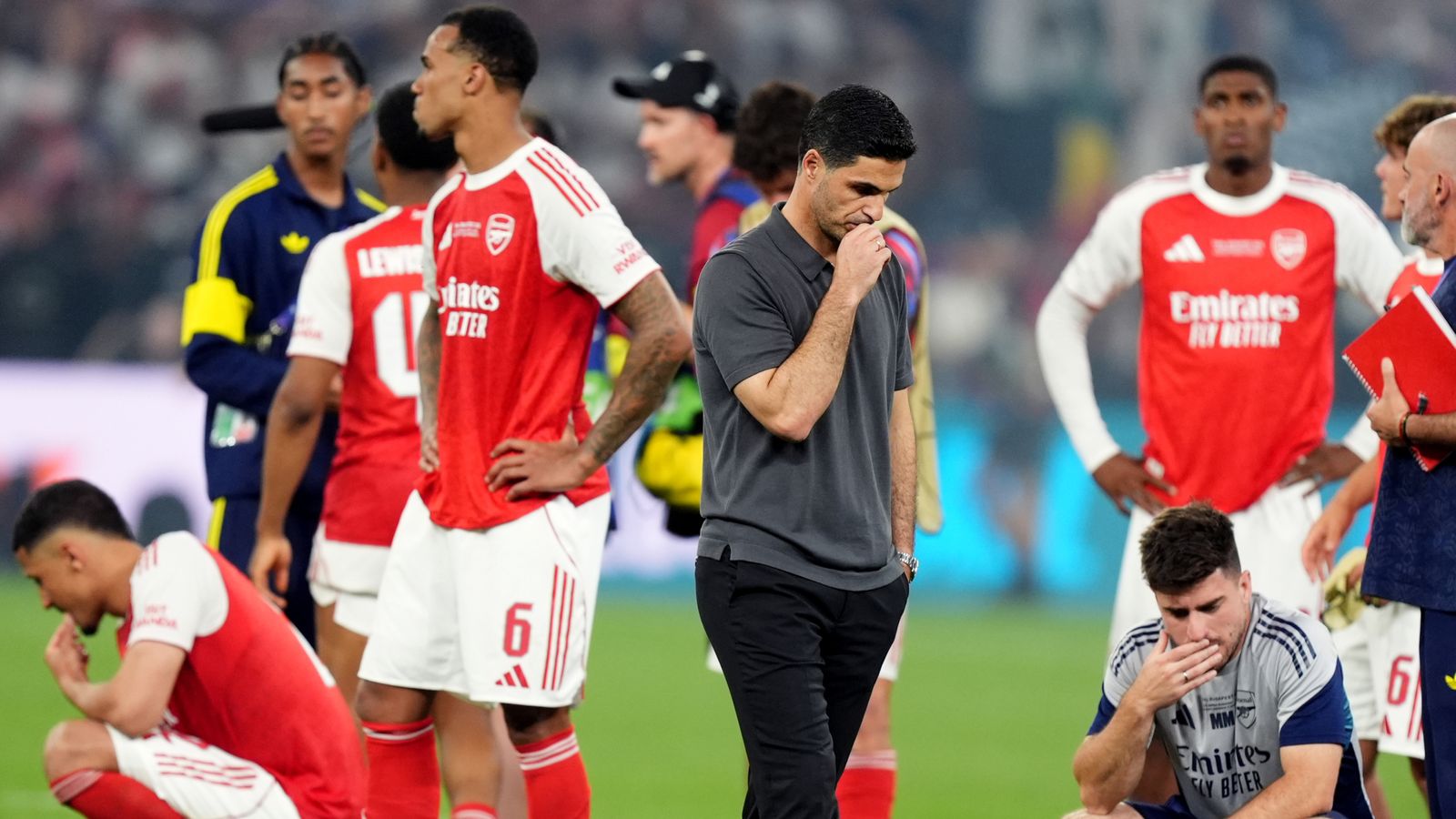
Losing the Champions League final is supposed to be the foundational trauma for a squad that eventually learns to win. Arsenal fans have been told this story before, but the 1-0 defeat to PSG in Budapest felt less like a stepping stone and more like a tactical ceiling. Arteta set the team up to stifle PSG’s transition game, and by the numbers, it worked for sixty minutes.
Arsenal restricted the French champions to an expected goals total of just 0.74, a defensive performance that should have been enough to secure a result. However, the lack of a clinical edge in the final third turned that discipline into a liability. Saka and Martinelli combined for only two shots on target, failing to exploit the space left by PSG’s aggressive high line. As Sky Sports observed, the pattern of play became dangerously predictable as the match wore on.
The creative stagnation
The issue wasn't the press; it was the progression. Statistics show that Odegaard was forced into deeper pockets to recycle possession, recording a 92% pass completion rate but failing to find the critical through-ball that defines Champions League winners. In the second half, the distance between the midfield pivot and the front three grew exponentially.
Arteta’s decision to keep his substitutions until the 78th minute was a coaching error of the highest order. By the time fresh legs entered the pitch, the rhythm was already dictated by PSG’s veteran midfield. Waiting for the game to come to you against a side with Luis Enrique's pedigree is a recipe for heartbreak, and that is exactly what played out.
The World Cup shadow
With the 2026 World Cup kickoff just eleven days away on June 11, the mental hangover from this loss will be heavy for the international contingent. Seven of Arsenal's starting eleven are heading to camps this week. Psychological recovery is notoriously difficult when the season’s primary objective has just evaporated in the Hungarian heat.
Expect to see this Arsenal drop off early in the opening weeks of the next campaign. The lack of a high-volume striker meant they were relying on collective output all year, and when the collective hits a wall, there is no individual magic to bail them out. You look at their shot maps from the 2025/26 season, and you see an over-reliance on wide overloads that defenders have now mapped out.
Arteta has built a functioning engine, but the chassis is missing a center-forward who can score from half-chances. If they don't find a legitimate goal-scorer by August, they are destined to plateau at the quarterfinals or semifinals stage in Europe again. The tactical rigidity that served them well during the league campaign became a straightjacket when faced with a one-off high-stakes match.
The verdict
My prediction for the near future is a sharp regression in the league win rate for Arsenal during the post-World Cup period. The tactical blueprint is exposed, and the squad is clearly suffering from a lack of dynamism in the final third. Losing in Budapest wasn't a freak accident against the run of play; it was the inevitable result of an offense that lacks the verticality to punish elite defensive transitions. They are the best-drilled team in England, but the best-drilled team rarely wins the biggest trophy without a secondary gear. Arsenal are stuck in first gear.
Read Next
- Arsenal's trophy parade is the most chaotic consolation prize in football
- Arsenal fans are still losing their minds over Arteta's penalty order
- Arsenal face a post-final identity check after Champions League heartbreak
- Arsenal's Champions League dream dies in Munich penalty shootout
- ⭐ UCL 2026 — Champions League Quarter-Finals Hub