The Quiet Absence of the Emirates Talisman
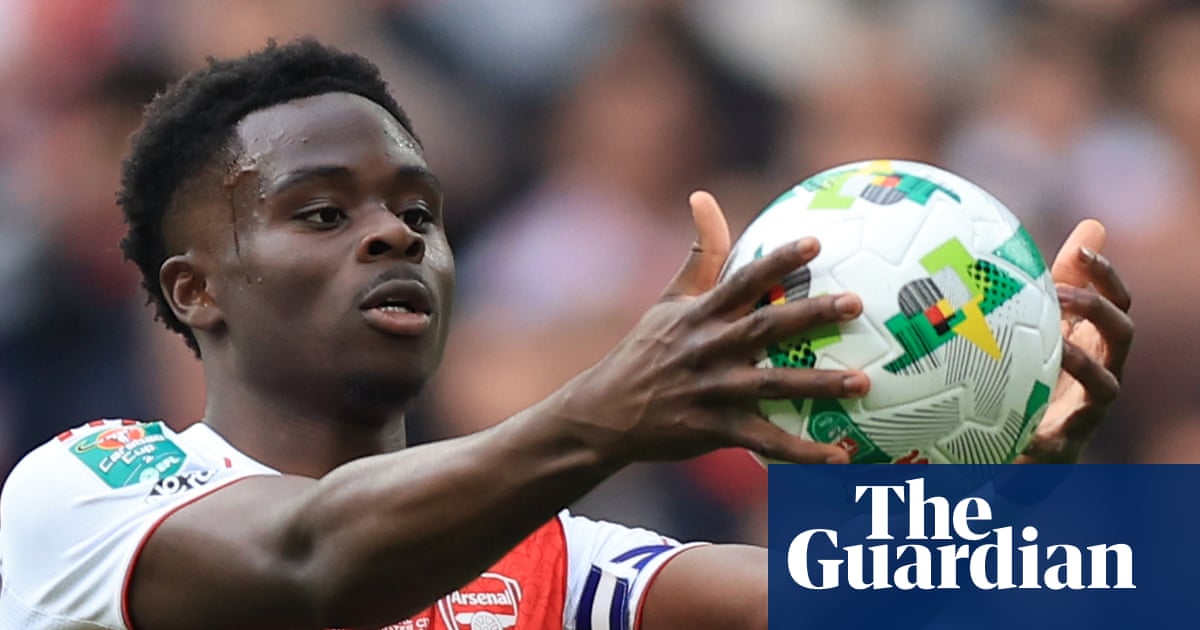
The Emirates Stadium is currently defined by a void on the right flank that no one seems willing to explain in full. Bukayo Saka has not been involved for the Gunners in recent weeks, leaving a gaping hole in Mikel Arteta’s tactical setup at the most volatile point of the season. On April 17, with the Champions League semi-finals just 11 days away, the silence from the Arsenal medical department is becoming deafening. This isn't just a minor knock; it is a full-blown fitness crisis for a player who has historically been the first name on the team sheet.
Arsenal are currently navigating the sharpest part of the 2025/26 campaign, yet their most dangerous individual weapon is currently a spectator. While the club has remained characteristically tight-lipped about the specific nature of the setback, the timeline suggests a significant muscular issue or a chronic fatigue response. The winger has been the victim of his own durability for years, and the bill for those high-intensity minutes appears to have finally arrived in the mail. Without his vertical threat, the Arsenal attack looks strangely symmetrical and far easier to defend.
The timing could not be more catastrophic for Mikel Arteta. As FourFourTwo reported, the end-of-season rumors regarding Saka’s fitness have reached a fever pitch. There is a sense of deja vu hanging over London Colney, reminiscent of previous seasons where Saka was asked to play through the pain barrier until his output inevitably dipped. This time, however, the player hasn't even made the bench, suggesting the risk of a long-term rupture is too high to ignore.
The Physical Cost of Being Indispensable
To understand why Saka’s body might be breaking down now, you have to look at the odometer. Since the start of the 2022 season, Saka has shouldered a workload that would break most elite athletes. He doesn't just play minutes; he plays high-leverage, high-contact minutes. He is the most-fouled player in the Arsenal squad by a significant margin, often subjected to systematic rotational fouling by opposition left-backs who know the only way to stop him is to kick him.
This absence is a direct consequence of a management style that prioritizes short-term results over long-term physical preservation. Arteta has famously been reluctant to rotate his core group, often leaving Saka on the pitch for the full 90 minutes even when games were effectively over by the hour mark. We are now seeing the fallout of that stubbornness. The medical staff at Arsenal are reportedly focusing on a specialized recovery program, but you cannot fast-track the healing of a muscle that has been pushed to its absolute limit for three seasons straight.
Historically, Arsenal have struggled when their primary creator is sidelined. During the 2023 title run-in, a drop in Saka’s physical metrics coincided with the team’s general collapse. By April 2026, the stakes are even higher. The Gunners are no longer just happy to be in the conversation; they are expected to win the biggest prizes. If Saka cannot return for the first leg of the UCL semi-final on April 28, the tactical burden on the rest of the squad will be immense.
The Tactical Void and the Rise of Rice
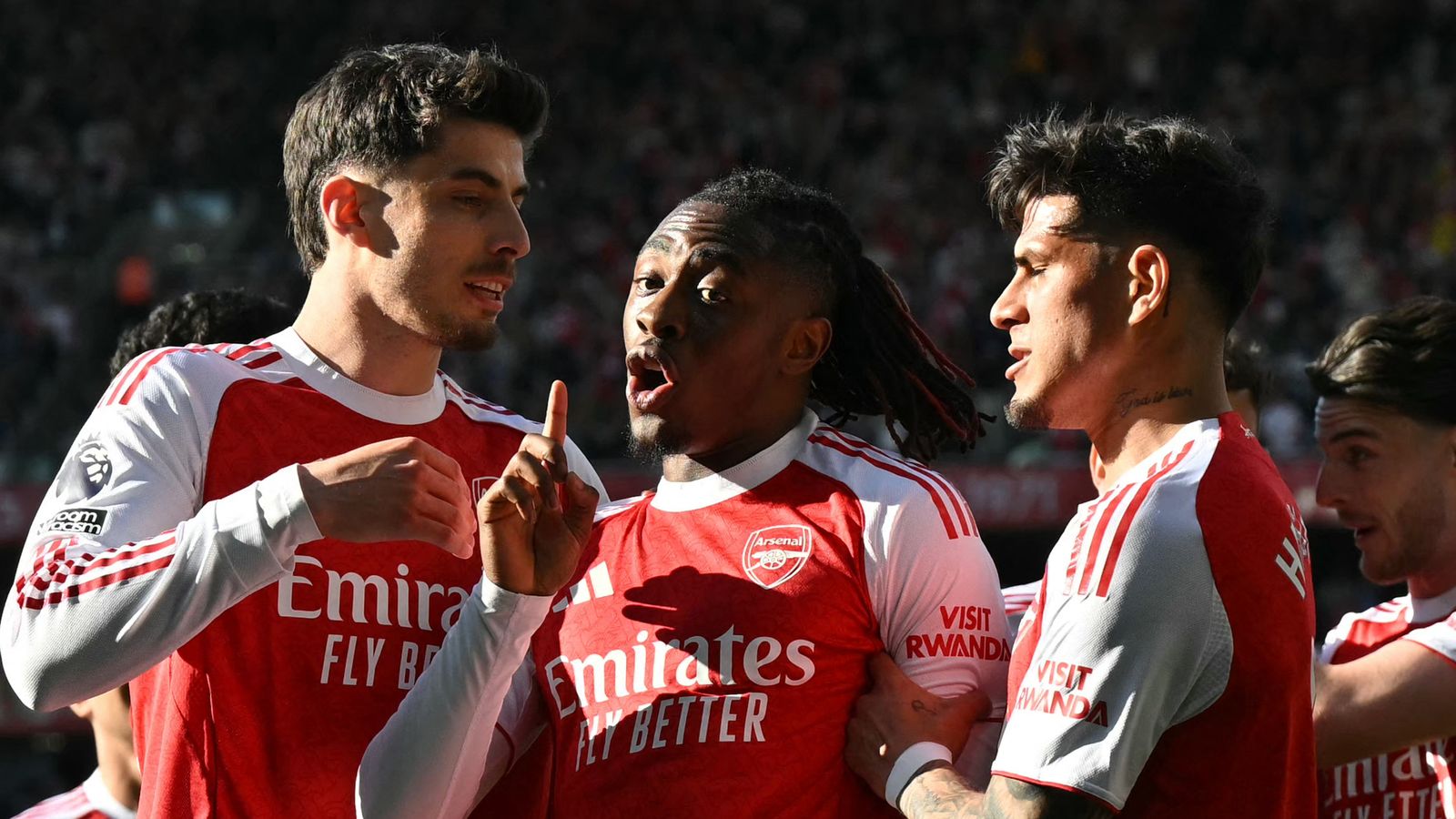
In the absence of their star winger, the leadership dynamics of the squad have shifted toward the center of the pitch. Declan Rice has been the vocal anchor for this team, and his recent comments suggest a squad that is trying to maintain its bravado despite the injury cloud. As Sky Sports reported, Rice has insisted that the Gunners don't fear anyone in the Champions League. It is the kind of quote you expect from a captain, and indeed, many are asking if Rice should now be the permanent Gunners captain.
But leadership cannot replace the 15 goals and 12 assists that Saka typically provides. Without him, Arsenal’s right side becomes a revolving door of deputies like Gabriel Jesus or Leandro Trossard, neither of whom offer the same natural width or one-on-one dominance. The opposition can now shift their defensive block four yards to the left, squeezing the space for Gabriel Martinelli and forcing Arsenal into a sluggish, U-shaped passing pattern that lacks a cutting edge.
The strategic implications are massive. If Saka is out, Arsenal lose their 'out ball' under pressure. When the high press comes, the standard move has always been to clip a ball toward Saka and let him turn his man. Without that escape valve, the Gunners look more vulnerable to the kind of transition-based football that European powerhouses excel at. The psychological blow of losing your best player just before a semi-final cannot be overstated, regardless of how much Rice tries to talk up their fearlessness.
A Critical Failure in Squad Depth
The most biting criticism of the current situation is that it was entirely predictable. Arsenal spent heavily in the summer windows of 2024 and 2025, yet they failed to recruit a genuine top-tier alternative to Saka. They have a squad full of versatile attackers, but no one who specializes in that right-wing role with the same level of proficiency. This lack of a specialized backup has forced Saka to play through minor knocks that have now clearly snowballed into a major injury.
Arteta’s refusal to trust his fringe players in lower-stakes matches has come back to haunt him. When you treat every game like a cup final, you eventually run out of players who can actually play in a final. The medical team is now in a race against time to get Saka fit for the 800 minutes of football that will define the club's season. If they rush him back and he suffers a recurrence, his involvement in the World Cup this summer could also be in jeopardy, creating a friction point between club and country.
Expect a late fitness test ahead of this weekend, but the whispers coming out of the training ground suggest he is nowhere near ready for 90 minutes. At best, he might be a 'break glass in case of emergency' substitute. At worst, he is done for the season. For a club that has spent hundreds of millions to reach this level, being undone by a lack of rotation for a single player feels like an amateur mistake. Rice and the rest of the squad can talk about not fearing their opponents, but the reality is they should be very worried about their own starting lineup.
The next 11 days will determine if this season is remembered as a triumph or another case of 'what if' for the red half of North London. Similar situations in the past, like the loss of William Saliba in the 2022/23 season, proved that this team lacks the structural integrity to survive the loss of a foundational piece. Bukayo Saka is more than just a player; he is the system. And right now, the system is offline.
Read Next
- Jamie Carragher isn't buying the Arsenal hype despite European progress
- Bukayo Saka is building an empire while Arsenal's legs are starting to go
- Arsenal are the last hope of a failing English contingent in Europe
- Top 10: The Manchester Power Shift and the Etihad Decider
- 🏴 England World Cup 2026 — Three Lions Hub
- ⭐ UCL 2026 — Champions League Quarter-Finals Hub