The Price of Progress in Lisbon
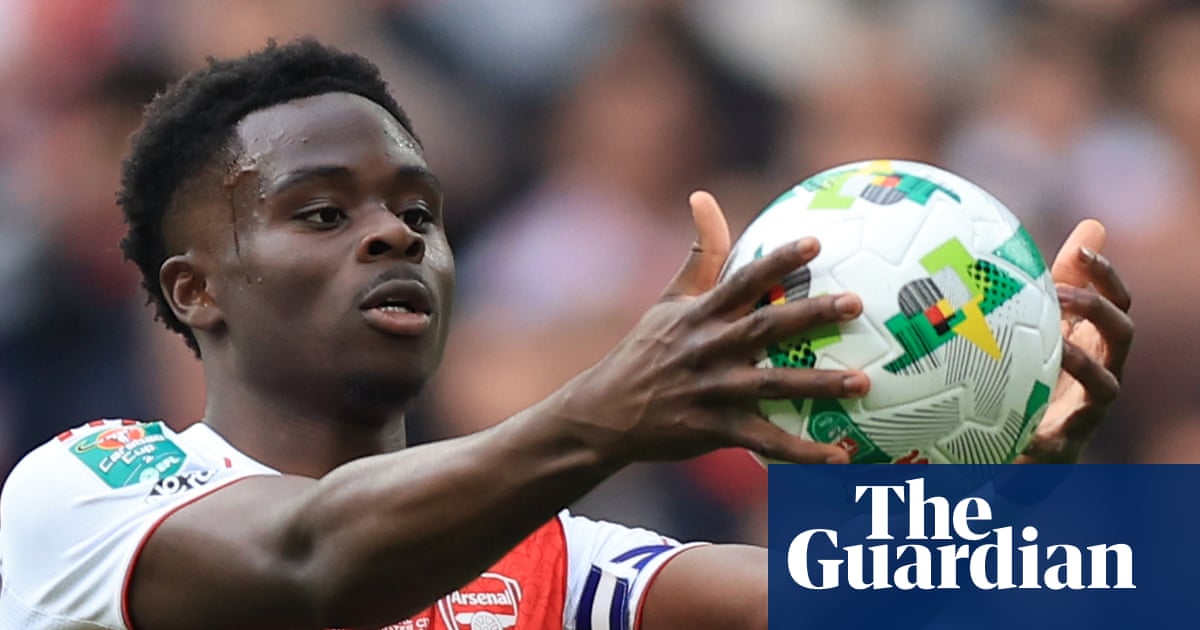
Arsenal secured a vital 2-1 victory over Sporting CP at the Estadio Jose Alvalade last night, but the flight back to London was anything but celebratory. While the scoreline puts Mikel Arteta's side in the driver’s seat for the return leg on April 15, the sight of Bukayo Saka clutching his left calf in the 84th minute has sent shockwaves through the Emirates.
Early reports from the medical team in Lisbon suggest a Grade 1 calf strain. This is not the first time Saka has been red-lined this season, but the timing is catastrophic. With a Premier League title race in its final turn and a Champions League quarter-final to finish, losing the heartbeat of the attack is the exact variable that invites the collapse onlookers have been predicting for weeks.
The winger was seen limping heavily through the mixed zone after the match, bypassing reporters with a protective boot already applied to the limb. Arsenal’s medical staff will conduct a high-resolution MRI later today at London Colney, but the internal expectation is a minimum of ten to fourteen days on the sidelines. That timeline effectively rules him out of the second leg and two critical domestic fixtures.
A History of April Attrition
Arsenal fans are suffering from a collective sense of deja vu. In 2023, it was William Saliba’s back injury that derailed a title charge. In 2024, a late-season stumble followed a grueling European schedule. This 2026 iteration of the squad was supposed to be deeper, more resilient, and better equipped to handle the physical demands of the spring calendar.
Instead, the club finds itself at a familiar crossroads. The data shows that Saka has played ninety-four percent of available minutes since January. It is a workload that defies modern sports science standards for a player in a high-intensity position. Arteta’s refusal to rotate his talisman, even in games that seemed controlled, is now under the microscope of every fitness expert in the industry.
The Tactical Void
Replacing Saka is a mathematical impossibility for this system. Gabriel Martinelli can shift to the right, but the chemistry between Saka and Ben White is a mechanism that took three years to perfect. Without that overlapping threat, Arsenal become predictable. Leandro Trossard is a clinical finisher, but he lacks the gravitational pull that Saka exerts on opposing fullbacks, often drawing two or three defenders to open space for Martin Odegaard.
Sporting CP manager Ruben Amorim noted the shift in the game's final minutes. Once Saka exited, the Portuguese side pushed their line five yards higher. They no longer feared the counter-punch. If this tactical shift carries over to the second leg at the Emirates, a one-goal lead might feel incredibly thin against a striker as lethal as Viktor Gyokeres.
The Critical Failure in Load Management
There is a harsh reality that Arsenal’s coaching staff must confront: this injury was preventable. High-performance data-tracking companies have long warned about the 'red zone' of cumulative fatigue. By the time Saka went down in Lisbon, he was deep in that territory. The choice to keep him on the pitch while leading 2-1 in the first leg was a gamble that prioritized immediate security over long-term health.
It is a recurring flaw in the Arteta era. The Spaniard manages every game like it’s a cup final, which is great for building a winning culture but disastrous for muscular longevity. When you compare this to the rotation patterns at Manchester City or Real Madrid, the disparity is jarring. Those clubs treat their stars like high-performance engines that need scheduled maintenance; Arsenal treats Saka like a battery they can just keep recharging until it finally leaks.
Industry Impact and Market Ripple
The fallout extends beyond the Emirates. England manager Gareth Southgate is reportedly monitoring the situation with immense frustration. With major summer commitments looming, the prospect of the nation’s best winger entering another tournament on the back of a soft-tissue injury is a nightmare scenario for the FA. The financial implications are also massive, as early exits from the Champions League represent a forty million pound swing in projected revenue.
Competitors are already smelling blood in the water. Rivals in the Premier League will see this as the definitive crack in the armor. The psychological impact of losing Saka is often greater than the tactical one. He is the player the rest of the team looks to when things get chaotic. Without his presence, the 'wobble' the Mirror reported on earlier this week could easily turn into a freefall.
Analyzing the Recovery Roadmap
Recovery for a Grade 1 calf strain is notoriously tricky because players feel one hundred percent healthy before the muscle fibers have fully knitted back together. If Arsenal rushes him back for the potential semi-final on April 28, they risk a Grade 2 tear that could end his season entirely. The medical team is now in a tug-of-war with the coaching staff over the return-to-play protocol.
Historical data from similar injuries—most notably the one suffered by Kevin De Bruyne in 2025—suggests that a cautious approach is the only way to prevent a recurrence. De Bruyne missed three weeks and returned to finish the season strongly. If Arsenal tries to beat the clock, they are playing a dangerous game with their most valuable asset’s career.
The Verdict on Arsenal's Depth
The next fourteen days will determine the legacy of this squad. If they can navigate the Sporting return and their domestic tests without Saka, it proves they have finally matured. If the wheels come off, the questions about Arteta's over-reliance on a small core of players will become deafening. Real journalism requires pointing out that for all the progress made, the club is still one pulled muscle away from a crisis.
The win in Lisbon was supposed to be the moment the narrative changed. Instead, it has only heightened the tension. The Emirates will be a nervous place on April 15. The Sporting win 'could' change it all, but only if Arsenal finds a way to win without the player who got them there in the first place.
Read Next
- That £70m Saliba Rumor Isn't a Transfer, It's an Insult
- Top 10: The Biggest Transfer Secrets Revealed This Week
- Tonight Is Viktor Gyökeres' Live Arsenal Audition
- Liverpool's injury crisis might actually help Arne Slot in Paris
- 🏴 England World Cup 2026 — Three Lions Hub
- ⭐ UCL 2026 — Champions League Quarter-Finals Hub