The lingering questions after Stratford
The dust has barely settled on a deeply chaotic afternoon in east London, but Mikel Arteta has no time for reflection. Arsenal managed to retain their grip on the Premier League summit with a controversial victory over West Ham. It was the kind of win that champions pull off, yet the underlying metrics from the London Stadium paint a slightly more anxious picture.
Arsenal’s control of the transitions was oddly fragile against the Hammers. For all their dominance in the opposition third, they were repeatedly caught by direct balls into the channels. William Saliba was forced into three desperation recoveries, a highly unusual figure for a center-back who typically operates with a cigar in his mouth. If West Ham had possessed a forward with a fraction more clinical edge, the narrative today would be entirely different.
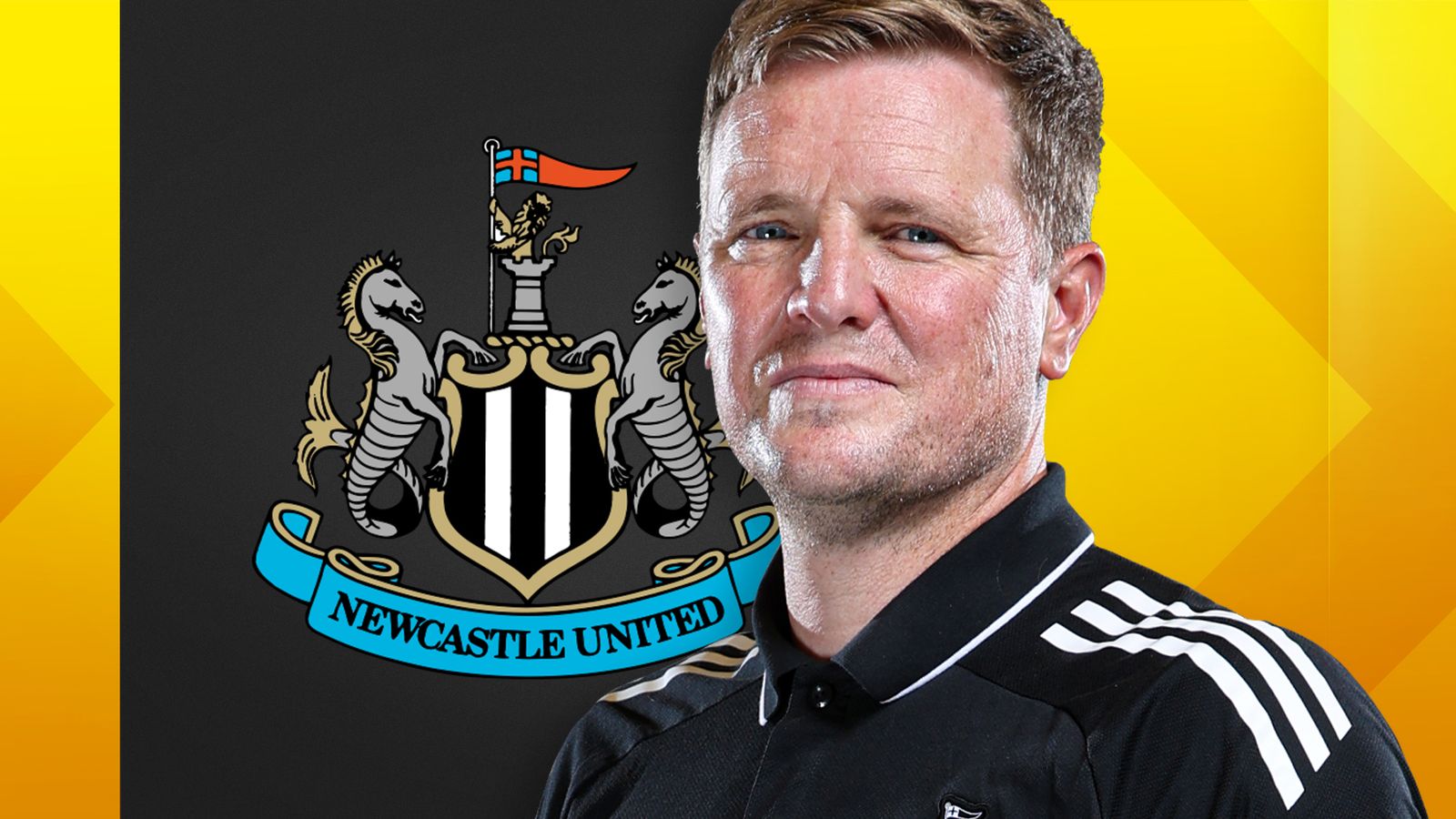
Arteta will know that relying on last-ditch defending is unsustainable. They escaped punishment against West Ham, but Newcastle United will not be so forgiving. Eddie Howe brings his side to the Emirates with a very specific tactical blueprint designed to expose those exact transitional flaws. The Magpies thrive in the chaos that Arsenal desperately want to avoid.
The Gordon dilemma and the left-wing imbalance
Much of the pre-match chatter has been dominated by the persistent updates surrounding Anthony Gordon. As the Mirror reported, Arsenal have received highly encouraging signals regarding the Newcastle winger. The irony of Arsenal facing the Magpies right as this transfer noise reaches a fever pitch is hard to ignore. Arteta’s admiration for the direct, aggressive runner is arguably the worst-kept secret in English football right now.
When you look at Arsenal's attacking heat maps, the desire for Gordon makes complete tactical sense. Everything still flows heavily through Bukayo Saka on the right flank. Martin Odegaard drifts to the right half-space to create overloads. Ben White tirelessly overlaps or underlaps. The left flank, by contrast, often feels like a tactical afterthought. It is heavily reliant on Gabriel Martinelli's isolated sprints or Leandro Trossard's penalty-box poaching.
Arsenal severely lack a relentless, touchline-hugging presence on the left who can drive at defenders for ninety straight minutes. Gordon offers exactly that profile. His off-the-ball work rate and high-intensity pressing metrics are in the 99th percentile across Europe. He operates like an Arteta prototype stuck in a black and white shirt.
Watching Gordon counter-attack against Arsenal’s high defensive line will be the defining tactical battle of this fixture. If he exposes Ben White in one-on-one situations, it will only accelerate the clamor for the Arsenal board to get a deal done this summer. Howe knows this, and he will undoubtedly instruct his midfielders to look for Gordon early and often.
Integrating the youth and shifting the shape
While external solutions are being plotted in the boardroom, Arteta has been handed a very clear directive regarding internal talent. The recent message regarding Myles Lewis-Skelly’s future at the club highlights a rapid developmental arc. For a coach often criticized for an over-reliance on a core group of fourteen senior players, integrating a teenager at this stage of a title run-in represents a significant shift in methodology.
Lewis-Skelly offers something genuinely unique to the current squad profile. When deployed as an inverted full-back, he does not just safely recycle possession backward. He aggressively breaks lines with his ball carrying. During his brief cameos, he has showcased an innate ability to receive the ball on the half-turn while under severe physical pressure from opposing midfielders.
The question is whether Arteta trusts him enough to start against a ferocious high-pressing Newcastle midfield. Bruno Guimaraes and Joelinton are physical monsters who hunt in packs, actively looking to bully inexperienced players. Throwing Lewis-Skelly into that specific cauldron might be viewed as reckless by conservative pundits. Yet, the clamor from the academy staff and sections of the fanbase is growing impossible to ignore. Using him is a genuine risk, but the upside is unlocking Newcastle's mid-block through central dribbling rather than predictable wide combinations.
Cracking the Howe code
Newcastle will not come to north London to play expansive, possession-based football. Howe is utterly pragmatic away from home against the top three. He will set his team up in a rigid 4-5-1 out of possession, ensuring the vertical distance between his defensive and midfield lines is kept to an absolute minimum.
To break this down, Arsenal cannot rely on slow, U-shaped circulation around the perimeter of the penalty area. They need rapid, sweeping switches of play. Declan Rice needs to ping diagonals before the Newcastle block can slide across the pitch. This is where the absence of a prime Thomas Partey is still occasionally felt. Rice is a phenomenal destroyer and a driving force, but his first-time progressive passing against low blocks remains the one area of his game that lacks absolute elite refinement.
This brings me to a core tactical concern for Arsenal. They are entirely reliant on Odegaard for central penetration. If Newcastle instruct Joelinton to strictly man-mark the Norwegian out of the game—a tactic that derailed Arsenal away at Goodison Park in previous seasons against Sean Dyche teams—who steps up to provide the creative spark?
This over-reliance on Odegaard is a structural flaw that Arteta has yet to fully solve. If the captain has a rare off day, or is physically bullied out of his rhythm, the attacking structure often devolves into harmless crosses aimed at a box lacking a traditional, towering target man. Arsenal must find secondary creation zones, or risk bashing their heads against a black and white wall for ninety minutes.
The pressing triggers and the front line
Arsenal’s out-of-possession structure is perhaps the most fascinating element of their evolution this season. Under Arteta, they have essentially perfected the 4-4-2 mid-block press. Kai Havertz and Odegaard initiate the press, but it is the tactical intelligence of the wide players that dictates its success rate.
Saka and Martinelli are heavily instructed to show the opposition full-backs inside. They curve their pressing runs, physically cutting off the passing lanes down the touchline, funneling the ball into the center of the pitch where Rice is waiting to pounce. It is a highly coordinated trap that suffocates inferior teams.
However, against West Ham, we saw a slight deviation. The Hammers bypassed the trap entirely by going long and direct to their striker. Newcastle will likely attempt a similar strategy with Alexander Isak. Isak’s ability to drop deep, drag a center-back out of position, and flick the ball around the corner is elite. He does not need service on the ground to be effective.
If Gabriel follows Isak into the midfield third to contest the header, he vacates a massive pocket of space in behind. That is the exact space Gordon will be attacking at full sprint. Arsenal’s resting defense must be immaculate to survive this. White cannot afford to be caught too high up the pitch when possession changes hands. This is the tactical tightrope Arsenal walk every single week, balancing attacking numbers with defensive security.
The psychological weight of the run-in
Beyond the tactical chalkboard, we must address the intense psychological burden carrying this team right now. Retaining control of the standings after that controversial West Ham game was a massive emotional relief. You could see the tension leaving the players' bodies at the final whistle. But relief is a highly dangerous emotion in elite sports because it can quickly breed complacency.
Every single fixture from here on out is effectively a cup final. The mental fatigue of knowing that a single draw could hand the initiative straight back to their rivals is exhausting. We saw visible signs of cognitive overload in the dying minutes at the London Stadium. Simple passes were slightly misplaced. Decisions in the final third were rushed. Players chose to shoot when a pass was clearly the better option.
Arteta has to act as a psychologist as much as a tactician this week. The recent updates regarding player futures and transfer targets are a reminder that the club is actively building for the long term. But the players currently on the pitch must be consumed entirely by the present. They need to block out the outside noise—the transfer rumors, the refereeing controversies, the extreme pressure of the league table—and focus purely on the immediate ninety minutes ahead of them.
The final third and the prediction
The margins for error are effectively zero. The scrappy win at West Ham kept Arsenal in the driver's seat, but it simultaneously masked structural issues that elite opposition will happily exploit. Newcastle have the raw pace in transition and the aggression in midfield to make this a thoroughly miserable afternoon for the league leaders.
Arsenal absolutely need an early goal to force Newcastle out of their defensive shell. If the match remains goalless by the 60th minute, the atmosphere inside the Emirates Stadium will turn noticeably anxious. Arteta will likely turn to his bench, and we might see Lewis-Skelly introduced to provide a totally different angle of attack through the middle.
I expect Arsenal to dominate the ball, easily racking up north of 65 percent possession. But possession without penetration is just cardio. They must be utterly ruthless when the ball reaches the half-spaces.
Newcastle will undoubtedly have their moments on the break. Gordon will inevitably find himself with green grass ahead of him at least twice during the match. It will require Saliba and Gabriel to be flawless in their one-on-one defending to prevent a catastrophe.
Ultimately, Arsenal's sheer willpower and the deafening noise of a home crowd desperate for a title should push them over the line. But it will not be pretty football. It will be a gritty, bruising encounter decided by a single lapse in concentration from the visitors.
Arsenal to win 1-0. A scrappy set-piece goal from Gabriel Magalhaes in the second half. It will not silence the critics of their attacking fluidity, but at this stage of the season, only the points matter.
Read Next
- Arsenal's title hopes hang by a thread ahead of St James' Park showdown
- Arsenal are sprinting toward a historic double but the cracks are starting to show
- Spurs hit peak Spurs while Arsenal ride VAR luck to a title
- Arsenal face a difficult reality check after the Beth Mead announcement
- ⭐ UCL 2026 — Champions League Quarter-Finals Hub