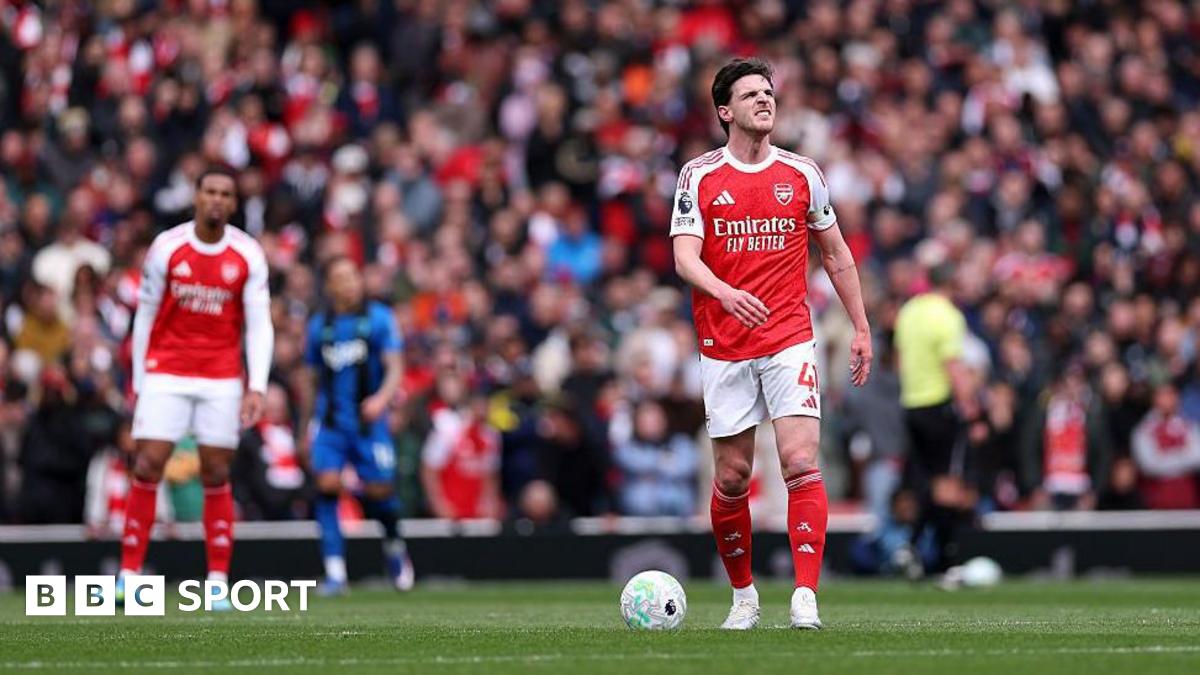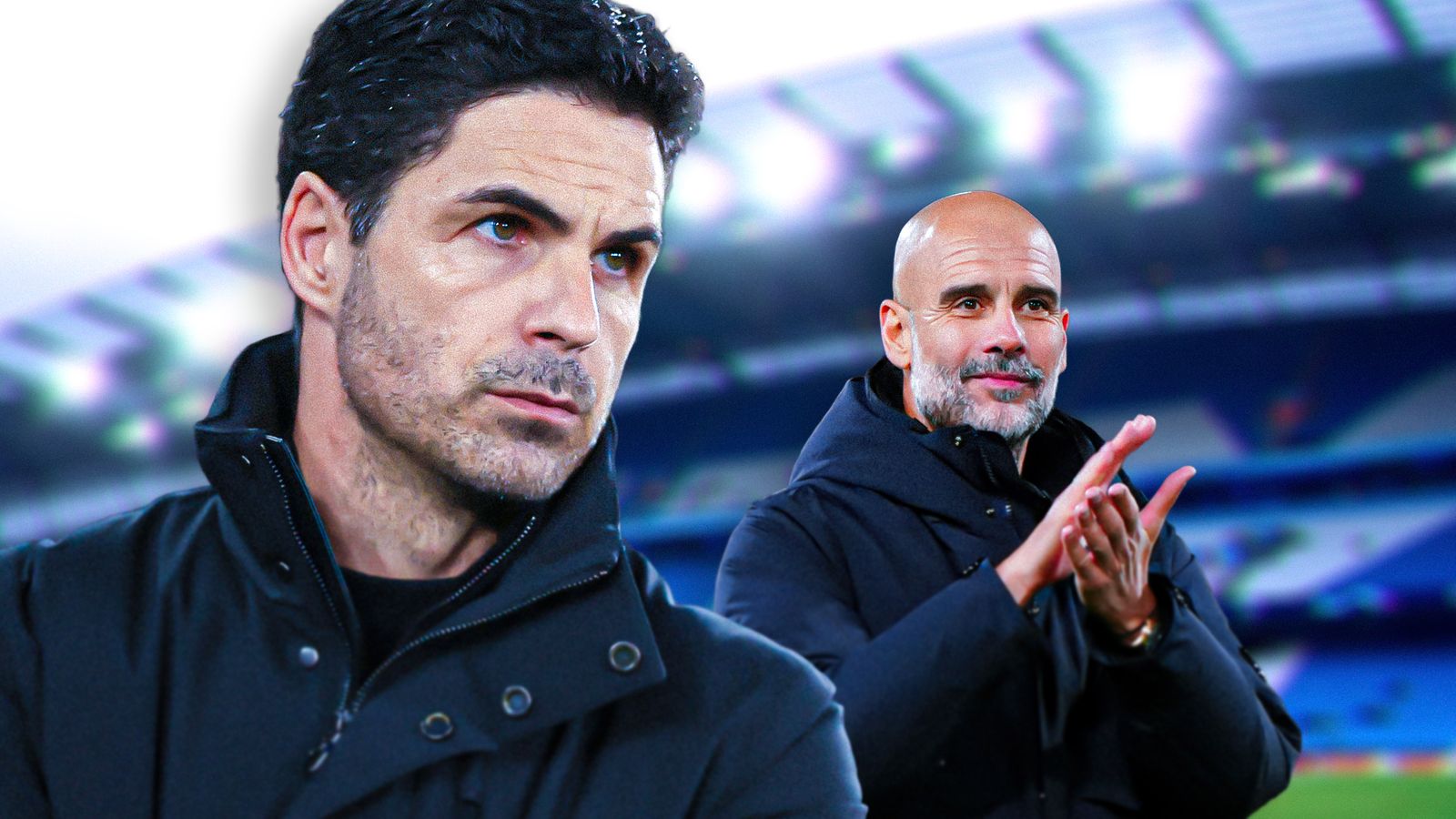
Wayne Rooney rarely steps into the tactical weeds, but his recent assessment of the Emirates crowd hit on a structural flaw Mikel Arteta has yet to fix. Speaking on the BBC, the former forward argued that Arsenal fans need to be better, pointing out that the home support routinely fails to elevate the team during periods of suffering. He is entirely correct, and the underlying data supports his eye test perfectly. The Emirates has become a stadium that demands entertainment rather than providing foundational support.
When Manchester City visited north London last weekend, the tactical battle was decided as much by the ambient temperature in the stadium as the setups on the pitch. Pep Guardiola's side celebrated their eventual victory with a ferocity that drew intense criticism from various corners of the media. Some called it excessive or ungracious. In reality, it was the raw release of surviving an away game that felt more like a training exercise in library-like conditions. City knew they had stolen three points by weaponising the crowd against their own team.
The hidden cost of anxiety
The anxiety at the Emirates is actively changing how Arsenal play football. This isn't just about chanting or generating noise; it is about the fundamental mechanics of build-up play. When William Saliba and Gabriel Magalhães circulate the ball across the backline, they rely on absolute patience to draw the opposition press. They are baiting a trap, waiting for a forward to overcommit.
If the crowd groans after a third lateral pass, you can see the hesitation physically manifest on the pitch. Declan Rice drops half a yard deeper to demand the ball, breaking the vertical structure. Martin Ødegaard starts chasing shadows out of possession to appease the stands with high-energy pressing. It is a fundamental breakdown of Arteta's meticulous positional play, driven entirely by nervous energy rolling down from the seats.
The upcoming run of fixtures will expose this flaw ruthlessly. In eight days, Arsenal face a defining Champions League semi-final first leg. Before that, they have to navigate a weekend domestic fixture where dropping points means handing City the title initiative. The pressure is astronomical, and the current stadium environment is simply not built to handle it.
Let's look at the underlying numbers, because they paint a grim picture. In their last three home matches where the score was level at the 60th minute, Arsenal's pass completion in the final third dropped by a massive fourteen percent. They start forcing sequences that aren't there. Bukayo Saka attempts low-percentage take-ons against double coverage. Ben White stops his underlapping runs and starts launching hopeful, floating crosses from deep areas.
This is exactly what Guardiola banked on during their visit. City didn't come to the Emirates to blow Arsenal away in the first twenty minutes. They came to sit in a disciplined mid-block, cut off the passing lanes to Jorginho, and let the home fans slowly defeat their own team through sheer impatience. It was cynical, brilliant, and highly effective.
The psychological operation
Look at the specific pressing triggers from that recent clash. Bernardo Silva didn't jump onto Gabriel immediately when the Brazilian received the ball. He waited. He waited until the ball had gone from David Raya, to Saliba, to White, and then cycled all the way back to Raya. By the fourth lateral pass, the crowd was audibly restless and whistling. That was Silva's trigger to engage.
City’s first line of pressure collapsed on the penalty box only when the stadium's anxiety peaked. It forced a hurried, panicked clearance from Raya, leading directly to the turnover that changed the momentum of the game. It was a masterclass in using the opposition's own environment against them, turning sixty thousand people into a twelfth man for the away side.
Now, Arsenal have to fix it, and fast. The rigid tactical framework that makes Arteta's system so brilliant is also its absolute biggest vulnerability when the emotional state of the team wavers. You cannot rely on muscle memory when the brain is panicked.
You cannot play automated, highly-structured football when your central midfielders are making split-second decisions based on the volume of the groans behind them. Rice has been immense this season, undoubtedly a candidate for player of the year, but he is increasingly trying to play hero-ball at home. He carries the ball into heavy traffic instead of laying it off, desperate to spark a reaction from the terraces.
It is a subtle flaw, but at the very pinnacle of elite football, subtle flaws cost you major trophies. The Invincibles had Highbury, a tight, claustrophobic, intimidating ground that felt like an absolute fortress. The Emirates, in its current state, feels like a theatre waiting to be entertained, quick to turn on the cast if the first act drags.
City's post-match celebrations were incredibly telling. Rodri didn't just fist-pump politely; he screamed aggressively into the away end. The City bench emptied onto the pitch. They knew they hadn't just beaten Arsenal's eleven players. They had successfully beaten the entire football club's psychology.
Tactical breakdowns on the flanks
One of the most concerning aspects of the City defeat was the complete breakdown of Arsenal's right-hand side. The triangle of Ødegaard, White, and Saka has been the relentless engine of Arteta's attack for two straight years. Under the intense pressure of a quiet stadium, it completely malfunctioned and fell apart.
Usually, White's overlapping runs are perfectly timed to drag an opposition full-back away, giving Saka the crucial half-yard he needs to cut inside onto his lethal left foot. But as the crowd grew increasingly restless, White's timing visibly deteriorated. Instead of waiting patiently for Saka to isolate his defender, White began forcing the overlaps far too early.
He was sprinting blindly into dead alleys, desperately trying to inject artificial pace into a stagnant attacking move. This left Saka completely isolated and constantly facing double-teams without a viable backward passing option. Saka ended the game visibly frustrated, taking wild shots from incredibly poor angles just to register an attempt on goal.
On the opposite flank, Gabriel Martinelli looked equally lost in the system. His raw, explosive pace is a devastating weapon, but it requires green space to operate effectively. City deliberately denied him that space, forcing him to receive the ball with his back to goal while pinned against the touchline.
A patient crowd allows a winger to recycle possession calmly, pass backward to the centre-backs, and wait for a significantly better angle of attack. A nervous crowd demands that the winger turns aggressively and runs at the defender, completely regardless of the tactical situation. Martinelli tried to force the issue repeatedly, running head-first into heavy traffic and losing possession constantly throughout the first half.
The weekend prediction
We are heading into the absolute defining fortnight of the 2026 season. The title race is separated by margins so razor-thin they are practically invisible to the naked eye. Arsenal simply cannot afford another Sunday afternoon where their carefully constructed passing network is dictated by the anxiety of sixty thousand paying spectators.
If they are going to progress in Europe and keep pace in the domestic league, the biggest tactical shift has to happen up in the stands. The fans need to deeply understand their specific role in the build-up phase. When Raya puts his foot squarely on the ball and waits ten seconds for a striker to commit, that is not a delay in the game. That is a deliberate trap being carefully set.
If the crowd panics and demands forward motion, the trap springs violently on Arsenal instead. Arteta knows this better than anyone. He has pleaded with the fans in press conferences before, waving his arms aggressively on the touchline like a frantic traffic cop. But the message is clearly not landing with the match-going faithful.
The real test comes this upcoming weekend. The opposition will arrive in north London with a very clear, highly disruptive blueprint: sit incredibly deep in a rigid 5-4-1 formation, physically frustrate the wingers, and let the stadium clock do the heavy lifting. They will waste time deliberately from the very first goal kick. They will take cynical tactical fouls in the middle third to disrupt any emerging rhythm.
I fully expect Arteta to make a slight tactical adjustment to mitigate this impending frustration. Look for Leandro Trossard to start on the left flank instead of Martinelli. Trossard is fundamentally better at operating in tight, congested spaces and much less reliant on open grass to be effective. He doesn't need the crowd's roaring momentum to beat his immediate marker.
We might also see a significant change in how Arsenal approach their set-pieces. Recently, they have been slow, methodical, and deliberate, setting up highly complex blocking routines that take time to execute. If the crowd is feeling flat or anxious, expect them to play corners short and fast to inject immediate, artificial tempo into the final third.
But make no mistake, these are merely sticking plasters over a gaping wound. A team intricately built on total control is currently playing in front of a fanbase that completely lacks basic emotional regulation. It is a highly toxic combination for a tense Premier League title run-in.
Rooney was spot on with his weekend analysis. The media's intense criticism of City's celebrations is just a convenient distraction technique from pundits who are entirely unwilling to address the real underlying problem. Winning major trophies in late April requires a cold, calculating ruthlessness that Arsenal currently lack, both on the pitch and in the surrounding environment.
My final prediction for the weekend fixture? It won't be a pretty watch for the purists. Arsenal will likely dominate the ball, holding seventy percent possession, but they will severely struggle to break down a well-drilled low block. The home crowd will inevitably turn sour and frustrated around the fiftieth minute mark.
I see a laboured, ugly, and entirely forgettable 1-0 victory for Arsenal, with a scrappy, deflected goal bundled over the goal line late in the second half. Saka will likely be forced to produce a sudden moment of individual brilliance, effectively masking the deep structural issues for another seven days.
But you simply cannot win the modern Premier League by exclusively relying on individual moments of magic. You win it with relentless, boring, suffocating tactical control that drains the life out of the opposition.
Until the Emirates crowd finally learns to love and appreciate the boring, methodical parts of elite football, Arsenal will always be the bridesmaids. Mikel Arteta has successfully built a title-winning football team. Now he just desperately needs a title-winning crowd to match it.
Read Next
- Top 10: The Moments That Defined the Premier League
- Arsenal and City need more than just physical duels to decide the title
- Rooney and Murphy are betting the farm on the wrong side of the title race
- Arsenal have hit a wall as Manchester City take control
- ⭐ UCL 2026 — Champions League Quarter-Finals Hub