Wayne Rooney is right: Arsenal's fans are killing their title bid
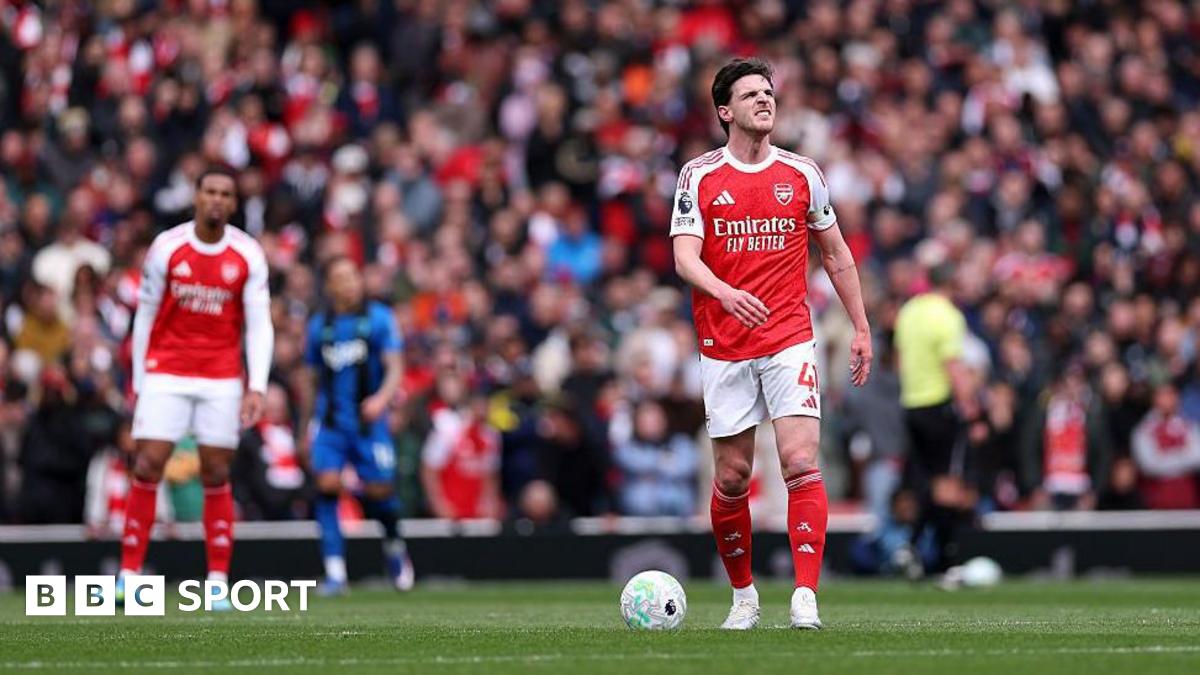
Wayne Rooney dropped a tactical grenade into the Emirates discourse this week. Speaking to the BBC, the former Manchester United captain pointed the finger not at Mikel Arteta’s tactical tweaks, nor at Bukayo Saka’s heavy workload, but directly at the stands. Arsenal fans, Rooney argued, "need to be better" if they want to drag their team through a faltering Premier League title bid.
It is incredibly easy to dismiss a United legend taking a swipe at the North London faithful. Rivalry breeds contempt, and Rooney was the ultimate antagonist for Arsene Wenger's Arsenal. But he is tapping into a very real, very persistent anxiety that has infected N5 as the 2025/26 season enters its defining stretch. As of late April, the swagger that defined Arsenal’s autumn has been replaced by a grinding, nervous energy. The noise in the stadium has changed. And it is entirely reciprocal between the pitch and the terraces.
The Anatomy of a Groan
Arteta’s system is built on absolute control. It requires a borderline obsessive commitment to positional play, circulating the ball until the defensive structure of the opposition shifts half a yard out of place. That requires extreme patience. When you are chasing a title in late April, with the finish line in sight but slipping away, patience is the first thing to evaporate from a football crowd.
We need to talk about the tactical cost of a restless stadium. Football is played on grass, but it is dictated by rhythm and emotion. When William Saliba puts his foot on the ball inside the center circle and opts for a lateral pass to Gabriel Magalhães instead of forcing a risky ball through the lines, the collective groan from sixty thousand people is audible. You can see the physical reaction on the pitch immediately.
Young players, in particular, start second-guessing the system. They rush the phase of play. A forced pass from Declan Rice into a heavily marked Martin Ødegaard leads to a turnover in the middle third. Suddenly, a team built on suffocating possession is playing a frantic, basketball-style transition game they simply aren't equipped for.
Oleksandr Zinchenko has become the primary lightning rod for this exact type of crowd frustration. His role as an inverted full-back dictates that he slows the game down, putting his foot on the ball to attract pressure before releasing it. In 2023, the Emirates applauded this bravery. In April 2026, every time Zinchenko pauses in possession, you can hear seats flipping up and sharp intakes of breath. The crowd wants verticality. The system demands horizontal manipulation. The clash between these two desires is tearing Arsenal’s build-up play apart.
The Low Block Paralysis
Take the recent fixtures against bottom-half opposition as the prime example. Opposing managers have completely figured out the emotional fragility of the Emirates right now. If you sit in a deep mid-block, deny space to Saka on the right touchline, and dare Arsenal to beat you with quick combinations through the center, they often run out of ideas. The crowd is restless because the football has become stubbornly repetitive.
Against deep-sitting opponents, Arsenal’s attacking patterns have looked algorithmic rather than instinctive. Gabriel Martinelli, who thrives on chaos and space, looks entirely suffocated against a low block. Kai Havertz has been drifting out of games for long stretches, failing to pin the opposing center-backs or offer a genuine focal point.
The fans are groaning not just because the passes are sideways, but because they have seen this exact movie before. They know that holding 74% possession without central penetration usually ends in a smash-and-grab by the opposition. The anxiety is born of brutal pattern recognition. The supporters are doing the math in their heads, watching the clock tick past the 60-minute mark, calculating dropped points and slipping title hopes.
Old Trafford's Ghost
Rooney knows exactly what a crowd can do for, and to, a title-chasing side. During his peak years under Sir Alex Ferguson, Old Trafford wasn’t necessarily a carnival of noise for 90 minutes; but it was demanding in a way that weaponized the home team.
The famous late winners of that era weren't just a product of superior fitness or tactical adjustments. They were driven by a crowd that expected a goal so fiercely it almost willed the ball over the line. The pressure from the Stretford End was a massive tailwind. It pushed United forward relentlessly. At the Emirates right now, the pressure feels like a weighted vest on the shoulders of the midfield.
There is a historical precedent here that Arsenal fans hate discussing. The "Highbury Library" tag haunted the club for years. The early Emirates era was defined by a toxic, fractious relationship between Wenger’s late-stage squads and the fanbase. Arteta spent his first three years meticulously repairing that bond. He turned the stadium into a fortress. The introduction of the Ashburton Army brought a continental ultras flavor to the Clock End.
But the novelty of challenging for the title has worn off completely. This is 2026. Merely competing is no longer the metric for success. Expectation has firmly replaced hope. And expectation, without the release valve of a recent major trophy, is a suffocating burden to bear. The fans are terrified of failing again, and they are projecting that fear directly onto the pitch.
The Manager's Complicity
But the blame cannot rest entirely on the people paying exorbitant prices for season tickets. Arteta himself is entirely complicit in this anxious feedback loop. His touchline behavior has always been manic, but in recent weeks, it has crossed the line from motivating to maddening.
When the manager is sprinting outside his technical area, waving his arms frantically after a single misplaced pass in the 12th minute, that nervous energy bleeds directly into the stands. The crowd feeds off the manager's visual cues. If Arteta looks panicked, the fans panic. If the fans panic, the players feel it. It is a vicious, inescapable cycle.
More critically, Arsenal’s lack of a genuine Plan B is feeding the unease. When the methodical passing circuits fail to break down a low block, Arteta rarely throws caution to the wind. There is no target man to hit. There is no shift to a chaotic two-striker system. It is just Plan A, executed slightly faster and with vastly more desperation. The fans get nervous because they know that if the current approach isn't working, the manager does not have a tactical wild card up his sleeve. The team becomes entirely predictable, and predictability breeds contempt in the stands.
The Leadership Vacuum
This creeping anxiety exposes a glaring structural flaw in the current Arsenal squad. The lack of an emotional shock absorber on the pitch is destroying their tempo. When the crowd starts turning, a title-winning team needs a player who can step on the ball, win a cynical foul, and reset the mood. They need someone who actively embraces the hostility and channels it.
During Arsenal's best run over the last few years, Granit Xhaka ironically became that player. After years of being the target of the crowd's ire, he evolved into their emotional barometer. When the Emirates got jittery, Xhaka would purposefully slow down a free-kick or smash into a heavy tackle to break the tension. He understood the dark arts of game management, which includes managing your own supporters.
In the current 2026 iteration, that profile is completely missing. Ødegaard is a brilliant technician and a lead-by-example captain, but he is not an enforcer. Rice covers ground effortlessly, but his natural instinct when the crowd groans is to try and force a progressive pass to fix the problem, which often just exacerbates the frantic nature of the game.
Without a designated tempo-setter willing to absorb the crowd's frustration, the anxiety flows unimpeded from the stands straight into the boots of the back four. Saliba and Gabriel are exceptional defenders, but they are being asked to act as playmakers in an environment that currently punishes any hesitation.
Furthermore, the attacking rotation offers no physical respite. When Gabriel Jesus drops deep to link play, he routinely gets bullied off the ball by aggressive center-backs, drawing more groans from a crowd that just wants a striker to stay in the penalty box. Leandro Trossard is a wonderful impact substitute, but his tendency to drift inside only clogs the central areas further against a low block.
The lack of varied profiles means Arsenal have exactly one way of playing. When the crowd decides they don't like that one way, the players have nowhere to hide. Rooney operated in teams featuring Roy Keane, Paul Scholes, and Nemanja Vidic. Those were players who would actively scream at their own fans if they felt the support was lacking. Arsenal's current crop are too polite, too structurally rigid, and perhaps too young to challenge their own stadium.
They are stuck trying to execute a surgical game plan while the operating theater screams at them to hurry up. It is an impossible working environment. Until someone on the pitch takes responsibility for dictating the mood, rather than just reacting to it, Arteta's men will continue to look like a team playing away from home every time they step onto the Emirates turf.
The Contrast at Rival Grounds
You only have to look at Arsenal's direct rivals to see the stark contrast in stadium psychology. When Manchester City are drawing 0-0 at home in the 70th minute, there is a serene, almost arrogant belief inside the Etihad that the goal is coming. The passing doesn't speed up. The players don't force low-percentage passes. They just keep turning the screw until the dam breaks.
At Anfield, a tense draw is met with a wall of noise designed to intimidate the referee and the opposing full-backs. The crowd turns matches into emotional wars of attrition. They drag their players into tackles and scream for every throw-in.
The Emirates, by contrast, turns inward. The silence is punctuated by exasperated sighs. The atmosphere becomes a court of judgment rather than a theater of support. Rooney recognized this instantly because he has played in stadiums all over Europe. He knows the difference between a crowd that is ready to go to war for you, and a crowd that is waiting for you to fail so they can say they told you so.
The Run-In Reality
Looking ahead to the final stretch of the season, Arsenal face a brutal run of fixtures. The margin for error is effectively zero. If they are to stay in the hunt, the Emirates needs to find a way to manufacture belief, even when the football is attritional and frustrating.
Arteta has to find a way to inject verticality back into the side to give the fans something tangible to cheer for. He needs to sacrifice a fraction of his beloved control for a dose of attacking chaos. And the fans, as Rooney so bluntly put it, have to provide a safety net for a team that currently looks terrified of making a mistake.
The Premier League title race won't just be decided by expected goals, pressing triggers, or tactical masterclasses in the final weeks. It will be decided by raw nerve. And right now, both Arsenal the team and Arsenal the fanbase are blinking first. Wayne Rooney saw it from a television studio. Everyone watching the broadcast saw it. The question is whether Mikel Arteta can fix the psychology of his stadium before the math officially eliminates them from the race. Arsenal are fighting a war on two fronts, and right now, they are losing the one in their own stadium.
Read Next
Adidas World Cup 2026 Trionda Training Ball
Bring the spirit of the 2026 World Cup to your local pitch.
More Coverage
Top 10: The Defining Moments of the 2025/26 English Football Season
3 hours ago
Crystal Palace's unlikely European title exposes the modern speed gap
11 hours agoThe World Cup knockout bracket is a total minefield
1 day, 5 hours agoThe World Cup bracket is a house of cards waiting to collapse
1 day, 5 hours agoThe World Cup knockout stage is a tactical disaster waiting to happen
1 day, 5 hours agoBrazil's Path to 2026 Glory Is Riddled With Traps
1 day, 5 hours agoMore Analysis
Arsenal's title hopes rest on the Emirates crowd finally waking up
1 month, 1 week ago
Arsenal are once again caught in their own heads during the run-in
1 month, 2 weeks ago
Rooney and Murphy are betting the farm on the wrong side of the title race
1 month, 1 week ago
Arsenal's title collapse started at the Emirates and won't end until May
1 month, 1 week ago
City's Etihad celebrations might be the biggest mistake of the season
1 month, 1 week ago