The high line of death
You do not just watch Aston Villa play Liverpool at Villa Park. You survive it.
If you want to understand the physical toll of modern tactical stubbornness, skip the coaching manuals. Just look at the faces of the Holte End whenever Liverpool's forwards make a run in behind. It is pure, unfiltered anxiety broadcast live under the floodlights. The tension in the stadium is heavy enough to crack a tooth.
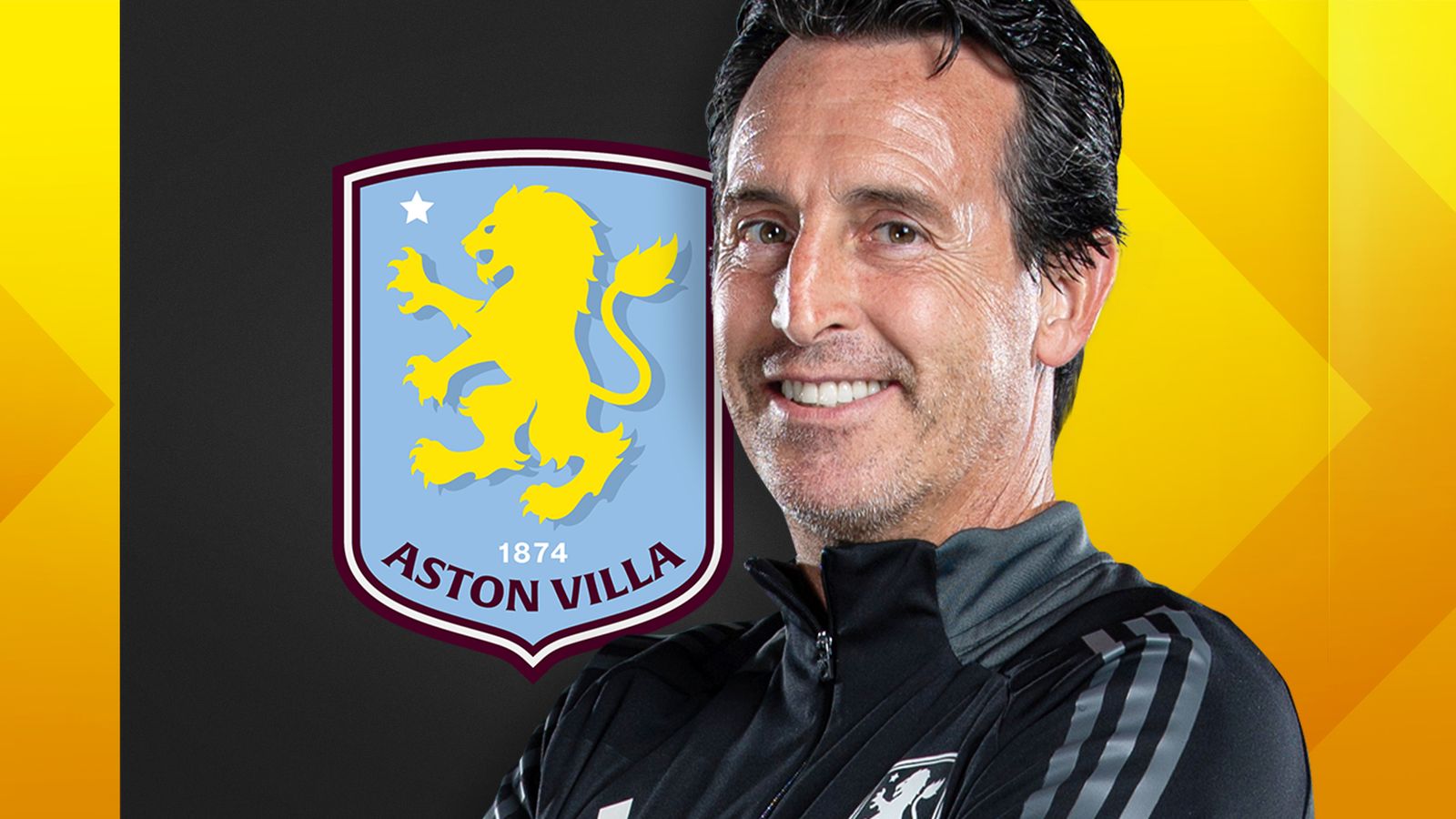
There is a reason Sky Sports circles this fixture the moment the Premier League calendar drops in June. It is guaranteed chaos. Unai Emery has built a formidable machine in the Midlands, completely changing the trajectory of a historic club. But his absolute refusal to drop his defensive line creates a terrifying geometry on the pitch. His central defenders stand confidently on the halfway line. The opposition forwards rev their engines. The assistant referee's offside flag becomes the most heavily scrutinized object in the entire stadium.
Against 80 percent of the Premier League, this offside trap works flawlessly. Teams lack the timing or the passing range to beat it. The trap snaps shut, the flag goes up, and Villa recover the ball. But against Liverpool, it is a completely different proposition. It is like handing a box of matches to a known arsonist and asking them to watch your house.
The broadcaster's dream
The television product is unparalleled. You can practically hear Jamie Carragher losing his mind in the gantry every time a ball is clipped over the top. The post-match analysis practically writes itself.
Sky Sports loves a narrative, and this fixture provides an endless supply. You get the tactical purists arguing about the validity of a defensive line that gives up 40 yards of green grass. You get the old-school pundits furious about the lack of simple, pragmatic defending. It fuels hours of television.
But the real drama is in the live broadcast. The camera angles looking straight across the pitch as three Liverpool attackers start their sprints. The agonizing wait for VAR to draw the lines on a marginal offside call. The eruption of noise when a goal is finally given or ruled out. It is a fixture built for the modern attention span, constantly oscillating between a brilliant defensive stand and a catastrophic error.
The Darwin Nunez experience
You cannot talk about this fixture without talking about the premier chaos agent himself. Darwin Nunez was built in a laboratory specifically to terrorize high defensive lines.
He will mistime his run three times in ten minutes. He will stray offside when he is looking right across the line of the defense. He will blast a shot into the upper tier of the Doug Ellis Stand when he has a simple pass available. But the sheer volume of explosive sprints he makes means the trap eventually breaks. And when it breaks, the transition is terrifyingly fast.
Mohamed Salah has adapted his game perfectly for these moments. He is no longer just a wide forward looking to cut inside and shoot. Salah has become an elite playmaker, dropping into pockets of space and waiting for Nunez or Luis Diaz to make their move. Salah only needs half a second to thread a pass that completely bypasses the entire Aston Villa defense.
Liverpool's midfield knows exactly what the assignment is. They do not need to build slowly through the thirds. They just need to wait for a Villa midfielder to take a heavy touch, win the ball back, and immediately look over the top. The moment the ball is turned over, the race is on. Pau Torres and Diego Carlos end up sprinting toward their own goal, desperately hoping Emiliano Martinez has rushed out far enough to sweep up the danger.
Martinez is a brilliant shot-stopper, but he is forced to play as a sweeper-keeper in a way that exposes him to immense risk. One hesitation, one slip on the wet grass, and Liverpool are rolling the ball into an empty net.
Stubbornness masquerading as genius
Here is the reality that nobody really wants to say out loud: Emery's tactical rigidity in these specific matches borders on arrogance.
Yes, the high line got Aston Villa back into the Champions League. Yes, it revolutionized the club and turned them into a genuine powerhouse. But watching a manager refuse to drop his defense by even five yards when Salah is routinely finding acres of space is baffling. It is a fatal flaw that gets exposed time and time again in high-stakes matches.
You can admire the commitment to a philosophy while simultaneously pointing out that it is incredibly naive game management. Sometimes, the smart move is to protect the 18-yard box and force the opposition to break down a low block. Emery refuses to do this, and it costs his team massive points.
On the flip side, Liverpool are just as guilty of losing the plot. When they take the lead, they rarely kill the game. Instead of putting a foot on the ball and dictating the tempo, they get dragged into the emotional vortex of Villa Park. They start playing a basketball match. You attack, we attack. It is exactly the kind of chaotic game state that allowed Jhon Duran to score two late goals in May 2024 to steal a miraculous 3-3 draw.
Neither team knows how to pump the brakes. Both managers seem content to let the game spiral completely out of control, banking on their attackers to simply outscore the opposition.
The midfield street fight
While the tactical analysts focus entirely on the high line, the actual game is won in the dirt. The middle of the pitch in this fixture is an absolute war zone.
John McGinn plays football like a man trying to protect his wallet in a crowded pub. He uses his body to shield the ball, drawing fouls, frustrating the Liverpool press, and dragging his team up the pitch by sheer force of will. He is the heartbeat of this Aston Villa side, and when he gets going, the crowd responds with a deafening roar.
Next to him, Youri Tielemans provides the velvet glove to McGinn's iron fist. If Liverpool give Tielemans too much time on the ball, he has the vision to completely bypass their press with a single sweeping pass. The dynamic between those two is what makes Villa tick in possession.
Liverpool have to match that physical intensity. Their midfielders cannot just rely on their technical ability. They have to win the second balls. They have to track back when the game breaks open. If they lose the physical battle, Villa simply overrun them and pin them back inside their own half.
This is where the television cameras usually find the most compelling drama. The tight shots of players aggressively arguing with the referee. The cynical tactical fouls that stop a counter-attack dead in its tracks. The yellow cards that pile up before halftime. It is a street fight dressed up as a tactical masterclass.
The pressure of May football
Because these fixtures frequently land late in the season, the stakes are always astronomical. It is not just three points on the line; it is European qualification, title aspirations, and financial futures.
Every single mistake is magnified. A missed interception in November is easily forgotten. A missed interception in May leads to a goal that could cost a club millions in Champions League revenue. That pressure changes the way players behave. Legs get heavy. Decision-making deteriorates under the intense spotlight.
Aston Villa thrive on this pressure at home. The crowd understands their role perfectly, turning the stadium into a hostile environment that intimidates visiting players and influences refereeing decisions. Liverpool, meanwhile, have built their entire modern identity on thriving in the chaos of massive European nights and vital late-season away days.
Why we keep coming back
Modern top-flight football is increasingly obsessed with absolute control. Elite managers want to eliminate risk entirely. They want endless sterile possession, predictable patterns of play, and zero transition moments. They want to choke the life out of a game until they win 1-0.
Aston Villa vs Liverpool is the perfect antidote to that boring modern trend. It is messy. It is loud. It is punctuated by glaring defensive errors and moments of breathtaking attacking brilliance.
When the lights go down and the broadcast goes live, you know exactly what you are going to get. You are going to see a high line that defies common sense. You are going to see forwards gambling on marginal calls. You are going to see a midfield scrap that borders on actual assault.
It might not be the smartest football played in the league. It certainly does not belong in an instructional video for young defenders. But it is undoubtedly the most entertaining spectacle on television.