April 18, 2026. Craven Cottage. A Saturday afternoon that promised a final, desperate surge for European qualification instead delivered a ninety-minute lecture on the efficiency of the low block. Brentford arrived in West London knowing that three points would catapult them into the sixth spot, leapfrogging a stumbling Chelsea. They left with a solitary point, a bruised ego, and a statistical profile that explains exactly why they are currently looking up at the European places rather than down from them. In the tactical environment of the modern Premier League, where possession is often fetishized, this was a stark reminder that what you do with the ball is secondary to where you are allowed to have it.
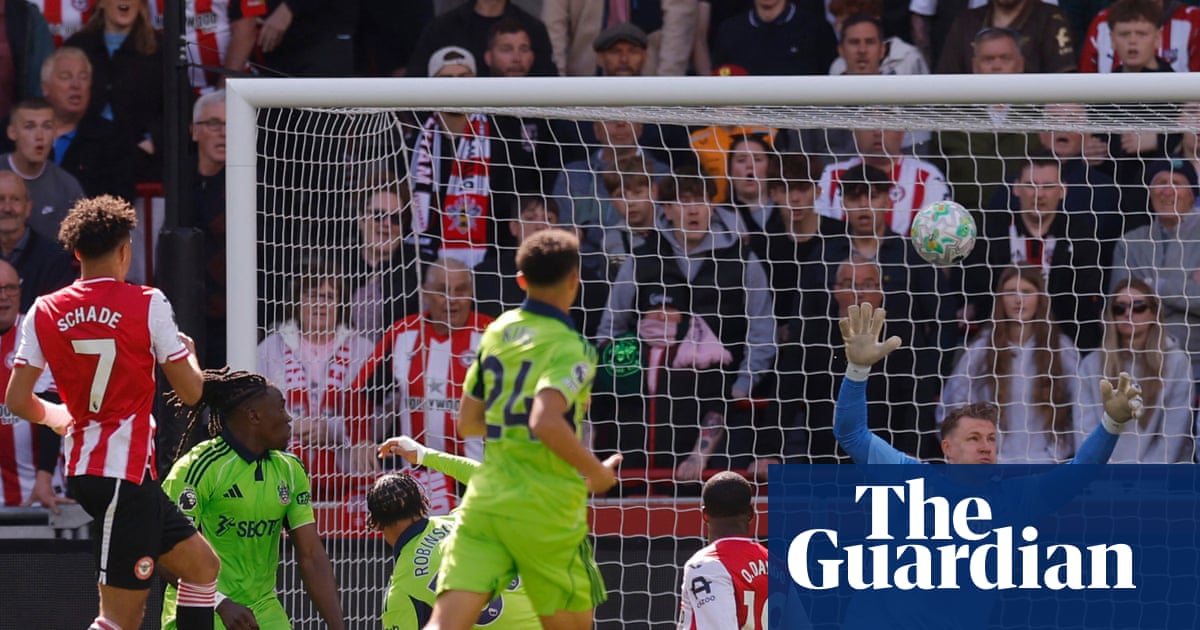
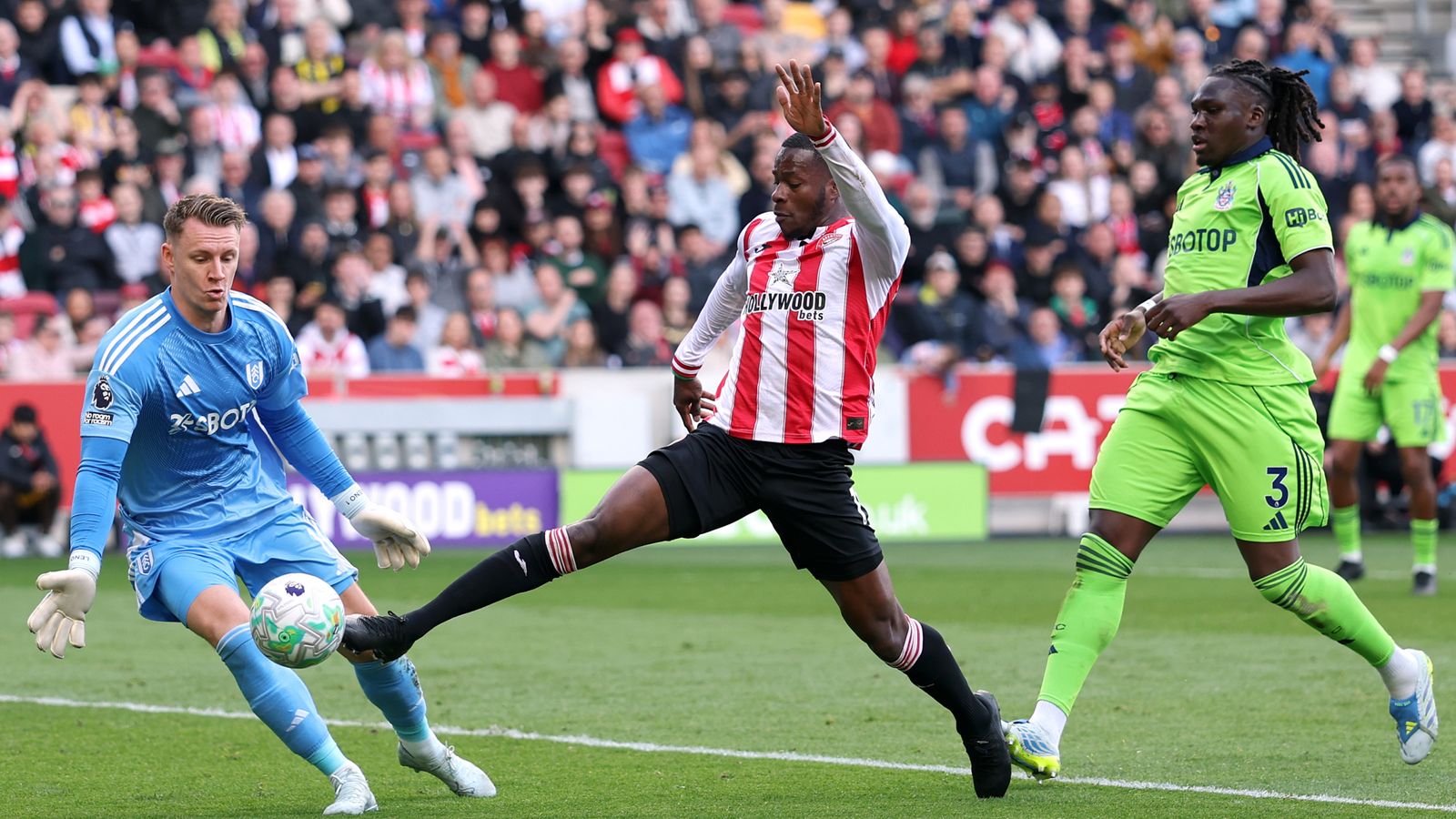
The headline from this 0-0 draw rightfully belongs to Bernd Leno. In the 89th minute, with the game finally stretching as Keith Andrews threw every available body forward, Igor Thiago rose above Calvin Bassey to meet a whipped cross from Bryan Mbeumo. The header was textbook—downward, powerful, and directed toward the bottom corner. Leno’s reaction was a pure display of Post-Shot Expected Goals (PSxG) defiance. The shot carried a value of 0.68 xG, but Leno’s fingertip save around the post was the difference between a season-defining victory and a forgettable stalemate. Thiago’s header was struck from seven yards out with an exit velocity that gave Leno less than 0.4 seconds to react.
Statistically, Bernd Leno is having a career-best campaign. Once the wunderkind at Bayer Leverkusen, his move to Fulham in 2022 has been a liberation. At Craven Cottage, Marco Silva has built a system that plays to Leno’s primary strength: pure, reactionary shot-stopping. He is no longer required to be a third center-back; he is required to be a wall. His PSxG+/- for the season now sits at +8.4, the second-highest in the Premier League. Today alone, he recorded a PSxG of 1.42 against zero goals conceded. It wasn’t just the wonder save; it was the cumulative effect of his positioning. He claimed three high crosses that relieved pressure when Brentford’s set-piece machine began to hum in the second half.
Brentford’s failure to secure the Top 6 today wasn’t just down to Leno’s brilliance. It was a failure of creation. Thomas Frank’s successor, Keith Andrews, has maintained the high-pressing identity of the Bees, but today they lacked the surgical edge required to break a disciplined 4-4-2. Brentford finished the match with 14 shots, but only 3 were on target. Their total xG of 1.22 looks respectable on paper, but when you realize 0.68 of that came from a single header in the dying seconds, the reality of their afternoon becomes clear. For the preceding 88 minutes, Brentford were engaged in 'hollow possession.' They enjoyed 58% of the ball and a staggering 62% field tilt, yet they were effectively kept at arm's length.
This territorial dominance without productivity is the hallmark of a team struggling to find verticality. Brentford’s passing map showed a classic 'U-shape,' with the center-backs circulating the ball horizontally, unable to find the line-breaking passes that Mikkel Damsgaard usually provides. When the ball did move wide, it met a brick wall in the form of Antonee Robinson. Robinson, perhaps the most improved one-on-one defender in the league, put on a clinic in jockeying and recovery pace. Robinson won 4 out of their 5 direct dribble duels, consistently showing Mbeumo onto his weaker right foot. The most damning statistic for the Bees' attack was Mbeumo’s crossing output: 0 successful crosses from 7 attempts.
Fulham’s defensive structure under Marco Silva was the primary reason for the game’s forgettable label. Silva set his side up with a defensive line height that rarely exceeded 41.2 meters. This mid-to-low block approach neutralized the pace of Igor Thiago and Kevin Schade in behind. Fulham weren’t interested in winning the ball high up the pitch; they were interested in making the central corridor a graveyard for Brentford’s ambition. They operated in a narrow 4-4-2 that frequently shifted into a 4-5-1 as Andreas Pereira dropped back to shadow Mathias Jensen. By congesting the 'half-spaces' where Brentford usually thrive, Fulham forced the Bees into a crossing game they were ill-equipped to win.
The numbers back up the solidity of the Cottagers. Fulham won 19 tackles today, with Calvin Bassey accounting for 6 of them. Bassey’s reading of the game has matured significantly; his 4 interceptions were decisive in cutting off the supply line to Mbeumo and Thiago. Bassey’s physicality allowed Fulham to maintain a line of confrontation even within their low block. Fulham’s compactness was reflected in their PPDA (Passes Per Defensive Action) of 16.4. This is a deliberately high number, indicating they allowed Brentford to have the ball in non-threatening areas while focusing on structural integrity rather than aggressive pressing. It was a masterclass in passive defending.
If you want to understand why this match was labeled forgettable, look no further than the low-event metrics. The total xG for the game was a meager 1.64 (0.42 for Fulham, 1.22 for Brentford). In a season where the Premier League average has climbed toward 3.1 goals per game, this was a regression to the mean of mid-table caution. The Field Tilt was 62% in Brentford's favor, but it was unproductive territoriality. In the second half, Brentford attempted 22 passes into the penalty area, but only 4 found a teammate. This 18% success rate in the most vital area of the pitch is why their European dreams are currently fading. It wasn't just poor execution; it was predictable movement.
The rhythm of the match was staccato. Constant fouls in the middle third prevented either side from building momentum. Fulham’s game plan was clearly to frustrate, and they executed it to perfection. By the 70th minute, the Field Tilt had swung even further toward Brentford as they chased the winner, but their progressive pass accuracy dropped to 64%. The urgency was there, but the technical execution was absent. It was a game played in the mud of tactical cancellation. Every time Brentford attempted to quicken the tempo, a Fulham player was there to win a tactical foul or block a passing lane.
The European race context makes this result particularly painful for the Bees. Brentford entered the day on 54 points, sitting in 7th place, just three points behind Chelsea. A win would have put them level on points with a superior goal difference, effectively putting them in the driver’s seat. Instead, they move to 55 points. With only four games remaining and Chelsea holding a game in hand against a relegated Wolves side, Brentford’s probability of finishing 6th has plummeted from 42% to 18% according to the latest Opta simulations. The psychological blow of failing to break down a Fulham side with 'nothing to play for' will likely resonate longer than the point on the board.
For Fulham, this was a statement of professional standards. Marco Silva’s side sits comfortably in 11th on 44 points, safe from the drop but too far from the European conversation to be truly motivated by the table. Yet, their commitment to the defensive blueprint was total. They didn't just play for a draw; they coached a draw. Silva’s ability to organize a defense that had previously been leaky reflects his coaching evolution. He has moved away from the expansive, sometimes reckless attacking football of his early career toward a more pragmatic approach that prizes clean sheets as much as creative flair.
Tactically, the second half saw Andrews try to shift the dynamic by bringing on Frank Onyeka to provide more verticality, but Silva responded by bringing on Harrison Reed to anchor the midfield. This tactical checkmate ensured that Brentford could never sustain enough pressure to break the Fulham resolve. Reed’s introduction at the 75-minute mark squeezed the final bits of space out of the central zones, forcing Brentford back into the wide areas where Robinson was waiting. Even the best-drilled defensive units eventually concede a 'Big Chance' in the dying embers; having a world-class outlier in goal is the final piece of the puzzle.
The takeaway for Brentford fans is a bitter one. You cannot expect to reach the Europa League if you cannot create more than one big chance against a mid-table side with its bags packed for the summer. The data suggested a Brentford edge, but the psychology of the Top 6 race seemed to weigh heavy on their legs. They looked like a team playing not to lose, rather than a team playing to win, until it was far too late. Their reliance on Mbeumo as a singular creative hub proved their undoing when faced with a defender like Robinson who had the physical and tactical tools to shut him down.
As the sun sets over the Thames, the race for the Top 6 likely set with it for those from the Gtech. They will point to Leno’s left hand as the reason, and they aren't entirely wrong. That save was a world-class outlier, a moment where 0.68 xGOT was defied by pure instinct. But the numbers suggest the damage was done long before that, in the 88 minutes where Brentford had the ball but lacked the imagination to do anything with it. Fulham will take their clean sheet and their 0-0 draw, happy to have been the most annoying team in West London for an afternoon.
Ultimately, football is a game of high-variance moments masked by ninety minutes of statistical probability. Brentford won the stats, but Leno won the moment. In the hunt for European football, moments are the only currency that matters. Brentford spent theirs poorly today, and they will likely be watching the Europa League from their sofas next season. Their season will be remembered as one of 'what ifs'—what if Mbeumo had beaten Robinson once? What if Leno’s hand was two inches to the right? But the table doesn't record 'what ifs'; it records points, and today, Brentford simply didn't do enough.