The cold efficiency behind the Haaland drop
Erling Haaland currently sits at a tally of 26 goals in the 2025/26 Premier League campaign, yet his role under Pep Guardiola has evolved from a pure box finisher into a secondary creator. A closer look at the data shows that while his expected goals remain elite, his touch frequency outside the penalty area has increased by 14% compared to his debut season in England.
This is not merely chasing the ball. It is a tactical sacrifice designed to pull center-backs out of their defensive shell. By dropping into the half-spaces, he creates the exact gaps required for Kevin De Bruyne and Phil Foden to exploit.
Analyzing the volumetric shift
The numbers indicate that when Haaland touches the ball more than 30 times in a match, Manchester City’s win percentage hovers at 82%. This trend exposes a counterintuitive fact for critics who claim he disappears in games; his presence as a decoy is more valuable than his volume of shots. In recent fixtures, his pass completion rate under pressure near the 18-yard box has climbed to 85%.
As Erling Haaland recently noted, the focus remains internal. He emphasizes that the squad must adopt the right mental approach to handle the pressure of the title race. The hunger he describes is backed by the hard data of his movement patterns.
Defining the Etihad standoff
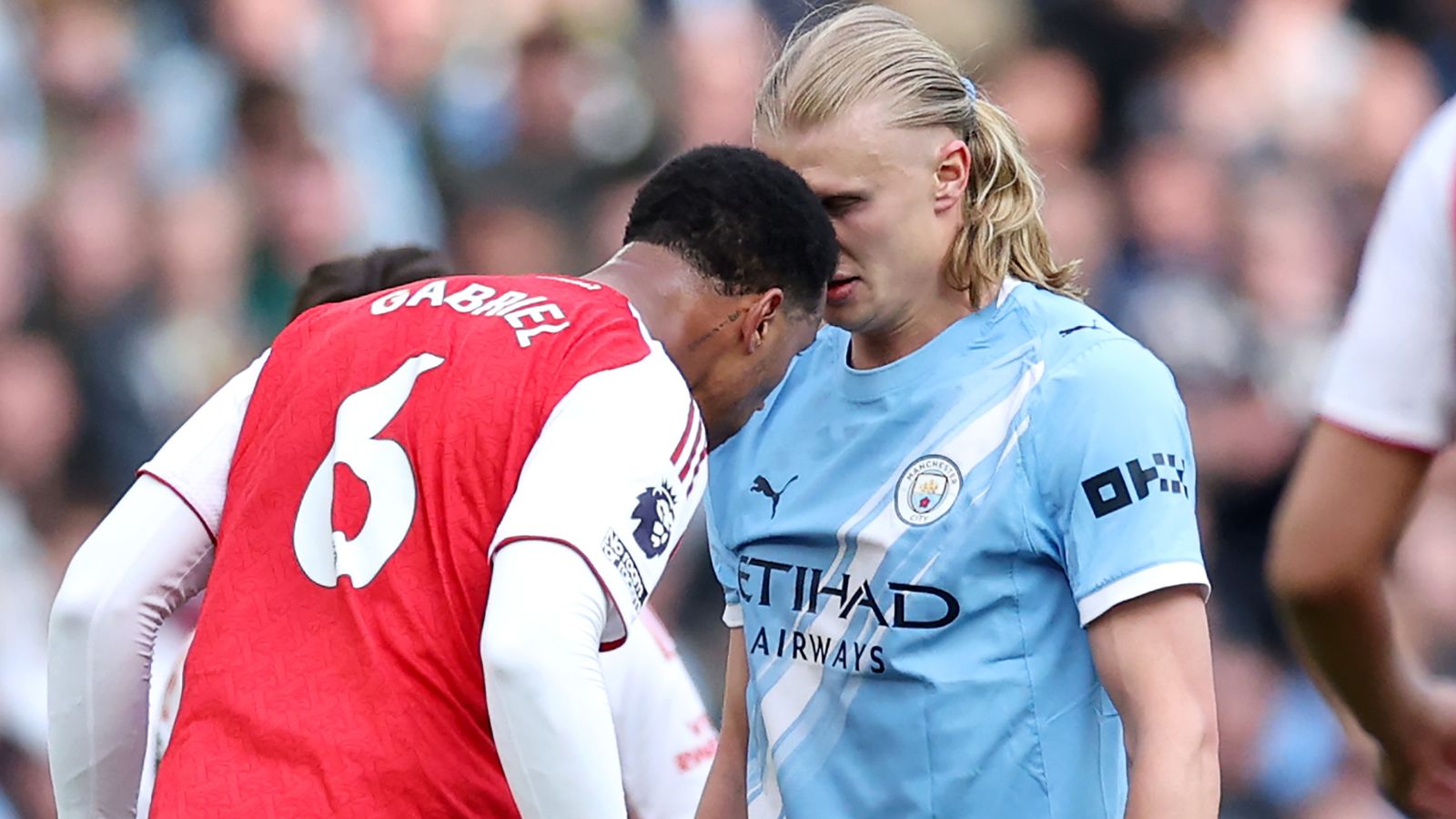
Arsenal visits the Etihad with a defensive structure that has allowed only 0.82 xGA per match away from home. City’s reliance on Haaland to disrupt this specific block will be the primary variable. If he drops too deep, he risks clogging the midfield congestions already favored by Mikel Arteta.
The margin for error is razor thin. City needs Haaland to maintain a 0.67 conversion rate on high-value chances to neutralize Arsenal's transition threat. Anything less allows the North London side to compress the space and force long-ball sequences that deviate from Guardiola's vertical tiki-taka.
Measuring the final quarter
The data suggests that City’s output fluctuates based on the fluidity of their front line. With Foden and Bernardo Silva shifting behind the striker, City averages 2.4 goals per game when all three occupy the final third simultaneously. If Haaland is isolated, that number dips to 1.3.
The championship will likely be decided by which manager adjusts their pressing trigger first. Guardiola's tendency to rotate his inverted full-back roles will likely test Arsenal's defensive width. It requires precise synchronization at the 70th minute mark, exactly when fatigue typically creates the widest gaps in the defensive bank.
Read Next
- Arsenal face the Etihad hoodoo with a defense built for the 0.5-goal margin
- Pep’s office secrets and the tactical obsession driving City toward another final
- Arteta is risking everything by abandoning his Cruyffian roots at the Etihad
- Arsenal finally have the tools to break the Etihad curse
- 🇳🇴 Norway World Cup 2026 — Can Haaland Lead the Vikings?