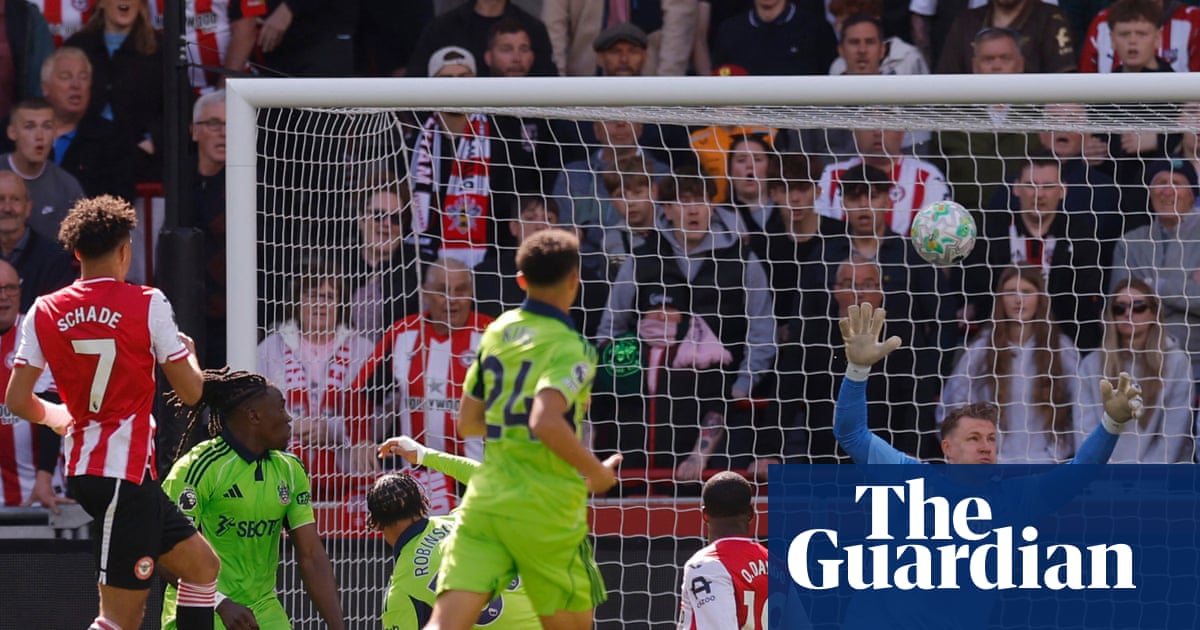
Adam Wharton waited exactly 94 matches to do what most midfielders dream about on their debut. When he finally found the net against Brentford on Sunday, it marked his first ever Premier League goal and his first in a Crystal Palace shirt. That is an enormous sample size of sheer tactical discipline.
To understand the weight of 94 appearances without a goal, you have to look at the job description. Holding midfielders are not paid to crash the penalty area. They are the insurance policy. They sit in the center circle while the full-backs overlap. But playing two and a half full seasons of football across multiple competitions without accidentally scuffing one in from a set-piece or a wild deflection is statistically unusual.
Historically, we have seen these deep-lying anchors go years without registering on the scoresheet. John Obi Mikel famously went 185 league matches for Chelsea before finally scoring. Javier Mascherano played over 70 times for Liverpool in the league and scored exactly once. Wharton is cut from that same cloth. His value is in breaking lines with his passing, winning the second balls, and sweeping up the mess left by attacking turnovers.
That makes the fact that he was the one to puncture Brentford's defense so surprising. It represents a total breakdown in Brentford's marking scheme. A player whose heat map is permanently glued to the center circle does not score unless he is completely ignored by the opposition's midfield pivot. As The Guardian noted, Palace were supposed to be operating in "preservation mode," with the squad's attention drifting toward "more exotic occasions." Yet, it was the ultimate stay-at-home midfielder who stepped up to punish a Brentford side that desperately needed all three points.
The myth of the May rollover
The late-season fixture list usually comes with built-in assumptions. The conventional wisdom dictates that a team chasing European football will easily dispatch an opponent resting on mid-table safety. When the team sheets dropped and Palace had made five changes to their starting lineup, the script seemed completely written.
But the Premier League rarely respects the script. Making five changes to a starting XI is a heavy rotation. In modern elite football, where pressing triggers and defensive lines are calibrated to the millimeter, swapping out half your outfield players usually results in disjointed rhythm. It usually means sloppy passing out of the back and large gaps appearing between the midfield and defensive lines.
Instead, Palace completely inverted the statistical probabilities. Sky Sports reported live that the visitors were "leading and all over Brentford" during the first half. Rather than looking like a group of strangers thrown together for a dead-rubber match, Palace played with the cohesion of a starting lineup.
This highlights a severe misunderstanding of what a team with little to play for actually looks like. Brentford had the crushing weight of expectation. They are chasing a European spot, a threshold that usually demands breaking the 60-point barrier to secure Conference League or Europa League football. Every misplaced pass at the Gtech Community Stadium draws nervous groans from the stands. The pressure physically slows players down. They take an extra touch. They second-guess their passing lanes.
Palace, completely free of that anxiety, played with the handbrake off. Rotation often backfires for managers trying to rest players. Changing half your outfield players removes the automatic partnerships built over the previous nine months. But when it works, it introduces fresh legs against a tired, stressed opponent. Ismaila Sarr put Palace in front, exploiting spaces that a desperate home side left completely vacant as they pushed up the pitch looking for an early breakthrough. Sarr's raw pace is exactly the wrong weapon to face when your full-backs are ordered to bomb forward to chase a win.
Ouattara's desperate rescue act
If Palace were the relaxed disruptors, Brentford were the chaotic survivors. They did not secure a point through controlled, methodical football. They got there because Dango Ouattara dragged them out of the fire. According to Sky Sports' post-match report, Ouattara saved Brentford twice over the course of the afternoon.
The phrasing there is vital. It was explicitly framed as a rescue mission. Ouattara salvaging a point is a great individual story, but the underlying performance will give Thomas Frank serious concerns. A team with serious European ambitions cannot afford to rely on a single forward repeatedly bailing out a leaky defense against heavily rotated opposition.
Ouattara's output in this game is the definition of high-pressure finishing. Scoring an equalizer in a high-stakes match alters the win-probability model completely. Doing it twice in the same 90 minutes requires a level of individual brilliance that covers up severe structural flaws. Brentford were sliced open by Sarr and undone by Wharton. Their defensive shape, normally one of the most reliable blocks in the division, looked porous and disorganized.
The math for Brentford is unforgiving. Taking one point from a home fixture against a team in preservation mode is a massive missed opportunity. European qualification in the Premier League is a game of fine margins. The gap between sixth and eighth place is often decided by two or three points over a 38-game season. Dropping two points here means Brentford now have to find an unexpected win against much tougher opposition just to balance the ledger.
The tactical cost of desperation
When a team knows they need three points to maintain their European trajectory, their tactical shape often degrades as the clock ticks down. Brentford's failure to contain Palace's rotated squad was not just a matter of bad luck. It was a direct consequence of over-committing.
In normal circumstances, a home side will probe a rotated defense, waiting for the inevitable miscommunication between center-backs who have not played together in months. Brentford bypassed the probing phase and went straight to desperation. This played perfectly into Palace's hands. By throwing bodies forward, Brentford created the exact transitional spaces that wide players like Sarr thrive in.
The statistical anomaly of Wharton's goal perfectly encapsulates this breakdown. Midfielders who go 94 games without scoring do not suddenly develop elite finishing instincts. They score because the opposition midfield has completely vacated the central zone, leaving a massive runway to the edge of the penalty area. Brentford's double pivot was likely caught out of position, desperately trying to overload the final third, leaving their back four entirely exposed to late midfield runners.
What the numbers actually mean
Let us look at the bare facts of Sunday afternoon's fixture:
- One goal for Wharton to end a 94-game drought.
- Five changes to the Palace starting lineup.
- Two equalizers from Ouattara to salvage a single point.
- Thirty-eight games in a season, and this home draw might be the defining failure of Brentford's campaign.
These numbers tell a story of an unpredictable afternoon where the stakes simply did not match the application.
For Palace, this match was a free hit that they executed perfectly. Wharton breaking his duck is a nice moment for a player who has quietly been one of their most consistent performers. Sarr getting on the scoresheet validates the manager's decision to rotate heavily. They proved that their squad depth can handle the intensity of a late-season away fixture, even when their attention is reportedly focused on other competitions.
For Brentford, the numbers are a brutal indictment of their mental readiness. When you are chasing Europe, you cannot let an opponent dictate the tempo in your own stadium. You cannot allow a defensive midfielder who has not scored in 93 previous appearances to suddenly find the space to convert. You certainly cannot rely on Ouattara needing to rescue the game twice just to secure a solitary point.
The draw leaves Brentford staring at a viciously difficult path forward. The single point salvaged by Ouattara might look valuable on paper, keeping their total ticking over. But the performance exposed a fragility that better teams will ruthlessly exploit. In the ruthless economy of the Premier League, you do not get to Europe by drawing at home to a team making five changes. You get there by being ruthless. On Sunday, Palace had nothing to play for, but they were the only ones who played like they belonged in the upper echelons of the table.