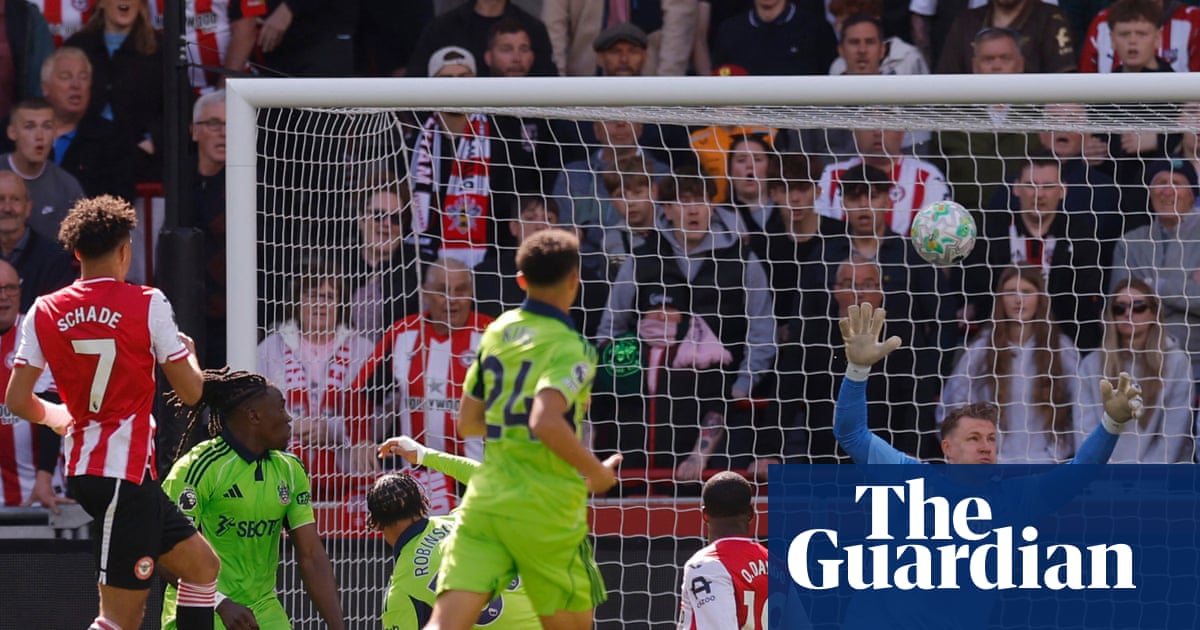
The brutal math of matchday 37
The numbers rarely lie in mid-May. When Brentford walked off the pitch at the Gtech Community Stadium following a 2-2 draw with Crystal Palace, the body language told a story that the league table merely confirmed. The Bees are fading at the exact moment the calendar demands a sprint. Thomas Frank's side have spent the better part of the spring chasing European football, but securing it now requires a final-day result at Anfield. That is not a position any team wants to be in.
This penultimate fixture was supposed to be the springboard. Instead, it became a prime example of the ceiling mid-table clubs hit when squad depth is tested. Crystal Palace, navigating their own complex balancing act under Oliver Glasner, arrived with the distinct air of a team learning how to juggle domestic duties with the unique physical demands of European travel. Yet they still managed to take points off a Brentford side that looked heavy-legged.
We can look at the 2-2 scoreline as a fair reflection of a chaotic game, but the underlying metrics of both clubs over the past two months reveal a deeper trend. Pushing for the top seven in the Premier League requires a sustained level of output that breaks most squads. For Brentford, the drop-off in pressing intensity during the final twenty minutes of matches has become a glaring vulnerability.
Glasner's delicate balancing act
Oliver Glasner has radically altered Palace's tactical profile since his arrival. The shift to his preferred 3-4-2-1 system immediately tightened their defensive transitions, but it also placed an immense physical burden on his wing-backs and central midfielders. Navigating Europe for the first time is a notoriously tricky puzzle. As Matt Barlow noted from the Gtech, there is an art to it. You have to savour the travels without letting the Thursday-to-Sunday turnaround destroy your domestic form.
Palace's ability to go toe-to-toe with Brentford away from home, despite those continental distractions, is a massive credit to Glasner's conditioning program. However, they are not immune to the fatigue tax. Earlier in the season, Palace's high turnovers were generating significant attacking output. Over the last month, their passes allowed per defensive action (PPDA) has crept up. They are sitting slightly deeper, absorbing more pressure, and relying on moments of transition rather than sustained territorial dominance.
Against Brentford, that approach yielded two goals, but it also invited late pressure. Glasner is clearly still figuring out the rotation math. How many minutes can his key creators play on a Thursday night in Europe before their sprint speed drops on a Sunday afternoon? It is a question that has derailed far more established squads than Palace.
The set-piece drop-off
For Brentford, the frustration lies in their departure from the fundamentals that made them a top-half threat in the first place. Under Frank, the Bees built their reputation on marginal gains, specifically through set-piece efficiency and highly structured pressing traps. This season, their dead-ball dominance has slightly waned. When you are chasing European qualification, losing even a fraction of a goal per game from corners and free-kicks can easily be the difference between sixth place and ninth.
The 2-2 draw highlighted this perfectly. In a game where open-play chances were hard to come by against Glasner's block, Brentford needed their set-piece routines to bail them out. They applied the pressure, but the execution lacked the ruthless precision of their earlier campaigns. This isn't just about bad luck; it is about the fatigue that accumulates when a thin squad plays high-intensity football for nine months.
There is also a valid criticism to be leveled at Frank's in-game management over the final stretch. When chasing a lead, Brentford's substitutions have occasionally disrupted their own rhythm rather than exploiting the opponent's weaknesses. Against Palace, the adjustments failed to completely neutralize the counter-attack, leaving them exposed right when they needed absolute control.
Anfield awaits
Now, the math is unforgiving. As defender Nathan Collins stated, the Bees are ready to give everything at Anfield on the final day. But wanting it and executing it against Liverpool are entirely different propositions. Winning away at Anfield is statistically one of the lowest-probability events in European football, let alone on a final day where positions are being finalized.
Brentford's away form against the traditional "Big Six" has always been patchy. They have the tactical blueprint to cause problems—specifically targeting the space behind advancing full-backs—but executing that gameplan requires fresh legs and flawless concentration. After 37 grueling matches, asking this squad to produce a tactically perfect 90 minutes might be a bridge too far.
If they fall short, the post-mortem will inevitably focus on points dropped in fixtures exactly like this 2-2 draw with Palace. It is a harsh reality of the Premier League. The difference between mid-table respectability and a European tour is razor-thin, usually decided by a missed clearance, a slight drop in pressing efficiency, or a failure to finish off a fading opponent. The Bees have the structure, but the data suggests they simply ran out of steam.