
Liverpool's injury crisis might actually help Arne Slot in Paris

The defining test of the Slot era
European away ties under the lights at Parc des Princes are rarely decided by aesthetics. They are brutal exercises in game management. Tonight, Arne Slot walks into the Parisian cauldron facing a mathematical disadvantage before a ball is even kicked.
Eight players are potentially missing for Liverpool. It is the kind of absentee list that usually provides a built-in excuse for a cautious, retreating performance.
But the narrative that Liverpool are walking into a slaughter against the Champions League holders misses a fundamental tactical reality. A depleted squad forces clarity.
Slot cannot rely on his preferred rotation patterns or his ideal starting XI. He has to strip the game plan down to its absolute bare bones. Sometimes, taking away a manager’s options is the best way to sharpen his focus.
Where the game will be won
The tactical battleground is blindingly obvious to anyone who has watched Paris Saint-Germain this season. They want to dominate the ball in the middle third.
They build through their pivot, drawing the opposition press before exploiting the spaces left behind. Slot’s Liverpool, by contrast, are a team built on controlled aggression.
Under Jurgen Klopp, Liverpool would have arrived in Paris intent on blowing the doors off. The heavy metal approach was thrilling but often left them exposed against elite European possession teams.
Slot has installed a more methodical rhythm. His midfield is less about covering ground and more about occupying the right zones. The double pivot, when functioning correctly, provides a shield that Klopp’s later teams often lacked.
However, the injury crisis complicates this structure. If the midfield spine is compromised, Slot cannot ask his remaining players to execute a high-wire pressing game for 90 minutes.
They will simply run out of gas. The adjustment has to be deeper. Liverpool must accept periods of suffering.
This is where the tactical tweak becomes interesting. Instead of engaging high, Liverpool might drop into a mid-block.
By sitting slightly deeper, they condense the space between the defensive and midfield lines. This denies PSG the central pockets they crave. It forces the French side to build down the flanks, where Liverpool’s fullbacks can engage with the support of the touchline.
The Parisian threat
Defending against PSG is never just about stopping the ball. It is about managing the spaces they create when they don't have it.
Their attacking wide players are instructed to stay high and wide, stretching the defensive line to its absolute limit. This creates massive isolation scenarios.
If Trent Alexander-Arnold is tasked with defending these wide overloads, Liverpool have a glaring problem. His defensive positioning in one-on-one situations remains a severe weakness.
Opponents know this. They overload his side, force him to commit, and then slip the ball into the channel behind him. It is a recurring nightmare that Slot has yet to fully solve.
The solution usually involves the right-sided center-back shuffling across to cover. But against PSG, that movement leaves a gaping hole in the penalty area.
If Ibrahima Konate or Jarell Quansah is dragged wide, the remaining defenders are left dealing with late runners from midfield. It is a domino effect of defensive compromises.
Slot has to decide whether to protect his fullbacks with aggressive midfield cover or ask his wingers to drop deeper. The latter option blunts Liverpool’s counter-attacking threat. It is a difficult trade-off, especially in a hostile away leg.
The hidden boost
The Mirror reported this morning that Slot has been handed a timely boost despite the injury list. The specifics are tightly guarded, but tactical logic points to a return of a key transitional player.
When you are forced to absorb pressure, your out-ball becomes the most important mechanism on the pitch.
Liverpool cannot simply clear their lines and hope. They need someone who can receive the ball under pressure, turn, and carry it 30 yards up the pitch. This relieves the defensive burden and forces PSG to retreat.
Without this outlet, the game becomes an agonizing exercise in pure survival. It becomes wave after wave of Parisian attacks crashing against the penalty area.
This is where the tactical discipline of the forwards is tested. They cannot just wait for the ball. They have to actively show for it, dropping into the half-spaces to offer a passing option.
It requires a massive physical effort. They have to sprint back to defend and then sprint forward to support the counter.
The problem with Slot’s substitutions
If there is one area where Arne Slot warrants serious criticism this season, it is his in-game management during high-stakes European nights. He is an exceptional tactician in his pre-match preparation, but he can be strangely reactive when the game state changes.
In hostile environments, you cannot wait for the opposition to score before making a structural adjustment.
There have been multiple occasions where Liverpool’s midfield has visibly tired around the 65-minute mark, losing the second balls and dropping too deep. Instead of refreshing the engine room immediately, Slot has often waited until the 75th minute.
By then, the momentum has shifted entirely. Tonight, with a depleted bench, his options will be severely limited. He cannot afford to get his substitutions wrong.
If he waits too long to inject fresh legs, PSG will ruthlessly exploit the fatigue. He has to anticipate the drop-off rather than reacting to it. This requires a level of ruthlessness that he has sometimes lacked on the continent.
The mechanics of survival
The absence of senior players inevitably means academy graduates or fringe squad members will be thrust into the spotlight. This changes the entire dynamic of the team.
Experienced players rely on implicit communication—a glance, a slight shift in body weight—to coordinate their movements. When you introduce unfamiliar personnel into the starting XI, that implicit understanding vanishes.
Every action has to be explicitly communicated, which slows down the speed of play and makes the team more predictable. Slot has been praised for his integration of youth, but throwing untested players into a Champions League quarter-final against the holders is an entirely different proposition.
The intensity of the pressing, the speed of thought required, the sheer physical toll—it is a massive step up from domestic cup competitions. The senior players, particularly Virgil van Dijk, will have to manage their young teammates through the early, chaotic phases of the game.
Van Dijk's role tonight cannot be overstated. He is the organizer, the safety net, the calm at the center of the storm.
His positioning will dictate the depth of Liverpool's defensive line. If he feels the midfield is being overrun, he will drop deeper to protect the space behind him. If he senses an opportunity to squeeze the play, he will push the line up.
It is a delicate balancing act that requires elite reading of the game. Then there is the issue of tempo.
PSG want to play the game on their terms. They want to pass the opposition to death, moving the ball horizontally until a gap opens up.
Liverpool’s best chance of disrupting this rhythm is to inject chaos into the game. Not the uncontrolled chaos of the Klopp era, but calculated, aggressive disruptions.
Tactical fouls in the middle third are necessary. Breaking up the play when PSG try to build momentum is non-negotiable.
Alexis Mac Allister will be central to this effort. He is the metronome in Slot’s midfield, the player who dictates the speed of Liverpool’s play.
When they win the ball back, his first touch will determine the success of the transition. If he can turn away from the counter-press and find a forward pass, Liverpool can hurt PSG.
If he is caught in possession, the defensive line will be instantly exposed. The French champions have evolved significantly since their era of purely relying on superstar individualists.
They now press with a coordinated intensity that was absent in previous iterations. Their front three work as a unit to cut off passing lanes and force turnovers high up the pitch.
This makes playing out from the back a perilous exercise. Liverpool’s center-backs will be under immense pressure every time they receive the ball from the goalkeeper.
Slot insists on building from the back to draw the opposition press, but there has to be a pragmatic limit to this philosophy. If the passing options are closed down, they cannot afford to take unnecessary risks on the edge of their own penalty area.
Sometimes, a long diagonal ball toward the flank is the smartest option. It bypasses the first line of the press and allows the forwards to fight for the second ball.
The fine margins
This brings us to the importance of the second ball. In tight European ties, the game is often decided by who reacts fastest when the ball drops loose in midfield.
It requires anticipation, aggression, and physical power. With a depleted midfield, Liverpool might struggle to compete physically against PSG’s athletic engine room.
They will have to out-think their opponents, anticipating where the ball will fall rather than just reacting to it. Set pieces will also be a vital weapon for Liverpool tonight.
When you are starved of possession and struggling to create from open play, corners and free-kicks become your primary source of goalscoring opportunities.
Slot’s coaching staff have been meticulous in their set-piece design this season. They use elaborate blocking schemes and decoy runs to free up their best headers of the ball.
Against a PSG side that can sometimes be vulnerable in the air, a well-executed set piece could be the difference between a respectable draw and a damaging defeat.
The tactical nuance extends to how Liverpool manage the wings. PSG's fullbacks push incredibly high, acting as auxiliary wingers.
This pins the opposition's wide players back, effectively turning a 4-3-3 into a 4-5-1 or even a 6-3-1 in defensive phases. Liverpool's wingers will have to spend long periods tracking back, doubling up on the flanks to prevent two-on-one situations.
This defensive workload inevitably blunts their attacking output. When you have spent 70 minutes shuttling back and forth defending the touchline, you lack the explosive energy required to launch a counter-attack.
Slot will need his forwards to be incredibly efficient with the ball when they do get it. They cannot afford to take low-percentage shots or dribble into blind alleys. Every attack has to have a clear purpose.
The psychological warfare
The Parc des Princes factor is also significant. The atmosphere is intensely hostile, designed to intimidate visiting teams and influence the referee.
Liverpool’s players must maintain their emotional control. Getting drawn into petty squabbles or reacting to provocation will only play into PSG’s hands.
Discipline is just as important as tactical execution on nights like these. There is a school of thought that suggests an injury crisis can sometimes galvanize a squad.
It creates a siege mentality. The players feel they have nothing to lose, which removes the fear of failure.
They fight harder for each other, knowing they are the underdogs. This psychological edge can occasionally compensate for a lack of quality or experience.
Slot will undoubtedly try to tap into this psychology in his pre-match team talk. He will frame the situation not as a crisis, but as an opportunity to defy expectations.
He will challenge his fringe players to prove they belong at this level. But motivation only gets you so far. Once the whistle blows, the tactical realities take over.
Conclusion
Consider the mechanics of Liverpool’s pressing traps under Slot. They no longer hunt in uncoordinated packs.
Instead, they wait for specific triggers. A square pass between center-backs. A heavy touch from a holding midfielder. A ball played into a fullback facing his own goal.
When these triggers occur, the trap snaps shut. The winger arches his run to cut off the pass back to the central defender, while the advanced midfielder aggressively engages the ball carrier.
It is a highly choreographed sequence. But it requires immense physical conditioning and absolute concentration.
With eight first-team players potentially absent tonight, executing these traps becomes exponentially more difficult. A fraction of a second's hesitation from a reserve player ruins the entire sequence.
The opposition bypasses the press, and suddenly Liverpool are scrambling back toward their own goal in a disorganized panic. This is why Slot must adapt.
He cannot ask a makeshift XI to execute a game plan designed for his strongest lineup. The pragmatic choice is to drop the line of engagement.
Let PSG have the ball in their own half. Retreat into a compact shape and force them to break down a rigid defensive block. It is not the Liverpool way, historically speaking.
The traveling supporters demand high-octane attacking football. But European away ties against elite opposition require a different kind of intelligence. You have to know when to throw punches and when to cover up on the ropes.
Slot needs to instill pragmatism in his squad. The injury crisis provides the perfect excuse to play a more cynical, defensive game.
If Liverpool try to go toe-to-toe with PSG tonight, they will be carved open. The French side possess too much pace and technical quality in the final third.
The role of the goalkeeper is also paramount in these tactical setups. Alisson Becker, assuming he is available, is essentially a sweep-keeper and a deep-lying playmaker rolled into one.
His starting position allows the defensive line to push higher, knowing he covers the space behind them. His distribution can bypass the first wave of the opposition press with a single laser-guided pass.
If Alisson is among the missing eight, the entire defensive structure has to be recalibrated. A backup goalkeeper rarely possesses the same reading of the game or the same passing range.
The defensive line instinctively drops five yards deeper to protect him. This creates a massive gap between the defense and the midfield, a gap that PSG's playmakers will gleefully exploit.
This cascading effect of injuries is what makes management at this level so complex. You are not just replacing a player; you are compensating for the loss of their specific tactical function.
You fix one hole, and another one immediately opens up elsewhere. Slot’s ability to plug these holes will define his tenure at Anfield.
The honeymoon period is over. The tactical theories drawn up on the training pitch are about to collide with the harsh reality of a European night in Paris. It is the ultimate test of his managerial acumen.
He has to manage the clock, manage the referee, and most importantly, manage the energy levels of his depleted squad. If Liverpool can reach halftime unscathed, the pressure will slowly begin to shift onto the hosts.
The Parisian crowd is notoriously demanding. If PSG are not winning comfortably by the hour mark, anxiety will start to spread through the stands.
That anxiety translates onto the pitch. Players take an extra touch. Passes are misplaced. Decisions are rushed.
That is the moment Liverpool must strike. They have to stay in the game long enough to make the opposition nervous. It is a psychological battle as much as a tactical one.
The outcome of tonight's match will ripple through the rest of Liverpool’s season. A heroic defensive display, resulting in a draw or a narrow victory, would inject massive belief into the squad.
It would prove that the system works even when the personnel changes. It would validate Slot’s methods. Conversely, a heavy defeat could shatter confidence.
It could expose the tactical inflexibility that critics have occasionally pointed out. When Plan A fails, Slot has sometimes struggled to implement a viable Plan B.
Tonight, he has no choice. Plan B has to be the starting point. The margins are terrifyingly thin.
A single lapse in concentration, a missed interception, a mistimed tackle—any of these could decide the tie. This is the brutal, unforgiving nature of the Champions League quarter-finals.
There is no room for error, and there is nowhere to hide. As the players walk out into the hostile Parisian night, the tactical whiteboards are left behind in the dressing room.
The theories are replaced by instinct, aggression, and sheer willpower. Arne Slot has set the structure. Now, his makeshift team must find a way to survive the storm.
Read Next
- Top 10: Moments That Built the Liverpool vs PSG Rivalry
- Arne Slot and Virgil van Dijk are already clashing at Anfield
- Arne Slot's tactical evolution faces its ultimate test in Paris
- The four-goal warning: Why Slot's broken system will collapse in Paris
- ⚽ Ligue 1 2025-26 — PSG, Monaco & the Title Race Hub
- ⭐ UCL 2026 — Champions League Quarter-Finals Hub
adidas FIFA World Cup 2026 Trionda Club Ball
Start the World Cup hype early with the official ball for the 2026 tournament.
More Coverage
Arsenal's Champions League final gamble rests on Timber's fitness
2 hours ago
Arsenal’s Champions League final run is pure Arteta obsession
3 hours ago
The sports calendar is currently eating itself alive
3 hours ago
Arsenal face a legacy-defining night in the Champions League final
3 hours ago
Arsenal vs PSG: The Champions League final is a tactical meat grinder
5 hours ago
Andoni Iraola eyes Anfield as Nico Williams closes in on Liverpool move
9 hours agoMore Analysis
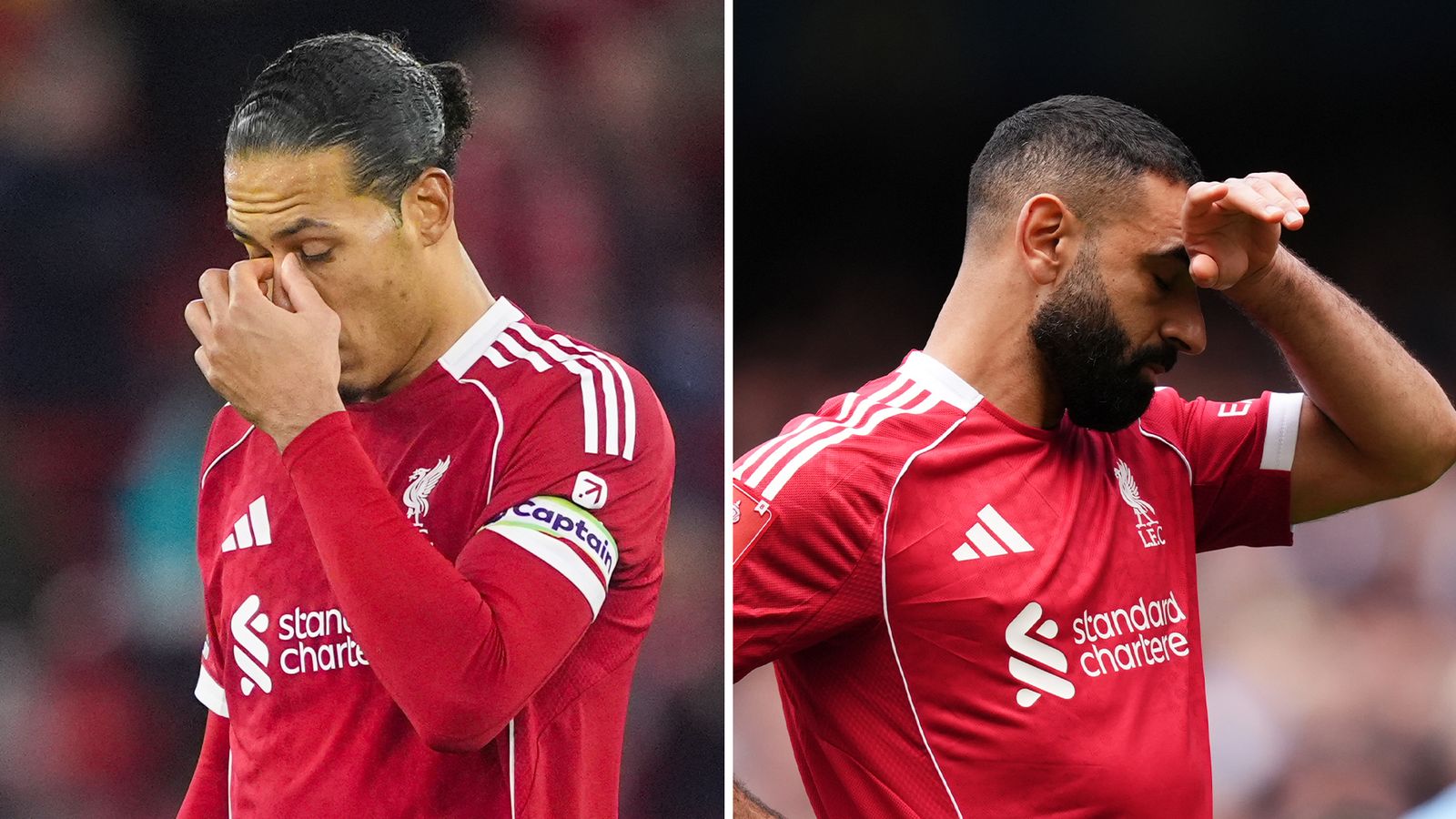
Arne Slot's tactical evolution faces its ultimate test in Paris
1 month, 3 weeks ago
Liverpool must solve the PSG puzzle or face a brutal exit
2 months ago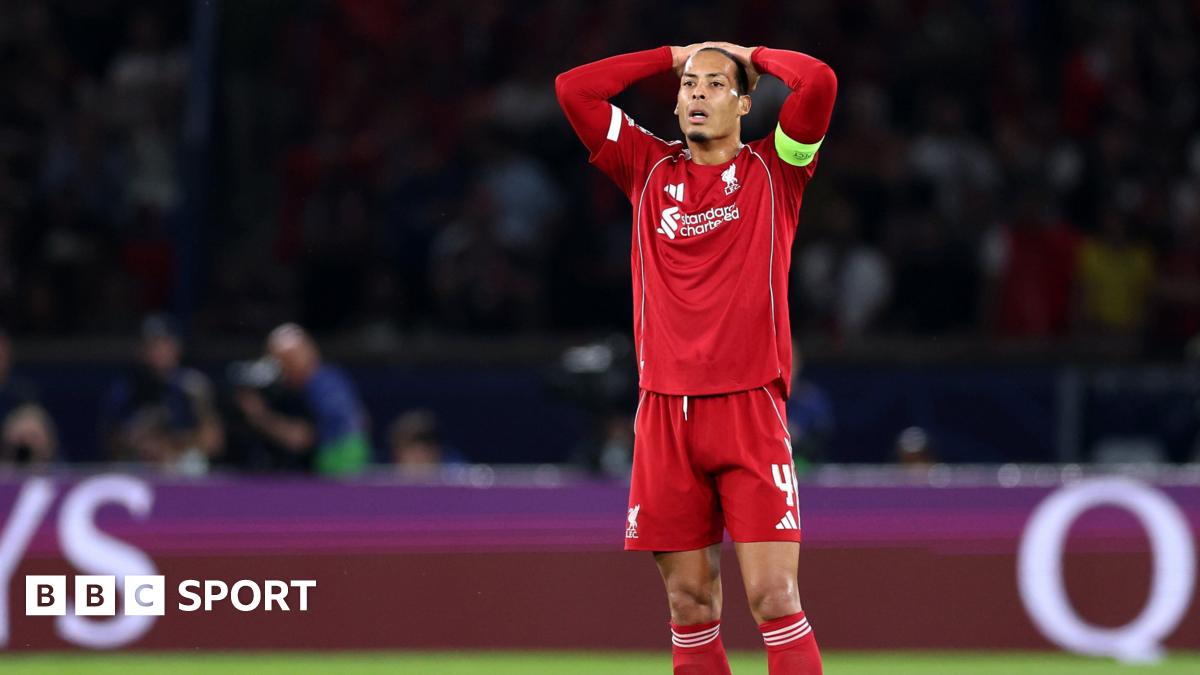
Liverpool are walking into a tactical graveyard against PSG
1 month, 2 weeks ago
Liverpool's medical room is leaking ahead of the Champions League clash
1 month, 3 weeks agoArne Slot is about to expose Luis Enrique's stubbornness in Europe
2 months ago