The Twenty-Second Illusion
On May 13 at Fir Park, referee John Beaton stood before a pitchside monitor for exactly 20 seconds. Those 20 seconds, filled with pixelated doubt, effectively decided the William Hill Premiership title. VAR Andrew Dallas had spotted a phantom handball by Sam Nicholson during an aerial challenge with Auston Trusty. Beaton pointed to the spot, Kelechi Iheanacho converted in the 99th minute, and Celtic walked away with a controversial 3-2 victory.
Yesterday, the Scottish FA’s Key Match Incident panel ruled that the penalty was entirely wrong. It was a fabricated decision that crushed the title aspirations of Hearts. The SFA concluded that Nicholson had no case to answer. Yet the points remained in Celtic’s column, sealing a league title that feels increasingly artificial under close statistical scrutiny.
This is a championship built on statistical sand. The Hoops won the league, but their underlying numbers suggest a team in structural decline. They are a club papering over massive cracks with short-term fixes and refereeing gifts. If owner Dermot Desmond thinks this double is a sign of health, he is misreading the spreadsheet.
The Martin O'Neill Paradox
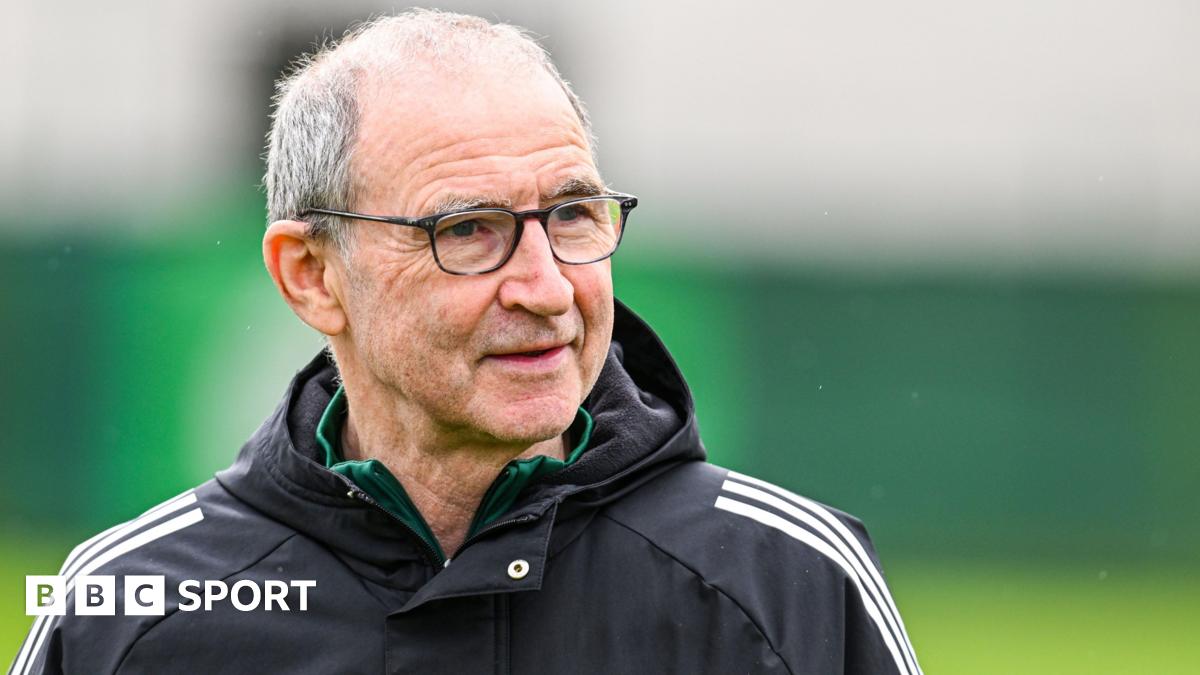
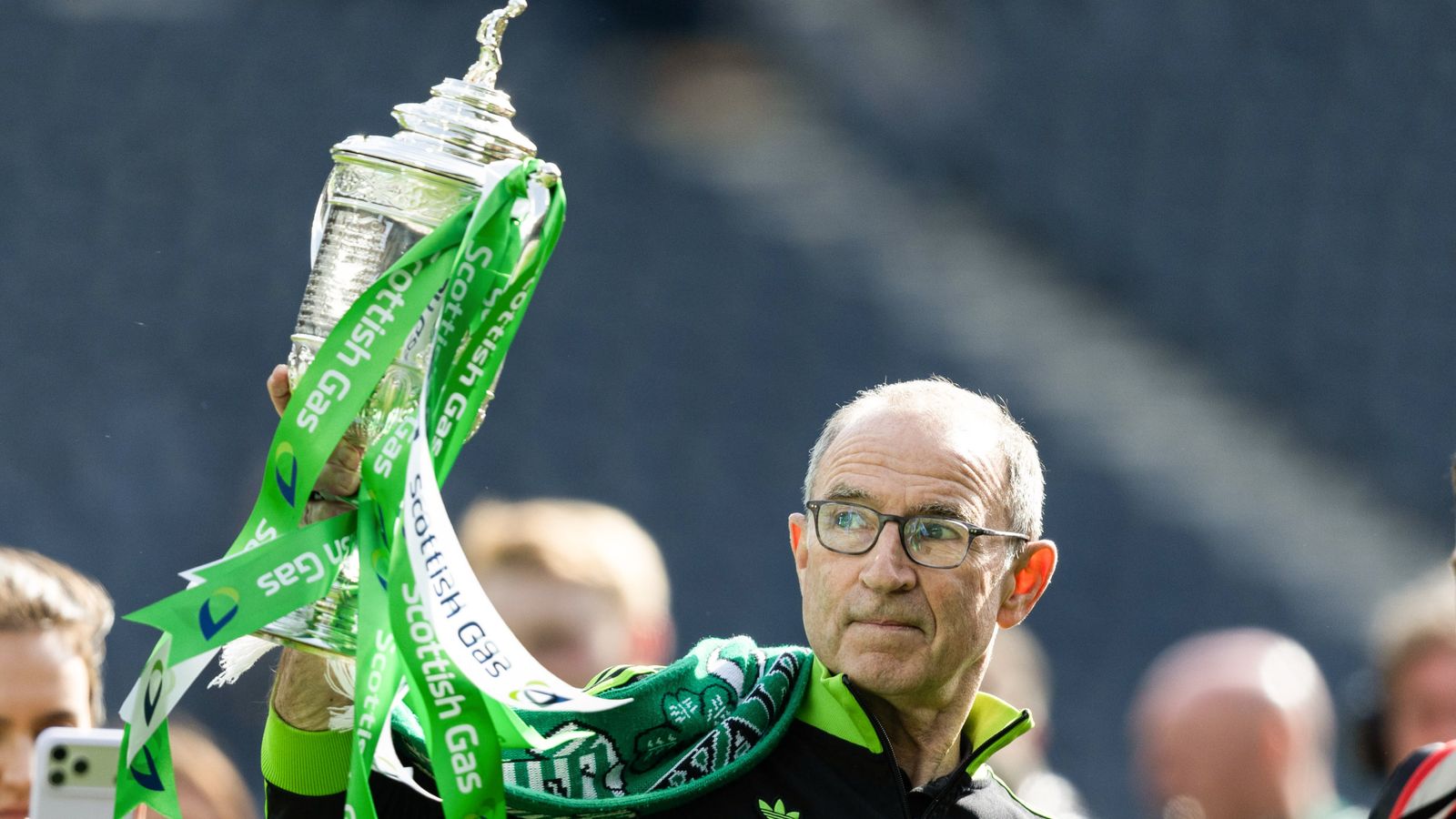
Celtic’s rescue mission this season was led by a 74-year-old manager who returned to the club twice in a single campaign. Martin O'Neill’s second homecoming was a triumph of sentiment over modern sporting science. The veteran manager came back twice to mastermind an incredible turnaround, adding the league title to a pending Scottish Cup final. But O'Neill’s very presence is a tactical anomaly in 2026.
O'Neill has been characteristically blunt about his methods and his refusal to engage with the club's long-term structure. O'Neill admitted that he remains highly skeptical of modern club planning:
"I've never believed in a project, anyway, to tell you the truth. But I definitely couldn't do that."
Under O'Neill, Celtic's defensive structure collapsed into a low block that invited pressure. They conceded 1.4 Expected Goals per 90 minutes over his two emergency stints. This is a massive regression from the 0.8 xG conceded during their dominant years. O'Neill's reliance on veteran leadership bypassed the club's modern scouting system, leaving younger players on the bench.
The Outlier in the Scouting System
While the first team operated under O'Neill's emergency pragmatism, Celtic's recruitment department did manage one massive victory. Hyun-jun Yang was named the club's Young Player of the Year after scoring 10 goals and providing 3 assists this season. The winger’s reward is a new contract running until 2030, securing his future ahead of Saturday's cup final.
Yang’s underlying metrics are the only modern element in this Celtic squad. He averaged 4.2 successful dribbles per 90 minutes and generated 0.35 Expected Assists per game. These numbers earned him a spot in South Korea's World Cup squad. He is a shining example of the buy-low, sell-high model that Celtic's board loves to preach.
But Yang is an outlier in a squad that is rapidly aging. Outside of the South Korean international, Celtic’s average starting eleven this season was 28.4 years old. The developmental minutes for younger players dropped by 34% compared to the previous campaign. The short-term demand to win at all costs has cannibalized the club’s long-term asset growth.
The Collapse of the Competitors
Celtic’s triumph was made possible by the historic underperformance of their traditional rivals. Rangers finished a distant third in the Premiership, forcing head coach Danny Rohl into a massive summer rebuild. Rangers’ failure relieved the pressure on Parkhead, but the statistical anomalies at Ibrox are even more baffling.
Consider the case of Rangers goalkeeper Liam Kelly. The 30-year-old made just three appearances all season, firmly stuck behind Jack Butland. Yet, Kelly has secured a spot in Scotland’s 26-man World Cup squad. It is a selection that defies sporting merit, highlighting the bizarre selection criteria operating in the national setup.
Further down the table, Jens Berthel Askou showed what modern, expansive coaching looks like. He guided Motherwell to a fourth-placed finish, securing European football before French side Toulouse snapped him up. Askou’s Motherwell side averaged 58% possession and completed 480 passes per match. That Motherwell could play better football than Celtic with a tenth of the budget is a damning indictment of O'Neill's system.
Dunfermline's Tactical Trap
Today’s Scottish Cup final at Hampden features a fascinating tactical clash between old friends. Dunfermline manager Neil Lennon is facing his former mentor, O'Neill. Lennon was signed by O'Neill at both Leicester and Celtic, and he is using that intimate knowledge to build a tactical trap. Dunfermline are the heavy underdogs, but Lennon is motivated by what he calls disrespectful commentary in the press.
Lennon has openly bristled at suggestions that Celtic’s double is a foregone conclusion, using the public narrative as motivation:
"I've seen a lot of comments this week about Martin picking up the trophy with Callum McGregor and if he'd have been here earlier in the season, he would have been winning a treble. I wouldn't dismiss us. We're the underdogs, but underdogs bite."
If Celtic cannot create central overloads, they will struggle. Under O'Neill, Celtic's pass completion in the final third dropped to 72% this season. They rely heavily on individual brilliance from players like Yang rather than cohesive attacking patterns. If Lennon can isolate Yang and double-team him on the flank, Celtic's attacking threat is virtually neutralized.
A League in Structural Crisis
The chaos on the pitch is mirrored by growing instability in the stands. The SPFL has opened disciplinary investigations across five games, including the Parkhead title decider and the Motherwell match on May 13. The league has already concluded 11 disciplinary processes against eight clubs this season for pyrotechnics and pitch incursions.
This off-field friction points to a deeper crisis. The SPFL is struggling to maintain order while the quality of the football on the pitch regresses. The league is increasingly dependent on aging stars and emergency managerial appointments. Elgin City sacked Allan Hale after finishing sixth in League Two, while Falkirk is releasing 12 players in a desperate bid to rebuild.
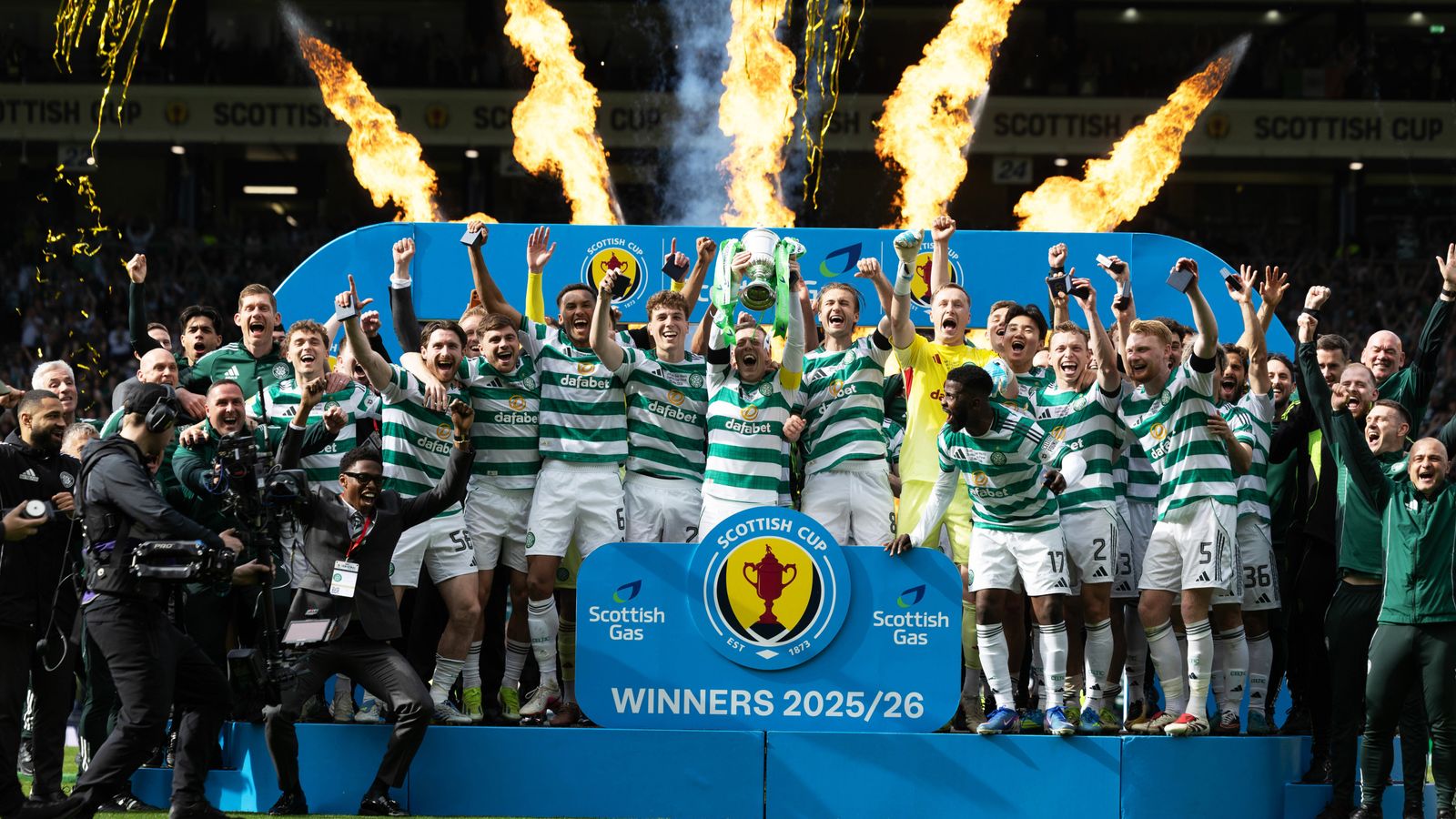
Celtic will likely lift the cup today, and O'Neill will celebrate another double. But this season is not a blueprint for future success. It is a warning. The numbers show a club that has stopped developing, stopped progressing, and started relying on luck. Next season, without O'Neill's emergency magic, the bill will finally come due.
Read Next
- Martin O'Neill just pulled off the most hilarious double in Celtic history
- Neil Lennon knows Celtic are fallible, but O'Neill has the Hampden pedigree
- Why Neil Lennon's Dunfermline could ruin Martin O'Neill's Celtic farewell
- Hearts are calling the cops while Celtic chases another double
- ⚽ Scottish Premiership 2025-26 — Celtic vs Rangers Hub