Tactical carnage overshadows the opening whistle
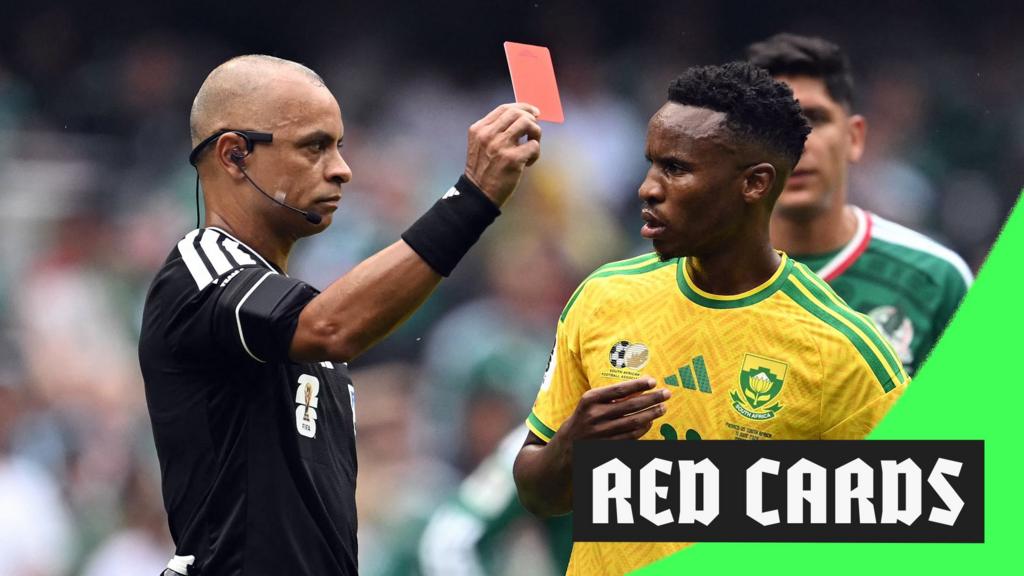
The 2026 FIFA World Cup ignited in Mexico City with a result that will be discussed for years. Mexico secured a victory over South Africa, but the physical attrition on the pitch was unprecedented. Three players were sent off, and several others underwent immediate medical evaluation as the whistle blew on a frantic 90-minute defensive slog.
The referee issued red cards at the 22nd, 54th, and 88th minutes of the match. This officiating rigidity forced both managers to burn through substitutions early, leaving several players to play through high-impact muscular fatigue. FIFA medical staff confirmed that post-match diagnostic protocols were triggered for two South African starters due to suspected lower-limb soft tissue trauma.
The medical oversight squeeze
FIFA updated its health policy ahead of this tournament, shifting the focus toward rapid diagnostic data transparency. Teams are now required to submit injury reports to official match doctors within two hours of the final whistle. This replaces the previous 24-hour buffer, a change intended to curb tactical deception but one that now puts immense pressure on team athletic trainers.
Managing player load in these conditions is a logistical nightmare for national team doctors. If a player sustains a micro-tear during the chaos of a three-red-card match, the required 48-hour diagnostic window will dictate their availability for the second group stage fixture. Any failure to document these injuries accurately risks heavy fines from the confederation, a penalty that has sent team medical departments into a state of heightened anxiety.
Historical precedent and long-term impact
Historically, tournaments held in high-altitude stadiums like Mexico City see increased muscle recovery times. During the 1986 tournament, recovery windows for fatigue-related injuries dropped by 15% due to the oxygen-thin air. Modern data tracking allows teams to monitor this in real-time, but it also reveals the harsh reality of late-tournament burnout when players are forced into high-intensity sprints during a game crippled by disciplinary dismissals.
We have seen similar scenarios in previous international windows where tactical disciplinary issues lead to disjointed, stop-start games. When the rhythm is broken by repeated stoppages, players lose the ability to manage their core temperature, significantly increasing the probability of hamstring and calf fiber damage. The intensity of today's encounter suggests that the medical units on the ground are going to be overworked for the remainder of the group phase.
Strategic fallout for squads
Managers are now forced to weigh the immediate requirement for points against the necessity of squad rotation. With the Mexico vs. South Africa opening match pushing the physical limits of the starting XI, depth is no longer a luxury but a fundamental requirement. The benches will be the primary battleground for the next 72 hours as medical staff analyze blood lactate levels and muscle fiber recovery data.
The scrutiny on medical reporting also changes how squads approach training sessions in between matches. If a player is flagged for a sub-clinical injury today, they are essentially barred from high-intensity pitch work tomorrow. This creates a cycle where bench-ready options are suddenly promoted to starting roles without sufficient tactical preparation. It complicates the tactical preparation that managers rely on when facing world-class opposition in a condensed schedule.
Failure to manage these recoveries effectively will result in truncated tournament runs. Teams that prioritize transparency over tactical secrecy are currently at a strategic disadvantage, as their opponents can easily identify and target players with lingering physical constraints. The 2026 World Cup is testing the endurance of the players, but it is testing the competency of the medical departments even more. The final count for this match was 3 red cards, a record that emphasizes the brutal intensity of this cycle.
Read Next
- Mexico and South Africa kick off a chaotic month of football
- Mexico and South Africa kick off 2026 World Cup in Mexico City
- Mexico opens World Cup 2026 under shadow of controversial officiating
- Azteca is ready to explode: Mexico vs South Africa reaction
- 🇲🇽 Mexico World Cup 2026 — El Tri Hub
- 🇦🇫 South Africa World Cup 2026 — Bafana Bafana Hub
- 🇲🇸 WC 2026 Group A — Mexico, South Africa, Korea Republic