The cost of advancement
Chelsea navigated their way to the Champions League semi-finals, yet the secondary narrative from the 1-0 second-leg victory over Arsenal has completely eclipsed the result. Sonia Bompastor’s side managed the aggregate 3-2 scoreline, but the structural integrity of the tie was compromised by a moment that should have fundamentally altered the numerical advantage on the pitch.
The incident involving Katie McCabe and Alyssa Thompson is impossible to ignore. Footage of the hair-pull confirms a disregard for the letter of the law that VAR somehow managed to overlook. When a player bypasses the ball entirely to initiate contact with an opponent’s hair, we aren’t talking about a physical duel. We are talking about conduct that belongs outside the technical parameters of the sport.
Tactical oversight and officiating failures
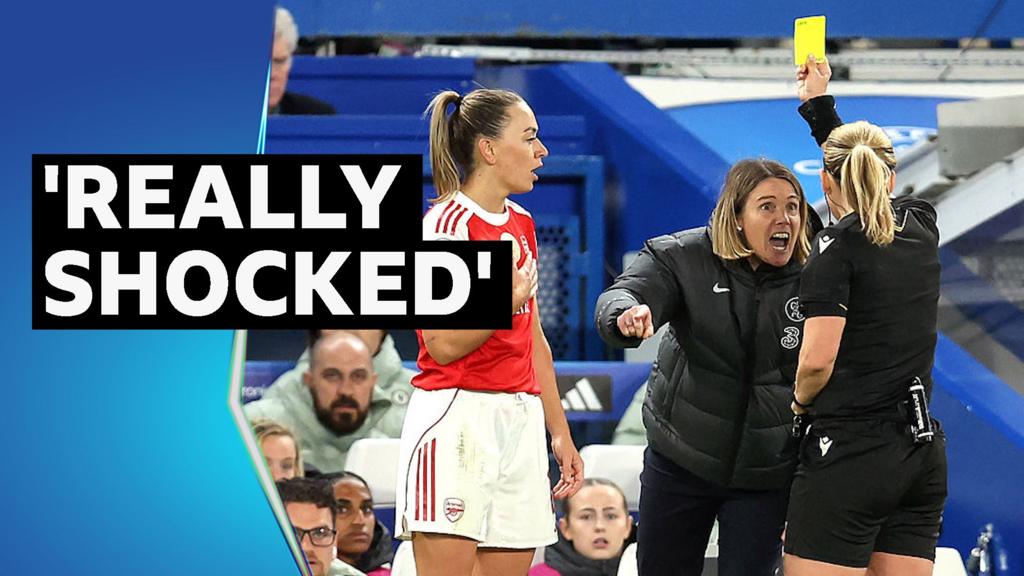
Bompastor was rightly incensed, later voicing her displeasure with VAR at length. Her expulsion from the technical area was a strange irony; she was punished for her reaction to a sequence of events where the primary offender, McCabe, remained shielded from the ultimate disciplinary consequence.
The refereeing performance here raises questions about the threshold for intervention in the modern game. Steph Houghton and Ellen White, speaking as pundits, expressed disbelief at the failure to apply a red card. If the technology exists to review every potential spot-kick and marginal offside, why does it default to passive observation when a blatant act of misconduct occurs in plain sight?
The Bompastor perspective
Bompastor’s comment that her players “deserve better” is not merely manager-speak. It identifies a breakdown in the fairness of the competition. When you watch the post-match assessment, the frustration is clear. Tactical plans often struggle to account for the "unknown" variables of officiating, but expecting a consistent application of the rules should be the floor, not the ceiling, of European knockout football.
Looking ahead to the semi-final
Chelsea move forward despite the chaos, but the lack of punishment for McCabe leaves a sour residue on their progression. Teams that rely on high-intensity transition play, like this Arsenal outfit, often push the line of aggressive physicality. However, once that line is crossed into petulance, the match official must step in.
My prediction for the semi-final phase is clear: Chelsea’s efficiency in the final third will be tested far more severely than it was by this disorganized Arsenal performance. If they cannot rely on referees to protect their ball-carriers, Bompastor must adjust her defensive spacing to account for players who are willing to gamble on escaping discipline. If the officiating remains this inconsistent, Chelsea's path to the trophy becomes infinitely harder. They are moving on with a 3-2 aggregate win, but the squad lacks the composure required to survive tighter margins if they keep losing their cool under pressure.