The 60-year itch is acting up again
Here we are. It is May 2026. The Premier League is wrapping up, the Champions League final is looming, and an entire nation is about to willingly subject itself to a month of sleep deprivation, screaming at televisions, and exhausting tactical debates. The World Cup kicks off in exactly 37 days across North America. England are packing their bags, and the hype machine is already running hot enough to melt steel.
You would think we’d learn to manage our expectations by now. We sat through the grim pragmatism of Euro 2024, watching Gareth Southgate’s side stumble to a final on pure individual brilliance before being clinically dismantled by Spain. We swore we wouldn’t get sucked in again. We promised ourselves we wouldn't buy the bucket hats. Yet, here I am, staring at the projected squad list and convincing myself that this is the year football actually comes home.
Before we even think about the knockout rounds and the inevitable penalty shootout heartbreak, there is the small matter of the group stage. The draw was kind, as it usually is when you are a top seed, but the narrative surrounding this team is anything but simple. Thomas Tuchel has taken the wheel, and the vibes around the camp are decidedly different. Here are the five biggest questions tearing through group chats right now.
1. Who survives Thomas Tuchel's tactical guillotine?
Gareth Southgate was a man of immense loyalty, often to a massive fault. If you did a job for him in Russia in 2018 or at Wembley in 2021, you were practically guaranteed a spot on the plane in 2024 regardless of how dreadful your club form was. Thomas Tuchel does not care about your feelings. He does not care about your past service. He absolutely does not care what the back pages of the tabloids think of you.
The man is a tactical mercenary in the best possible way. We saw it when he dragged Chelsea to a Champions League title, and we’ve seen glimpses of it in his early England tenure. If his specific system requires a rigid double-pivot to shut down a counter-attack, he will drop a hundred-million-pound superstar without a second thought. The English press spent the last decade demanding a ruthless club manager. Now they have one, and they are terrified of what he might do.
Tuchel’s tournament record is undeniable. He knows exactly how to set up a team to survive the meat grinder of knockout football. But the group stage in North America presents a unique logistical nightmare. Dealing with massive travel distances across time zones and stifling summer humidity requires heavy rotation. How he manages the massive egos of players who are used to being completely undroppable at their clubs will define the first two weeks. The first time he benches a star, the reaction will be nuclear.
2. The Harry Kane dilemma is finally here
Look away now if you are easily upset, because this conversation is unavoidable. Harry Kane is England’s greatest ever goalscorer, a generational talent, and an absolute model professional. He is also turning 33 this summer. During the latter stages of Euro 2024, there were moments when he looked like he was running through knee-deep wet cement. The passing range was still elite, but the burst of pace to press from the front had completely vanished.
Tuchel knows Kane intimately from their brief crossover at Bayern Munich. He knows exactly what the striker can and cannot do at this stage of his career, and he knows how to mask those physical deficiencies. The question is whether Tuchel has the absolute brass neck to bench his captain in a World Cup group game if the tactical setup demands a high-energy, suffocating press from the front line.
Ollie Watkins showed exactly what a mobile, aggressive forward can do against tired legs when he smashed that winner against the Netherlands two years ago. Ivan Toney offers a completely different, bullying physical presence. If England are chasing a game in the sweltering heat of Miami or Houston, dragging a gassed Kane off the pitch shouldn't cause a national crisis. It should be standard operating procedure. But we all know the media won't treat it that way.
3. The great number ten traffic jam
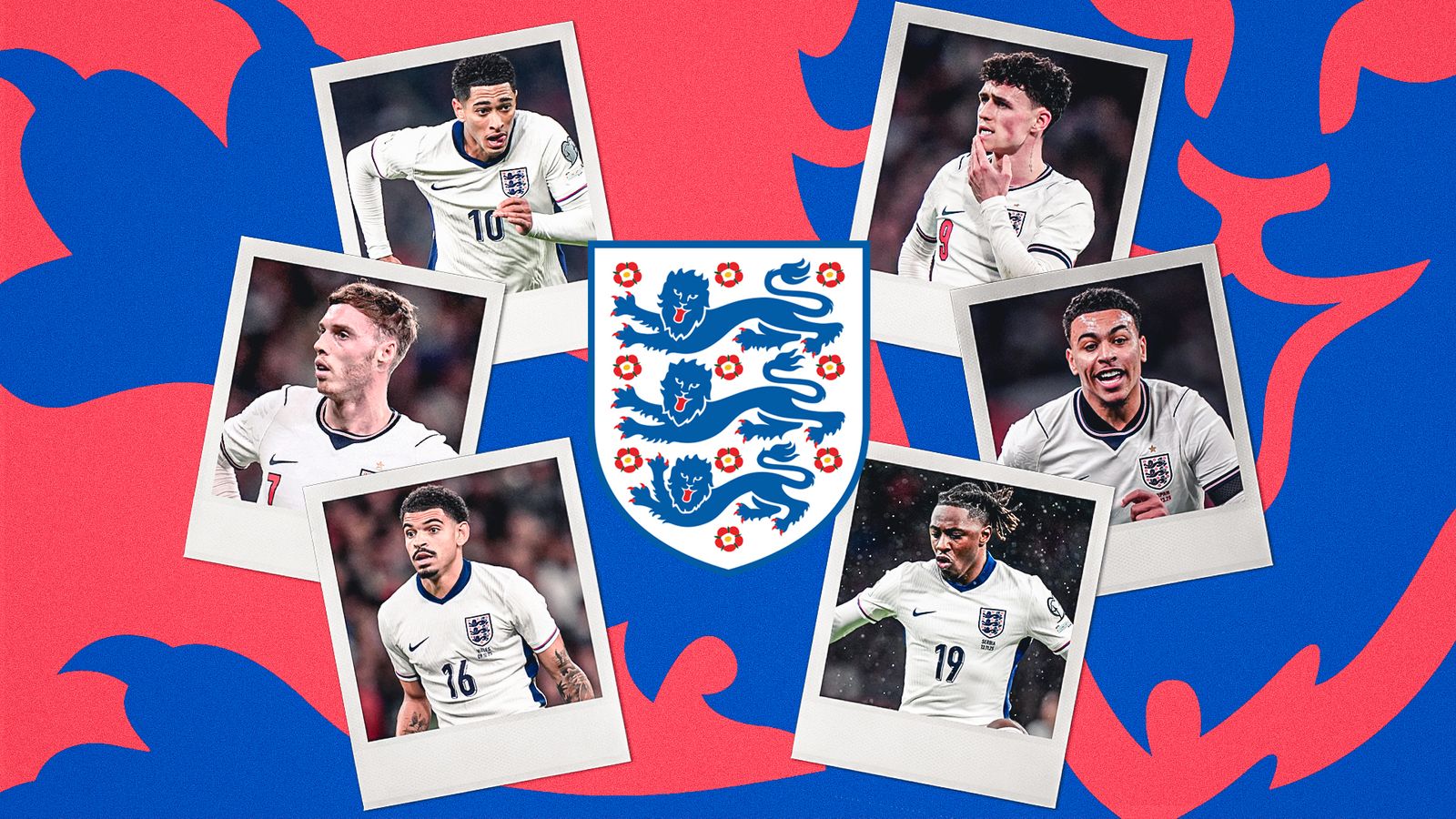
If you are playing EA Sports FC, you just cram Jude Bellingham, Phil Foden, and Cole Palmer into the same starting eleven, ignore the defensive metrics, and hold down the sprint button. In reality, fitting three players who all fundamentally want to occupy the exact same half-spaces is a tactical nightmare. We spent the entirety of the last European Championship watching them literally trip over each other while the left wing remained completely deserted.
Bellingham is the undisputed main man. His sheer force of will and physical dominance dragged England through the mud multiple times in Germany. But Foden just wrapped up another absurdly productive domestic season for Manchester City, and Palmer has spent the last two years turning water into wine at Stamford Bridge. You cannot start all three without fundamentally unbalancing the midfield and exposing the backline.
Someone has to miss out. Someone is going to be sitting on the bench staring absolute daggers at the back of Tuchel’s head while the cameras zoom in on their facial expressions. My bet is that Palmer becomes the most devastating super-sub in international football history, arriving against tired legs in the 70th minute to ruin lives. But convincing a player of that caliber to accept a cameo role requires elite man-management.
4. Are we really doing this left-back thing again?
It is genuinely hilarious that a country with the most lucrative football league on the planet cannot produce a naturally left-footed defender who stays fit for more than three consecutive weeks. The ghost of Luke Shaw's hamstrings has haunted this national team for half a decade. We are dragging the same problems across the Atlantic that we had in Qatar and Germany.
We are still having the exact same tactical arguments we had in 2021. Do you play Kieran Trippier or Trent Alexander-Arnold out of position and completely kill the angle of attack on the left flank? Do you throw a completely untested youngster into the fire of a World Cup group stage just for the sake of natural width? Do you try a back three and rely on Bukayo Saka to do the defensive dirty work as a wing-back?
Opposing managers aren't stupid. They will look at England's team sheet, identify the makeshift left-back, and absolutely hammer that side of the pitch for ninety minutes. Tuchel needs a definitive, functional answer before they board the plane. Relying on medical miracles and cortisone injections in the middle of a major tournament is a guaranteed recipe for an early flight home.
5. Can the defense survive the pressure cooker?
We spend so much time arguing about the attacking talent and the midfield balance that we completely ignore the glaring structural issues at the back. John Stones is a brilliant footballer, but he requires a very specific type of partner to function optimally. Harry Maguire was that guy for Southgate, heading away every long ball and physically dominating the box, but that era is definitively over.
Marc Guehi proved he could handle the step up during the Euros, looking calm and collected next to Stones. But a World Cup in North America is a different beast entirely. You are coming up against wildly different tactical styles, from South American flair to hyper-athletic, direct CONCACAF sides. The midfield shield provided by Declan Rice is elite, but the center-backs will inevitably be exposed in transition.
If England are going to play a higher defensive line under Tuchel to support a more aggressive press, the recovery pace of those central defenders is going to be tested constantly. One missed interception or bad offside trap in the group stage can completely derail the momentum of the tournament. The margin for error at this level is practically non-existent.
The reality check
England should coast through the group stage. They have the deepest squad in the tournament, arguably the best midfield rotation in world football, and a manager who has won club football’s biggest prizes. The raw talent gap between them and the pot three or pot four teams they will face early on is comical.
But you don't win World Cups on a spreadsheet. You win them on heavily watered pitches in massive stadiums with tens of millions of people waiting for you to fail. The group stage is rarely about playing beautiful football; it is about managing the noise. It is about establishing a functional rhythm, banking the points, and not completely burning out your key players before the round of sixteen.
Sixty years since 1966. It is a heavy, suffocating number that gets dragged out every single cycle. The English media will remind the players of it every day. Tuchel doesn't care about the ghosts of Alf Ramsey or Bobby Moore. He just wants to win football matches, and he will happily win them ugly if he has to. Honestly? That cold, calculated, deeply unsentimental approach might be exactly what this neurotic football nation needs right now.
Read Next
- The Azteca awaits but Mexico's World Cup opener feels like a terrifying trap
- Mexico vs Turkey: The World Cup opener is shaping up to be a beautiful disaster
- Don't let the Real Madrid forwards fool you about Brazil's chances
- England's World Cup group stage will be an agonizing, miserable success
- 🏆 World Cup 2026 — Full Coverage Hub
- 🏴 England World Cup 2026 — Three Lions Hub
- 📋 World Cup 2026 Groups — Full Draw & All 12 Groups