Tuchel's 16 guarantees and the massive tactical headache facing England
The ticking clock and the core of 16
We are precisely three weeks away from the 2026 World Cup kickoff in North America. Thomas Tuchel is staring down the barrel of a classic English predicament. The squad announcement is looming. The flights to the States, Canada, and Mexico are booked.
Yet, the same tactical ghost that has haunted three successive England managers is still lingering around St George's Park. How do you cram a generational crop of attacking midfielders into a coherent tactical shape without completely abandoning midfield solidity?
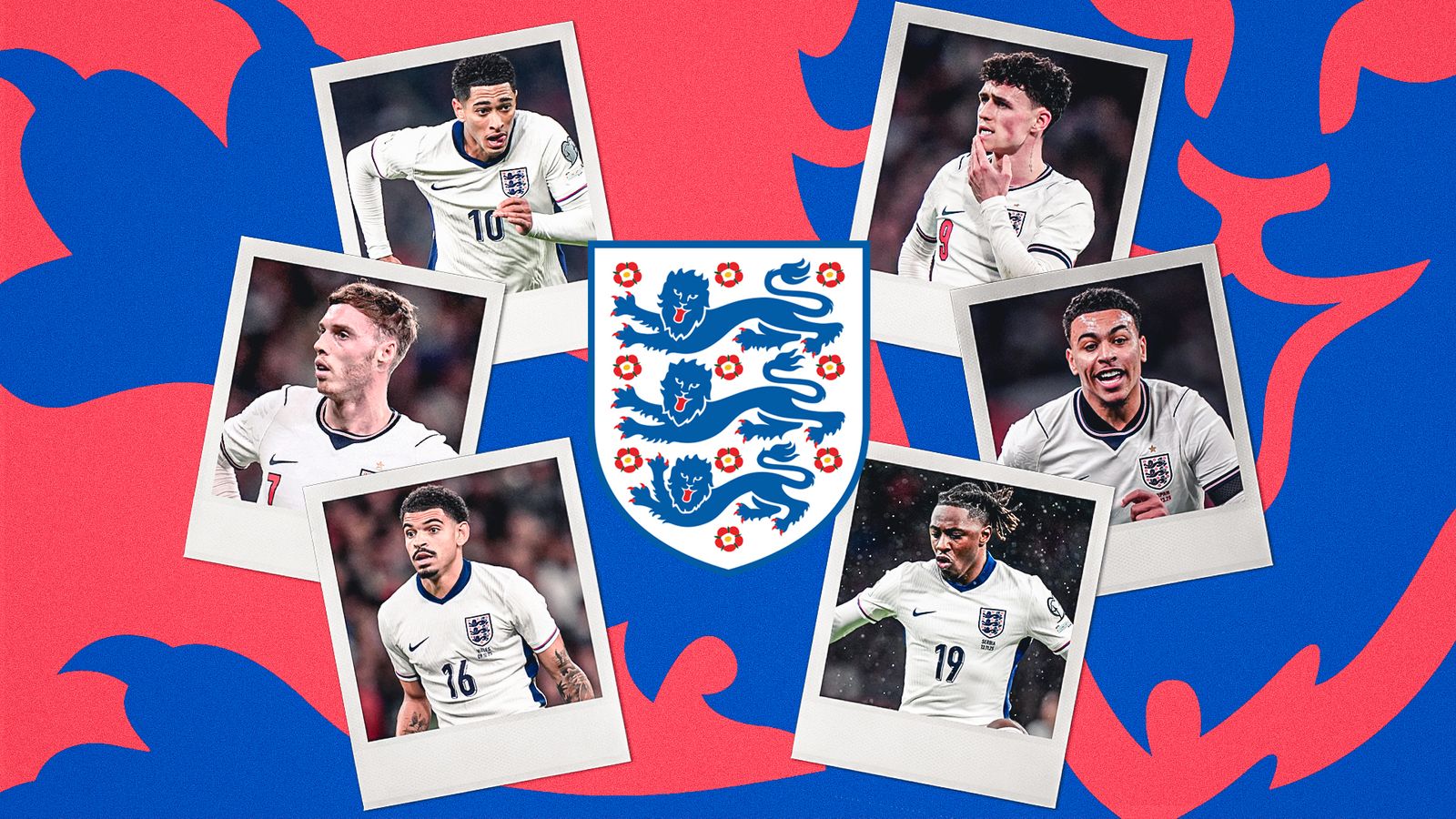
The recent noise around the squad list suggests there are 16 guaranteed names on the plane. These are the untouchables. Jordan Pickford, Kyle Walker, John Stones, Declan Rice, Jude Bellingham, Bukayo Saka, and Harry Kane form the undisputed spine.
Add in Trent Alexander-Arnold, Phil Foden, Cole Palmer, Luke Shaw, and a handful of trusted defensive rotations. You quickly realize the core of this team practically picked itself months ago.
But football at international tournament level is rarely won by assembling the best collection of individuals. It is won by finding the exact right structural balance. Tuchel knows this intimately.
His Champions League-winning Chelsea side wasn't the most expansive or technically gifted in Europe. It was structurally impregnable. He built a system that disguised weaknesses and amplified specific strengths.
The issue with this current England squad is that the remaining nine spots are entirely dependent on solving massive tactical contradictions. The 16 guarantees provide the ceiling of this team. The fringes of the squad will define the floor.
The geometry of the No. 10 problem
Let's look at the No. 10 position, because this is where the tactical headache becomes a full-blown migraine. As Sky Sports rightly highlighted, England have produced three world-class operators who all want to occupy the exact same 15-yard zone.
The traditional playmaker is largely dead. The role has been fractured into hybrid eights and inverted wingers who operate strictly in the half-spaces.
Jude Bellingham is a battering ram of a midfielder. His movements over the last two years have essentially turned him into a shadow striker. He does not want to dictate the tempo from deep. He wants to crash the box, attack cut-backs, and arrive late to finish moves.
If you watch his spatial awareness, he thrives on chaos. He relies on defenders being occupied by a traditional striker so he can exploit the blind spots.
Phil Foden, conversely, is a true half-space occupier. He receives the ball on the half-turn better than any English player in recent memory. But Foden requires very specific tactical conditions to thrive.
He desperately needs a high-and-wide winger stretching the defensive line to create pockets of space. Under Pep Guardiola, his movements are heavily choreographed. For England, when placed out on the left wing, he instinctively drifts inside. This clogs the very central zones that Bellingham wants to run into.
Then there is Cole Palmer. His rise has been built on an entirely different rhythm. Palmer slows the game down.
He operates with a delayed, almost arrogant cadence. He pauses in possession to force defenders into committing their weight, before sliding reverse passes through impossible gaps. Palmer is a volume player who needs the ball constantly to dictate the flow.
You cannot play all three. It is a structural impossibility. Previous regimes attempted to shoehorn every talented attacker onto the pitch. It resulted in a sluggish, congested final third where players were literally stepping on each other's toes.
If Tuchel opts for a 4-2-3-1, Bellingham is the undeniable starter behind Kane. His physical presence and counter-pressing offer an aggressive first line of defense.
That forces Foden out wide, where his effectiveness drops noticeably unless he has an overlapping left-back constantly holding the width. It relegates Palmer to a highly overqualified substitute role.
This forces the team into a narrow shape, completely reliant on full-backs for width. If the opponent plays a quick transition game, the space vacated by advancing English full-backs will be ruthlessly exploited.
The left-sided black hole
Any discussion about England's attacking shape eventually crashes into the reality of the left-back position. It is the tactical black hole that continuously warps the rest of the team's geometry. For years, Luke Shaw has been the only reliable overlapping presence on that flank.
When Shaw is fully fit, he provides the essential width that allows an inverted player like Foden or Jack Grealish to drift inside. Shaw’s overlapping runs force the opposition right-back to stay wide, instantly creating the half-space pockets where Foden is most dangerous.
But Shaw’s fitness record is a perpetual red flag. Without him, Tuchel is forced to deploy a right-footed player—like Kieran Trippier or Ezri Konsa—out of position. The knock-on effect of this is tactically catastrophic for the No. 10s.
A right-footed left-back will naturally cut back inside onto their stronger foot when they receive the ball in advanced areas. This entirely eliminates the threat of an overlapping run down the outside. The opposition defense realizes they don't need to defend the touchline, so they condense the center of the pitch.
Suddenly, Foden, Bellingham, and Kane are trying to operate in an area populated by five defending players. The passing lanes vanish. The ball speed drops. The attack becomes entirely predictable.
It is baffling that a nation with England's resources has failed to produce a natural left-sided understudy who can replicate Shaw’s tactical function. Nobody has firmly grasped the opportunity, leaving a glaring structural weakness.
If England travel to North America without a fully functioning left side, the entire burden of progression falls on Saka down the right. Elite teams will simply double-team the Arsenal winger, knowing there is no reciprocal threat on the opposite flank.
Replacing the irreplaceable: The Kane dependency
The second massive headache is the backup striker role. Harry Kane is not just England's primary goalscorer. He is the entire tactical fulcrum of the attacking structure.
When Kane drops deep into midfield, he drags a center-back with him. This creates the exact vertical channels that Saka and Bellingham exploit. He is a No. 9 and a No. 10 rolled into one highly efficient package.
When Kane is substituted or rested, the entire tactical geometry of the team collapses. Nobody else in the English squad does what he does. The debate for the deputy role seems to have boiled down to Ollie Watkins and Dominic Solanke.
Both are excellent players. But both change the fundamental way the team attacks. Watkins is a sensational runner in behind. He operates on the shoulder of the last defender and stretches the pitch vertically.
If England are defending deep and looking to counter-attack against a high-possession team, Watkins is a devastating weapon. But if England are dominating the ball against a low block, Watkins can become isolated. He wants the ball played into space, not to his feet in congested areas.
Solanke offers a slightly different profile. He is a more aggressive presser from the front, willing to engage center-backs and disrupt the early phases of build-up. He can hold the ball up reasonably well, but lacks the devastating final-third passing range that Kane possesses.
The fact that Ivan Toney seems to have fallen out of the guaranteed list is telling. Toney offers elite penalty-box instincts and a psychological edge from the spot, famously dispatching his penalty in 119th minute shootout scenarios. However, his overall mobility in open play doesn't quite match the pressing demands Tuchel usually insists upon.
Tuchel cannot simply swap Kane for Watkins in the 70th minute and expect the team to function the same way. The manager needs two entirely separate attacking game plans.
The fact that the 16 guarantees seemingly do not include a clear backup striker speaks volumes. It highlights a severe lack of depth in this specific tactical profile. It forces a complete systemic overhaul mid-match if a change is required.
The double pivot vulnerability
While the forward line dominates the tabloid headlines, the most alarming structural flaw lies at the base of midfield. Declan Rice is an exceptional ball-winner and carrier. His ability to intercept and drive through the center of the pitch is undeniable.
However, he is not a pure deep-lying orchestrator. He thrives when he has permission to jump out of the defensive line, hunt the ball down, and engage higher up the pitch. To do that safely, Rice needs a disciplined partner who will sit stubbornly in front of the center-backs.
We have seen the catastrophic results of pairing him with a player who lacks positional discipline. The space left behind a pressing Rice becomes a multi-lane highway for opposition counter-attacks.
Kobbie Mainoo is incredibly press-resistant and capable of wriggling out of tight spaces under severe pressure. But asking him to anchor a midfield against elite international opposition is a massive gamble. He operates best as a connector, not a destroyer.
Conor Gallagher offers relentless running and aggressive pressing. Yet, he lacks the intricate, progressive passing range to break down a well-organized mid-block when the opposition concedes possession.
This leads us to the Trent Alexander-Arnold experiment. Using him as an inverted full-back or stepping him into midfield offers unparalleled diagonal passing capability. He can switch play to Saka faster than any player on the planet.
But against elite transition teams, defending the wide spaces he vacates becomes a desperate scramble. If Alexander-Arnold steps inside to play next to Rice, the right-sided center-back is repeatedly pulled wide. This fractures the entire defensive structure.
England are heavily stacked in areas where tactical redundancy is least helpful. Conversely, they are critically light in the specialist roles required to win a 30-day major tournament.
Tournament pragmatism and the final cuts
The reality of international football is that coherent systems consistently trump collections of talented individuals. France won the World Cup in 2018 with Blaise Matuidi playing as a lopsided, defensively-minded left-winger. Argentina won the last tournament by building an aggressive, hard-running midfield explicitly designed to cover for Messi.
Tuchel will have to make ruthless, deeply unpopular decisions. Leaving a player like Palmer or Foden on the bench will generate endless debate. But it might be the exact pragmatic cruelty required to balance the side.
A tournament in the heat and vast distances of North America will test squad depth immensely. The 16 locked-in names guarantee a baseline of world-class quality. It is the remaining selections that will determine whether England actually have a coherent strategy.
The dilemma regarding the No. 10s and Kane's deputy isn't just about who starts the opening group game. It is about defining the entire structural identity of the team.
If Tuchel gets it right, he has the firepower to overwhelm any defense in the world. If he gets it wrong, we will be watching another painfully familiar summer of congested attacks, isolated strikers, and devastating counter-attacks. The decisions remaining are far from simple.
Read Next
- Why Tuchel's tactical rigidity will doom England at the World Cup
- Emi Martinez's broken finger will ruin Argentina's World Cup
- Merino's return gives Arsenal the physical edge for the final week
- Aston Villa's Europa League victory exposes the myth of the high press
- 🏆 World Cup 2026 — Full Coverage Hub
- 🏴 England World Cup 2026 — Three Lions Hub
The Mixer: The Story of Premier League Tactics, from Route One to False Nines
The definitive deep-dive into how the Premier League was won.
Frequently Asked Questions
Which players are guaranteed for England's 2026 World Cup squad?
What is the No. 10 dilemma facing the England national team?
How does Jude Bellingham operate in England's current tactical setup?
Why does playing Phil Foden on the left wing create issues for England?
What are England's main tactical weaknesses ahead of the 2026 World Cup?
More Coverage

Arsenal vs PSG: Why tactical rigidity will determine the European champion
30 minutes agoLincoln City just entered the weirdest experiment in League One history
2 hours ago
Arsenal’s title win has changed the math for London football
4 hours ago
Cristian Volpato makes a high-stakes call ahead of the World Cup
8 hours ago
Arsenal and England breathe sigh of relief as Bukayo Saka manages training load
8 hours ago
Emily Cassap represents a shift in Northern Ireland's tactics
8 hours agoMore Analysis
Thomas Tuchel has a major England problem before the World Cup
1 month, 4 weeks ago
Why Tuchel's tactical rigidity will doom England at the World Cup
1 week, 2 days ago
Thomas Tuchel isn't writing a sequel to Dear England
1 week, 3 days ago
England's left-back crisis is Thomas Tuchel's biggest World Cup headache
2 months ago
Thomas Tuchel has a massive headache before the World Cup even starts
2 months, 1 week ago