The Bill Comes Due in Nottingham
UEFA has finally dropped the hammer on Fenerbahçe, though it feels more like a light, bureaucratic tap on the wrist. Following the chaotic scenes during their recent Europa League clash, the Turkish giants have been officially ordered to foot the bill for the extensive damages caused by their traveling supporters at Nottingham Forest.
The ruling mandates that Fenerbahçe compensate Forest directly for the destruction left behind at the City Ground. It closes a messy chapter in what was supposed to be a purely romantic European night on the banks of the River Trent.
This is the inevitable conclusion to a fixture that saw the intense, boiling-point culture of Istanbul football crash head-on into the tight, traditional confines of an iconic English stadium. For Forest, an unexpected and thrilling run in continental competition suddenly came with a very tangible, physical cost.
The away end was left looking like a demolition site. It served as a stark, expensive reminder that hosting Europe’s most volatile fanbases requires more than just a few extra stewards and a polite pre-match briefing.
A Bureaucratic Tap on the Wrist
The governing body's decision is beautifully straightforward on paper: break it, and you buy it. But the simplicity of the mandate belies the massive logistical nightmare this has caused Nottingham Forest’s back-office staff over the past fortnight.
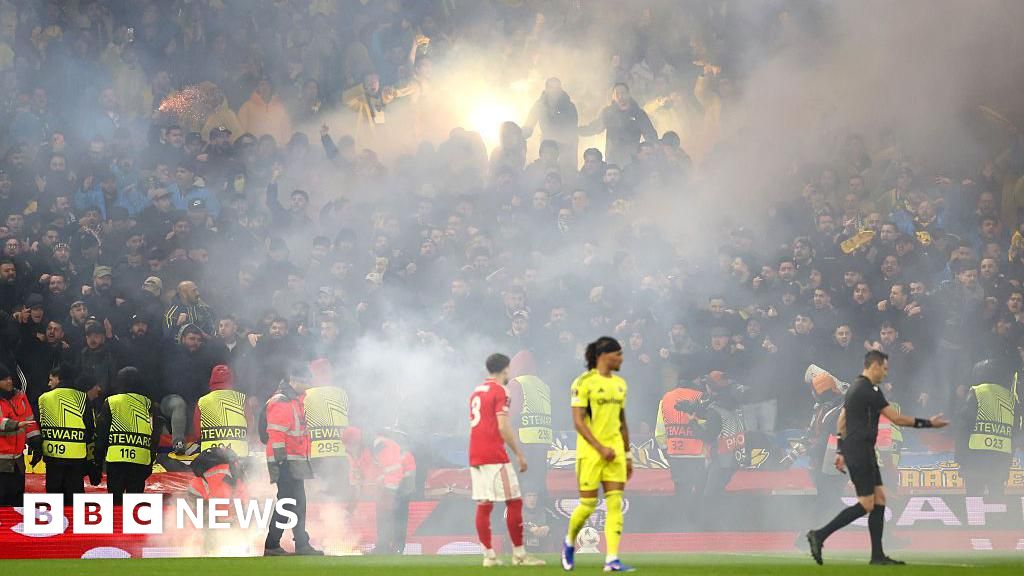
When a club with the massive gravitational pull of Fenerbahçe rolls into town, the atmosphere instantly shifts. The noise is deafening, the pyrotechnics are blinding, and the relentless energy is genuinely intimidating. But that energy tipped over the edge in Nottingham.
Ripped-out seating, severely damaged concourse facilities, and widespread vandalism in the away sector forced Forest’s operations staff into overdrive. The plumbing in the away toilets was reportedly wrecked, and extensive graffiti required specialist removal.
Here is the massive flaw in UEFA's current disciplinary framework. Fining a massive, heavily backed club like Fenerbahçe for stadium damage is little more than an administrative inconvenience. It is simply baked into the operating budget of competing in Europe.
The Istanbul club will pay the invoice without blinking. But does writing a check actually deter the ultra groups from tearing up the next away end they visit? History across European competitions suggests absolutely not.
Forest are now left rushing to repair the Trent End lower tier, or whichever specific section housed the visiting contingent, before their next massive domestic fixture. It is a massive drain on resources and energy for a club that is trying to punch above its weight in both the Premier League and the Europa League.
The romanticism of Thursday night football fades incredibly quickly when your stadium staff are sweeping up shattered plastic and calling emergency plumbers on a Friday morning.
UEFA's complete lack of severe sporting sanctions—like a blanket, multi-game ban on away fans—means these incidents are guaranteed to keep happening. The financial restitution is a cheap band-aid on a gaping wound of fan violence that continues to plague the knockout stages.
The Reality of European Nights
For Nottingham Forest, this entire European campaign has been a steep, bruising learning curve. Navigating the brutal Thursday-Sunday grind is difficult enough for the players on the pitch. Off the pitch, it introduces a completely different tier of operational stress for the club.
Hosting Premier League away fans is a known, manageable quantity. The banter is tribal, the chanting is loud, but the setup of English football is purpose-built to handle it week in and week out.
Bringing in thousands of passionate Turkish supporters, many of whom traveled without tickets just to soak up the occasion in the city center, stretched Forest’s matchday operations to the absolute breaking point.
Nottinghamshire Police had to deploy serious resources to manage the crowds before a ball was even kicked. The city center saw heavy police escorts, a standard procedure for high-risk European fixtures, but one that completely changes the mood of a matchday.
Local businesses around the Trent often have to decide whether to shutter their doors or risk the chaos of thousands of ticketless fans drinking in the streets. It is a stark contrast to the highly sanitized, heavily regulated environment of the modern Premier League.
In England’s top flight, away travel is a strictly managed affair, with predictable ticket allocations and familiar faces. European nights strip away that predictability. They inject a level of raw, unpredictable danger that English clubs are increasingly unaccustomed to handling without heavy-handed intervention.
The local police force and the club's private security contractors were clearly caught off guard by the sheer aggression directed at the physical stadium facilities itself. You cannot police a European knockout tie with the same relaxed tactics you use for a mid-table domestic cup clash.
There is a lingering, justified frustration around the City Ground today. While the club will eventually be reimbursed for the repair costs, the UEFA-mandated cash transfer does not buy back the lost man-hours. It does not erase the terrible optics of a shattered away concourse being broadcast across social media to millions of rival fans.
Nottingham Forest owner Evangelos Marinakis has poured millions into upgrading the club's facilities. Seeing those upgrades trashed by visiting supporters will undoubtedly infuriate the notoriously fiery Greek shipping magnate. He expects his stadium to be respected.
Forest desperately wanted this tie to be remembered for the football. They wanted to celebrate the return of magical European nights under the lights, a callback to their historic glory days. Instead, the entire post-match discourse has been hijacked by invoices, structural repairs, and disciplinary committee statements.
Looking Ahead to the Quarter-Finals
This incident casts a long, grim shadow as we look toward the business end of the European season. With the Europa League Quarter-Finals looming on April 9, the stakes are only getting higher and the tension is only going to escalate.
The teams left in the competition represent some of the most fiercely supported, uncompromising clubs on the continent. Host cities for the upcoming rounds will look at the chaotic footage from Nottingham and immediately begin ramping up their police presence.
If Fenerbahçe are still in the mix for the quarter-finals, their traveling support will be under massive, unprecedented scrutiny. The reputational damage for the club is significant, even if their board attempts to dismiss the vandalism as the isolated actions of a rogue minority.
For Forest, if they have survived this bruising encounter to advance further into April, it is a harsh lesson in European realpolitik. They must harden their physical setup and drastically rethink their segregation and containment strategies.
You cannot host top-tier European knockout ties with a welcoming, naive attitude. The away sectors need to be functional fortresses, explicitly designed to withstand not just deafening noise, but targeted physical assault from groups determined to leave their mark.
Ultimately, this UEFA ruling is a frustrating footnote in a much larger, ongoing problem within continental football. The sport is built on raw, unfiltered passion, but the line between that passion and wanton destruction is repeatedly ignored in these high-stakes fixtures.
Fenerbahçe paying for the physical damages is the absolute bare minimum requirement. It is the floor of basic accountability. But until governing bodies start docking competition points or issuing multi-year travel bans that actually hurt a team's chances of progressing, the plastic seats will continue to fly into the pitch.
Nottingham Forest will fix their stadium. The invoice will eventually be processed by the authorities in Istanbul. Both clubs will move on to their respective next fixtures as the grueling season marches into the spring.
But the bitter taste of the whole affair remains hard to wash away. A historic, highly anticipated European tie in the East Midlands will be remembered not for a stunning goal or a tactical masterclass, but for the shattered remnants of the away end and the tired, predictable cycle of UEFA disciplinary hearings.
Read Next
- Fenerbahçe's away day at Nottingham Forest sparked a toxic fan civil war
- Catarina Macario is moving for $8 million and it’s about damn time
- Top 10 Moments Shaping the 2026 World Cup Narrative
- Top 10: Defining Moments of Northern Ireland’s World Cup Heartbreak
- 🔥 Turkish Süper Lig 2025-26 — Istanbul Derby Hub