The Thursday night chaos we deserve
We are officially in the endgame. It is April 12, and the Europa League has successfully filtered out the pretenders, the domestic underachievers, and the squads that simply lacked the depth to survive the Thursday-Sunday meatgrinder. The Champions League gets all the glossy television promos, but anyone who actually watches European football knows the real unhinged drama happens here.
Looking ahead to the quarter-final second legs on April 16, the bracket is heavily loaded with narratives that make no sense on paper but perfect sense on the pitch. We have wildly stubborn managers refusing to adapt. We have players visibly dragging their legs, absolutely terrified of snapping a hamstring just sixty days before the World Cup kicks off in North America. We even have the looming threat of a final played in Istanbul, with a Turkish giant desperately trying to survive long enough to claim a home-city advantage.
The road to Beşiktaş Park is completely fractured. Nobody looks invincible. Every remaining squad has at least one massive, glaring weakness that a smart opponent can exploit. The tactical naiveite on display in last week's first legs was staggering, and it leaves us with five massive questions that will dictate who actually gets to lift the trophy in late May.
1. Will Ange Postecoglou finally admit his high line is suicidal in Europe?
Tottenham Hotspur are the most entertaining team to watch in this competition, purely because you never know if they are going to score four goals or concede five. Their first-leg performance in Germany against Bayer Leverkusen was a masterclass in tactical stubbornness. Pushing your defensive line up to the halfway mark against a team built entirely around vertical transition is certainly a choice. It resulted in a 3-1 defeat that flattered Spurs.
Ange Postecoglou has repeatedly stated he will not change his philosophy. That is highly commendable when you are playing against mid-table Premier League sides who panic under a heavy press. It is absolute madness when you are facing elite European opposition who spend all week drilling quick, one-touch passing sequences to break that exact trap. It feels exactly like watching Marcelo Bielsa's Leeds United — incredibly fun for the neutrals, but tactically suicidal when it actually matters.
Micky van de Ven is fast, but asking him to cover fifty yards of open grass every time Tottenham loses possession in the attacking third is physical abuse. Leverkusen completely bypassed the midfield. They drew Spurs in, triggered the press, and then launched the ball into the massive acres of space left behind Pedro Porro and Destiny Udogie. If Tottenham cannot overturn this deficit on Thursday, the inquest into Postecoglou's European adaptability needs to start immediately. You cannot win a knockout tournament by giving your opponents free runs at your goalkeeper.
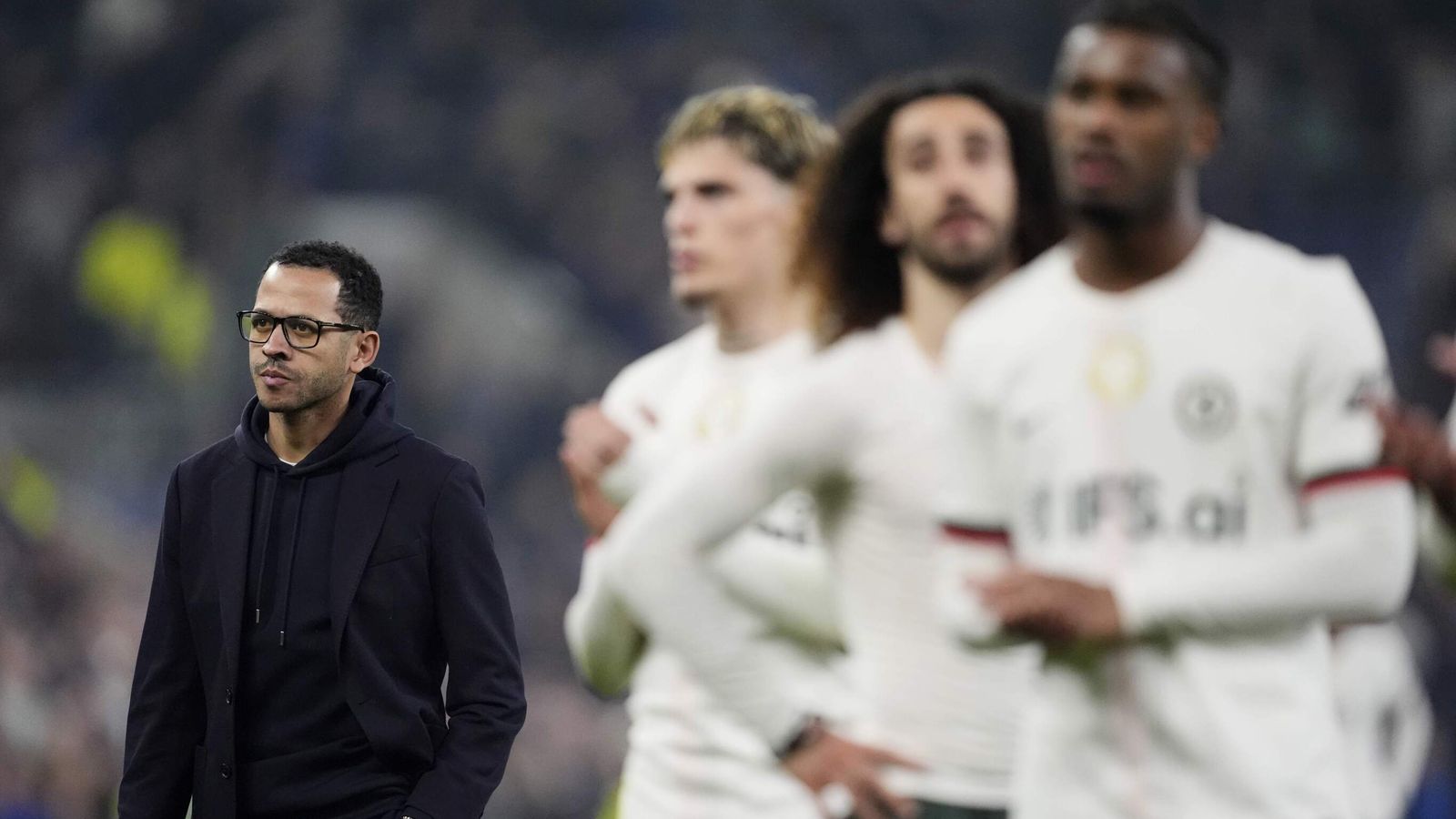
2. Can AC Milan survive the Velodrome without a functioning midfield?
Milan managed to scrape a 2-1 victory over Marseille at the San Siro, but the scoreline hides how deeply flawed this Italian side looks right now. They dropped down from the Champions League group stages carrying the expectation of heavy favorites, yet they play like a team composed entirely of strangers.
The problem is glaringly obvious. They have an incredibly talented forward line, led by Rafael Leão, and a completely invisible central midfield. Ruben Loftus-Cheek and Tijjani Reijnders spent the entire first leg chasing shadows. Marseille realized within ten minutes that they could just pass straight through the center of the pitch without facing a single tackle. There is absolutely no resistance.
Now Milan has to travel to the Stade Vélodrome. If you have never seen a European knockout match at the Velodrome, it is loud, hostile, and genuinely intimidating. Marseille's fans will demand extreme aggression from the opening whistle. If Milan attempts to sit back and absorb pressure with a midfield that cannot win the ball, they are going to get absolutely battered. It is giving serious shades of their 2023 Champions League semi-final collapse against Inter — lots of individual attacking flair completely undermined by a soft underbelly. Stefano Pioli's replacement has yet to fix the structural issues that plagued this team all winter. Relying on Leão to produce a moment of magic on the counter-attack is a prayer, not a tactical plan.
3. How heavily is the 2026 World Cup impacting intensity?
Nobody wants to talk about it openly, but the physical toll of this season is heavily suppressing the quality of these knockout matches. The expanded 48-team World Cup kicks off on June 11. Players are completely exhausted. Look at the tracking data from the round of 16 and the quarter-final first legs. High-intensity sprints are dropping. Players are pulling out of 50-50 challenges they would normally contest.
You cannot blame them. Imagine being a regular starter for your national team, carrying a slight calf strain in mid-April. Are you going to risk tearing a muscle on a cold Thursday night in the Europa League and missing the biggest sporting event on the planet? Absolutely not. This self-preservation instinct is creating bizarre passages of play where both teams essentially agree to walk for ten-minute stretches.
This dynamic heavily favors squads with massive depth. Teams that can rotate five players without a massive drop in quality are going to survive. Teams relying on their starting eleven to play ninety minutes twice a week are going to collapse. We are watching a war of attrition where the medical staff is arguably more important than the coaching staff right now.
4. The death of the false nine and the return of the target man
If there is one major tactical trend defining this year's Europa League, it is the complete abandonment of the false nine. Knockout football in 2026 has become remarkably direct. Managers are realizing that when the high press fails, you need an out-ball. You need a massive, physical striker who can pin a center-back, control a long clearance on his chest, and buy the team five seconds to breathe.
Look around the remaining squads. Sporting CP relies heavily on Viktor Gyökeres to drag them up the pitch. Roma uses Romelu Lukaku as a blunt instrument to bypass midfield congestion. Athletic Club throws balls into the box with extreme prejudice. The intricate, Guardiola-style passing networks around the penalty area are mostly gone, replaced by aggressive wing play and early crosses.
This shift makes for incredibly raw, physical matches. Referees are letting a lot of contact go unpunished. The semi-finals are going to be decided by which team has a center-forward capable of winning ugly headers against miserable, hyper-aggressive defenders. It is not pretty, but it is brutally effective when the stakes get this high.
5. What happens if Galatasaray actually reaches Istanbul?
This is the nightmare scenario for UEFA and an absolute dream for football purists. The final is scheduled for Beşiktaş Park in Istanbul. Galatasaray, currently battling through a chaotic tie with Sporting CP after a 2-2 draw in Lisbon, is desperately trying to reach a European final in their own city. Yes, it is their fierce rival's stadium, but the entire city would effectively become a hostile zone for whoever has to play them.
Turkish teams rarely make it this deep into European competitions anymore, usually falling apart in the group stages due to chaotic squad building or defensive meltdowns. But this Galatasaray side is different. They are deeply cynical, incredibly aggressive, and completely unfazed by playing away from home. Their performance in Lisbon was a masterclass in dark arts — slowing the game down, disrupting the rhythm, and hitting on the break.
If they finish the job against Sporting on Thursday, the entire complexion of the tournament changes. Every other remaining team will suddenly realize that getting to the final means walking into an absolute cauldron. The pressure on Galatasaray would be immense, but the psychological advantage of playing a European final without having to leave your home city cannot be overstated. It would be the most heavily policed, intensely watched, and downright explosive match of the entire season.
The final stretch
We are just weeks away from crowning a champion, but the path forward is a total mess. The Europa League is rarely won by the best team. It is usually won by the team that refuses to break down when everything goes wrong. Between Tottenham's defensive high-wire act, Milan's empty midfield, the looming shadow of the World Cup, and the terrifying prospect of an Istanbul final featuring a local club, we are guaranteed absolute chaos.
Thursday's matches will answer a lot of questions, but they will probably just create new problems. That is the beauty of this competition. Nobody is safe, nothing makes sense, and any manager who thinks they have it all figured out is usually packing their bags by Friday morning.
Read Next
- Eddie Howe is saying all the right things, but his Newcastle future looks fragile
- Why the 2026 Europa League is an absolute bloodbath
- The Premier League final day is looming and it is going to be a beautiful disaster
- Why Man City will break Arsenal's hearts on the final day again
- 🏆 Europa League Final 2026 — Full Coverage Hub