The Anatomy of an Outburst
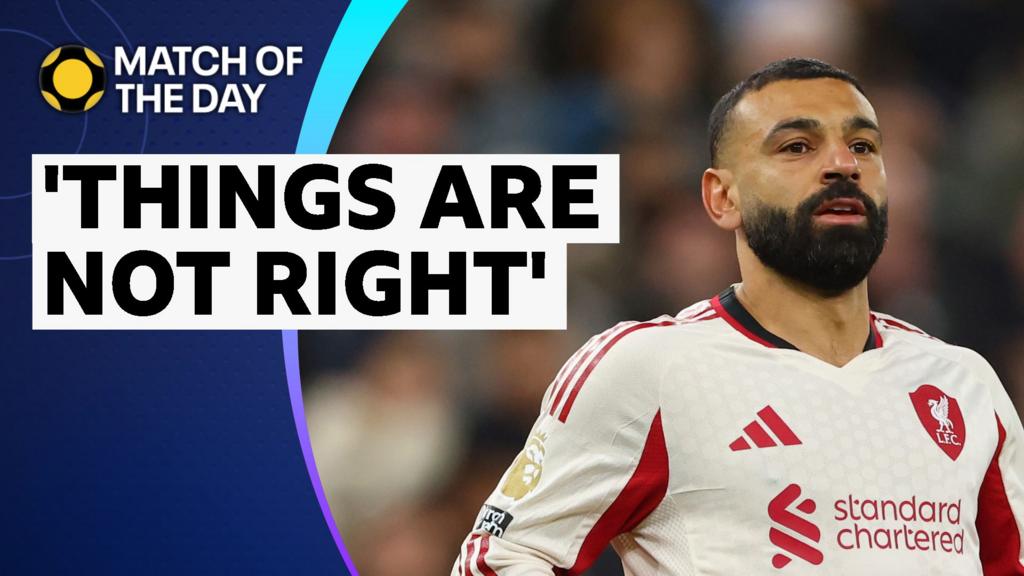
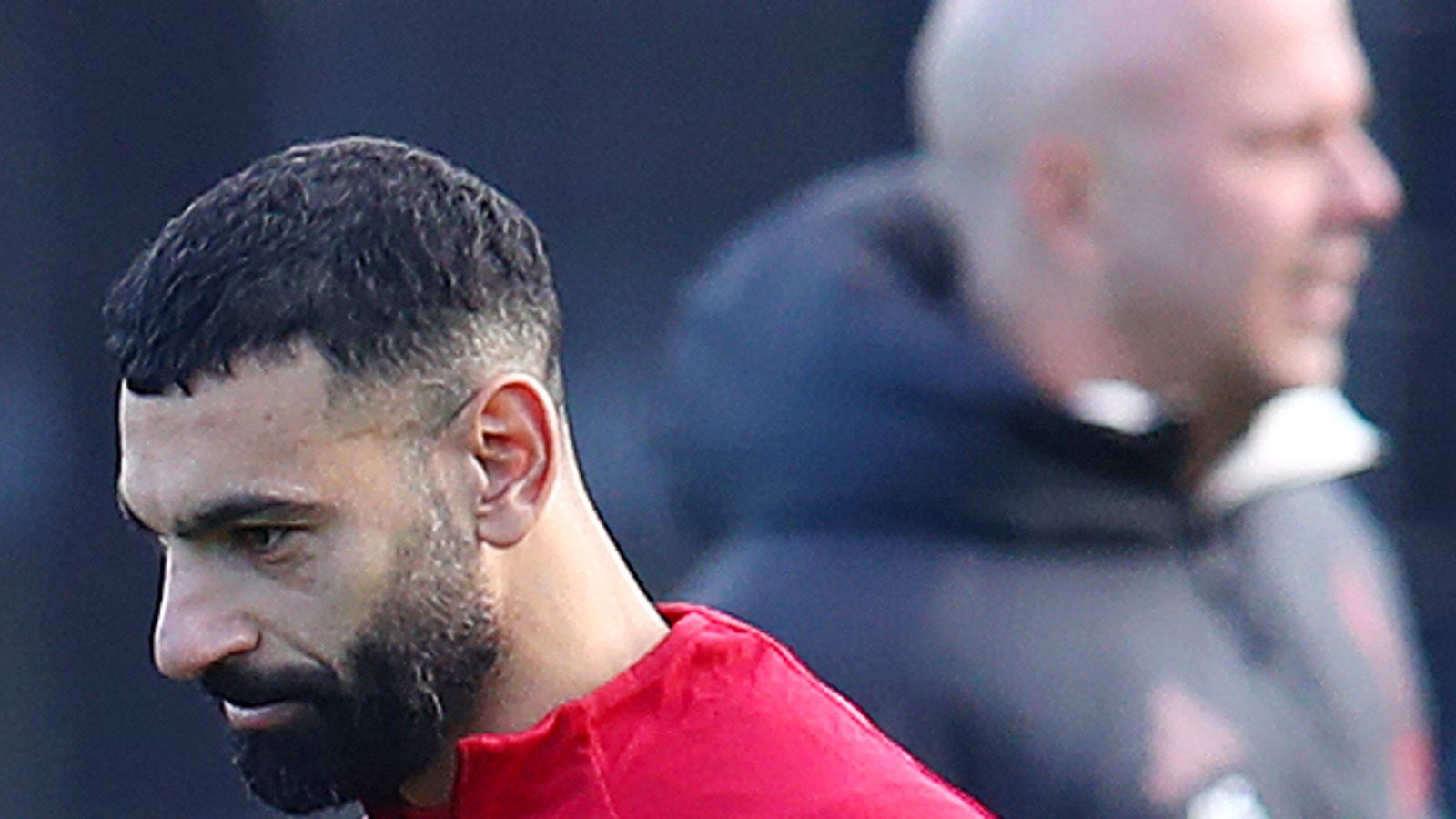
Gary Neville's assertion that he would be fuming at Mohamed Salah's weekend social media post isn't just a pundit generating a headline. It is the natural reaction of a former dressing room leader seeing a current one break the sacred omertà of the modern football club. As The Mirror reported, Salah's explosive verbal volley regarding Liverpool's rotten form has split opinions online. Fans are divided between backing their star man and demanding internal unity.
Neville's perspective is entirely rooted in the culture of a functional dressing room. You do not air dirty laundry in public. You do not point fingers at the collective form when you are part of the starting eleven.
I'd be fuming.
That is the quote that frames the debate. But when you strip away the emotion of a superstar venting online, and bypass the traditional punditry outrage, you are left with the cold, hard tactical reality on the pitch. The data suggests that Salah's frustration isn't just justified. It is the inevitable byproduct of an elite forward watching his tactical supply line disintegrate before his eyes.
To understand the weight of Salah's social media post, you have to look beyond the text and look at the underlying metrics of Liverpool's season. The frustration of a winger who built his legacy on high-volume output is directly tied to the mechanical failure of the system behind him.
The Collapse of the Supply Line
For the better part of a decade, Mohamed Salah has operated not just as a winger, but as the primary shot-taking terminus for one of the most aggressive attacking machines in European football. His historic baseline relies on a very specific set of tactical conditions. The midfield wins the ball high, the full-backs stretch the defensive line, and Salah isolates his marker in the final third.
When those conditions are met, his numbers are frightening. But this season's rotten form has seen a structural collapse in how Liverpool move the ball into the final third. We are seeing a drastic reduction in high-turnover sequences resulting in shots. The pressing intensity, historically measured by Passes Per Defensive Action (PPDA), has waned. When a team's PPDA rises, it means they are allowing the opposition more passes before intervening. They are defending deeper, which means the starting position for every counter-attack is further away from the opposition goal.
For Salah, this is a statistical nightmare. Instead of receiving the ball on the edge of the penalty area against a retreating, disorganized backline, he is increasingly picking up possession near the touchline, forty yards from goal, facing a set defensive block. The distance he has to travel to generate a shot has increased, and consequently, his Expected Goals (xG) per 90 minutes will inevitably suffer in this type of dysfunctional setup.
Neville is right to point out the lack of decorum in Salah's post. But Salah is responding to a very real tactical starvation.
Touches in the Danger Zone
The most telling metric for any elite forward is touches in the opposition penalty area. It is the purest indicator of a team's ability to sustain pressure and a forward's ability to find space. During Liverpool's peak years, Salah routinely ranked in the 99th percentile among European forwards for this metric. He lived in the box.
This season, the eye test tells us he is increasingly isolated. The tactical geometry has shifted. Without the relentless, suffocating midfield press that defined Liverpool's identity, the ball is not being recycled quickly enough to catch defenses out of shape. The resulting stagnation forces Salah to drop deeper to simply feel the ball, dragging him away from the zones where he is most lethal.
When a player who averages over three shots per game suddenly finds himself starved of service, the frustration compounds. The social media post over the weekend did not happen in a vacuum. It was the boiling over of weeks, perhaps months, of tactical isolation. You can track the frustration in the heat maps. They show a player drawn wider and deeper, fighting a losing battle against a system that is no longer optimizing his output.
The Conversion Rate Conundrum
There is, however, a critical observation to be made here that Neville would likely seize upon. While the supply line has undeniably faltered, an elite forward is still expected to convert the chances that do fall his way. If we analyze the shot quality and conversion rates during periods of poor team form, we often see a secondary drop-off caused by an eagerness to force the issue.
When a striker knows he might only get one high-quality chance per game instead of three, the pressure on that single shot increases exponentially. The mechanics of finishing break down under stress. Shots are snatched at. Decisions become selfish. A pass that should be slipped across the six-yard box is instead driven into the side netting from a tight angle.
This is the dual nature of Liverpool's current crisis. The system is broken, failing to create high-quality, high-frequency chances. But simultaneously, the attacking unit's composure has evaporated. The split opinions online mentioned by The Mirror likely reflect this dual reality. Some fans see a team failing its star; others see a star failing to drag his team out of the mire.
Neville's hypothetical dressing room reaction stems from the fact that football is a collective enterprise. If the midfield is struggling to progress the ball, they do not need the primary goalscorer broadcasting their failures to the world. It breaches trust. It creates a rift between the creators and the finisher.
Historical Context and Dressing Room Politics
We have seen this pattern before. Elite forwards, acutely aware of their own ticking clocks and historical legacies, often react poorly when the collective standard drops. Cristiano Ronaldo's second stint at Manchester United, a dressing room Neville knows intimately, featured similar public displays of frustration when the tactical reality failed to match the forward's expectations.
The numbers dictate that a forward's output is reliant on the team. But dressing room politics dictate that the team must protect the forward, and the forward must protect the team. Salah's explosive post shatters that fragile ecosystem. It shifts the blame. It points a glaring spotlight on the midfield and defensive structures that are failing to provide the platform for success.
Neville knows that once that spotlight is turned on by an insider, it is very difficult to turn off. The media will dissect every misplaced pass, every failed defensive rotation, framing it through the lens of Salah's dissatisfaction. It creates a self-fulfilling prophecy of toxic pressure.
The Reality of the Rebuild
Looking ahead, the question isn't just about whether Salah was right or wrong to post his feelings. It is about how the structural issues highlighted by his frustration can be fixed. Liverpool's rotten form is not a mystery; it is a mechanical failure.
The midfield needs to rediscover its ability to win second balls. The full-backs need to provide the width that allows Salah to operate in the half-spaces. The passing tempo, which has looked sluggish and predictable, must return to the hyper-kinetic speeds that once terrified the Premier League.
Until those underlying metrics improve, until the PPDA drops and the final-third entries rise, Salah will continue to be starved. And while Gary Neville is absolutely correct that taking to social media is a breach of dressing room code, the numbers suggest that Salah is simply stating a truth the data has been screaming for weeks.
The debate will rage on online. But the solution won't be found in the comment sections or in television studios. It will be found on the training pitch, where Liverpool must rebuild the tactical framework that once made them untouchable. If they don't, Salah's outburst won't be an isolated incident; it will be the defining narrative of a season gone completely off the rails.
Read Next
- Mohamed Salah is right about the crumbling state of Arne Slot’s Liverpool
- Wolves' European Dream Hinges On Solving The Fulham Puzzle
- Michael Carrick's chaotic United finish third by accident
- Brighton are ready to expose the fatal flaw in the Leeds machine
- 🇪🇬 Egypt World Cup 2026 — Salah's Last Dance