
Hashtag United's 7-0 collapse proves YouTube football has a hard ceiling

The Illusion of the Content Club
The March international break always forces a wandering eye down the English football pyramid. With the top flights paused, traditional fans look to the lower tiers for a pure, unvarnished fix of the sport. But look closely at the semi-pro and amateur ranks in 2026, and the picture is bizarre.
It is less about muddy pitches and local pride, and more about subscriber counts, energy drink endorsements, and vanity projects. The intersection of internet fame and grassroots football has officially reached a breaking point.
For decades, the National League and its regional feeders operated in a state of quiet, desperate financial ruin. Clubs survived on meat raffle money, loyal turnstile operators, and the occasional FA Cup run. Now, a new asset class has arrived.
Content creators and internet celebrities have realized that buying a lower-league football club is cheaper than running a digital marketing agency. They want the authenticity of the pyramid without respecting the grind required to survive in it.
Look no further than Hashtag United. Founded a decade ago by Spencer Owen, they were the pioneers of the YouTube-to-pitch pipeline. They played exhibition games for views before bravely stepping into the actual pyramid. For a while, the momentum was undeniable.
They won promotions. They built a real fanbase. They brought in former professionals to anchor their midfield. They looked like the future of alternative football ownership.
But gravity always wins in non-league football. The seventh tier is a brutal, unforgiving environment. It is populated by aggressive center-halves, tactically astute part-time managers, and wage bills padded by local businessmen.
It requires defending set-pieces in swirling rain and breaking down stubborn low blocks. Just days after Hashtag United shockingly requested to be relegated from this level, reality delivered a brutal verdict on the pitch. They were obliterated 7-0.
That scoreline is not just a bad day at the office. It is an utter structural failure. It shows what happens when a club built on engagement metrics runs into semi-professional teams built on grit, tactical discipline, and aggressive defensive organization.
Hashtag United hit their absolute physical and mental ceiling. You cannot edit around a seven-goal deficit in post-production. The algorithm cannot track a runner into the box or win a vital second ball on a freezing Tuesday night in Essex.
Their request for voluntary relegation is the ultimate admission of defeat. It breaks the fundamental contract of the English pyramid: you fight to go up, and you fight to stay up.
Asking to go down because the football is too hard exposes a deep misunderstanding of the sport. It treats league placement as a slider in a video game settings menu, rather than an earned status. It is a terrible look for a club that demanded to be taken seriously by the football establishment.
The Cost of Survival in the Lower Leagues
Yet, the influencer invasion is only accelerating, and it is happening higher up the chain. Over in East London, Dagenham & Redbridge are operating under the glow of KSI’s investment. They are currently fielding Andy Carroll—a visual that feels like a glitch in a broken simulation.
Thanks to the international break lifting the usual broadcasting blackout, fans can stream Dagenham for free today. It is a shrewd, ruthless business move. Give the product away, capture the wandering Premier League eyeballs, and monetize the backend through advertising and data collection.
KSI understands attention better than almost anyone in modern media. Putting a battered Andy Carroll up front is pure spectacle. It guarantees short-form video clips. It guarantees social media traction every time the former Liverpool striker wins a header or fluffs a volley.
Tactically, watching Carroll in the National League is a fascinating experiment in physical decay versus elite experience. He cannot lead a high press. He rarely sprints into the channels. But if you put the ball within a three-yard radius of his forehead, he will still win the aerial duel.
Opposing defenders, used to dealing with energetic 22-year-old loanees from League One academies, suddenly have to figure out how to move a 6-foot-4 battering ram who knows every dark art in the book.
But we have to ask what Dagenham & Redbridge actually is now. Just fifteen years ago, under the legendary John Still, this club fought its way into League One. They were the ultimate underdog story, built on shrewd scouting of non-league talent and an unbreakable team spirit. They represented their patch of East London with fierce, authentic pride.
Are they still that club? Or are they merely a physical prop for the Prime energy drink empire? KSI’s money undoubtedly helps keep the lights on. Running a National League club today is a financial black hole, requiring hundreds of thousands of pounds just to tread water.
The transaction, however, comes with a heavy cultural cost. The soul of the club shifts slightly with every viral marketing stunt. The identity is suddenly tied to the whims of a man who built his empire playing FIFA and fighting exhibition boxing matches.
Every kit release, every major signing, every broadcast decision is filtered through the lens of what generates the most internet traffic. You get financial security, but you surrender your dignity to the engagement machine.
The Acceptable Face of Vanity Projects
The contrast between corporate influencer takeovers and pure, localized investment is stark. Take the bizarre but charming situation unfolding down in Warwickshire.
An unnamed Formula One driver has suddenly emerged as the financial backer for a Sunday league team. Shottery United, currently floating mid-table in the Evesham & District Sunday Football League Division Two, are now inexplicably operating with elite motorsport money.
This is the acceptable, entirely harmless face of celebrity involvement. There is no aggressive rebrand. There is no demanding the team play in neon pink kits for better thumbnail visibility. There is no camera crew tracking the manager into the dressing room to manufacture halftime drama.
It is simply a wealthy athlete buying the post-match pints and paying the exorbitant local council pitch fees for a group of mechanics, teachers, and builders. Shottery United will not be trying to hack their way into the seventh tier. They will just enjoy the ride.
They will buy nicer training bibs, secure a better sponsor for the front of the shirt, and maybe upgrade their post-match spread at the local pub. It is a rare instance of modern money respecting the amateur boundaries. It is genuine philanthropy disguised as a football sponsorship, rather than a cynical venture capital play.
When the Blood Pact Breaks
All of this forces a deeply uncomfortable conversation for legacy fans. When your club is bought by a YouTuber, or when your rivals start fielding aging target men for engagement bait, what happens to your loyalty?
The BBC recently asked a provocative question: Can a fan ever truly stop supporting their team? For decades, the answer across British football was a defiant, unconditional no.
You supported your local side through administration, awful managers, and terrible owners. You complained, you protested, you boycotted the pie stands, but you never walked away entirely. It was a blood pact. Changing teams was considered the ultimate sporting sin, an offense that carried a lifetime of derision from your peers.
We have seen clubs test this loyalty before. The hostile relocation of Wimbledon to Milton Keynes broke the bond for thousands, forcing them to start again at the bottom of the pyramid. The corporate rebranding of Austria Salzburg by Red Bull alienated a massive portion of their core support. But those were violent, sudden hostile takeovers.
The influencer era represents a slower, more insidious erosion of club identity. It is one thing to watch your team lose every week due to sheer incompetence on the pitch. It is entirely different to watch your team become a punchline in a heavily edited vlog.
When the core purpose of a football club shifts from winning football matches to generating digital content, the emotional connection violently snaps. You realize you are no longer a supporter; you are just a metric on a spreadsheet.
Fans of Hashtag United—the ones who legitimately bought into the dream, who traveled to away days and stood in the rain—must be wondering what exactly they are supporting today. You show up in the freezing cold to watch your team concede seven goals, only to find out the boardroom has already waved the white flag and asked for a voluntary demotion.
It is humiliating. It makes a mockery of the time, money, and emotional energy fans invest in the project. We are rapidly approaching a tipping point in the lower leagues. The traditional revenue models are completely broken.
Ticket sales and matchday catering revenues cannot cover the ballooning costs of travel, facility maintenance, and player wages. The FA offers very little meaningful financial protection for clubs teetering on the edge of bankruptcy.
The immense wealth hoarded at the top of the Premier League rarely trickles down to the base of the pyramid in a way that sustains these historic community clubs. In that desperate, cash-starved vacuum, YouTubers, streamers, and pop stars look like white knights riding over the hill.
They bring immediate cash injections to clear debts. They bring lucrative new sponsorship deals. They bring a sudden surge of teenage fans who actually buy the overpriced replica shirts. For a board of directors staring at a winding-up order from HMRC, handing the keys over to a twenty-something with a ring light and ten million subscribers feels like the only logical choice to prevent total liquidation.
However, the bill always comes due. Football is not a frictionless digital product. It is chaotic, unpredictable, and deeply resistant to being controlled by a script. It requires relentless, grueling competence across every department.
It requires a massive network of scouts, medical staff, and tactical planning. You cannot outsource defending a counter-attack to an app. When the novelty inevitably fades, and a traditional, hard-nosed side puts seven goals past your makeshift, engagement-friendly defense, the content dries up.
The algorithm stops promoting the videos because relentless losing is not fun to watch. The fleeting teenage fans move on to the next viral trend on TikTok. And the club is left holding the bag, completely hollowed out, with its traditional local fanbase alienated and its hard-earned reputation in tatters.
The English pyramid will survive this era of vanity projects. It has survived worse. It survived the hooliganism epidemic, massive stadium disasters, and multiple financial crashes. The structure is deeply embedded in the cultural fabric of the country.
But individual clubs might not be so lucky. As Hashtag United just painfully proved, the crash back to reality is going to be incredibly violent for those who tried to cheat the system.
SKLZ Star-Kick Hands-Free Solo Soccer Trainer
Master your touch and control without ever chasing the ball.
Frequently Asked Questions
Who founded Hashtag United?
Why did Hashtag United request voluntary relegation?
What happened in Hashtag United's recent 7-0 loss?
How do content creator ownership models affect lower leagues?
What makes the seventh tier of English football so difficult?
More Coverage
Jonathan Gjoshe's train nightmare is the stuff of actual horror movies
1 week, 4 days agoBradley Lowery at 15: Why Sunderland fans will never let that light go out
1 week, 4 days agoCallum Paterson is the last real footballer left
1 week, 6 days agoThe Ashton Gate Eight deserve a monument, not just a footnote
3 weeks, 3 days ago
Scotland's World Cup school holiday debate is peak football
1 month ago
Jimmy Bullard being a disaster on reality TV is peak football culture
1 month agoMore Analysis
Hashtag United's 7-0 collapse proves YouTube football is hitting a wall
2 months agoKSI is actually saving Dagenham and Redbridge
1 month, 4 weeks ago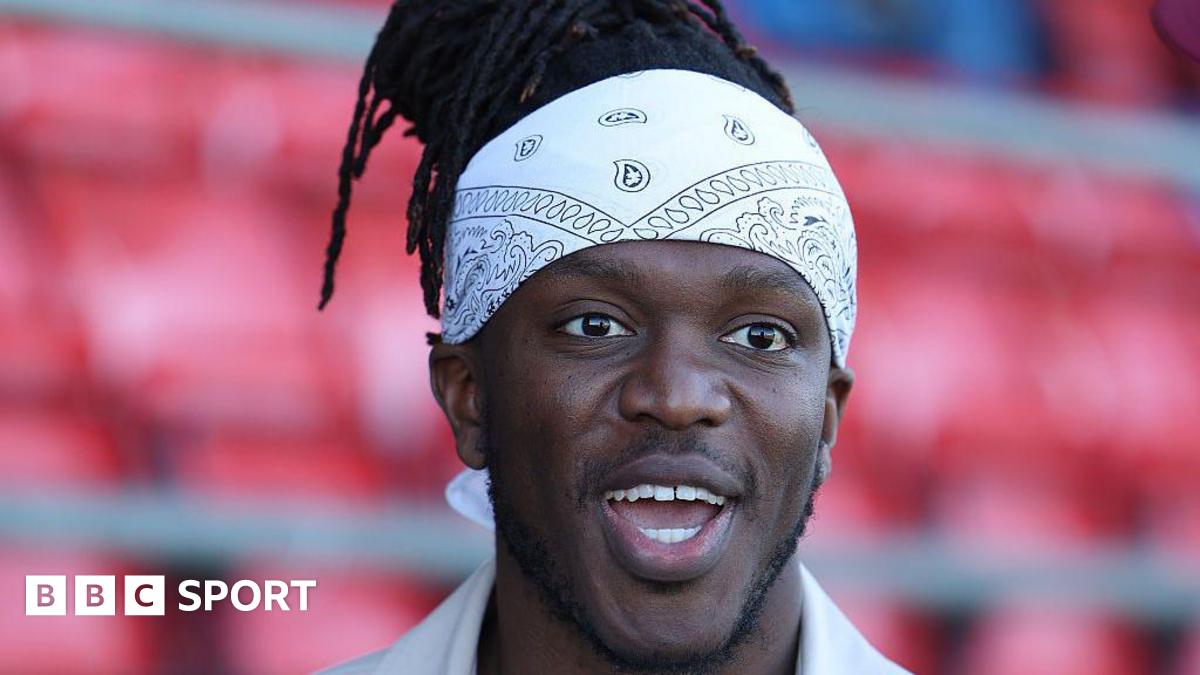
KSI wants to take Dagenham & Redbridge to the Premier League and it sounds wild
1 month, 2 weeks ago
The Sidemen Charity Match at Wembley and the evolution of influencer football
1 month, 1 week ago
Sidemen Charity Match at Wembley reminds the old guard why they're irrelevant
1 month, 1 week ago