
Hearts stay top as McEntee rescues win amid Shankland benching drama

The Tynecastle Pressure Cooker
The air at Tynecastle on Saturday afternoon was thick with the kind of nervous energy that only a title race can generate. For a club like Hearts, leading the Scottish Premiership in March feels less like a dream and more like a high-wire act where every gust of wind threatens a catastrophic fall. Following the stumble against Kilmarnock last weekend, the Gorgie faithful arrived in their thousands, not for a celebration, but for an interrogation of their team’s resolve.
The sky was a bruised purple, threatening a downpour that eventually arrived just minutes before the first whistle. It was the kind of Edinburgh afternoon that demands grit rather than glamour. The sound of 18,827 souls collectively holding their breath as the teams emerged from the tunnel was a visceral reminder of what is at stake this season.
There was a collective intake of breath when the team sheets were released an hour before kick-off. Lawrence Shankland, the captain and the talisman who has carried this team’s scoring burden for seasons, was named among the substitutes. Derek McInnes, ever the pragmatist, opted for a more industrious midfield configuration, but to the fans in attendance, it felt like a gamble that bordered on the reckless. It was a decision that dominated the pre-match chatter in the pubs around Dalry Road.
McInnes has built his reputation on defensive solidity and a refusal to be bullied, but benching your best finisher when the league title is on the line is a move that either makes a manager a genius or a scapegoat. Throughout the opening forty-five minutes, it looked increasingly like the latter. Hearts dominated possession, but they lacked the surgical precision that Shankland provides in the final third. The ball was moved with a heavy touch, as if the players themselves were overthinking every pass.
A First Half of Frustration
The opening exchanges set the tone for a match defined by Dundee’s stubbornness and Hearts’ lack of creative spark. Cammy Devlin was his usual energetic self, snapping into tackles and trying to drive the team forward, but his passing often lacked the subtlety required to unlock a well-organized Dundee low block. Tony Docherty’s side knew exactly what they were here to do, and they executed their defensive plan with a discipline that was almost admirable in its cynicism.
Tiago Braga, the Portuguese winger whose arrival in Edinburgh was seen as a statement of intent, was the one bright spark in a dull first half. He came closest to an opener when he cut inside from the left and unleashed a low drive that skipped off the rain-slicked turf. Dundee goalkeeper Jon McCracken was equal to it, however, tipping the ball around the post for a corner that ultimately came to nothing. It was one of the few moments where the home crowd felt a surge of genuine excitement.
The frustration in the stands began to manifest as a low-frequency rumble of discontent. Every backward pass from Frankie Kent was met with a chorus of groans. The lack of movement upfront was glaring. Without Shankland to occupy the center-backs, Dundee were able to step out and squeeze the space in midfield, leaving the Jambos’ creative players looking lost and isolated. The tactical setup seemed designed to not lose, rather than to win.
Dundee even had a few half-chances of their own on the counter-attack. Lyall Cameron looked dangerous whenever he found space between the lines, and one stinging effort from the edge of the box required a sharp save from Hearts’ keeper. It was a reminder that while Hearts were doing all the pressing, they were far from secure at the back. The defensive line looked shaky, with McEntee and Kent frequently out of sync when dealing with long balls over the top.
As the clock ticked towards half-time, the referee’s whistle was greeted with more than a few boos from the more impatient sections of the Main Stand. The performance was a far cry from the free-flowing football that had seen them climb to the top of the table earlier in the campaign. The grit was there, but the glamour was entirely absent. It was a slog, and a nervous one at that.
McInnes and the Tactical Standoff
As the teams emerged for the second half, the expectation was that Shankland would be introduced immediately. Instead, McInnes stuck to his guns. It was a baffling decision, a stubborn refusal to acknowledge that his starting XI was failing to find a way through. The "industry" he had prioritized was resulting in a lot of running but very little end product. The players looked like they were following a script that had no third act.
The second half mirrored the first, albeit with a heightened sense of desperation from the home side. Beni Baningime tried to dictate play from deep, but he found himself surrounded by dark blue shirts every time he looked up to find a forward pass. The game was becoming a battle of attrition that played right into Dundee’s hands. The visitors were happy to waste time at every opportunity, with McCracken taking an age over every goal kick.
Dundee’s defensive line, led by the veteran presence of Joe Shaughnessy, was rarely troubled. They were content to allow Hearts to move the ball from side to side, knowing that the final cross would likely be cleared without much fuss. The absence of a physical presence in the box made Dundee’s job far too easy. The lack of a Plan B from the Hearts coaching staff was a worrying sign for a team with title aspirations. It felt like they were waiting for a mistake rather than forcing one.
McInnes eventually blinked, but not until the hour mark. Even then, the changes felt reactive rather than proactive. The atmosphere was becoming increasingly toxic, with the home supporters sensing that their lead at the top of the table was about to evaporate. As Sky Sports reported in their live blog, the game was a war of nerves that looked like it would end in stalemate. The psychological advantage was slipping away with every minute that passed without a goal.
The introduction of fresh legs did little to alter the pattern of play. Hearts were still playing in front of the Dundee defense, rarely managing to get in behind. The crossing was poor, the set-pieces were predictable, and the general sense of malaise was beginning to feel permanent. It was a performance that lacked the conviction of a champion-in-waiting. The players looked drained, both physically and mentally.
The Breakthrough and the Tension
Just as the game seemed destined for a goalless draw that would have felt like a defeat for the hosts, the breakthrough arrived from the most unexpected of sources. In the 77th minute, a deep corner from the right was missed by the Dundee defense, allowing Oisin McEntee to steal in at the back post. The center-back, who had been solid if unspectacular all afternoon, rose highest to power a header into the roof of the net. The ball hit the mesh with a satisfying thwack that sparked scenes of pandemonium.
The explosion of noise at Tynecastle was more relief than joy. It was a goal that lacked aesthetic beauty, a scrappy header from a set-piece, but in the context of a title race, its value was immeasurable. McEntee’s celebration was a mixture of defiance and exhaustion, a reflection of the team’s performance as a whole. He sprinted towards the corner flag, pursued by ten teammates who looked as though a weight had been lifted from their shoulders.
For Dundee, it was a cruel blow. They had defended manfully for over an hour and a quarter, only to be undone by a lapse in concentration on a set-play. They immediately threw men forward in search of an equalizer, but the goal had injected a fresh sense of belief into the Hearts defense. Kent and McEntee were suddenly winning everything in the air, throwing their bodies in front of every shot as the clock ticked down. The siege mentality had finally kicked in.
The final ten minutes were a chaotic blur of long balls and desperate clearances. Dundee brought on more attacking options, but they struggled to create a clear-cut opening against a Hearts side that was now firmly entrenched in "protect what we have" mode. The tension was unbearable, with every Dundee foray into the Hearts half bringing a hush over the stadium. The fourth official’s board showed five minutes of added time, and a collective groan went up from the home fans.
It was a period of the game that tested the nerves of everyone in the ground. Dundee were winning every second ball, pumping crosses into the box and hoping for a deflection or a mistake. Hearts were clinging on by their fingernails, their composure gone and their only focus being the final whistle. It was a frantic, ugly end to a frantic, ugly match.
The Red Card and the Final Whistle
Just as the fifth minute of stoppage time was beginning, the match took another dramatic turn. Frankie Kent, who had been on a yellow card earlier in the game, committed a cynical foul to stop a Dundee break. The referee had no hesitation in brandishing a second yellow and then the red. Hearts were down to ten men for the final agonizing seconds. Kent walked off the pitch with his head down, knowing he had left his team in a precarious position.
The dismissal of Kent was a moment of madness from a player who should know better. It gave Dundee a glimmer of hope and forced Hearts into a frantic defensive reshuffle. McInnes finally brought on every defensive body he had left, creating a wall of maroon shirts on the edge of the eighteen-yard box. The fans were on their feet, screaming for the referee to end the game.
Dundee threw everything at them in the final seconds. A goalmouth scramble in the 94th minute saw the ball ping-ponging around the Hearts area before finally being hacked clear by Baningime. The final whistle, when it eventually came, was greeted with a roar that was part relief and part exhaustion. Hearts had survived, but only just. The players slumped to the turf, their faces etched with the strain of the previous hour and a half.
While the three points are all that matter in the league table, the manner of the victory raises serious questions about this Hearts team. They were toothless for the majority of the game, unable to break down a team that sits in the bottom half of the table. The decision to bench Shankland felt like an unnecessary complication, a managerial ego-trip that almost cost them dearly. It was a win, but it was a win that highlighted their vulnerabilities as much as their strengths.
McInnes will point to the result as justification for his methods, but the fans aren’t stupid. They know that this kind of performance won’t be enough against the likes of Rangers or Celtic. The pressure of being the frontrunner is clearly weighing heavy on the players, and the lack of a convincing Plan A is a major concern. If they are to stay at the summit, they need more than just late headers from defenders and desperate clearances in stoppage time.
The Road Ahead and the Shankland Shadow
The "not all title pressure on Hearts" narrative that Steven Pressley has been pushing feels increasingly hollow after a game like this. When you are top of the pile, the pressure is entirely on you. Every result for your rivals is a psychological blow, and every narrow win like this feels like a bullet dodged rather than a statement of intent. They are leading, yes, but they aren’t leading with authority. The shadow of Lawrence Shankland looming over the game from the bench was the most telling image of the afternoon.
Dundee, for their part, can take heart from their performance. They showed that they can compete with the best in the league, even if they lacked the clinical edge to take a point from Tynecastle. Their defensive organization was excellent, and on another day, they might have caught Hearts on the break and secured a famous result. For Hearts, however, it’s a case of job done, even if the job was done poorly and with a significant degree of risk.
As the fans streamed out of Tynecastle into the cold Edinburgh night, the talk was less about McEntee’s winner and more about Shankland’s future. Why was he on the bench? Is there a rift with the manager? These are the questions that will dominate the headlines in the coming days, and McInnes will need to find some convincing answers if he wants to maintain the harmony in his squad. The title is within their grasp, but they are clutching it with trembling hands and a sense of growing anxiety.
The next few fixtures will define this season and, quite possibly, the legacy of this squad. Hearts cannot afford another slip-up, and they certainly cannot afford to play with this level of caution again. They have the players to dominate matches, but they need the courage to let them play. The pragmatism of Derek McInnes has taken them to the top, but it might be the very thing that prevents them from staying there when the pressure reaches its peak.
Ultimately, the scoreboard reads Hearts 1, Dundee 0. In the history books, that’s all that will remain. But for those who were there, the memory will be of a team struggling to meet the moment, rescued by a defender’s head and a healthy dose of luck. It was a win, but it was a win that felt remarkably like a warning. The race is far from over, and Hearts look like a team that is beginning to feel the heat of the finish line.
The question now is whether they can find a second wind. The return of Shankland to the starting XI is surely a non-negotiable for the next match. Without him, they lack the predatory instinct that separates champions from also-rans. The fans will demand more, the media will scrutinize every decision, and the rivals will be waiting for another slip. This win provides a breathing space, but it’s a narrow one, and the oxygen is getting thin at the top of the Scottish Premiership.
The sound of the final whistle was a reprieve, but the silence that followed in some quarters was just as telling. There is a sense that the team is reaching its limit, and that the title might be decided by who can hold their nerve the longest. On this evidence, Hearts are struggling with the psychological weight of their own success. They are leading the race, but they are looking over their shoulder more than they are looking at the finish line.
Read Next
adidas Men's Samba Classic Soccer Shoe
The timeless indoor soccer shoe that became a streetwear icon.
Frequently Asked Questions
Who scored the winning goal for Hearts against Dundee?
Why was Lawrence Shankland benched for the match against Dundee?
What happened to Frankie Kent during the Hearts vs Dundee game?
How many fans attended the Hearts vs Dundee match at Tynecastle?
What was Hearts' league position following the win over Dundee?
More Coverage

VAR consistency concerns mount as Scottish Premiership season hits final stretch
6 hours ago
Aberdeen is cooking with this triple-signing spree
1 day, 8 hours ago
Curtis faces contract limbo amid Rangers injury recovery
1 day, 16 hours ago
Why Barcelona’s pursuit of Anthony Gordon feels like a tactical misfire
2 days, 10 hours ago
Hearts swing for the fences with Kamson-Kamara signing
2 days, 10 hours ago
Lawrence Shankland's move to Rangers is the ultimate vanity project
2 days, 12 hours agoMore Match Reports

Ten-man Hearts grit out a massive win over Dundee at Tynecastle
2 months, 1 week ago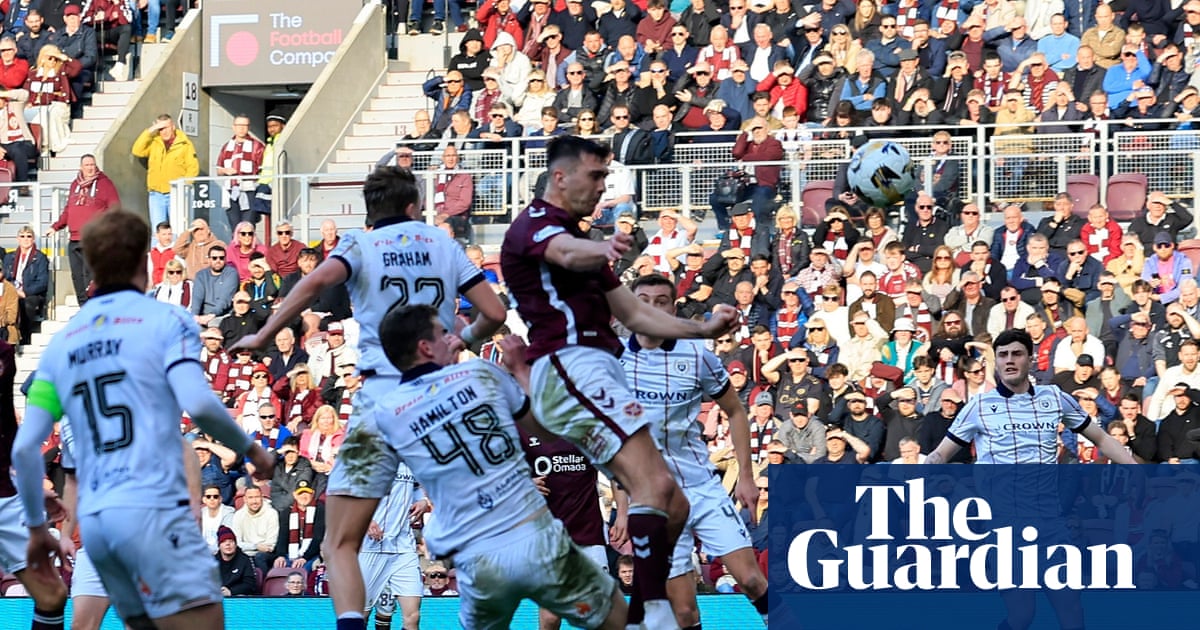
Hearts are starting to believe as Oisin McEntee saves the day at Tynecastle
2 months, 1 week ago
Hearts keep the pace but Tynecastle fans are sweating
2 months, 1 week ago
Hearts are playing with fire but the title is still theirs to lose
1 month, 2 weeks ago
Hearts are winning the Scottish Premiership and the doubters should take note
1 month ago