
A Different Kind of Casualty
There are no torn anterior cruciate ligaments to report today. No shattered metatarsals, no Grade 3 hamstring strains, and no carefully calculated return-to-play timelines to map out. Instead, the Iranian national football team took the pitch in Turkey carrying a collective, devastating trauma that no medical or fitness staff on earth has a verified protocol to treat.
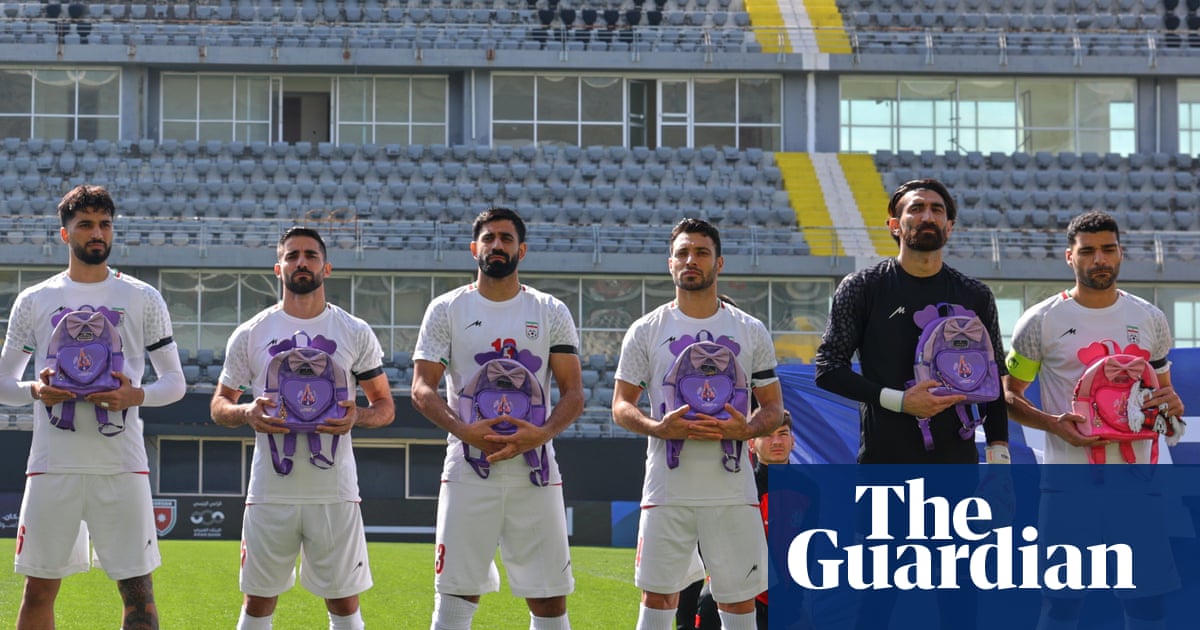
Ahead of Friday's friendly against Nigeria, the Iran squad lined up for their national anthem. They were not focused on tactical shapes, high presses, or the looming 2026 World Cup. They stood wearing black armbands. More strikingly, each player held a schoolbag.
It was a direct, unmistakable protest mourning the more than 175 people—predominantly young girls—killed in a US bombing of an Iranian school. The visual was gut-wrenching. You had elite athletes, trained for years to ruthlessly compartmentalize external distractions, standing in silent defiance while holding the everyday symbols of stolen childhoods.
As a medical and fitness reporter, I spend my life analyzing physical breakdowns. We look at load management, fixture congestion, and biomechanics. But the physical impact of profound psychological grief is an entirely different beast. You cannot tape up a squad carrying the weight of a national tragedy. You cannot inject a localized painkiller to numb the reality of a massacre.
The Physiology of Grief in Elite Athletes
Let’s be absolutely clear about what happens to an athlete’s body under this level of severe, sudden stress. The endocrine system goes into overdrive. Cortisol and adrenaline levels spike uncontrollably, trapped in a sustained fight-or-flight response. When that happens, sleep architecture completely falls apart.
Without deep REM sleep, muscle recovery grinds to a halt. The central nervous system, which dictates split-second reaction times and explosive movement on the pitch, becomes utterly sluggish. The Iranian players stepped onto the pitch in Turkey fundamentally compromised on a physiological level.
They went on to lose the match to Nigeria, but the result is arguably the most irrelevant statistic of the entire international break. A team official confirmed the pre-match gesture was a deliberate protest. The players chose to carry that immense emotional load into a sanctioned international fixture, fully aware of the toll it would take.
We constantly talk about the brutal realities of the 2025/26 calendar. The Champions League quarter-finals are mere weeks away. The expanded 48-team World Cup kicks off in exactly 76 days. Players are already breaking down physically from the relentless demands of the modern game, with managers begging for schedule relief.
Now, add the devastation of a deadly bombing back home. The sports science departments monitor resting heart rates and GPS running data, but those metrics mean absolutely nothing when players are grappling with raw, unfiltered mourning. The sheer exhaustion visible on the faces of the Iranian squad was not from intensive training blocks. It was from the absolute nightmare unfolding thousands of miles away.
Historical Precedents and Hidden Metrics
We have seen flashes of this before, though rarely on this scale. When squads face sudden tragedy—whether it is a localized disaster, the loss of a teammate, or geopolitical violence—the physical fallout is entirely predictable. We saw similar physiological drops in squads affected by the tragedy of Chapecoense or the sudden collapse of Christian Eriksen during the Euros.
In those instances, medical staffs reported immediate spikes in muscle fatigue and a sharp decrease in sprint endurance. Grief acts as a massive energy sink. The body diverts resources away from athletic recovery to process the emotional shock. For Iran, dealing with the loss of so many lives in a school bombing, the physical drain is exponentially worse.
Fitness coaches right now will be watching the blood markers closely. They will be looking at creatine kinase levels, which indicate muscle damage, and heart rate variability, which is the gold standard for measuring nervous system fatigue. Right now, those numbers for the Iranian squad are likely in the red zone. Pushing them to compete against a physical side like Nigeria was a massive risk.
The medical teams cannot fix this with nutrition or cryotherapy. You cannot hack grief. The players are operating in a deficit, and the medical staff is essentially doing damage control, trying to prevent major ligament tears while the players' minds are completely detached from the physical reality of the pitch.
A Failure of Protocol and Duty of Care
This brings up a harsh, undeniable reality about international football governance. Federations are completely unequipped to handle the human element of these crises. They expect the broadcast to roll and the show to go on, regardless of the human cost.
There is a glaring lack of support systems for squads operating under geopolitical trauma. The unspoken expectation is that players will simply lock in for 90 minutes. That is a medically unsound and wildly irresponsible assumption from the governing bodies. Forcing a squad to fulfill a friendly obligation just days after a massive tragedy at home is a gross failure of basic duty of care.
The match against Nigeria went ahead anyway. As The Guardian reported, the team made their gesture right before suffering the loss. But the product on the pitch was entirely secondary to the moment before kickoff. We watched a group of men going through the motions, their physical output directly hindered by an impossible psychological burden.
You could see it in the heavy touches and the delayed reactions. When sleep is disrupted by grief, injury risk skyrockets. Asking these players to sprint, tackle, and compete at an elite level under these physiological conditions is a massive gamble with their physical health. The fact that no one suffered a catastrophic soft-tissue injury during the loss is sheer luck, not proof of good preparation.
The Road to the World Cup
The timeline moving forward for this squad is incredibly murky. We are less than three months out from the FIFA World Cup kickoff on June 11. Most national teams are using this brief window to finalize their 26-man squads, fine-tune set pieces, and build long-term tactical cohesion.
Iran is currently managing a localized crisis. Their preparation phase is effectively suspended. You simply cannot drill pressing triggers or defensive blocks when your players are mourning the deaths of schoolgirls. The medical and psychological staff face an unprecedented challenge between now and the summer tournament in North America.
How do you rebuild a team's readiness from this state? Short-term, the focus has to shift entirely away from the football pitch. The next 1-3 weeks must be dedicated solely to psychological decompression and trauma counseling. Any physical training right now must be strictly regenerative.
Putting these players through high-intensity tactical sessions right now would only accelerate the physical breakdown already set in motion by their stress response. They need rest, not shuttle runs.
Long-term, as we look toward the summer, the squad's resilience will be tested in ways no data model or algorithm can predict. The reality of sports psychology is harsh. Some players will channel this immense grief into extraordinary, defiant performances on the pitch. Others will simply hit a wall, unable to recover their peak physical state in time for the tournament.
The Weight of the Armband
The image of the starting eleven holding those schoolbags will be the defining moment of this international break. It completely overshadows any tactical analysis, any individual performance, or any transfer rumor dominating the news cycle. It was a stark, undeniable reminder of the vulnerable humans existing inside the national team kits.
They wore black armbands, which is a traditional footballing gesture of mourning used for decades. But as highlighted by the BBC coverage, the addition of the schoolbags elevated the protest into something deeply visceral and permanent. It forced the watching world to confront the brutal reality of the victims. These were kids.
The medical updates going forward for the Iranian national team won't feature estimated return dates, surgical results, or rehabilitation videos. The updates will center purely on whether this squad can find a way to function as elite athletes while their country bleeds. It is going to be a grueling, unpredictable, day-by-day process for everyone involved.
Elite football demands total physical and mental commitment. Right now, the Iranian national team is completely drained of both. The federations, the coaching staff, and the fans must aggressively adjust their expectations. The road to the World Cup just became exponentially harder, and the psychological scars from this week in Turkey will linger long after the final whistle blows this summer.
The reality is that some injuries don't show up on an MRI scan. Right now, an entire squad is playing through severe trauma, and no amount of ice baths or physical therapy will fix it. The sport needs to recognize when to step back, but as usual, the schedule marches on ruthlessly.
Read Next
- Iran players protest US school bombing ahead of World Cup
- Italy’s Bergamo blueprint is the ultimate warning for Haaland’s Norway
- Ben White's return and the tactical puzzle facing Thomas Tuchel
- Ireland find a new way to break hearts in Prague
- 🏆 World Cup 2026 — Full Coverage Hub
- 🇳🇬 Nigeria Super Eagles — World Cup 2026 Hub


