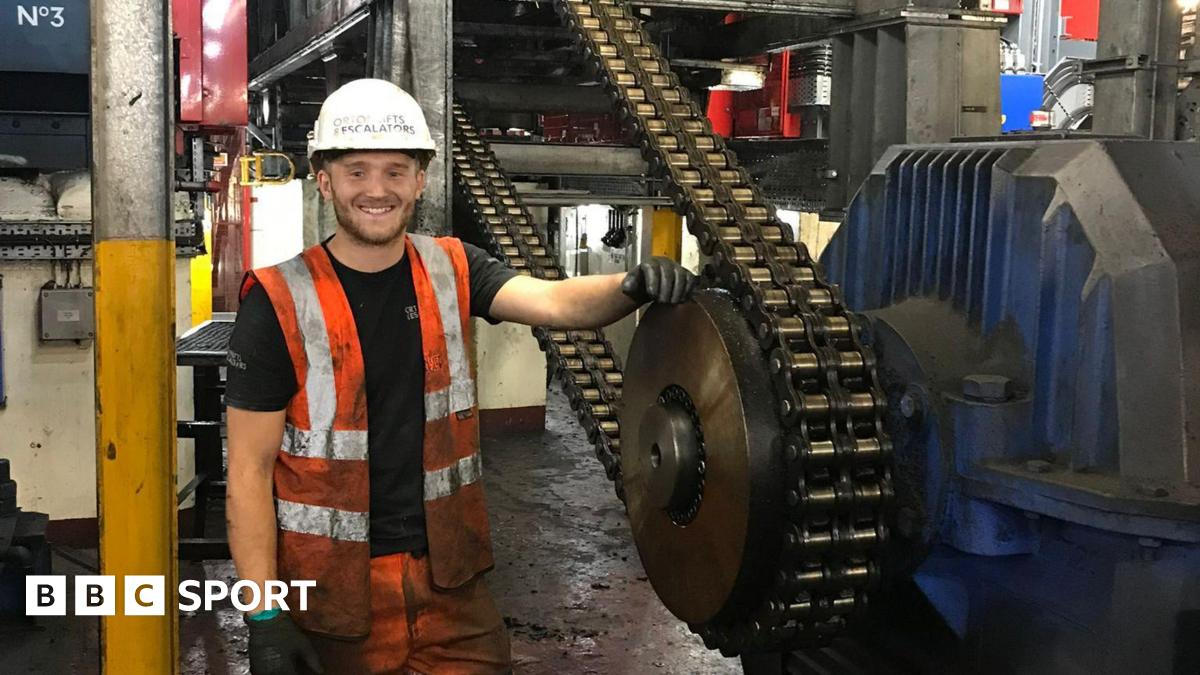
The Roster Swap
The BBC dropped the news this morning. Jay Lovell was scheduled for an engineering shift at Wembley Stadium this Sunday. He isn't showing up for work. Instead, he is walking out of the tunnel to play in the FA Vase final.
It is the ultimate non-league fairytale. But behind the romance lies a brutal physiological reality. As a medical and fitness reporter, I look at Lovell's situation and see a massive sports science challenge.
We spend our days analyzing the exact hamstring loads of Premier League wingers who sleep in hyperbaric chambers. We track the micro-cycles of elite athletes. Lovell represents the extreme opposite end of the spectrum.
The semi-pro end. The end where cumulative fatigue is not a data point on a dashboard, but a daily physical reality. He is not dealing with a torn ACL today. He is dealing with the slow, grinding wear of working a demanding job while trying to peak for the biggest 90 minutes of his life.
The Biomechanical Reality of the Working Player
Professional players train, recover, and rest. Their entire day is optimized for a singular exertion. Non-league players like Lovell work full-time jobs.
Engineering shifts often involve standing, heavy lifting, or awkward postures. This introduces severe non-football biomechanical stress. Your lower back takes a beating. Your hip flexors tighten.
The nervous system doesn't differentiate between the stress of carrying equipment and the stress of a heavy squat session. It just registers fatigue. When a player clocks out of a shift and heads to training on a Tuesday night in winter, his central nervous system is already heavily compromised.
This creates a heightened injury risk profile. The lack of dedicated recovery time means micro-tears in muscle fibers don't fully heal. Tendons remain inflamed.
We see chronic tendinopathy—particularly in the Achilles and patellar tendons—run rampant in semi-pro football. They play through it because they have to. There is no world-class medical department to pull them out of the lineup. They rely on heavy taping, ibuprofen, and pure adrenaline.
The Wembley Problem
Sunday presents a unique physiological threat. Wembley Stadium is enormous. The pitch dimensions are brutal for the uninitiated.
For players accustomed to tighter, heavily worn non-league grounds, the extra space is a trap. The distance covered will spike. More importantly, the high-speed running metrics will go through the roof.
When players are suddenly asked to make 40-yard recovery sprints instead of 20-yard ones, the hamstring load increases exponentially. The eccentric load on the hamstrings during deceleration is exactly where Grade 2 tears happen.
Wembley is not just big; the surface itself is a hybrid grass system, stitched with synthetic fibers. It is designed to be pristine, fast, and firm. This firmness completely changes the ground reaction forces.
Every time a player plants their foot to change direction, the force sent back up through the kinetic chain is greater. This increases the load on the meniscus and the ankle ligaments.
We see it every year in these lower-league finals. By the 70th minute, the cramping begins. It is not just about hydration. It is total neuromuscular fatigue.
The muscle simply cannot contract and relax at the required speed anymore. Lovell and his teammates will be entering deep physiological waters this weekend.
The Medical Disparity
Let's talk about recovery facilities. A Premier League team arrives at Wembley with a phalanx of physios, masseurs, and sports scientists.
They have individualized nutrition protocols waiting in the dressing room. They have pneumatic compression boots. Non-league teams do not have this luxury.
Their medical staff is often a single part-time physio working with severely limited resources. The pre-match strapping is basic. The post-match recovery might just be a cold shower and a long coach journey home.
This disparity matters. It affects how the game is played and how careers are shortened. We romanticize the grit of the non-league player, but we ignore the long-term physical cost.
Knee cartilage wears down faster. Joint degradation accelerates. Playing semi-pro football while working a labor-intensive job is a fast track to osteoarthritis.
Industry Impact and Systemic Failures
The situation Lovell finds himself in highlights a systemic flaw in English football. The financial gap between the elite and the semi-pro level is discussed constantly.
The medical gap is completely ignored. The Football Association pours millions into elite sports science at St. George's Park, but that knowledge rarely reaches the teams competing in the FA Vase. It is a dereliction of duty by the governing body.
There is a growing market for democratized sports science. Wearable technology like GPS trackers are becoming cheaper. We are seeing some non-league teams adopt basic load-monitoring protocols.
But technology cannot replace rest. A GPS vest can tell a manager that his right-back is entering the red zone for muscle fatigue. If that player has to work an eight-hour shift the next day to pay his rent, the data is entirely useless.
You cannot out-monitor a lack of sleep.
"Engineer Jay Lovell was set to be working at Wembley on Sunday, but instead he will be playing there in the FA Vase final."
That single sentence from the BBC report sounds like a dream. In reality, it is a nightmare of load management.
The psychological load cannot be ignored either. Mental fatigue manifests as physical fatigue. The stress of playing at Wembley creates a unique hormonal profile for the player heading into kickoff.
Elevated cortisol levels before the match will suppress the immune system. The adrenaline spike will mask the pain of any existing micro-injuries. When the final whistle blows, the physical crash will be severe.
The Immediate Future
Lovell's focus right now is entirely on Sunday. The FA Vase final is the absolute pinnacle of his footballing life. He has earned the right to step onto that immaculate turf.
But the reality of his dual life will set back in quickly. The delayed onset muscle soreness will peak 48 hours later. On Tuesday morning, while elite players are enjoying structured active recovery sessions, Lovell will be back in his engineering boots.
He is not injured today. But managing his fitness and recovery over the next week will be an immense physical challenge.
That is the true cost of the non-league dream. It is paid in sweat, in chronic inflammation, and in joints that ache a little more with every passing year. We celebrate the fairytale, but we should also respect the sheer, stubborn physical endurance it requires.
Read Next
- The hidden physical toll of VAR offside checks on Premier League players
- Why the League Two play-offs are a physiological meat grinder
- Fletcher's FA charge proves United are entering Wembley with a grudge
- Pep Guardiola says he has one more year but City look like a team in transition
- 🏆 FA Cup Final 2026 — May 16, Wembley