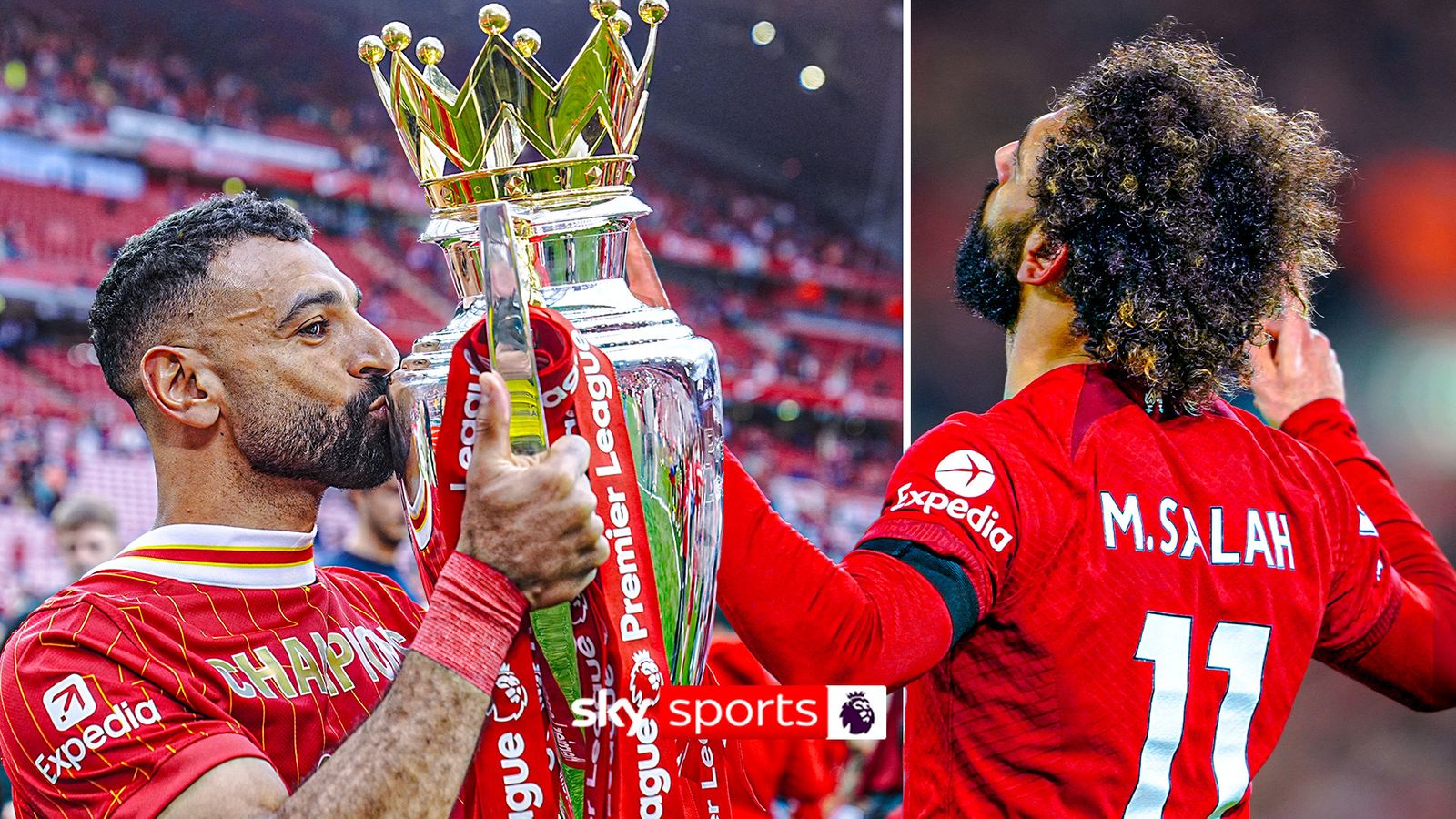
In a summer crowded with AEW's Double or Nothing tomorrow, the Champions League final in five days, and the World Cup kickoff in nineteen days, Anfield is preparing for its own historical shift. Tomorrow at 4:00 PM BST, Liverpool face Brentford. It is the end of an era.
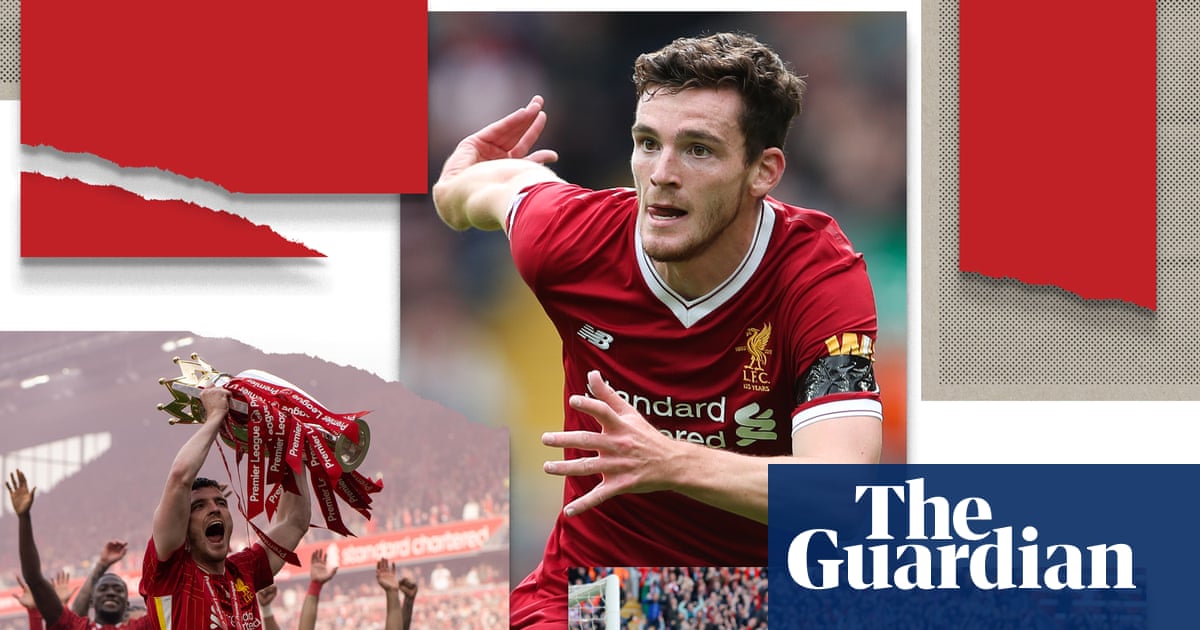
Mohamed Salah and Andy Robertson will make their final appearances in red. Two pillars of Liverpool's modern dominance are leaving. The emotional weight of this farewell is heavy, but the tactical challenge it presents to Arne Slot is even heavier.
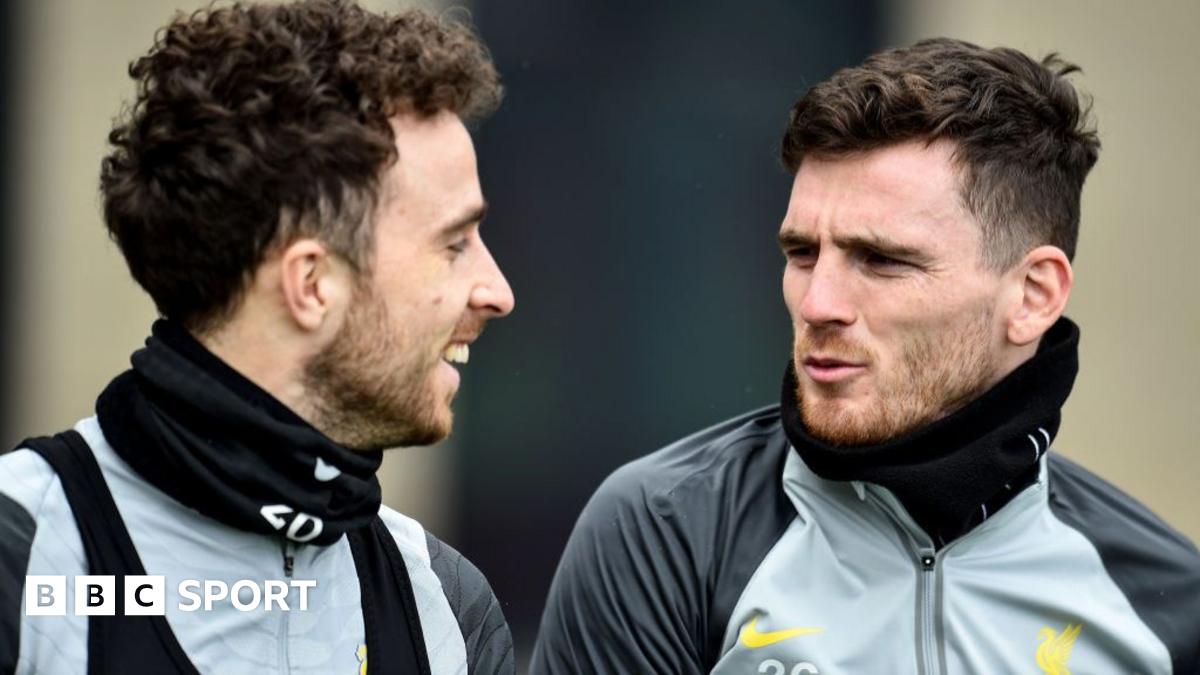
This squad has survived an incredibly draining year. The tragic death of Diogo Jota in Spain last July cast a long shadow over the entire campaign. In a recent interview, Robertson admitted the team struggled to find their footing in the aftermath, explaining that they didn't care about football for weeks.
"We didn't care about football for weeks. None of us wanted to train. You were getting treatment off physios and physios didn't want to treat you. That is the reality of it."
To navigate that grief and still compete speaks to the resilience of this group. But tomorrow, the focus must shift back to the pitch for ninety final minutes.
The Left-Flank Revolution of the Hull City Pioneer
When Liverpool signed Robertson from Hull City for just £8million in 2017, few expected him to become the definitive modern left-back. He was the poster child for the club's data-driven recruitment model. He offered high-intensity running, relentless recovery sprints, and a whipped cross that became a primary playmaker weapon.
Over nine years, Robertson became the engine of Liverpool's transition play. He did not just defend; he dictated the width of the attack. In Klopp's system, Robertson's average position was frequently higher than the central midfielders, acting as a high-pressing trigger on the touchline.
Under Klopp, Robertson's relationship with Sadio Mane was telepathic. Mane would tuck inside into the left half-space, dragging the opposing right-back with him, which cleared a massive vertical runway for Robertson to sprint into. Under Slot, the rotations are different. Luis Diaz stays wider, forcing Robertson to make underlapping runs into the box. This structural change has altered his statistical profile, reducing his cross volume but increasing his touches inside the penalty area from 2.1 per game to 3.8.
Yet, his departure creates a massive structural problem. His understudy, Milos Kerkez, is a talented prospect, but he lacks Robertson's spatial intelligence. Robertson's defensive style was never flawless. His aggressive front-foot pressing often left the left half-space exposed. In the draw against Arsenal in December, Bukayo Saka repeatedly targeted the space behind him when Robertson committed to an unsuccessful press at the 14-minute mark. Brentford will look to exploit this exact vulnerability.
Furthermore, Robertson's crossing accuracy has declined this season. Only 18% of his crosses from open play have found a teammate, down from a career-best 29% in the 2019/20 season. His tendency to hit the first defender has become a predictable frustration.
During a special BBC feature, Robertson discussed the legacy of Scottish players at Anfield with Sir Kenny Dalglish and Kelly Cates, highlighting the special connection between Liverpool and Scotland. It is a lineage of grit and high footballing intelligence. Replacing that psychological profile will be just as difficult as replacing his physical output on the pitch.
The Evolution of Salah's Spatial Dominance
On the opposite flank, Mohamed Salah's departure marks the exit of arguably the most efficient forward in Premier League history. Salah arrived in 2017 as a rapid winger who wanted to run behind defenses. He leaves as a master playmaker who controls the half-space.
Ian Rush recently remarked on Salah's intellectual growth, stating, "He's got a great football brain, just like Kenny Dalglish". This comparison is not mere hyperbole. Salah's ability to manipulate defensive lines through his body shape and micro-movements is elite.
Consider his assists this season. He is no longer just running down the line; he is cutting inside and playing delicate, disguised passes into the penalty box. His pass completion rate in the final third has hovered around 74%, a remarkable figure for a high-risk creator.
The classic Liverpool right-sided triangle of Alexander-Arnold, Henderson, and Salah has transitioned into Alexander-Arnold, Szoboszlai, and Salah under Slot. Previously, Alexander-Arnold would overlap, but now he frequently inverts into the double pivot next to Gravenberch. This forces Salah to hold the width longer before making his horizontal diagonal runs. It is a highly demanding role. When Szoboszlai fails to make the decoy runs into the channel, the opposing left-back can sit narrow and squeeze Salah's space.
This intelligence was forged through years of relentless self-improvement, including yoga and dedicated fitness regimes. It is a far cry from his early days at Chelsea. Back then, under John Terry's captaincy, Salah was a raw talent who sometimes received a stern talking-to from senior players.
Yet, Salah's final season has not been without its frustrations. Against compact low-blocks, he has occasionally looked isolated. When opponents double-team him and cut off the passing lanes to the underlapping midfielder, Salah's effectiveness decreases. His xG from open play has dipped to 0.35 per ninety minutes in his last six starts.
Salah's sprint frequency has also dropped from 22 sprints per ninety minutes to 15 this season. He must now rely entirely on his brain rather than raw physical recovery. When Liverpool's build-up is too slow, he becomes a passive observer on the right touchline.
Deconstructing Thomas Frank's Low-Block Threat
Thomas Frank's Brentford will not come to Anfield to participate in a testimonial. They will set up in their trademark 5-3-2 mid-to-low block. They want to deny Liverpool any space in the central channels.
Brentford's defensive structure relies on horizontal compactness. The three central defenders will pin Liverpool's central striker, while the wing-backs will press Liverpool's full-backs. This setup forces opponents to play wide, slow passes across the backline.
Arne Slot's double pivot, likely featuring Gravenberch and Mac Allister, must be incredibly sharp. They cannot afford to play into Brentford's pressing traps. If they lose possession in the middle third, Brentford will transition instantly.
Brentford's primary outlet is Bryan Mbeumo. He excels at exploiting the spaces left behind by advancing full-backs. Mark Flekken will look to hit long, direct passes toward Mbeumo the moment Brentford regain the ball.
Liverpool's rest defense will be tested to the limit. If Robertson and the right-back push high simultaneously, the central defenders will be left in two-on-two situations against Mbeumo and Wissa. This is where the match will be won or lost.
Slot's slow build-up sometimes plays right into a disciplined low-block team like Brentford. Earlier this season, Liverpool had 68% possession against Crystal Palace but managed only four shots on target. A repeating pattern of sideways passing will induce anxiety at Anfield.
To secure a victory, Liverpool must execute three tactical objectives:
- Countering Brentford's second-ball recoveries from long Flekken distribution.
- Creating underlapping runs to drag Brentford's wing-backs out of their compact back five.
- Securing the rest defense with a structured double pivot.
Brentford are one of the most efficient set-piece teams in the division, averaging 0.42 xG per game from corners and free kicks. Ethan Pinnock remains a massive threat in the air, and Liverpool's zonal marking system under Slot has shown vulnerability when defending the second ball. In the 34th minute of their match against Brentford last season, Pinnock scored from a second-ball scramble after Liverpool failed to clear the initial delivery. Slot must ensure that Gravenberch and Mac Allister are positioned to sweep up these second balls.
Anfield's Emotional Finale and a Confident Prediction
This match will be defined by how quickly Liverpool can settle their nerves. The emotional atmosphere at Anfield will be electric, but it can also lead to rushed decisions on the pitch.
Brentford will likely score first. A direct counter-attack in the 22nd minute will catch Liverpool's left side unbalanced. Mbeumo will drag the center-backs wide before feeding Yoane Wissa for a neat finish.
But Liverpool have too much quality and too much motivation to lose this game. Salah will find the equalizer before halftime. He will cut inside on his left foot and bend a shot into the far corner, standard Salah.
In the second half, Robertson will produce one final moment of magic. A trademark overlapping run and a low cross will set up Cody Gakpo for the winner. I am predicting a 3-1 victory for Liverpool. It will be a fitting send-off for two club legends who changed the modern history of Liverpool Football Club.
Read Next
- Salah and Robertson's exit marks the end of Liverpool's greatest data era
- Why Mo Salah is suddenly questioning Arne Slot's tactical setup
- Arne Slot is making a massive mistake with Mo Salah's Anfield farewell
- Why Liverpool contacting Andoni Iraola proves their midfield is broken
- 🇪🇬 Egypt World Cup 2026 — Salah's Last Dance
- 🏴 Scotland World Cup 2026 — Tartan Army Hub