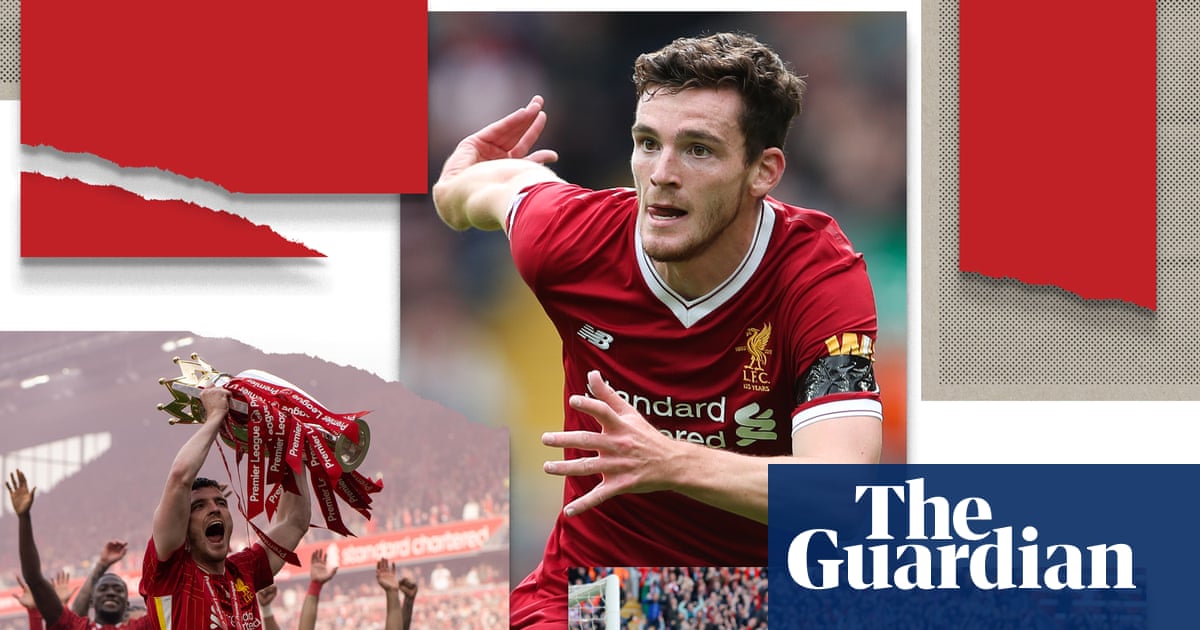
When Liverpool paid a mere £8 million to sign Andy Robertson from relegated Hull City in July 2017, the sporting world barely blinked. Yet that transaction represents the absolute zenith of the modern data-driven recruitment model that transformed a fading powerhouse into a relentless title-winning machine. Together with Mohamed Salah, who arrived in the same transfer window, Robertson formed the tactical bedrock of Jurgen Klopp's decade-defining squad.
On Sunday, May 24, 2026, both players will walk out at Anfield for their final match in red. Their departures signal more than just the end of two legendary careers on Merseyside. It marks the definitive conclusion of an era where analytical precision perfectly aligned with physical output.
To understand the scale of their impact, one must look past the emotional farewells and study the cold, hard numbers that powered their nine-year tenure. The club built a footballing dynasty not by outspending its rivals, but by finding undervalued metrics that broke the traditional positional molds of the English game. Salah and Robertson did not just play their positions; they completely rebuilt them.
The Statistical Blueprint of the Left-Flank Engine
Before Robertson's arrival, the modern left-back was typically evaluated on defensive stability or isolated crossing volume. Liverpool's analytical department looked deeper, focusing on progressive ball-carrying capacity and high-intensity recovery runs under intense pressure. He was everything their famed data-led Moneyball-style model was about, offering elite stamina and elite progressive distance metrics.
Evaluating the Overlap and Cutback Profile
Over his nine seasons, the Scotland captain registered 59 Premier League assists, cementing his status as the highest-assisting defender in the history of the competition. His creative output was not the result of speculative, high-arching crosses from deep positions. Instead, the data reveals a highly calculated pattern of overlapping runs that culminated in low-recovery cutbacks.
During the peak 2019-20 league championship campaign, Robertson averaged 6.4 progressive carries and 4.2 passes into the penalty area per 90 minutes. His ability to sustain these numbers while maintaining a 84.2% short-pass completion rate allowed Liverpool to dominate possession high up the pitch. Opponents knew the overlap was coming, yet they could not stop the mechanical efficiency of the movement.
There was also a special connection between Liverpool and Scotland that Robertson carried, echoing the legendary influence of Sir Kenny Dalglish. But where Dalglish operated with sublime individual skill in the final third, Robertson served as the system's relentless physical engine. He ran an average of 11.2 kilometers per match during his peak years, with over 35 high-intensity sprints per 90 minutes.
The Asymmetric Defensive Balance
In terms of defensive contribution, Robertson averaged 2.8 successful tackles and 1.9 interceptions per 90 minutes during his prime seasons. He was rarely beaten in one-on-one situations, winning 63.4% of his defensive duels in wide areas. This defensive resilience allowed his counterpart on the opposite flank to drift centrally and act as a primary playmaker.
How Mohamed Salah Decoupled the Winger Profile
While Robertson provided the structural width on the left, Mohamed Salah was redefining what it meant to be a wide forward on the right. In the summer of 2017, many pundits questioned whether a winger who struggled at Chelsea could thrive in Klopp's intense system. The answer came immediately, as Salah shattered the single-season scoring record in his debut year.
Over his nine years at the club, Salah scored 121 goals at Anfield alone, turning the stadium into a personal scoring laboratory. The secret to his sustained success lay in his exceptional spatial awareness and elite physical durability. Like Dalglish, he possessed an innate understanding of space, revealing the secrets of his rise through a mixture of cognitive speed and physical preparation.
From Inside Forward to Hybrid Playmaker
In his initial three seasons, Salah functioned primarily as a direct inside forward, receiving diagonal balls and cutting inside on his left foot. His non-penalty expected goals (npxG) per 90 minutes in this period was an astonishing 0.68, reflecting the high quality of his shot selection. He took shots from high-value central areas rather than settling for low-probability efforts from the perimeter.
As opponents adjusted by doubling up on his flank, Salah adapted his tactical game to become a elite playmaker. By the 2022-23 season, his expected assists (xA) per 90 minutes had risen from 0.18 in his debut year to a career-high 0.32. This evolution from a pure goalscorer to a hybrid creator is what truly cemented his legacy as an all-time great.
The Physical Decline and the Tactical Limits of the Press
No system, regardless of its analytical brilliance, is completely immune to physical exhaustion and human tragedy. This final campaign has exposed the limits of Liverpool's intensive style, showing that even elite physical profiles eventually break down. The squad suffered an immense emotional shock mid-season that severely damaged their tactical cohesion on the pitch.
Grief and the Collapse of Pressing Intensity
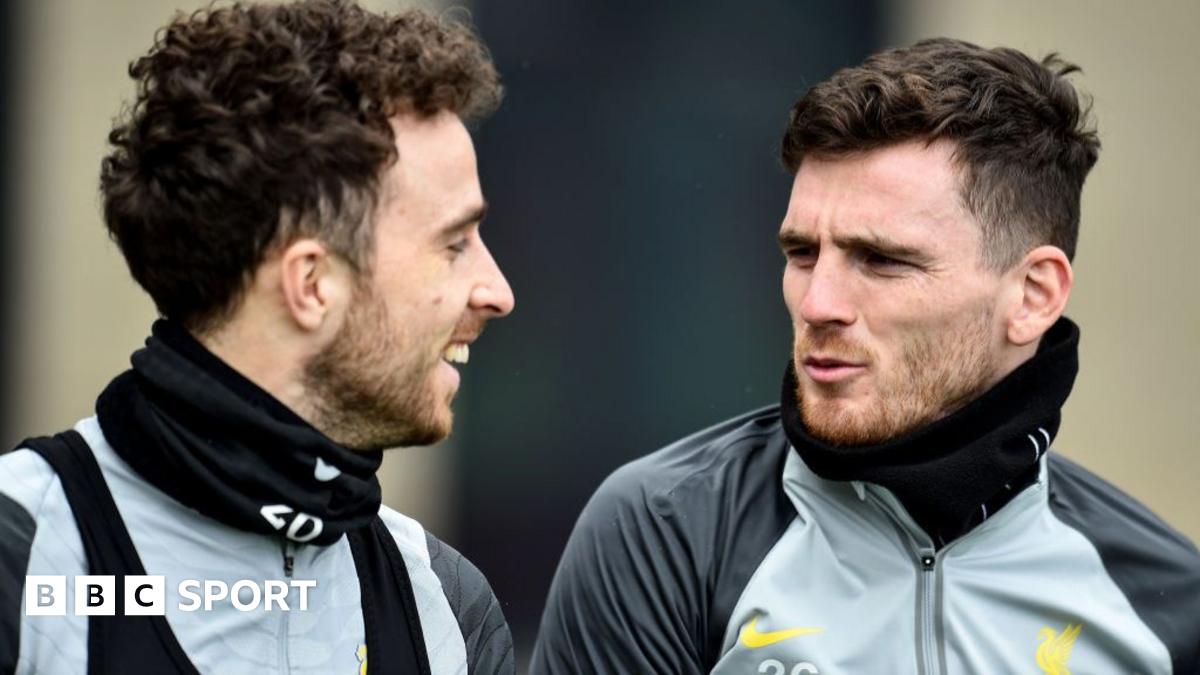
The tragic passing of teammate Diogo Jota left the players emotionally shattered during a vital stretch of the season. Robertson openly admitted that there were weeks where the players simply could not focus on football, and that grief reflected directly in their performance metrics. The high-intensity pressing system requires absolute mental focus, and that focus evaporated in the wake of the tragedy.
The statistical drop-off was immediate and devastating for their title hopes. Prior to the tragedy, Liverpool averaged 2.15 points per match; in the ten games that followed, that figure fell to just 1.35 points per match. The high-turnover rate within 40 meters of the opponent's goal plummeted by 24 percent as their pressing triggers lost their usual bite.
Targeting the Vacated Zones
Their defensive structure collapsed as a direct consequence of this drop in pressing efficiency. The Passes Per Defensive Action (PPDA) metric, which measures pressing intensity, rose from a suffocating 8.2 in their peak years to a sluggish 11.4 this season. This slower press allowed opponents time to pick passes over the top, exposing the high defensive line that Robertson and his fellow defenders had to maintain.
With the press failing to stop service, opponents repeatedly targeted the vacant space behind Robertson when he overlapped. Liverpool conceded 1.42 expected goals against (xGA) per 90 minutes this season, their worst defensive record of the decade. The physical demands of the system had finally caught up with a squad that had played over 50 matches a year for nearly a decade.
The Legacy of the Decimal-Point Dynasty
As Salah and Robertson prepare for their final Anfield appearances, they leave behind a blueprint for how modern football clubs must operate. They proved that a smart recruitment strategy, backed by rigorous data analysis, can challenge and defeat state-backed financial giants. Their success was measured not in transfer market noise, but in progressive yards, recovery runs, and clinical finishes.
Replacing them will require more than just signing talented players with high price tags. It will require finding the next undervalued statistical anomalies who can withstand the relentless physical and emotional demands of the English game. Until then, Anfield will bid farewell to the two men who turned decimal points into silver trophies.
Read Next
- Liverpool face a tactical vacuum as Salah and Robertson bid farewell
- Why Mo Salah is suddenly questioning Arne Slot's tactical setup
- Why Liverpool contacting Andoni Iraola proves their midfield is broken
- Arne Slot is making a massive mistake with Mo Salah's Anfield farewell
- 🇪🇬 Egypt World Cup 2026 — Salah's Last Dance
- 🏴 Scotland World Cup 2026 — Tartan Army Hub