The emotional weight of a final day
Anfield on the final day of the season is never just a football match. It is a theater of goodbyes. This Sunday against Brentford carries a heavier burden than usual.
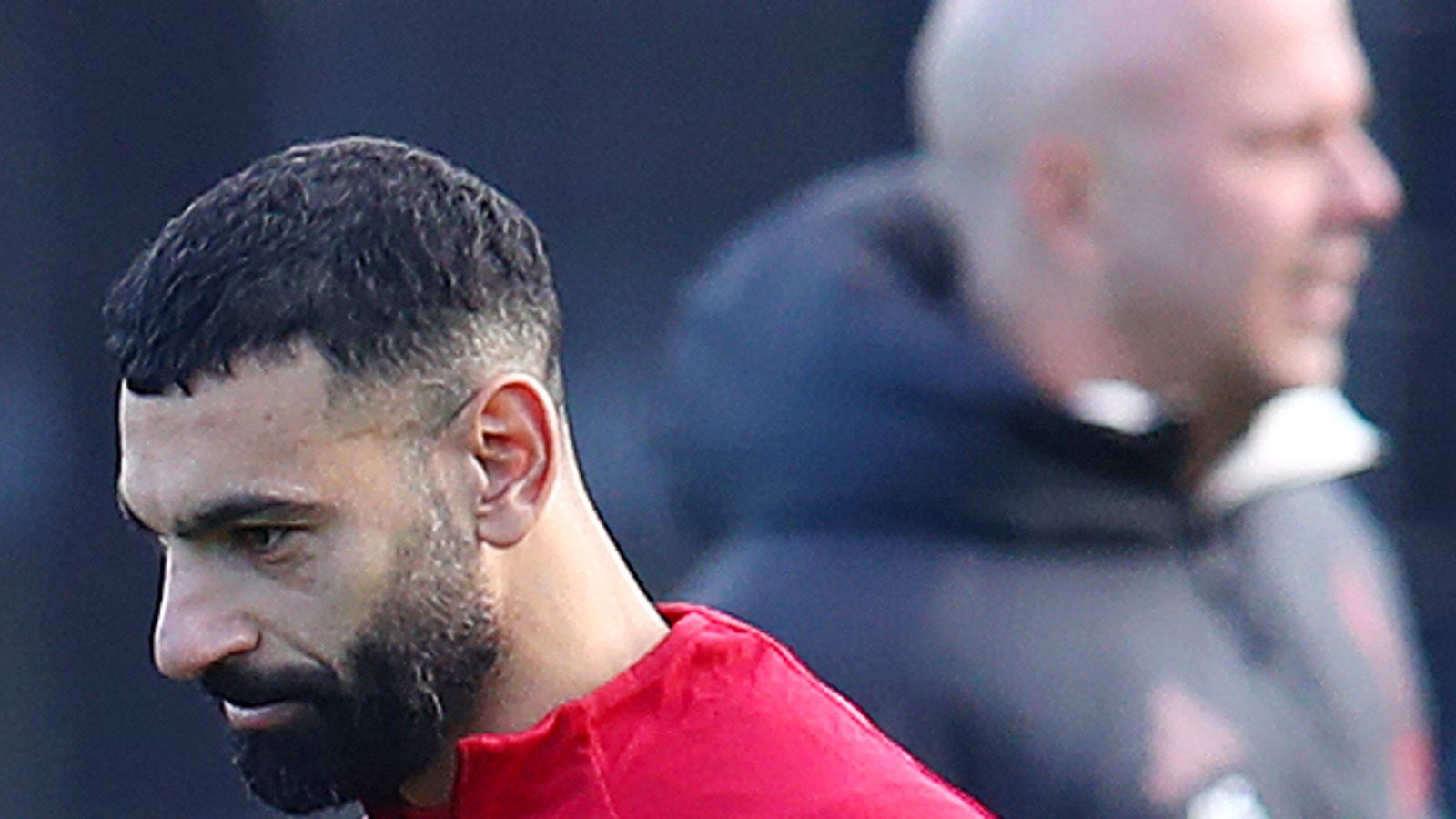
As The Mirror reported this week, up to eight players could be making their final appearance in a red shirt. That kind of squad turnover signals the definitive end of an era. It also injects a chaotic emotional energy into what should be a straightforward tactical exercise.
Players wanting one last goal. Defenders pushing too far forward to hear the Kop sing their name. A manager trying to balance sentimentality with securing three points. It is a recipe for broken structures.
The Thomas Frank problem
If you are managing an emotionally charged team that might abandon its shape, the absolute last manager you want to face is Thomas Frank. Brentford do not care about your farewells. They care about space.
Frank’s tactical setup has evolved, but the core principles remain infuriatingly effective. They will drop into a compact 5-3-2 out of possession. They will force Liverpool to cycle the ball in a U-shape around the penalty area. They will wait for a mistake.
Brentford are entirely comfortable defending deep for 85 minutes. Their block is narrow, specifically designed to cut off passes into the half-spaces where Liverpool’s advanced midfielders like to operate. If you try to force a pass through the center, they will intercept it and break with terrifying speed.
Exposing the rest-defense
This is where my biggest criticism of Arne Slot’s recent tactical tweaks comes in. Liverpool’s rest-defense has been shockingly porous over the last six weeks. When they push up to break down a low block, the spacing between the midfield pivot and the center-backs is frequently misaligned.
They are getting caught in transition far too often. You can see it in the underlying numbers. Liverpool's expected goals conceded from fast breaks sits at an uncomfortable 1.24 per 90 minutes since April. That is relegation-level transition defense.
When the fullbacks invert to overload the midfield, the wide channels are left completely vacant. Opposing teams have figured out that you don't need to play through Liverpool's press. You just need one direct, diagonal ball into the channel behind the advancing fullback.
Brentford have the exact profile of forwards to exploit this. Bryan Mbeumo and Yoane Wissa thrive on isolated one-on-one situations in wide areas. If Liverpool's center-backs are dragged out to the touchline to cover these runs, the penalty area is instantly destabilized.
The battle for the second ball
Brentford do not play out from the back against high-pressing teams. They bypass the midfield entirely. Their goal kicks are long, aimed at specific zones where they can create an overload to win the second ball.
This turns the midfield into a war zone of aerial duels and loose-ball recoveries. Liverpool's midfield pivot has to be flawless in their positioning. If they drop too deep, Brentford win the second ball and are instantly attacking the backline. If they push too high, the flick-on takes them completely out of the game.
The benchmark for success here is simple. You have to look at the aerial duel win rate and ball recoveries in the middle third. Liverpool need their holding midfielder to dominate this space. In recent weeks, their ball recovery rate in the central zones has dipped by nearly 12 percent compared to their mid-season peak.
When you fail to win those second balls, you get pinned in your own half. Frank knows this. He will instruct his team to turn the game into a series of ugly, physical duels rather than a clean football match. If Liverpool try to out-muscle Brentford, they lose. They have to out-position them.
The set-piece battleground
You cannot preview a Brentford match without talking about set-pieces. It is the most reliable weapon in their arsenal. Frank employs dedicated set-piece coaches and uses highly choreographed routines that target specific zonal marking weaknesses.
Liverpool’s set-piece defense has been mostly solid, but they struggle against teams that crowd the six-yard box and block the goalkeeper. Brentford will stick two massive center-backs right on Alisson's toes. They will use out-swinging deliveries from the right and in-swinging from the left to create chaos.
If Liverpool give away cheap fouls in the middle third out of frustration, they are playing right into Frank's hands. Brentford generate a massive portion of their expected threat from dead-ball situations. Giving them free deliveries into the box is simply bad game management.
How Liverpool break the block
So, how does Liverpool actually win this game? It comes down to tempo and third-man runs. Slow, methodical possession will just allow Brentford to shift side-to-side and close the gaps.
To break down this Brentford block, Liverpool must execute three things flawlessly:
- Maintain absolute width to stretch the back five.
- Ensure the holding midfielder stays disciplined to stop counter-attacks.
- Deliver early, low crosses behind the defensive line rather than floating balls into the box.
Once those gaps appear, it is all about the third-man run. A pass into the striker, a quick lay-off to a midfielder, and a perfectly timed run from the opposite winger slicing through the defensive line. It requires absolute precision.
This is where the individual brilliance of Liverpool's forwards has to cover for the structural difficulties. You need someone capable of beating their man in a phone booth. You need a piece of magic from the edge of the box to force Brentford to step out.
The psychological factor
Tactics dictate the shape of the game, but psychology often dictates the result on the final day. The impending player exits will weigh heavily on the squad. There is a very real risk of Liverpool starting the match too frantically, desperate to force an early goal to settle the crowd.
If Brentford survive the opening 20 minutes without conceding, Anfield will get anxious. The passes will become a little more forced. The fullbacks will push a little higher. The rest-defense will become even more fragile.
I expect Brentford to score first. They will absorb the early pressure, hit a long diagonal pass over the top, and win a corner. A messy scramble in the box, and suddenly the away end is celebrating.
The final verdict
But Liverpool at Anfield rarely roll over. Slot will have to make aggressive changes at halftime. I expect him to switch to a more direct 4-2-4 shape in possession, sacrificing midfield control for pure attacking volume.
The sheer number of crosses and shots will eventually break Brentford's resistance. The emotional pull of the crowd will drag the team back into the match. It will not be a clean, tactical masterclass. It will be a chaotic, flawed, and highly entertaining scrap.
Liverpool’s defensive frailties are real, and Brentford are smart enough to exploit them. But the home side simply has too much firepower off the bench to lose this specific fixture.
I am backing Liverpool to win 3-1. Brentford take the lead, Liverpool equalize just after halftime, and two late goals seal the victory. It will be a fitting, messy farewell for the departing stars.