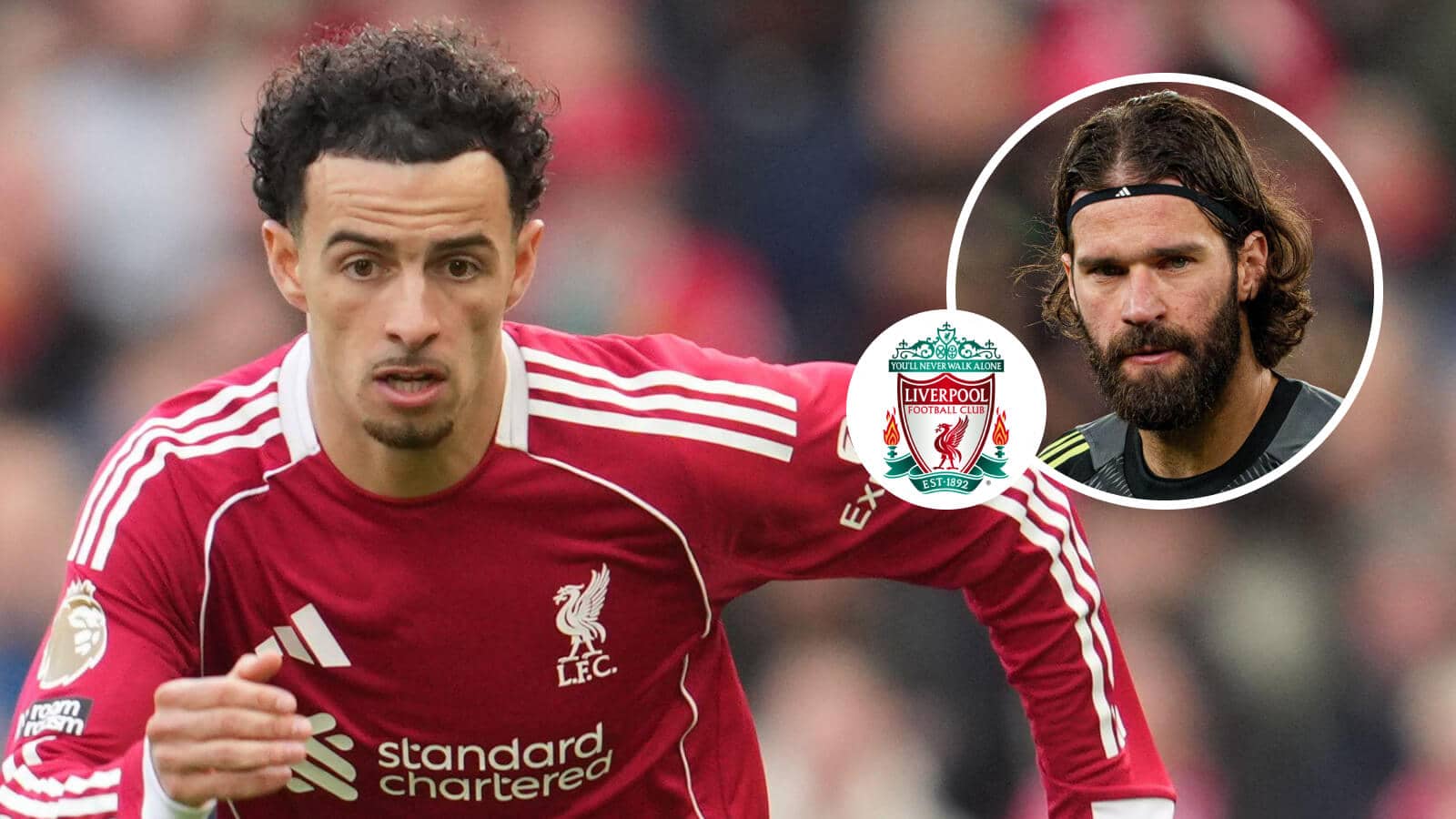
Liverpool's right-sided rebuild is already hitting brick walls
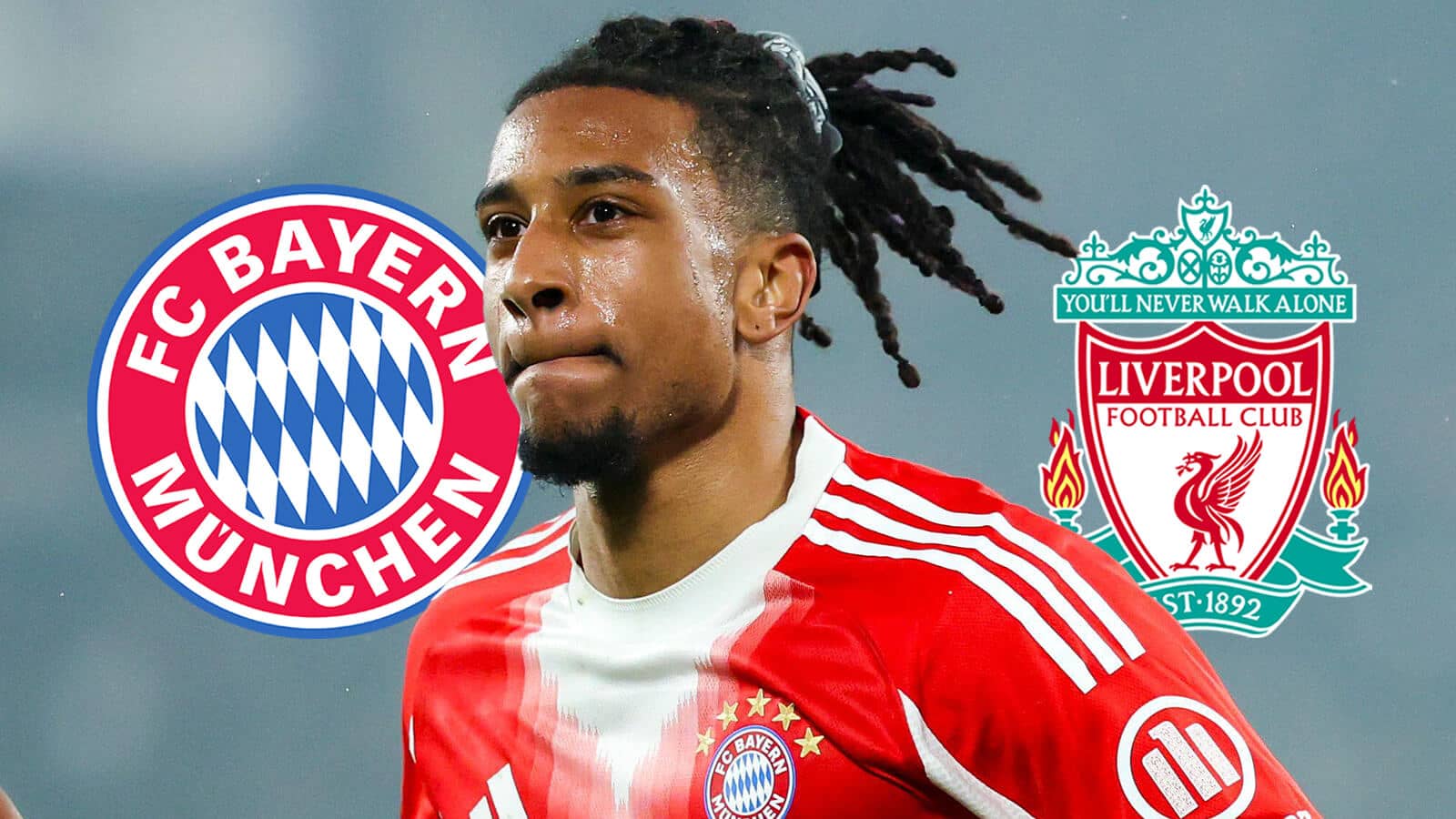
March used to be for touchline anxiety. Now it is for boardroom posturing. Today is March 26. We are barely out of the international break. The Champions League quarter-finals kick off on April 7. Yet the summer transfer market is already dictating the news cycle.
Liverpool have a right-sided problem. They know it. The rest of Europe knows it.
For half a decade, the Mohamed Salah and Trent Alexander-Arnold axis defined their attacking structure. It was an overwhelming combination of overlapping runs, underlapping darts, and terrifying ball-striking. But time is undefeated. Contract situations are murky. Tactical demands have shifted.
Arne Slot cannot rely on the ghosts of 2019. He needs a modern solution.
That explains the sudden flurry of briefings regarding two very specific targets: Michael Olise and Josh Acheampong. One is an elite, established left-footed creator. The other is a teenage defensive prodigy.
Together, they represent the exact profile of what Liverpool need to rebuild their right flank. The issue? Getting them looks nearly impossible.
The Salah succession headache
Let us look at Olise first. Bayern Munich have firmly shut the door. As recent reports outline, the German giants privately communicated they have zero intention of selling the Frenchman.
You cannot blame Liverpool for trying. Olise is a unicorn.
He does not play like Salah. Salah is a penalty-box killer. He operates on the shoulder of the last defender. Olise is a touchline-hugging playmaker who prefers to receive to feet, draw a defender, and slide a reverse pass into the half-space.
If you plug Olise into Liverpool's current system, the dynamics change entirely. The right-back would need to provide the penetrative runs. The central striker would need to stretch the pitch.
Bayern know what they have. Vincent Kompany relies heavily on Olise's ball retention. In the Bundesliga, Olise routinely completes over 85% of his passes while operating in the most congested areas of the pitch. That is an absurd metric for a wide creator.
Liverpool's interest indicates a desire to shift away from pure transition football. They want control. But with Bayern holding firm, they have to look down the list.
Before Olise moved to Bavaria, he dismantled Premier League defenses for Crystal Palace. It was there, playing alongside Marc Guehi, that his underlying numbers exploded.
At Selhurst Park, Olise was given complete freedom. He was the system. Palace built their entire attacking shape around isolating him against fullbacks.
Bayern do not operate like that. Kompany demands rigid positional play. Yet Olise has adapted seamlessly. He has proven he is not just a maverick highlight-reel player; he is a disciplined tactical asset who can execute complex attacking patterns.
Liverpool desperately need that discipline. Salah's genius has always been slightly chaotic. He scores goals out of nothing, but he also loses the ball frequently when attempting high-risk passes.
Slot prefers a methodical approach. He wants to probe the opposition block, circulate the ball, and wait for the precise moment the structure fractures. Olise fits that blueprint flawlessly. His pass completion rate under pressure is remarkably high for a wide forward.
Salah's contract situation casts a long shadow over Anfield. If he signs an extension, he will not accept a diminished role. He wants to play every minute of every game. Bringing in a player of Olise's stature to sit on the bench is politically impossible. Therefore, targeting Olise implies a belief that Salah might actually be leaving.
But again, Bayern are not selling. The £50m they paid Palace looks like a massive bargain now.
So who is next on the list?
If Liverpool want a touchline winger, they might look at Johan Bakayoko at PSV. If they want a wide playmaker, they might circle back to West Ham's Mohammed Kudus.
But none of those options offer the specific blend of elite dribbling and elite passing that Olise possesses.
Chelsea's academy dilemma
The fullback situation is arguably even more complex.
If your right winger is dropping deep to create, your right-back has to change. He cannot just be a pure overlapping threat. He needs to defend large spaces in transition. He needs elite 1v1 defensive fundamentals.
Enter Josh Acheampong.
The 19-year-old is highly regarded at Cobham. He has the physical profile of a modern wide center-back. He is comfortable defending the wide channels and tucking inside to form a back three in possession.
Chelsea have reportedly reached a decision to block any move to Anfield. They view him as untouchable.
But the word untouchable means very little at Stamford Bridge right now. The ownership model is built on player trading.
There is a glaring historical precedent here. Both clubs are acutely aware of the Marc Guehi situation. Chelsea let Guehi leave for Crystal Palace because his pathway was blocked. He developed into an England international. Chelsea then spent astronomical sums trying to sign defenders of a similar, or often inferior, profile.
Acheampong wants to play. If Malo Gusto and Reece James are ahead of him, he will look at his options.
Liverpool see the vulnerability. They are testing the waters.
Trent Alexander-Arnold’s defensive limitations have been debated ad nauseam. It is an exhausting conversation, but a necessary one.
When Liverpool play against elite transition teams, Alexander-Arnold is targeted. Opposing managers specifically instruct their left wingers to stay high and wide when Liverpool have the ball. They know that if they win possession, there will be fifty yards of green grass behind Alexander-Arnold to exploit.
Slot has tried to mitigate this by instructing his right-sided central midfielder—usually Dominik Szoboszlai—to drop and cover the space.
But that severely limits Szoboszlai’s attacking influence. You are sacrificing your most dynamic midfield runner to babysit a fullback.
This is exactly why Acheampong is so coveted.
If Acheampong plays at right-back, Szoboszlai does not need to cover. Acheampong has the recovery pace to deal with the transition himself. He has the 1v1 defensive technique to stall the winger, force him outside, and allow the rest of the defense to recover.
It releases the midfield. It changes the entire defensive geometry of the team.
Chelsea's desperation to keep him is understandable. Their own defensive record is patchy at best.
Enzo Maresca has faced consistent structural issues. Chelsea concede far too many goals in transition because their fullbacks are caught out of position. Reece James' injury record is a tragedy. Malo Gusto is brilliant offensively but can be reckless defensively.
Acheampong is the internal solution to their problems.
Selling him to Liverpool would be an act of self-sabotage. It would directly strengthen a rival while weakening their own defensive depth.
The Marc Guehi parallels are impossible to ignore. Chelsea sold Guehi for roughly £18m. They have since spent over £150m on central defenders like Benoit Badiashile and Axel Disasi. Not one of them has proven to be a definitive upgrade on the player they let walk away.
Acheampong might be an even bigger talent.
He captained England at youth level. He reads the game beautifully. He is aggressive in the tackle but rarely goes to ground.
Liverpool are probing a very sensitive area of Chelsea's operations. The Blues want to project strength. They want to be seen as a destination, not a stepping stone.
But the profit and sustainability reality is biting hard.
Every club in the Premier League is looking at Chelsea's academy with hungry eyes. They know the ownership group might be forced to sell homegrown players to balance the books before the June 30 accounting deadline.
The structural shift at Anfield
Liverpool are well-positioned to take advantage. They have maintained a healthy wage bill. They have transfer capital available.
But this scattergun approach to recruitment deserves massive criticism. Targeting Olise and Acheampong simultaneously feels disjointed.
If you buy Olise, you need a fullback who can overlap aggressively to create space for him to cut inside. Acheampong is better suited to a tucked-in role. If you play Acheampong as an inverted fullback, you need a winger who holds maximum width and attacks the byline. Olise prefers the inside channels.
It suggests Liverpool's recruitment team are identifying elite talent without a unified tactical framework.
They are chasing pure quality over functional fit.
Michael Edwards built his reputation on the latter. The current setup seems dangerously close to the former.
Take a look at Liverpool's pressing structures this season. When the right winger triggers the press, the right-back has to jump to the opposition winger. Alexander-Arnold has struggled with this exact movement. His recovery pace is fine, but his body positioning when defending backwards is frequently poor.
Acheampong excels in this exact scenario. He squares up attackers brilliantly.
At Feyenoord, Slot used Lutsharel Geertruida in a fascinating hybrid role. Geertruida started at right-back but essentially played as a right-sided defensive midfielder in possession, and a third center-back out of possession. He was the anchor that allowed the left side to attack freely.
Acheampong is the English equivalent of Geertruida. He has the exact athletic and technical profile to execute that demanding role.
But if Chelsea refuse to sell, what is the backup plan?
The transfer market is brutally unforgiving. You miss your primary targets, you panic.
We saw it with Moises Caicedo and Romeo Lavia. Liverpool wasted weeks chasing players who preferred London, then ended up scrambling.
They cannot afford a repeat this summer. The squad profile is aging in key areas.
Throwing money at Acheampong makes sense if Slot fully commits to an inverted fullback model.
Throwing money at Olise makes sense if you have a fullback capable of overlapping relentlessly.
Doing both would be a profound miscalculation.
The Premier League does not forgive tactical incoherence. Manchester United have spent billions proving that exact point.
Liverpool have to decide what they want to be. The transition from Jurgen Klopp to Arne Slot was supposed to be seamless. On the pitch, it has largely worked.
But the squad Slot inherited was built for Klopp’s heavy metal football.
Now, Slot wants to play a different tune. He wants control. He wants structural rigidity.
The upcoming transfer window is his first real opportunity to mold the squad in his image. The moves he makes—and the players he is ultimately denied—will define his tenure at Anfield.
April will decide the fate of this season. The Champions League and the Premier League run-in will consume the headlines. The FA Cup final waits in May. The FIFA World Cup looms on June 11.
But the battles that define the next five years are already raging. Bayern Munich have won the first skirmish by locking down Olise. Chelsea are fighting desperately to win the second by barricading Acheampong inside Cobham.
Liverpool have to regroup, reassess, and figure out exactly what kind of team they are trying to build. Because right now, the blueprint looks dangerously confused.
Adidas FIFA World Cup 2026 Al Rihla League Training Soccer Ball
Kick it like a pro with the official design language of the upcoming 2026 World
Frequently Asked Questions
Who are Liverpool targeting for their right side?
Why are Liverpool interested in Michael Olise?
How does Michael Olise play differently than Mohamed Salah?
What is Bayern Munich's stance on selling Michael Olise?
Why is Arne Slot rebuilding Liverpool's right flank?
More Coverage
Michael Skubala takes the hot seat at Ashton Gate
2 hours ago
World Sevens brings high-octane chaos before the World Cup fever hits
2 hours ago
The Konate saga has Liverpool fans spiraling into absolute chaos
6 hours ago
Kieran Trippier move to Wolves is a gamble on fading legs
7 hours ago
Anthony Gordon to Barcelona: Analyzing the Camp Nou Gamble
7 hours ago
Top 10: Real Madrid’s Summer Transfer Volatility
8 hours agoMore Analysis
Bayern laughing at Liverpool over Michael Olise is a massive reality check
2 months ago
Why Michael Olise is Liverpool's primary target to replace Salah
1 month, 2 weeks ago
Liverpool and Chelsea are swapping tactical identities in the market
6 days, 10 hours ago
Liverpool's £165m double raid on Bayern is exactly the chaos they need
1 month, 2 weeks ago
Liverpool's chaotic exodus exposes a lack of defensive vision
3 days, 8 hours ago