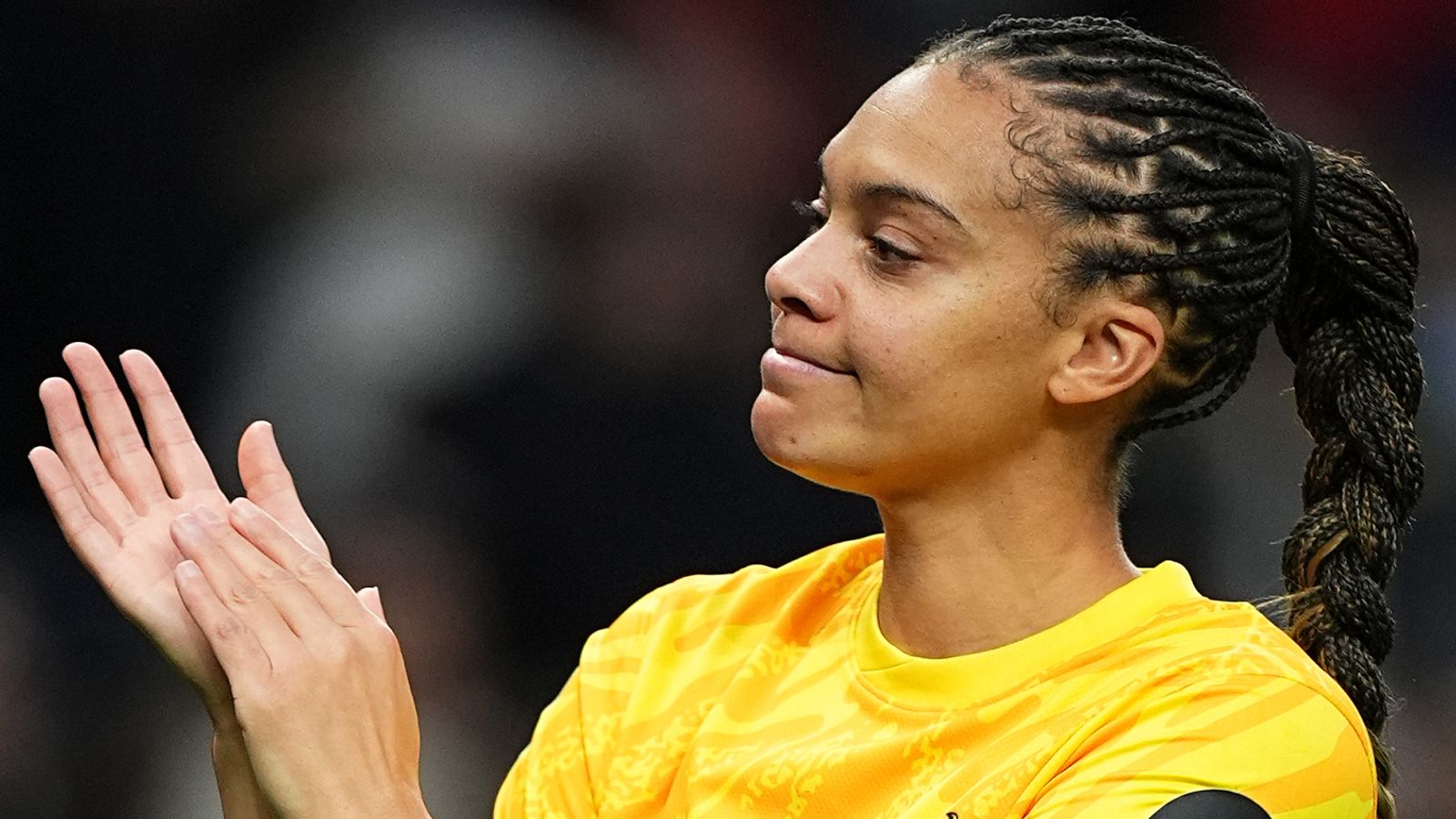
The blue screen of death at the Joie Stadium
If you wanted to see what a complete system failure looks like in real-time, you didn't need to be monitoring a cluster of H100s last weekend. You just had to watch Manchester City's defense against Brighton. It was the footballing equivalent of a frontier model suddenly deciding that 2+2 equals a banana. One minute Gareth Taylor is looking at a nine-point lead and dreaming of a coronation; the next, his high-parameter defense is being jailbroken by a team that, on paper, shouldn't even be in the same training set.
City are currently sitting at the top of the WSL table like a model that’s been overfitted to beating mid-table fodder at home. They’ve won 10 out of 10 at the Joie Stadium this season. Their metrics are beautiful. Their possession stats are basically a perfect bell curve. But as any researcher will tell you, benchmarks are a lie if you can't handle out-of-distribution data. Brighton provided that data, and City responded by having a massive hallucination, shipping three goals and leaving the title race door wide open for Sonia Bompastor and the Chelsea vultures to swoop in.
Today’s clash against Liverpool isn't just a game; it’s an urgent patch. It’s a mandatory firmware update for a squad that looks like it’s running on a legacy architecture that can't handle the pressure of a late-season title push. The Joie Stadium is sold out, the Sky Sports cameras are rolling, and the vibes are currently set to "imminent crash." If City don’t secure the three points here, we aren't just looking at a dip in form—we are looking at total model collapse.
The Gareth Taylor alignment problem
Let’s talk about Gareth Taylor's tactical alignment, because it is increasingly looking like he’s trying to run a trillion-parameter offense on a scientific calculator. Taylor is the ultimate "Process" manager. He wants the 4-3-3 to be as rigid as a set of safety guardrails on a corporate chatbot. It’s all about the angles, the rotations, and the incremental gains in territory. When it works, it’s a thing of beauty—a seamless stream of tokens resulting in a Bunny Shaw tap-in.
But when a team like Liverpool comes to town, led by the ultimate chaos-engineer Matt Beard, that rigid alignment becomes a vulnerability. Beard doesn't care about your possession percentages. He’s looking for the prompt injection. He’s looking for the moment Alex Greenwood steps two inches too far forward so he can launch a counter-attack that bypasses City’s entire midfield processing layer. We saw it in the Brighton loss—a team that refused to play by City's rules and instead exploited the massive latency in their defensive transitions.
"City need five points from their final three matches to mathematically secure the championship. They hold a nine-point lead, but Chelsea’s games in hand make that gap feel like a rounding error."
The problem with Taylor is a lack of RLHF—Reinforcement Learning from Human Feedback. He seems incapable of adjusting the weights mid-game. If Plan A is being countered, he just doubles down on Plan A, hoping that the law of large numbers will eventually save him. Against Liverpool, a team that thrives on making the game ugly and disruptive, that stubbornness is a liability. Liverpool are currently 10th, coming off a miserable 1-0 loss to West Ham, but they live for these spoiler moments. They are the low-resource, open-source disruptors that thrive on making the proprietary giants look foolish.
Bunny Shaw is the only thing keeping the weights balanced
If Manchester City is a massive, sprawling AI project, Khadija "Bunny" Shaw is the GPU cluster keeping the whole thing afloat. Without her, this team would be a very expensive, very pretty search engine that never actually returns the right results. She scored again in the Brighton debacle, but even a SOTA (State of the Art) striker can’t compensate for a backline that has the context window of a goldfish. Shaw is effectively carrying the entire compute load of the title race on her shoulders.
The reliance on Shaw is becoming a critical single point of failure. If Liverpool can isolate her—something Matt Beard has been studying for months—City’s attack starts to look like a stochastic parrot. They pass the ball in circles, mimicking the *idea* of a dangerous team without ever actually penetrating the box. Aoba Fujino was the hero in the reverse fixture back in October, scoring a late winner at Anfield, but since then, the offensive output from the wings has been wildly inconsistent. It’s all Shaw, all the time, and that’s a dangerous way to run a championship campaign.
Liverpool’s Mia Enderby, meanwhile, is the kind of wildcard that gives defensive coordinators nightmares. She’s not polished, she’s not following a complex script, but she’s fast and she’s opportunistic. In a game where City will likely have **70 percent** of the ball, Enderby only needs one glitch in the system to ruin their afternoon. If City’s defense hasn't been re-trained after the Brighton disaster, she’s going to have a field day in the transition space.
The Chelsea shadow and the cost of inference
While City are sweating over Liverpool, Sonia Bompastor is sitting in West London watching the telemetry with a grin. Chelsea have been the dominant force in the WSL for so long that they treat the trophy as their own personal training data. They’ve had a tougher run this year, but they know how to finish a season. If City drop points today, the psychological shift will be massive. It’s one thing to lead the league; it’s another to feel the breath of a relentless winning machine on your neck while your own performance metrics are trending downward.
The "cost of inference" for City is getting higher every week. Every missed pass, every defensive lapse, and every frustrated gesture from Taylor on the sidelines adds to the cumulative pressure. They aren't just playing against Liverpool; they are playing against their own mounting anxiety. This is a team that was built to dominate, not to scramble. When they are forced into a high-stakes, high-noise environment, their error rate spikes. They are a clean-room model being forced to operate in the mud and the rain of a WSL title fight.
There is also the uncomfortable reality that City’s recruitment has been a bit of a black box lately. They’ve spent heavily on "high-potential" assets that haven't always integrated into the core architecture. When you look at the bench, there isn't that same sense of reliable redundancy that Chelsea possesses. If a key component fails, the whole system degrades rapidly. The Brighton game was a warning shot—a sign that the infrastructure is more brittle than the glossy PR would have you believe.
Conclusion: Zero-shot or total rot?
So, here we are. May 3rd, the sun is out (hopefully), and the title race is in the balance. City need this win like a startup needs a Series A—without it, the whole vision starts to look like vaporware. If they can squash Liverpool early, they re-establish their dominance and put the pressure back on Chelsea. They need to show that the Brighton loss was a one-off glitch, a temporary hallucination caused by bad training data. They need to prove they are the frontier model of the WSL.
But if Matt Beard manages to frustrate them for 60 minutes, if the Joie Stadium crowd starts to get twitchy, and if the defense starts looking for the "Ignore all previous instructions" button, we could be in for the collapse of the century. You can't just prompt-engineer your way to a WSL title. You have to earn it in the trenches, and right now, City look like they’d rather be back in the lab looking at spreadsheets. This is the ultimate eval. Let’s see if the weights hold.