The geometry of a demolition
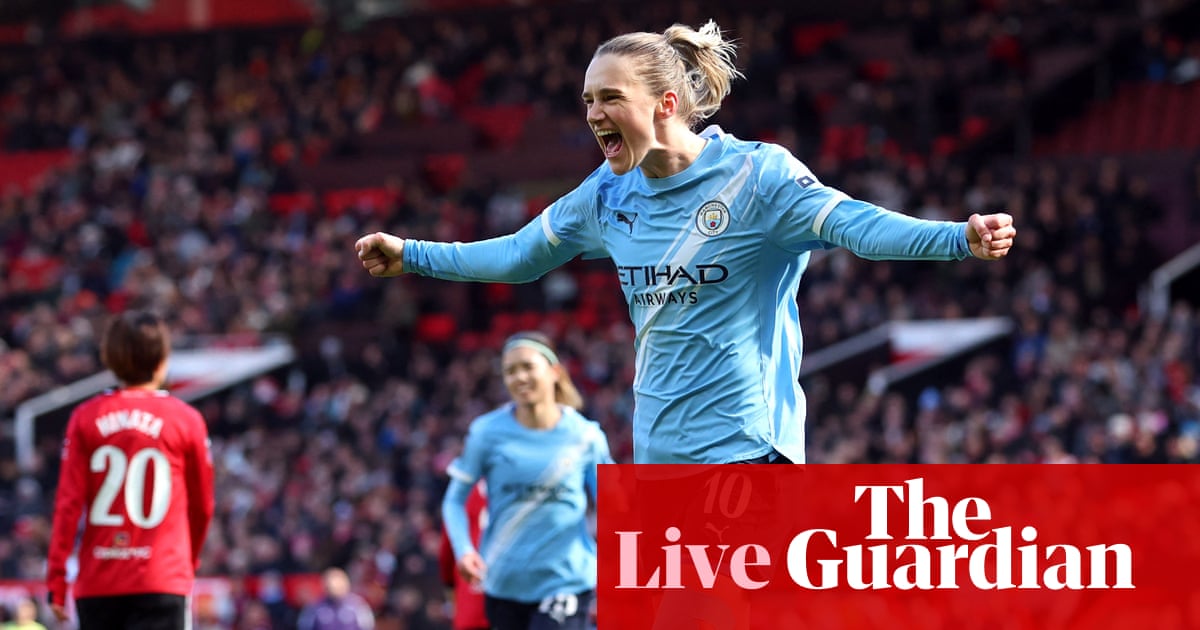
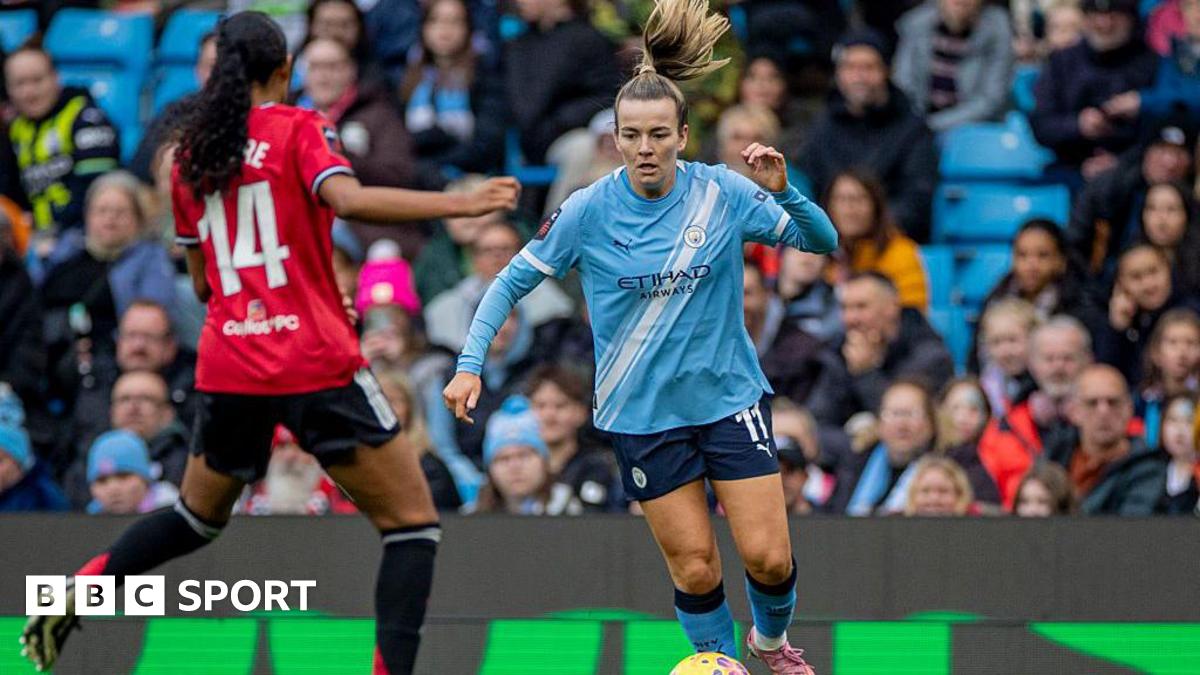
You can usually tell how a Manchester Derby is going to unfold within the opening exchanges. When Manchester City cross the city limits to face United, the pattern rarely deviates from the established script. City dictate the tempo and map the geography of the pitch. United try to survive the initial wave and look for transitional moments.
But surviving is not a sustainable tactical plan against a team designed to suffocate opponents. Sky Sports reporting City "running riot" at United today highlights a recurring structural flaw. This isn't just about a gulf in individual quality. It is a fundamental mismatch of tactical frameworks.
Gareth Taylor's side dismantle defensive blocks with surgical precision. Their shape in possession frequently morphs into an aggressive 3-2-4-1. The full-backs invert or push aggressively high, leaving a back three to sweep up long clearances.
This structure is designed to pin the opposition midfield so deep that counter-attacks become geographically impossible. If you win the ball back on your own penalty spot, your forwards have 90 yards of grass to cover. United simply cannot launch effective transitions from those deeper areas.
City's dominance is not just about what they do with the ball. Their counter-pressing structure is terrifyingly efficient. When they do lose possession, they immediately swarm the ball carrier with three or four players. They force turnovers before United can even look up to locate their wingers.
Look at the underlying numbers when United face the WSL's traditional heavyweights. Across recent seasons, United's average possession in these fixtures frequently hovers below 40%. More concerning is their open-play expected goals output, which plummets when forced into a reactive low block against elite passing networks.
The transition trap
This is where United continually stumble under pressure. Their pressing triggers are maddeningly inconsistent. When they initiate a high press, the distances between the forward line and the midfield double pivot stretch too far.
City's center-backs bypass the first line of pressure with a single, vertical line-breaking pass. Suddenly, United are sprinting back toward their own goal in a state of panic. You cannot play an effective transition game if you never actually secure the ball in the middle third.
The geometry of City's attacks creates impossible decisions for United's defensive line. The wingers drift inside into the half-spaces, operating almost as dual number tens. This creates a nightmare scenario for opposition full-backs tracking the runs.
Do you follow the winger inside and leave the flank exposed for an overlapping run? Or do you hold your width and allow City to outnumber your center-backs in the penalty area? United repeatedly choose the wrong option, and City punish that hesitation instantly.
We need to seriously examine United's midfield recruitment strategy. It has been fundamentally reactive for several transfer windows. They buy talented individual players, but rarely profiles who fix their specific tactical deficits in high-pressure games.
When City overload the central channels, United's midfield pivot gets completely dragged apart. There is a glaring lack of a dominant, press-resistant number six who can dictate the tempo under duress. Without that specific profile, they will always look second-best when elite opposition arrive.
It is a harsh reality for Marc Skinner. His tactical rigidity in high-stakes matches consistently costs his team points. You cannot approach Manchester City with the same game plan you use against the bottom half of the table. The spacing is different, and the speed of thought is entirely different.
City's expected threat from those central areas is suffocating. They average over 3.1 deep completions per half in these heavily tilted fixtures. They camp on the edge of the opposition box and wait for the defensive block to shift out of alignment.
The Merseyside contrast
Over on Merseyside, the tactical picture looks completely different. Liverpool edging past Everton is the most predictable outcome imaginable for that specific derby. Matt Beard does not build teams to run riot. He builds teams to grind opponents into dust.
Liverpool matches are frequently exercises in controlled attrition. They excel in the dark arts of the WSL, breaking up play and refusing to let the game settle. Throw-ins are taken slowly, and set-pieces are meticulously choreographed.
The ball spends an inordinate amount of time in the air, bypassing the midfield battle entirely. Over the past two years, Liverpool's reliance on dead-ball situations has been their defining offensive characteristic. They frequently generate upwards of 35% of their total xG from corners and wide free-kicks.
Everton, under Brian Sorensen, genuinely want to play intricate football through the thirds. They build from the back and look for combinations in central areas. But Liverpool simply refuse to engage in a technical contest.
They disrupt Everton's build-up with a physical, bruising mid-block. Liverpool average over 14.2 fouls per 90 minutes in these high-stakes local clashes. It is not pretty, but it is brutally effective at destroying momentum.
Protecting the premium real estate
Everton frequently attempt to build out using a modern box midfield, dropping an extra player deep to secure numerical superiority against the press. It works beautifully against mid-table opposition who allow them time to rotate. But Matt Beard instructs his forwards to aggressively cut off the passing lanes into the central pivots.
They force Everton's center-backs to play predictable, looping passes out to the touchline. Once the ball travels wide, the pressing trap snaps shut. Liverpool's full-backs jump aggressively, pinning Everton against the sideline to isolate the winger and force a hurried clearance.
When Everton face Liverpool's low block, they are forced into speculative efforts from distance. Their average shot distance increases dramatically. An xG per shot of 0.06 in derbies highlights exactly how effective Liverpool are at protecting the premium real estate inside the penalty box.
Liverpool's defensive line height is intentionally deep. By dropping their line of engagement 15 yards deeper than the league average, they compress the space behind them. Everton's pacy forwards are rendered entirely useless because there is simply no space to run into.
United, conversely, try to play a higher line without applying consistent pressure on the ball. That is tactical suicide. If the opposition center-back has time to look up and pick a pass, a high defensive line is just an invitation for disaster. City exploit that exact flaw time and time again.
Everton suffer a different kind of frustration. They often dominate the passing statistics against Liverpool but fail to translate possession into penetration. Moving the ball sideways in front of a well-drilled defense generates zero value.
Liverpool sit deep, absorb the sterile possession, and wait for a turnover. They know they only need one poorly defended corner to win the match. It is a triumph of pragmatism over possession.
The structural ceiling
This weekend's results outline the exact parameters of the WSL hierarchy. Teams like City and Chelsea have established a tactical ceiling that United are currently bumping their heads against. The gap is no longer just financial. It is entirely structural.
A single step in the wrong direction from a United center-back opens a passing lane, and City exploit it immediately. That is why they run riot. It is the accumulation of marginal spatial advantages turning into high-quality scoring opportunities.
Liverpool are proving that you do not need 70% possession to secure points in massive fixtures. You just need absolute clarity of purpose and a ruthless commitment to your own specific game plan. They know exactly who they are.
Manchester United, meanwhile, look entirely lost in an identity crisis. Are they a possession team? Are they a counter-attacking side? Against City, they look like neither. They are caught in a miserable tactical purgatory, trapped between wanting the ball and not knowing how to keep it.
Until United figure out how to disrupt elite passing networks without leaving massive gaps in transition, these derby humiliations will continue. You cannot outrun a team that moves the ball this quickly. You have to out-think them, and right now, United are falling painfully short on the tactical chalkboard.