The ghosts of past management
There is a harsh reality to life at the elite level of English football that rarely makes the broadcast cut. We see the pristine grass. We see the coordinated pressing triggers. We consume the carefully curated social media posts.
What we don't see is the quiet devastation of a player frozen out of the squad. Stripped of their purpose. Left to rot in the reserves.
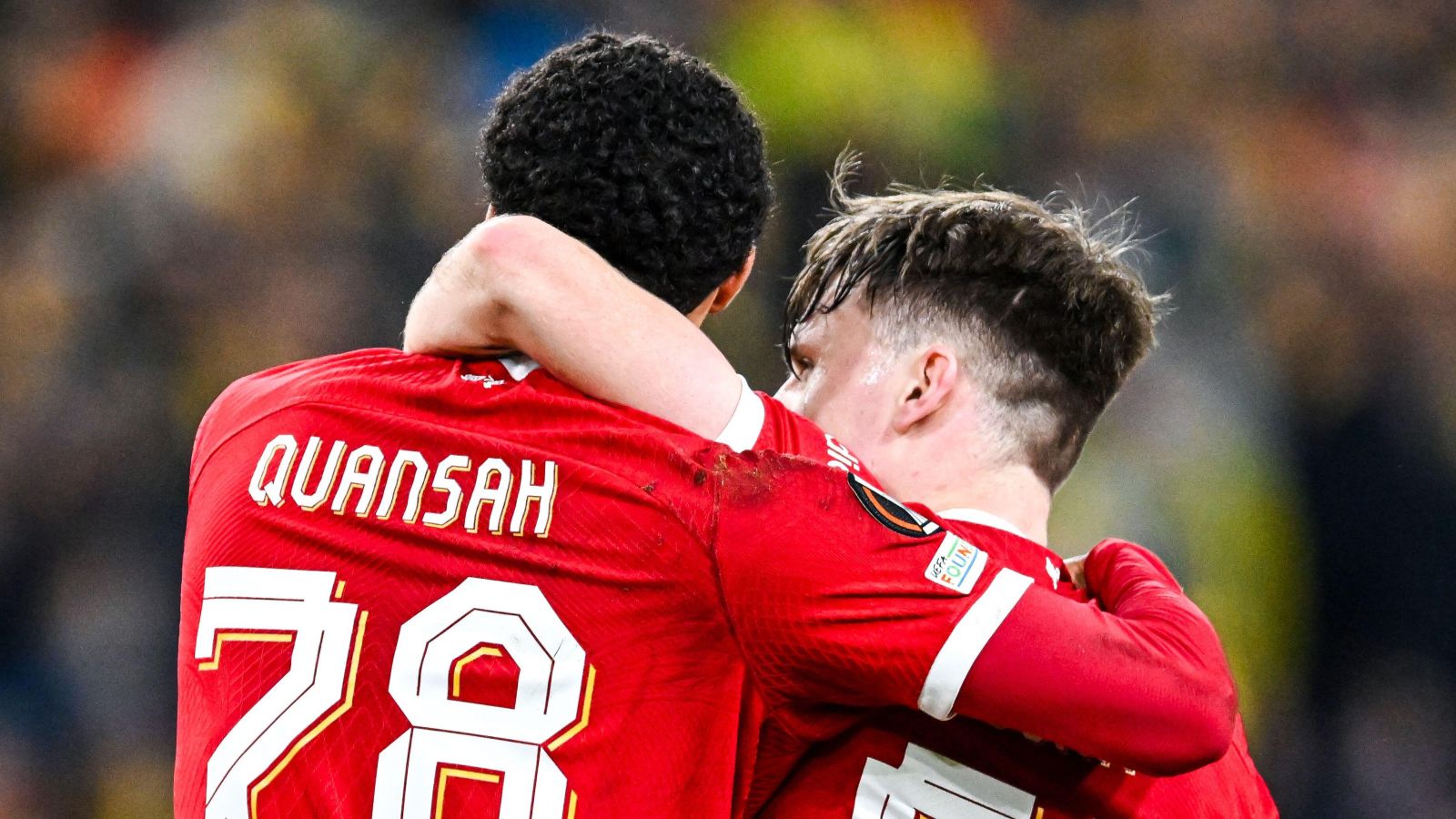
A former Liverpool player recently pulled back the curtain on this dark corner of the game. Speaking to the Mirror, he admitted a past manager's behavior was "disgusting" after he was dropped. The treatment pushed him to the brink of quitting football entirely. It is a sobering admission.
That is the brutal edge of the sport. We obsess over xG models, passing networks, and tactical periodization. But football is fundamentally played by human beings with fragile confidence.
When a manager isolates a player, the tactical implications inevitably ripple through the entire dressing room. The modern manager has to be part tactician and part psychologist. You cannot run a dictator's regime and expect to survive a modern Premier League season.
As we sit here on March 28, 2026, the margins for error have completely vanished. The Champions League quarter-finals kick off in exactly ten days. The domestic schedule is an unforgiving meat grinder. Squad depth isn't just a luxury for the top clubs right now. It is the absolute baseline requirement to keep seasons alive.
Man-management as a tactical weapon
You simply cannot execute a high-intensity pressing game with eleven players. It requires a functioning, committed unit of at least eighteen men. If fringe players are alienated or treated with contempt, the drop-off in physical output when they are finally called upon becomes fatal to the system.
Look at how elite teams set up their rest defense. It relies on absolute synchronization and mutual trust. When the ball is turned over in the final third, the nearest two players must counter-press immediately. They have to violently shut down the passing lanes, a trait Diogo Jota has mastered through sheer repetition.
Simultaneously, the number six drops to form a temporary back three. This provides vital cover against the long clearance.
If a rotational player steps into that complex system without full belief in the manager, their timing will be off. They will hesitate. They will second-guess their positioning. That fraction of a second is all a transition-heavy opponent needs to break the lines and expose Ibrahima Konaté or Virgil van Dijk.
This is where past managerial mistakes act as a glaring warning. Treating a dropped player like collateral damage doesn't just ruin that individual's week. It rots the collective spirit from the inside out.
When the time comes to call upon that marginalized player in the 82nd minute of a tight European knockout tie, they will not run through brick walls. They will protect themselves.
The April gauntlet approaches
The upcoming schedule is frankly absurd. Leg 1 of the UCL quarter-finals looms on April 7. The return leg follows swiftly on April 14. Sprinkled violently in between are domestic fixtures that will define the trajectory of the title race.
This is where we have to be highly critical of how squad rotation is often handled. There have been moments this season where the integration of squad players has felt incredibly disjointed. Bringing on cold legs in the midfield pivot when the game state desperately demands control has repeatedly backfired.
You cannot simply throw a player into the base of midfield and expect them to dictate the tempo like Alexis Mac Allister if they haven't seen meaningful minutes in a month. The spatial awareness dulls. The scanning frequency drops. The player takes the safe option instead of the progressive, line-breaking pass.
The spacing in the middle third often suffers as a result. When the wingers stay pinned to the touchline, the central midfielders need to aggressively occupy the half-spaces. They have to offer progressive passing options.
Lately, we've seen a frustrating lack of bravery in those central areas from rotational options. Players are choosing to recycle possession backwards or sideways. This allows defensive blocks to shift easily and reset their shape without breaking a sweat.
The anatomy of a pressing trap
Consider the mechanics of a wide pressing trap. The defensive shape actively invites the opposition to play the ball to the opposition full-back. The moment the ball travels laterally, the trigger is pulled.
The winger sprints to shut down the line. The near-side central midfielder steps up to block the inside channel. The striker cuts off the back-pass to the center-half. It creates an inescapable suffocating net.
But the trap only works if the far-side winger tucks in to cover the central zone. If that winger is disillusioned, if he feels isolated by the manager's actions off the pitch, his recovery run will be half-hearted. He jogs instead of sprinting.
That creates a passing lane through the middle. One switch of play, and the entire pressing structure is bypassed. The opposition is suddenly bearing down on an exposed back four with a numerical advantage.
This is exactly why tactical analysis can never be separated from man-management. A manager can spot the opposition's weakness perfectly, but if he has lost the respect of the dressing room through poor behavior, the players won't execute the plan.
Tactical shape and vulnerability
Heading into this vital ten-day window before Europe resumes, the defensive line's height will be the ultimate risk-reward calculation. Playing a high line compresses the pitch. It suffocates the opponent's build-up and keeps the attacking transitions close to the opposition goal.
But against elite transition teams, it requires elite recovery pace. It requires flawless offside coordination and Alisson sweeping aggressively outside his box.
The gap between the center-backs and the midfield pivot is the kill zone. If the opposition's attacking midfielder can receive the ball on the half-turn in that specific pocket, the backline is immediately exposed to a devastating through ball.
The manager has to ensure the midfield is dropping aggressively out of possession to screen those passing lanes.
This is where the tactical analysis circles back to the revelations regarding past management. Executing a flawless mid-block requires tireless, unglamorous running. It requires wingers tracking fullbacks deep into their own half.
It requires a level of buy-in that simply does not exist in a toxic environment.
We are seeing teams increasingly utilize a 3-2-2-3 shape in possession. They push a full-back like Trent Alexander-Arnold into midfield alongside the six to create a box. This box midfield is designed to overload the center, forcing the opposition wingers to tuck inside and leaving the flanks open.
Defending against this requires extreme tactical discipline and communication. If a player is resentful of their manager, the communication breaks down. The press becomes disjointed. The entire system collapses.
The final verdict
You can draw up the perfect tactical blueprint on a whiteboard. You can map out the passing networks, optimize the expected threat, and drill the set-piece routines until they are muscle memory. None of it matters if the human element is fundamentally broken.
The Mirror's story about past managerial behavior is a stark, uncomfortable reminder of how fragile a footballer's career can be. It shows how easily a manager can destroy it with a lack of empathy.
The modern game demands emotional intelligence just as much as it demands tactical genius. Managers who fail to grasp this do not survive the brutal gauntlet of April football.
Prediction time. The upcoming European nights will test every squad's resolve to the absolute limit. I expect a deeply pragmatic approach in the first leg on April 7. We will likely see a low-block, counter-attacking setup designed specifically to kill the game and frustrate the home crowd.
They will follow that up with a high-octane, heavy-metal performance in the return fixture. They will advance, but it will be an ugly, grinding process. Expect a gritty 1-1 draw in the first leg, with the tie finally settled late in the second leg through sheer force of will.
Read Next
- Why Andy Robertson's Liverpool exile changes everything for the run-in
- Manchester City are staring at a total identity crisis before the UCL quarters
- Andy Robertson's looming exit casts a shadow over Liverpool's run-in
- Why Liverpool want to sign two wingers to replace Mohamed Salah
- ⭐ UCL 2026 — Champions League Quarter-Finals Hub