Late March usually brings clarity to a grueling Premier League season. The title contenders separate themselves from the pretenders. The tactical experiments of autumn solidify into the battle-tested systems of spring.
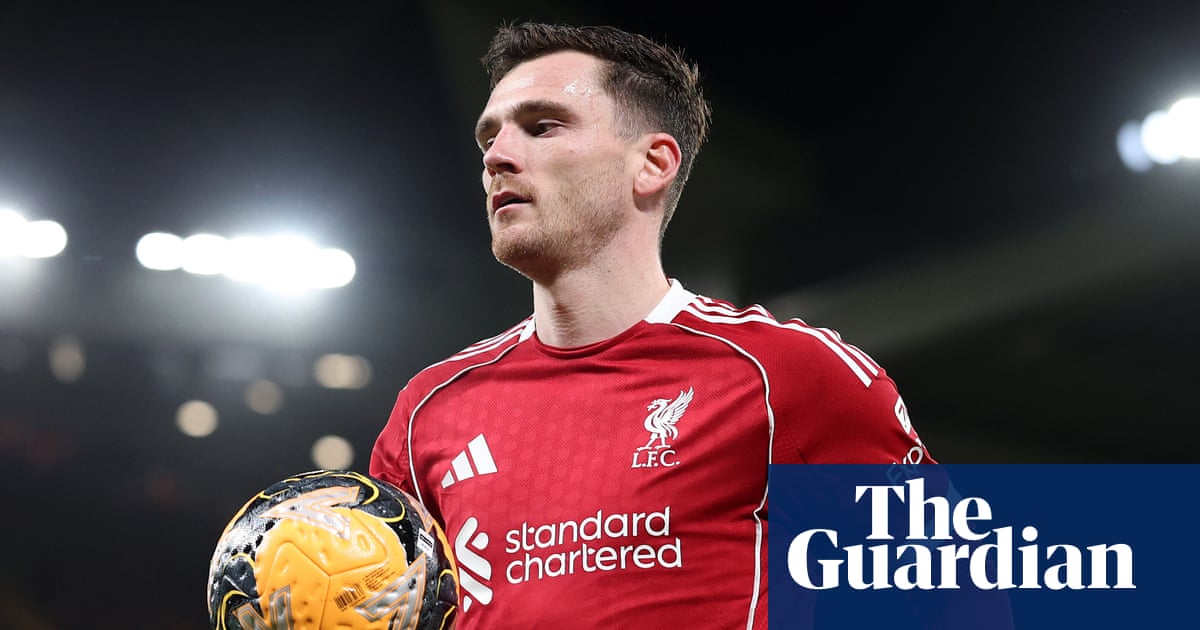
Yet, for Liverpool, the international window has exposed a lingering, uncomfortable reality. Andy Robertson, for years the undisputed engine on the left flank and the emotional heartbeat of the squad, has spent most of this campaign watching from the bench.
It is a jarring sight for anyone who has followed English football over the past decade. Robertson redefining the modern fullback role was a cornerstone of Liverpool's dominant era. He was the primary playmaker stationed on the touchline.
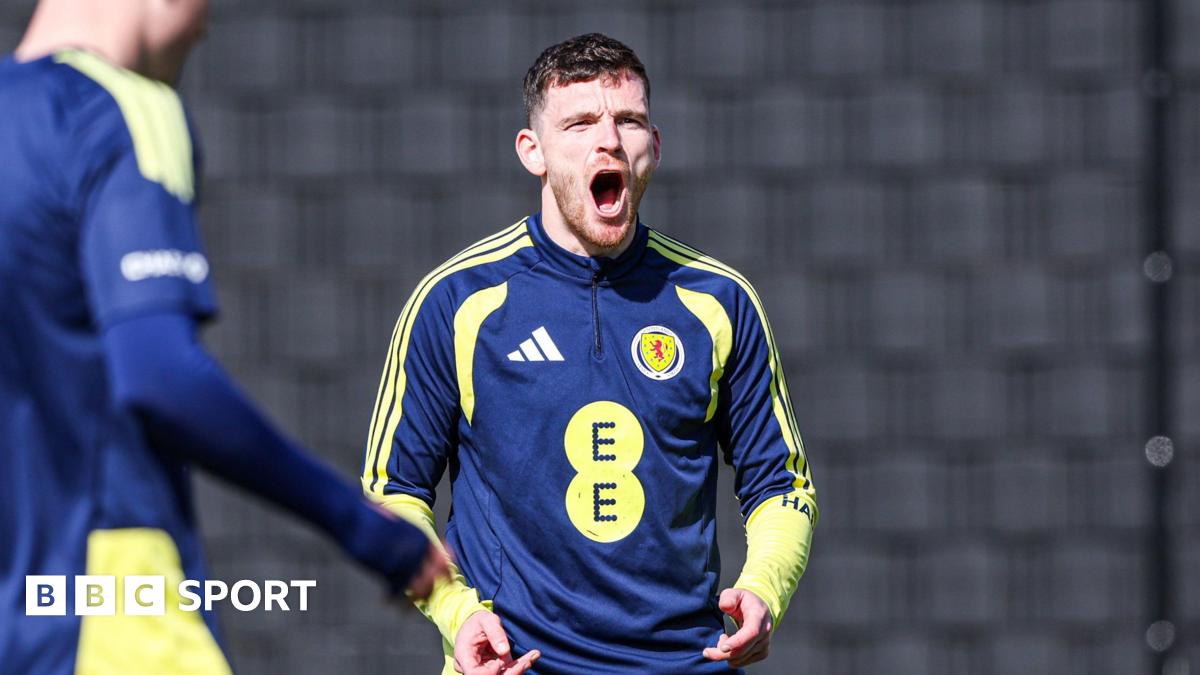
But football moves relentlessly, and tactical systems evolve without sentimentality. Speaking this week, the defender offered a rare glimpse into his frustration. He admitted that his international duties have been his saving grace during a difficult domestic campaign.
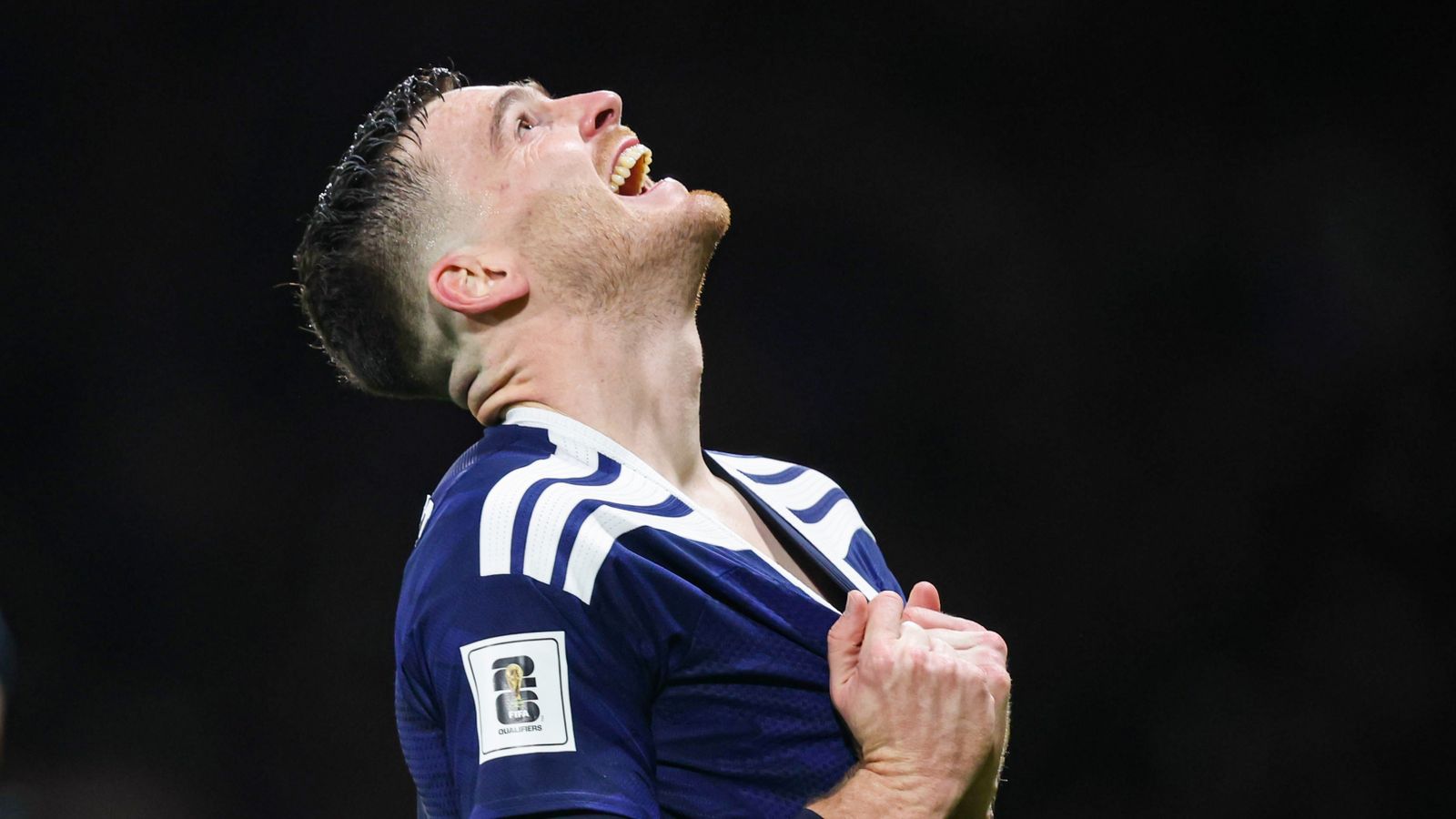
As the BBC reported, the Scotland captain noted that playing for his country this season has been important after losing his starting spot at his club.
"Scotland highs kept me going," says Robertson.
That single sentence speaks volumes. It highlights a fiercely competitive player wrestling with his sudden mortality at the elite club level. It also frames the massive tactical decision facing Liverpool as they prepare for the relentless April schedule.
The Champions League quarter-finals are looming on April 7, and squad depth will be tested to its absolute limit.
The Tactical Shift That Broke a Legend
Let’s look at the tactical reality that led to this exile. The modern game at the elite level has pivoted sharply away from the pure, touchline-hugging overlapping left-back. Managers across Europe now crave absolute control in the central areas.
We routinely see fullbacks tucking into midfield, forming a double pivot to shield against quick transitions. This role requires tight-space technical proficiency, the ability to receive the ball on the half-turn under pressure. Robertson is an elite crosser and a relentless presser, but he is not a natural central midfielder.
When Liverpool shifts into their offensive shape in possession, the left-sided defender is often asked to stay conservative. They drop back to form a makeshift back three. Robertson's natural instinct is to fly forward.
Tying him to the defensive line blunts his best attributes and limits his effectiveness. This brings us to the upcoming weekend fixture. Liverpool face a demanding test where the left flank will be heavily targeted by opposition scouts.
Every analyst in the league knows that attacking the space vacated by an overlapping fullback is the most efficient way to break down a high-pressing team. If Robertson starts, Liverpool instantly gains width and aggressive, overlapping runs.
They gain a player who can whip a ball into the corridor of uncertainty better than almost anyone. But they concede structural stability. When the ball turns over, the space behind him is glaring.
Opposing wingers circle that specific zone in red marker. This is not a minor critique or a harsh judgment. It is a fatal flaw in high-stakes matches.
We saw it repeatedly earlier in his career when the midfield cover was slightly off. The tactical shift that marginalized him was born of necessity, not malice.
The Scotland Sanctuary
Scotland, conversely, builds their entire tactical system around maximizing Robertson's strengths. Steve Clarke deploys him as an aggressive wing-back in a five-man defense.
He has the absolute freedom to attack the touchline because a left-sided center-back is explicitly tasked with covering his forward runs. The national team environment masks his defensive vulnerabilities in transition.
It amplifies his delivery into the box. That is why the "Scotland highs" are so real and so vital for his confidence. He looks exactly like the Robertson of 2019 when wearing the dark blue shirt.
But Liverpool cannot afford to play a back five just to accommodate one player, no matter his legendary status. The attacking talent in the squad demands a back four to fit the necessary forwards and midfielders onto the pitch.
The form guide heading into this weekend is notoriously tricky to read. International breaks disrupt rhythm and momentum. Liverpool have looked defensively solid over the last month.
However, they have occasionally looked disjointed and predictable in attack without the natural width Robertson provides. The key match-up this weekend isn't just about the winger isolating the fullback. It is system versus system.
System Versus System
It is about how quickly Liverpool can transition from their defensive block into their attacking shape. If Liverpool's current left-back starter pushes up, the opposition will look to bypass the midfield press with long, raking diagonals.
If Robertson is recalled from his exile, the dynamic changes entirely. The opposition will drop deeper, wary of his delivery, but they will leave their fastest forward hovering on his shoulder, waiting for the counter-attack.
Let's analyze the passing networks from recent weeks. Without Robertson, Liverpool's left-sided combinations rely heavily on the winger dropping deep to receive the ball to feet.
The overlapping threat is minimal, meaning the opposition right-back rarely has to make a difficult decision. This makes the attack functional, but predictable.
Defenses can shift their blocks compactly, safe in the knowledge that the left fullback will not make that punishing secondary run to the byline. It lacks the chaotic, overwhelming thrust that used to terrify the league.
Here is the uncomfortable truth that few want to admit. Liverpool might be a mathematically better defensive team without Robertson, but they are undeniably a less frightening attacking force.
Finding the balance between control and chaos is the ultimate puzzle for the coaching staff. With the massive Champions League knockout phase arriving soon, squad rotation is absolutely inevitable.
Robertson will get minutes. But getting minutes in a heavily rotated squad against lower-tier opposition is entirely different from being trusted in a high-stakes knockout tie.
The Run-In and the Prediction
His delivery from set-pieces remains world-class. In a tight, tense match where open play yields nothing, a single whipped corner can alter the trajectory of a season.
You do not discard a weapon like that lightly, especially when trophies are on the line. Yet, the defensive lapses are impossible to ignore in the video room.
His aggressive pressing triggers are sometimes mistimed now. He jumps out of the defensive line to press, the opponent plays a quick wall pass, and suddenly the center-backs are sprinting towards their own goal in a panic.
These are the fine margins that define the elite level. A half-second delay in recognition, a slight drop in acceleration over ten yards. It is a ruthless environment where past achievements offer zero protection against the present reality.
The FIFA World Cup kicks off on June 11, 2026. That tournament is Robertson's ultimate target. To lead Scotland in North America, he needs sharp, competitive football.
Sitting on the bench at Anfield is not the preparation required for the pinnacle of international football. This creates a fascinating tactical friction.
Robertson is desperate to prove he still belongs at the highest level of the club game. Liverpool need every single player firing for the run-in, but they cannot compromise their tactical structure to give him rhythm.
Watch his body language carefully if he comes on this weekend. The intensity will be dialed up to maximum. Every tackle will carry extra weight.
Every sprint will be a statement. He is fighting for his legacy at the club that made him a superstar. I expect Liverpool to start conservatively this weekend.
The tactical blueprint that has kept them solid will remain firmly in place. The left-back will tuck in. The midfield will dictate the tempo and focus on ball retention rather than vertical risks.
But if they are chasing a goal with twenty minutes left, look to the bench. Robertson will be the first substitute called upon. The game state will demand his specific set of skills.
Liverpool will struggle to break down a well-drilled low block initially. The lack of natural width on the left flank will stall their possession phases in the final third, leading to sterile possession around the penalty area.
The match will remain frustratingly deadlocked until the 70th minute. Robertson will be introduced. He will immediately stretch the pitch, forcing the opposition defense to widen and creating pockets of space internally.
Liverpool will snatch a narrow, ugly 1-0 win late on. And it will be a Robertson cross that forces the decisive error or finds a head in the box. The tactical exile isn't over, but his sheer willpower and value in specific, desperate game states remains undeniable.
Read Next
- The cracks in Mikel Arteta's squad management are starting to show
- Liverpool are facing a brutal reality as the Mo Salah era ends
- Top 10: Mohamed Salah's Most Iconic Liverpool Moments
- Football sets aside the banter for Roy Keane
- 🏴 Scotland World Cup 2026 — Tartan Army Hub
- 🇧🇷 WC 2026 Group C — Brazil, Morocco, Scotland, Haiti