
Manchester United are returning to the Champions League but the old guard must go

The cost of being a television product
Manchester United are being cannibalized by their own popularity. While the footballing merit of returning to the Champions League is undeniable, the structural reality of the club remains a mess of conflicting incentives. This season, United have been forced into the Monday night television slot six times. Only Everton, a club perpetually locked in a relegation dogfight, have been scheduled more frequently in that graveyard shift.
For a club of United's commercial scale, these Monday fixtures are not just a logistical headache for traveling supporters; they are a financial drain. Internal estimates suggest these kick-off times are costing the club millions in lost matchday revenue. When you move a game from a Saturday afternoon to a Monday night, you lose the corporate hospitality surge and the pre-match retail spike. It is a tax on success, or more accurately, a tax on being the Premier League's biggest audience draw.
The loyalty of the fans remains the only constant. Despite the chaotic scheduling and the mid-week treks across the country, Old Trafford remains full. But that loyalty is being tested by a team that often feels more like a collection of individual highlight reels than a cohesive tactical unit. As we head into the final weeks of the 2025/26 campaign, the gap between being a top-four side and being a title contender remains a chasm defined by two names: Bruno Fernandes and Casemiro.
The Bruno Fernandes paradox and the Carrington chaos
Tactically, Bruno Fernandes is the sun around which everything at United orbits. He is the primary creator, the pressing trigger, and the emotional barometer. However, the data suggests that this total reliance is reaching its expiration date. His tendency to vacate the number ten space to hunt the ball in deeper areas often leaves the midfield transition in tatters. He is a high-risk, high-reward player in a system that desperately needs a lower-risk, consistent rhythm.
Recent reports from Man United Confidential suggest the tension is not just tactical. Security at Carrington reportedly had to intervene to assist Fernandes during an incident at the training ground. While details are sparse, it points to a volatility that matches his on-pitch persona. For a captain, that level of friction is unsustainable when the club is trying to build a new, disciplined culture under Ineos.
There is a growing consensus that United need a different profile in the central creative role. Rumors of an ideal replacement are already circulating, suggesting the recruitment team is looking for a player who can provide the tactical discipline Fernandes often ignores. You cannot build a Champions League-winning structure on a player who treats every possession like a 90th-minute desperation play. The 4-2-3-1 requires a pivot point, not a nomad.
The machine stops: Casemiro prepares for the exit
If Fernandes is the tactical problem, Casemiro is the physical one. The club has reportedly reached an agreement not to trigger the additional 12 months on his contract, meaning the Brazilian will depart next month. It is the correct decision. While Benjamin Sesko has recently called him a machine and urged his younger teammates to soak up every bit of knowledge before he leaves, the reality on the grass is different. The machine has been red-lining for eighteen months.
Casemiro’s pass completion rate under pressure has plummeted this season. His recovery speed, once his greatest asset, is now a liability in a league that has become significantly faster and more transition-heavy. At 34, he is struggling to cover the vast expanses of grass that United’s disjointed pressing system demands. He is a localized solution to a systemic problem, and his departure will leave a £350,000-a-week hole in the wage bill that must be filled by a specialist six who can actually run.
Sesko is right to praise the veteran’s mentality. You do not win five Champions League titles without possessing a professional standard that is alien to most players. But United have spent too long paying for what players achieved at their previous clubs rather than what they can do at Old Trafford. Casemiro was a necessary sticking plaster in 2022. In 2026, he is a reminder of the expensive, short-term thinking that Ineos is desperate to erase.
Building around the Sesko generation
The arrival of Benjamin Sesko has changed the gravitational pull of the United attack. Unlike previous strikers who waited for the ball to find them, Sesko creates his own gravity. He is a vertical threat who forces defensive lines to drop, which should, in theory, create more space for the midfield. The fact that he is the one advocating for the younger players to learn from Casemiro shows a maturity that is often missing in the current squad.
The blueprint for the 2026/27 season must revolve around this younger core. The goal is no longer to survive Monday nights or scrape into the top four. The goal is to build a team that can compete with the tactical sophistication of the current European elite. That means moving away from the individualistic 'hero ball' that has defined the Fernandes era. It means finding a midfield partner for Kobbie Mainoo who doesn't require a security detail to manage his temperament.
We are seeing the end of an era. The departure of Casemiro and the potential sale of Fernandes would be the biggest statement of intent the new hierarchy could make. It would signal that the club is no longer a retirement home for legends or a stage for individual drama. It is a return to a collective identity. The Champions League music will return to Old Trafford next year, but the personnel walking out to it must be fundamentally different.
The Vancouver distraction and the FIFA ego
As United grapple with their internal rebuild, the wider world of football remains focused on the upcoming World Cup. Gianni Infantino is heading to Vancouver this week for the annual congress, but the headlines aren't about the 48-team format or the logistics of the tournament. Instead, he is reportedly making waves because he was refused presidential-level security by local authorities. It is a classic Infantino moment—a bizarre disconnect from the reality of the sport he supposedly leads.
While fans in Manchester are worrying about the 8:00 PM Monday night kick-offs and the cost of travel, the head of FIFA is concerned with the size of his motorcade. It highlights the staggering gap between the people who run the game and the people who actually pay for it. The lack of self-awareness is staggering, but it is par for the course in modern football administration. Infantino wants the prestige of a head of state without any of the accountability.
For United, the focus must remain local. The Champions League qualification is a milestone, not a destination. The next month will determine whether the club has the courage to actually move forward. Letting Casemiro walk is the easy part. Deciding what to do with Bruno Fernandes—the man who defines their current ceiling—is where the real work begins. The loyalty of the fans is there, the revenue is recovering, but the tactical soul of the club is still up for grabs.
Read Next
- Top 10: Latest Talking Points from United's Narrow Win Over Brentford
- Benjamin Sesko is finally giving United fans something to believe in
- Casemiro is crying and Olivier Giroud won't stop talking about 2016
- Casemiro's fitness remains a concern despite United's Champions League push
- 🇵🇹 Portugal World Cup 2026 — A Seleção Hub
- ⭐ UCL 2026 — Champions League Quarter-Finals Hub
Roku Express 4K+ | Streaming Player
Never miss a Premier League kickoff with crystal clear 4K streaming.
More Coverage

Why Liverpool must be wary of the Yan Diomande Bundesliga trap
an hour ago
Raheem Sterling's arrest is a disaster for his career timeline
3 hours ago
Kieran Trippier is the exact veteran Wolves need right now
3 hours ago
Adam Wharton emerges as top summer target for Arsenal's midfield evolution
3 hours ago
Manchester United’s Summer Obsession: Why Inconsistency Defines the Strategy
3 hours ago
Liverpool chasing Yan Diomande in high-stakes €150m transfer scramble
3 hours agoMore Analysis
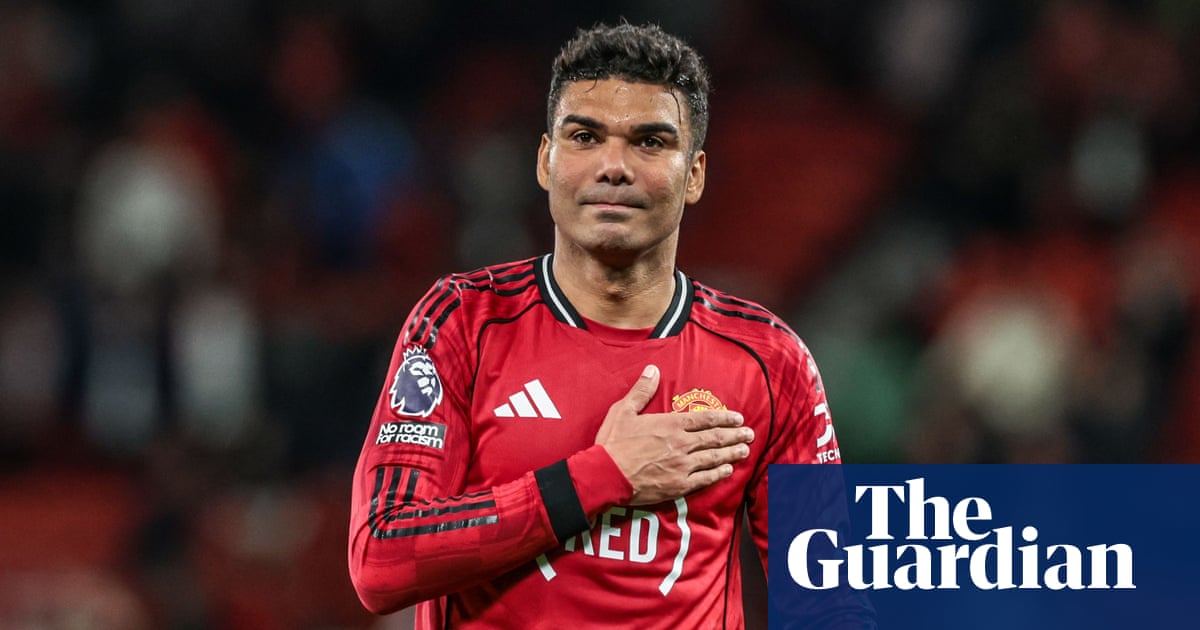
United are closing in on the Champions League but the Casemiro void is huge
1 month ago
Casemiro's exit proves Man United are finally reading the numbers
2 months ago
Casemiro's inevitable United exit exposes a completely broken system
1 month, 2 weeks ago
Why Casemiro's Manchester United exit is the only way forward
2 months, 1 week ago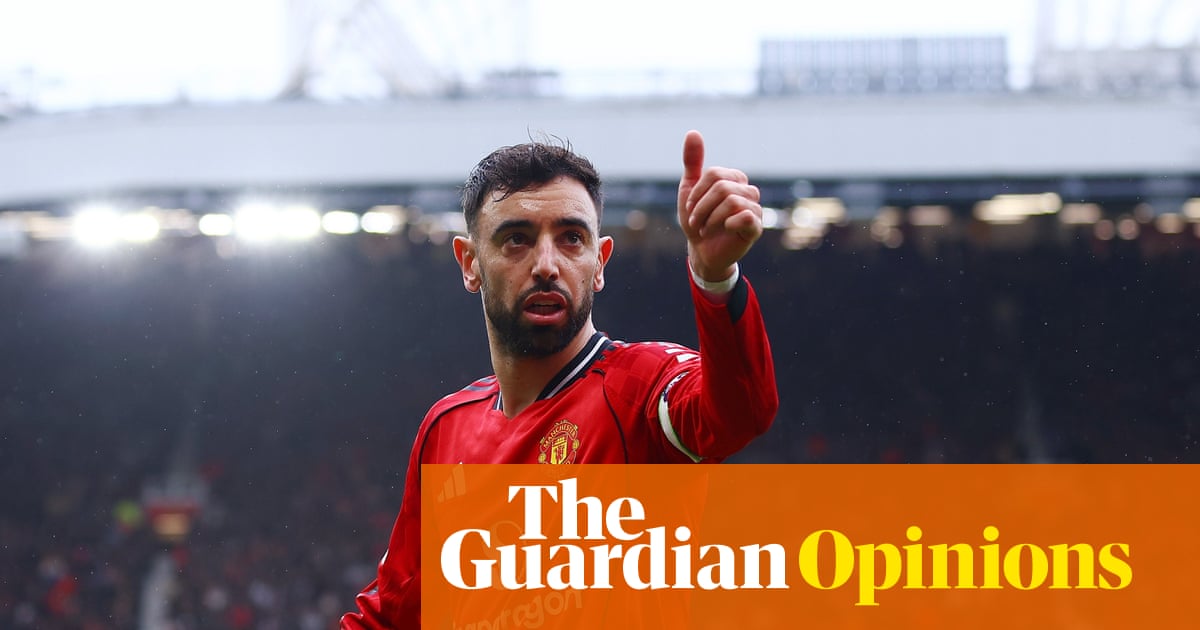
Manchester United's rebuild is starting upstairs, but Bruno still runs the pitch
2 months ago