
Manchester United’s £150m pursuit of Cole Palmer is a tactical nightmare

The international break vacuum and the Palmer paradox
The international break is a predictable machine. When the domestic schedule pauses, the rumor mill shifts from tactical analysis to financial absurdity. The latest report from Mirror Football suggesting Manchester United are preparing to enter a £150m transfer battle for Cole Palmer is the quintessential example of this phenomenon.
On the surface, it makes sense for a club that has spent the last decade chasing individual brilliance to solve systemic failures. Palmer is the most gravitational player in the Premier League right now. He demands the ball, he dictates the tempo, and he possesses a weight of pass that most of the United midfield can only replicate on a PlayStation. But beneath the headline price tag lies a fundamental misunderstanding of United’s current squad construction.
Palmer is not a luxury addition that solves a problem; he is a redundant asset that would likely exacerbate the team's existing structural imbalances. At Chelsea, he has been given the keys to the kingdom, operating in that hybrid right-wing/No. 10 role where he can drift into the half-spaces and exploit the gap between a fullback and a center-half. Manchester United already have a player who occupies that exact territory, and his name is Bruno Fernandes.
The Bruno Fernandes conflict
You cannot play Bruno Fernandes and Cole Palmer in the same functional 4-2-3-1 without compromising the defensive integrity of the pivot. Both players require high usage rates. Both players are high-risk, high-reward passers. If you put them both on the pitch, you are essentially asking Kobbie Mainoo to cover the entire width of the Old Trafford pitch by himself while the front four wait for a transition that may never come.
When we look at Palmer’s metrics from the 2026 season so far, his efficiency in the final third is staggering. He isn't just a goalscorer; he is a primary creator who averages nearly four shot-creating actions per 90 minutes. However, those actions come from a specific positioning—the right-hand channel. If United move for him, they are either forcing him into a central role he doesn't prefer or shunting him to a wing where his lack of recovery pace becomes a liability in the Premier League’s increasingly athletic transition game.
The argument for Palmer usually ignores the 'rest defense' implications. Modern football at the elite level—the level United supposedly want to return to—is won by how you set up when you have the ball. Palmer is a floater. He is an artist who needs the structure built around him. United’s current structure is less of a building and more of a series of loosely connected tents. Adding a £150m artist to a camp with no foundation is a recipe for another high-profile failure.
The Marcus Rashford hope or a stay of execution
Parallel to the Palmer noise is the narrative that the boss is offering Marcus Rashford 'hope.' It is a curious choice of words for a player who was once the undisputed face of the project. Rashford’s decline hasn't been a lack of talent, but a lack of tactical evolution. In a world where elite wingers are expected to be both secondary playmakers and primary defensive triggers, Rashford has remained a specialized transition threat.
The 'hope' being offered likely stems from a desire to see Rashford adapt to a more disciplined role on the left, perhaps as an inside forward who prioritizes timing over volume. But if the Palmer rumors have even 1% of truth in them, Rashford’s future becomes even more precarious. A front four featuring Palmer, Bruno, and Rashford would be the most immobile defensive block in the top half of the table.
We saw this in the collapse against Liverpool earlier this month. When the opposition fullbacks pushed high, United’s wingers failed to track the runners, leaving the midfield exposed to a three-on-two overload. Palmer does not solve this. In fact, his defensive work rate at Chelsea has been criticized during their heavier defeats this season. He is a player you accommodate, not a player who does the dirty work to accommodate others.
The financial reality of PSR and the Man Utd tax
United’s recruitment strategy has long been plagued by the 'Man Utd tax'—a surcharge applied by selling clubs who know the Red Devils are desperate for a PR win. Chelsea, despite their chaotic ownership, are not going to let their talisman leave for a penny less than a record fee, especially to a direct rival for the Champions League spots. With Profit and Sustainability Rules (PSR) tightening their grip, a £150m layout for one player is almost impossible without significant outgoings.
This brings us back to Rashford. If United are serious about Palmer, they aren't just offering Rashford 'hope'; they are likely offering him to the highest bidder. You cannot carry a £350,000 a week winger on the bench while paying another £300,000 a week to a new arrival in the same salary bracket. The math doesn't work, and the dressing room dynamics would be even more volatile than they were during the Ronaldo return era.
The critical observation here is that United are still behaving like a club that believes one 'world-class' signing can fix a decade of poor coaching and recruitment. They are looking for a savior when they should be looking for a system. Palmer is a brilliant individual, but he is a solution to a problem United don't actually have. They have creators. What they lack is a defensive structure that allows those creators to work without conceding three goals on the counter-attack.
The tactical shift United actually needs
Instead of chasing Palmer, the recruitment team should be obsessing over a high-volume defensive midfielder who can win the ball in the first phase. The obsession with 'names' is what led to the Antony disaster and the stagnation of the post-Ferguson years. Palmer is a far superior player to Antony, but the logic remains the same: buying the shiny object instead of the necessary tool.
If you watch Palmer at Stamford Bridge, his best moments come when he has a 'box' midfield behind him—two sitting players and two attacking outlets. United rarely play with that level of rigidity. They are a team of moments, and Palmer is the king of moments. But two kings in one midfield (Palmer and Bruno) usually results in a civil war of possession, with neither player willing to be the one who recycles the ball safely to maintain pressure.
The 'hope' for Rashford is equally flimsy. If he hasn't developed the necessary defensive discipline by the age of 28, it is unlikely a few encouraging words from the manager will suddenly turn him into a two-way winger. The reality is that both Rashford and the United hierarchy are at a crossroads. One represents the failed promise of the last five years; the other represents the expensive, flashy gamble of the next five.
The verdict on the £150m rumor
Is Cole Palmer worth £150m in a vacuum? Possibly. Is he worth that to Manchester United? Absolutely not. The move would represent a retreat into the 'Galactico' era of recruitment that has consistently failed at Old Trafford. It would signal that the club has learned nothing from the Paul Pogba or Jadon Sancho sagas.
United need to stop trying to win the transfer window and start trying to win the midfield battle. Palmer’s arrival would be a victory for shirt sales and social media engagement, but it would be a tactical nightmare for any manager trying to build a balanced, modern football team. The 'hope' for Rashford should be that the club finds a way to use him effectively, rather than replacing him with a more expensive version of the same tactical problem.
Ultimately, this report feels like a calculated leak to drive up Palmer's value or to keep United's name in the conversation during a quiet week. If the club actually follows through, it will be the clearest sign yet that the new ownership is just as susceptible to the allure of the 'big name' as the previous regime. Football is moving toward collective systems; United are still trying to buy the best players and hoping they figure it out on the grass. That approach hasn't worked since 2013, and Cole Palmer won't be the one to change that.
Frequently Asked Questions
Why are Manchester United pursuing Cole Palmer?
Why would Cole Palmer clash with Bruno Fernandes?
What are Cole Palmer's stats for the 2026 season?
What happens if Cole Palmer plays out of position?
Why is Palmer considered a redundant asset for United?
More Coverage

Bernardo Silva is effectively a cheat code on a free transfer
16 hours ago
Why the new BBC awards feel like a Participation Trophy
21 hours ago
Arne Slot and the high-stakes gamble in the Anfield boardroom
1 day, 15 hours ago
Top 10: Chelsea 2026 Power Rankings
1 day, 19 hours ago
Liverpool’s summer rebuild strategy is mathematically flawed
2 days, 5 hours ago
Jamie Vardy is leaving Cremonese and the internet is losing its mind
2 days, 22 hours agoMore Analysis
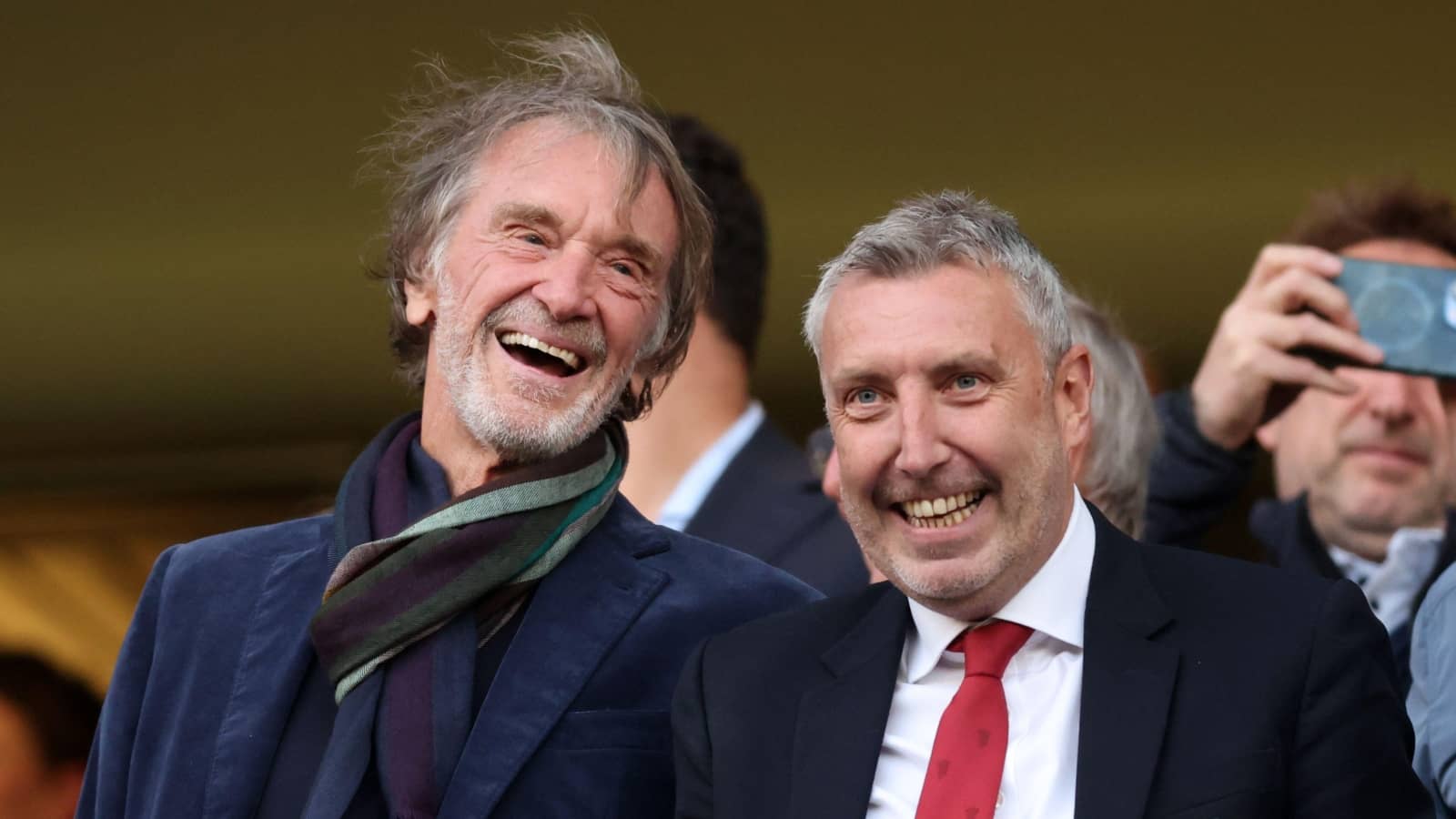
Manchester United are chasing Cole Palmer for a record-breaking summer deal
1 month, 4 weeks ago
Chelsea face catastrophic squad failure as Cole Palmer eyes Man Utd
2 months ago
Cole Palmer's Chelsea frustration makes this United clash a powder keg
2 months ago
Why Cole Palmer's Chelsea exit is becoming a tactical inevitability
2 months ago
Carrick fixed Man Utd's tactics but a £150m Palmer deal changes everything
2 months ago