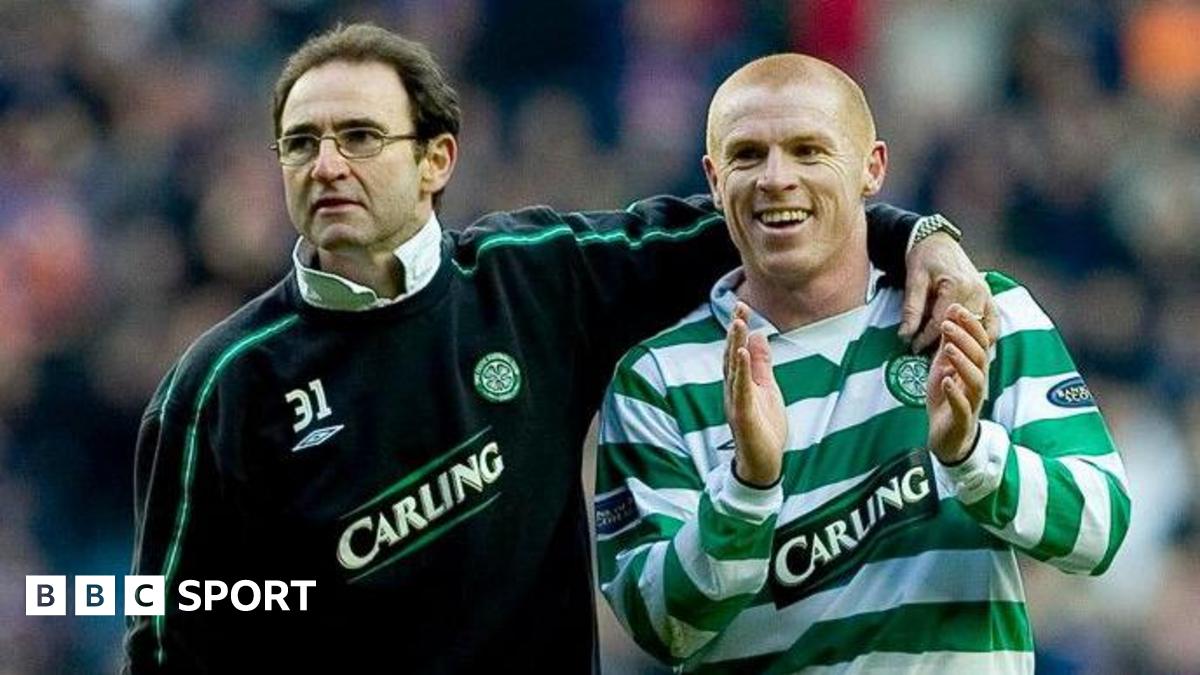
The Scottish Cup final rarely needs extra narrative weight. It is Hampden. It is the end of the season. But this year feels heavily burdened and undeniably messy. Martin O'Neill is staring down a potential farewell. Across the touchline stands Neil Lennon, his former captain and longtime disciple, ready to play the ultimate party pooper.
But the football itself is currently playing second fiddle to a toxic war of words off the pitch. The fallout from last weekend’s absolute chaos at Parkhead has overshadowed the preparations completely. Tony Bloom, the analytics guru and Hearts investor, threw a grenade into the buildup by alleging his players were assaulted on the pitch. O'Neill is furious. The situation spiraled out of control immediately. The Celtic boss was forced to change his mobile phone number due to a barrage of abusive texts and calls.
It is an ugly backdrop for what should be a celebration. Scottish football has a nasty habit of cannibalizing its own showcase events. Instead of talking about formations and fitness, we are talking about alleged assaults and burner phones.
The Bloom Allegations and the Burner Phone
Let’s address the Parkhead incident first. The post-match scenes were a total breakdown of order. There is no defending the lack of security and the vitriol that spilled from the stands. But Bloom’s specific phrasing—claiming players were outright "assaulted"—crossed a dangerous line. O'Neill did not hold back. He dismantled Bloom’s comments, suggesting the Hearts investor was playing a cynical PR game rather than dealing in verifiable facts.
Bloom usually operates in the shadows. His entire brand is built on cold algorithms and silent investments. For him to burst into the tabloids with inflammatory legal terms represents a massive departure from his playbook. It shows a fundamental misunderstanding of the media environment in Glasgow. You do not throw the word assault into the ether without starting a fire.
The immediate consequence of Bloom's rhetoric was a targeted harassment campaign against O'Neill. Getting a manager's private number is difficult. The fact that it was leaked and weaponized tells you everything about the current temperature in the city. Changing a phone number is a logistical headache. It severs your immediate line to scouts, agents, and medical staff. Doing it days before a cup final is a massive, unwanted distraction engineered by an angry mob.
This is where the criticism needs to land squarely on the league authorities. The Scottish FA have been completely passive. They allowed a media circus to dictate the week while O'Neill deals with anonymous threats. The SFA will fine a manager instantly for criticizing a referee, but they offer absolutely zero protection when a manager is driven off his personal phone by a coordinated harassment campaign. Their silence is cowardly.
Master, Apprentice, and a Cheshire Flat
If O'Neill can block out the noise from Edinburgh, he still has to solve the problem standing in the opposite dugout. Neil Lennon knows every trick in O'Neill's playbook. Their relationship stretches back over three decades. It originated in a cramped flat in Cheshire during their early days in England. O'Neill built teams around Lennon's snarl and tactical discipline at Leicester City and Celtic.
Now, Lennon is tasked with using those exact traits to deny his mentor a flawless exit. Lennon has openly admitted he is comfortable playing the villain here. He has to be. Sentimentality gets you fired in this business. Lennon has his own managerial reputation to fiercely protect. He cannot afford to be a footnote in Martin O'Neill's retirement party.
The Psychological Warfare
There is a fascinating psychological battle at play. O'Neill manages through sheer force of personality and emotional momentum. Lennon knows exactly how to disrupt that. He knows when to slow the game down, when to commit the cynical foul, and when to agitate the crowd. If anyone can short-circuit a Martin O'Neill emotional tidal wave, it is the man who used to orchestrate it on the pitch.
The tactical matchup is secondary to the mental one. Will Lennon set his team up to sit deep and frustrate, knowing Celtic will come out desperate to secure O'Neill’s legacy? Almost certainly. It will not be pretty. It might even be excruciating to watch. Lennon does not care about aesthetics. He cares about lifting the cup and proving he is his own man.
The Ghost of Robbo
Hanging over all of this is the profound absence of John Robertson. "Robbo" was O'Neill's right-hand man, his tactical sounding board, and his closest friend in the game. His passing cast a massive shadow over Celtic’s entire campaign. The emotional toll on O'Neill has been evident all season. He has looked older, more fatigued, carrying a grief that football cannot cure.
When asked about Robertson ahead of the trip to Hampden, O'Neill offered a painfully vivid image of his former assistant.
Robbo would be looking down on us at Hampden... he'd be having a fag and saying, 'Isn't this extraordinary?'
That single quote cuts through all the noise. It strips the game back down to what it actually means. Robertson was the grounded cynic to O'Neill's soaring orator. He was the guy who smoked on the touchline and saw the game in cold, practical terms. O'Neill misses that anchor desperately.
Celtic have looked tactically disjointed at times without Robertson to read the flow of the match. O'Neill is carrying the burden alone, which makes this cup run even more exhausting. Winning this final without Robertson by his side is the underlying motivation driving the manager. It is not about adding to the trophy cabinet anymore. It is about a tribute to a man who helped build his entire career.
A Broken Build-up
As we look toward kickoff, it is hard to shake the feeling that the buildup has been irreparably damaged. The Tony Bloom controversy highlights a massive flaw in modern football ownership. Billionaire investors throw verbal grenades from the directors' box, leaving the managers on the ground to deal with the real-world fallout and the police reports. It is a dereliction of duty.
But once the whistle blows, the noise will finally stop. It will just be O'Neill, Lennon, and ninety minutes to settle a thirty-year relationship. Lennon will try to break Celtic's rhythm. O'Neill will try to summon one last legendary performance. And somewhere, Robbo will be watching, probably shaking his head at the absolute madness of it all.