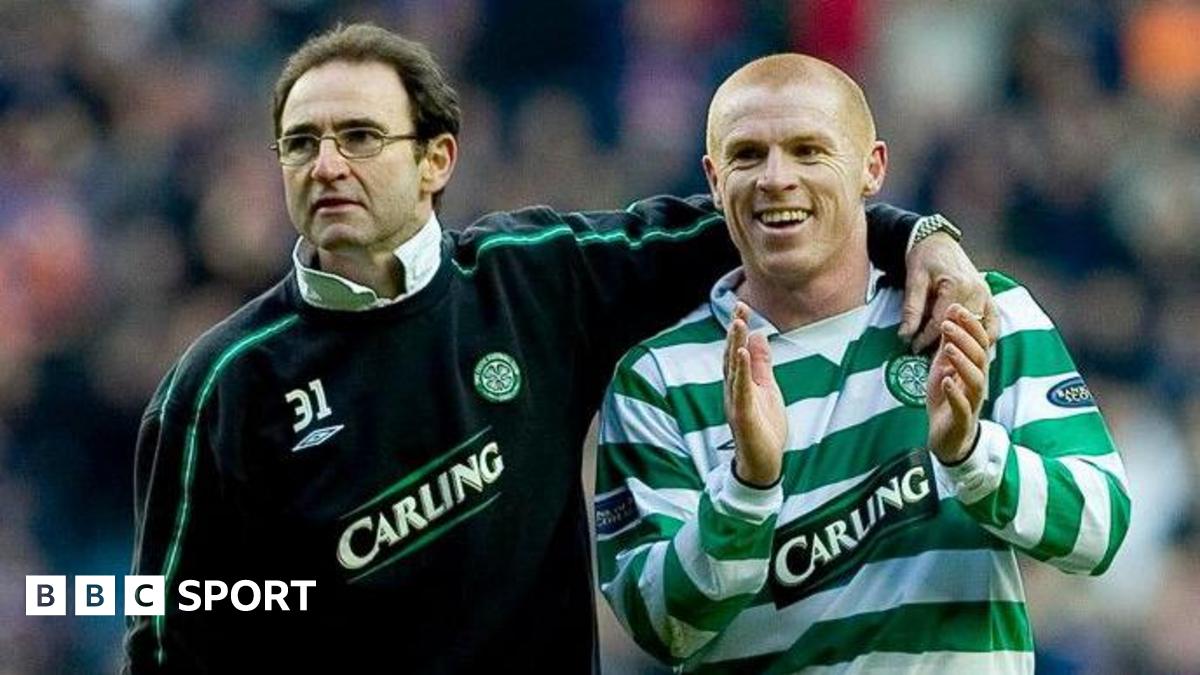
The First Encounter
After three decades of shared history, from the mud of Filbert Street to the glory of Parkhead, a unique statistical anomaly will finally be resolved in May's Scottish Cup final. For the first time in their careers, Martin O'Neill and Neil Lennon will stand in opposing technical areas. It's a managerial head-to-head 30 years in the making, and it pits one of the game's most decorated cup specialists against his own decorated protégé.
The narrative is almost too perfect. The mentor, O'Neill, in what could be his managerial swansong, against the player he signed twice and built teams around. But beyond the sentiment lies a fascinating tactical and statistical duel. Their shared past is well-documented, but their individual records in knockout football tell an even more compelling story.
The Leicester-Celtic Partnership
To understand the final, you have to go back to 1996. O'Neill, building a formidable Leicester City side, signed Lennon from Crewe. Lennon became the on-field lieutenant for a team that defied expectations. Together, they secured four consecutive top-10 Premier League finishes and reached three League Cup finals in four years, winning two (1997, 2000). Lennon was the midfield engine, making over 170 league appearances in that period, the embodiment of O'Neill's demanding, high-energy style.
Their partnership was so integral that when O'Neill moved to Celtic in 2000, Lennon followed months later. This reunion sparked a period of immense success, including the historic 2000-01 domestic treble. Their bond was forged in the heat of title races and cup runs, creating a shared footballing DNA that will now be used against each other at Hampden.
A Tale of Two Final Records
This is where the final truly ignites. Both managers are, by the numbers, serial winners with a clear aptitude for the unique pressure of cup finals.
O'Neill: The Master of the One-Off
Martin O'Neill's record in major finals is nothing short of extraordinary. Across his entire career, he has managed in 15 finals (including crucial promotion play-offs) and won a remarkable 10 of them. That's a 67% win rate when a trophy is on the line. His first spell at Celtic was a golden era for knockout success: he won the Scottish Cup in 2001, 2004, and 2005 and reached the UEFA Cup final in 2003, a feat that momentarily put Scottish football back on the European map.
His ability to prepare a team for a single, decisive match is legendary. He has been winning high-stakes games since his days at Wycombe, where he won the FA Trophy twice. This is the mountain Lennon's side must climb: a manager who has seen and won almost every type of final imaginable.
Lennon: The Perfect Scottish Cup Apprentice
Yet, Neil Lennon is not coming to Hampden as a sentimental underdog. He is a cup specialist in his own right, particularly in this competition. As a manager, Lennon holds a perfect 4-0 record in Scottish Cup finals. Overall, he has won 6 of the 8 domestic finals he has contested as a boss. He knows this stage intimately.
While his mentor was building a legacy across Britain and Europe, Lennon was carving out his own niche as Celtic's successor. Winning the Cypriot Cup with Omonia in 2022 via a penalty shootout further proves his ability to handle knockout pressure in different environments. This final isn't a David vs. Goliath story; it's a clash of two Goliaths, two managers who expect to win when they reach a final.
Pragmatism Over Sentiment
Any thought that O'Neill might soften in his approach when facing his former captain has been firmly dismissed. His recent decision to drop striker Tomas Cvancara from the Celtic squad sent a clear message. O'Neill's public warning that 'people have to fight for their place' is classic pragmatism. It's a move designed to sharpen the minds of his entire squad ahead of the final, a reminder that form and reputation mean nothing compared to the needs of the team on the day.
This is the cold, calculated side of the manager Lennon knows so well. As O'Neill himself stated, while Lennon had a major impact on his career, he is determined to beat him. The 30-year bond will be set aside for 90 minutes. For O'Neill, the final is not a reunion tour; it's a chance to add an eleventh cup to his incredible managerial trophy cabinet, potentially as a final act.