The debut that broke the internet
A familiar cycle repeats constantly in American soccer circles. A young player steps onto a European pitch, the Twitter timeline catches fire, and suddenly we are mapping out the starting XI for the next World Cup. This week, the cycle found its latest protagonist in Mathis Albert.
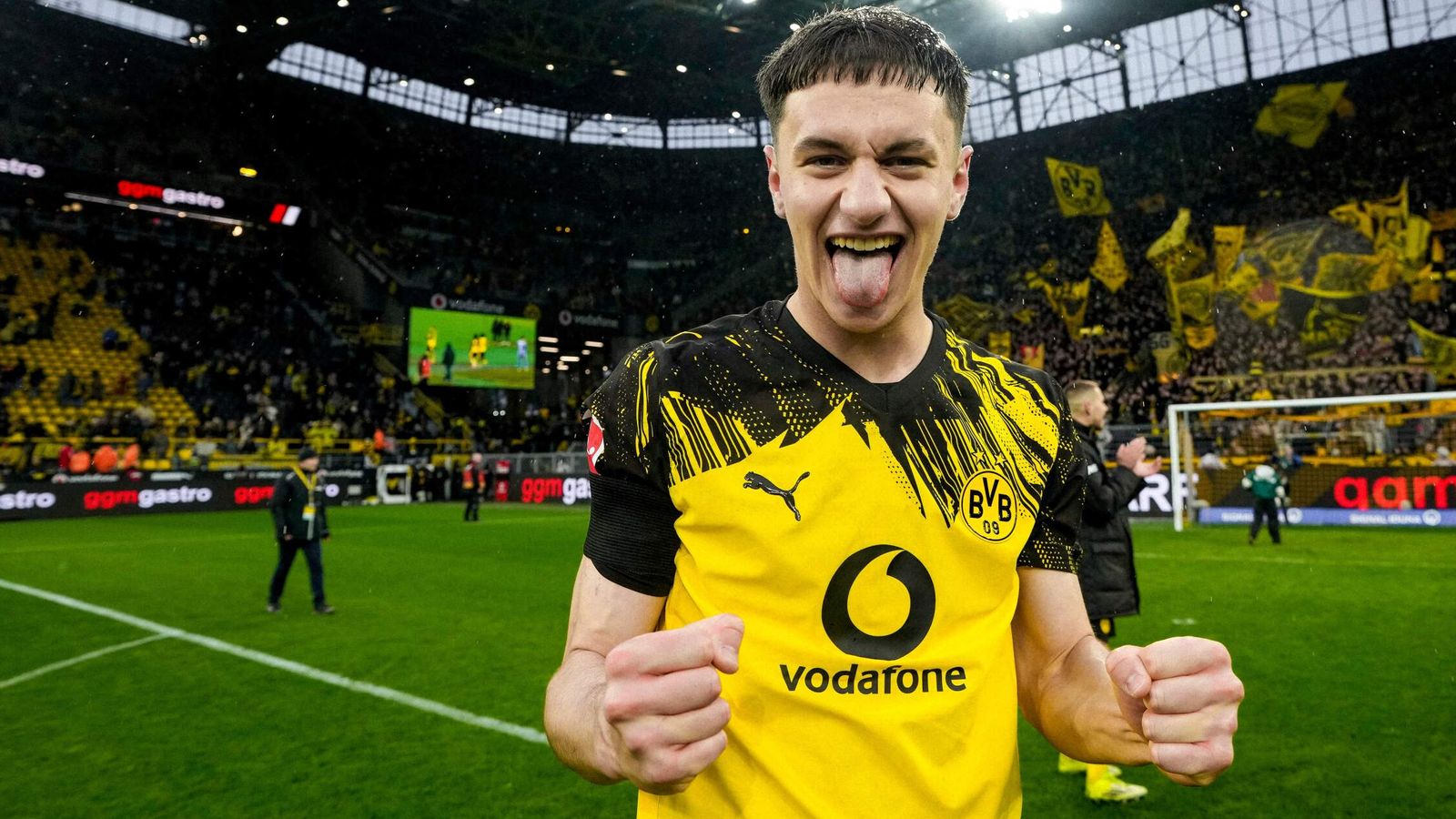
At just 16 years old, Albert broke a Bundesliga record by making his debut for Borussia Dortmund. As The Guardian rightly pointed out, seeing a teenager step onto the field alongside fully grown senior professionals is jarring.
He looked like a fawn out there. A scrawny, wobbly baby deer trying to figure out the function of his arms and legs against seasoned athletes who tackle for a living.
But he was out there. And for a fanbase that is permanently hungry for the next big thing, that was more than enough. The clips of his limited minutes circulated immediately. Every touch was analyzed, every sprint graded.
It is exhausting, but it is exactly what we do. We build the hype because the alternative is admitting we are still a step behind the global elite when it comes to youth development.
Dortmund’s familiar playbook
We have seen this script play out at the Westfalenstadion before. Borussia Dortmund has built a reputation as the premier finishing school for elite talent. Jadon Sancho, Jude Bellingham, Erling Haaland, and importantly for the American audience, Christian Pulisic and Gio Reyna.
They offer a clear pathway to the first team for anyone talented enough to grab the opportunity. They know exactly when to blood a youngster and when to protect them from the spotlight. There is a rigid internal structure designed specifically to manage this kind of meteoric rise.
Giving a 16-year-old his debut isn't a PR stunt for this club. It is a calculated, cold-blooded decision based entirely on sporting merit. The coaching staff saw something in Albert during training sessions that convinced them he was ready for the physical demands of top-flight German football.
Even if he still looks like he belongs in a high school classroom, his technical baseline must be incredibly high to survive those intense, small-sided training drills. In Dortmund's system, if you cannot control a zipped pass under immense pressure, you do not get to train with the first team. Period.
The problem isn't Dortmund. The problem is the noise surrounding him back home. The club will try to insulate him, but the digital borders are porous. The kid has a phone. He sees the notifications. He knows exactly how much weight is suddenly on his shoulders.
The American hype machine
American soccer will have truly progressed when cases like the teenagers are common enough to be unremarkable.
That observation from The Guardian hits the nail on the head. Right now, every debut feels like a moon landing. We overreact to everything. We analyze every touch, every pass, every off-the-ball movement with forensic intensity.
It places an absurd burden on players who are still legally children. Albert isn't a finished product. He is barely starting his professional journey. Yet, the expectations are already soaring into the stratosphere.
We forget the missteps and the growing pains. We expect a linear progression from promising debutant to world-class superstar, ignoring the reality that development is often messy and unpredictable. Look at Gio Reyna.
The highs were incredible, but the injuries and inconsistencies have made his path far more complicated than anyone predicted.
This is the trap the US soccer fandom falls into time and time again. We want the finished article so badly that we refuse to let the drafting process happen naturally. We demand instant gratification from players who still need time to physically mature.
The Guardian nailed it when describing him as a scrawny, wobbly baby deer. That isn't an insult. It is an honest, objective assessment of a 16-year-old playing against grown men.
He is going to get knocked off the ball. He is going to make bad passes. He is going to look lost at times. That is exactly what being 16 in the Bundesliga looks like.
The tactical reality of his next appearance
As Dortmund prepares for their upcoming weekend fixture, the question on everyone's lips is whether Albert will get another run-out. The manager has a delicate balancing act to perform.
Dortmund is fighting for points in the Bundesliga, and you don't play a 16-year-old out of charity in these matches. You play them because they give you a better chance to win.
If he plays, watch how the opposition treats him. Defenders in the Bundesliga smell blood in the water. They will test him physically early.
They will shoulder-charge him to see if he holds his ground or shrinks away. They want to know if the baby deer has any bite. The German top flight does not do favors for teenagers.
Dortmund's midfield and attacking bands are crowded. Finding minutes will require him to out-train players who have years of top-flight experience.
But the fact that he's even in the conversation for matchday squads proves his raw ability. He just needs time to figure out the function of his arms and legs at this level. The speed of thought required is completely different from the youth ranks.
The pace of the Bundesliga is unforgiving. One heavy touch and the ball is gone. One missed assignment and it's a goal on the counter.
Albert will learn these lessons the hard way. It is a mandatory part of the curriculum.
A critical eye on the development path
It is worth taking a step back to look at the broader picture. Yes, breaking a Bundesliga record is an incredible achievement. But we need to be highly critical of how we handle these moments.
Handing a teenager the keys to the hype machine rarely ends well. Look at the history of American prodigies over the last two decades. For every Christian Pulisic who manages to carve out a massive European career, there are five players whose names we barely remember today.
We have seen teenagers labeled the next big thing only to be bouncing around lower leagues by their mid-20s. The hype builds, the pressure mounts, and eventually, the weight becomes too much to bear. The American media apparatus needs to dial it back drastically.
We do these kids absolutely no favors by anointing them the savior of the national team before they can legally drive a car. It sets impossible standards that almost guarantee failure.
The breathless coverage often ignores the glaring flaws in their game. Albert is fast, yes. He clearly has an eye for a pass in the final third. But his defensive work rate is a complete unknown at this level.
Can he press effectively in a modern tactical system? Can he track back when his fullback gets caught high up the pitch?
These are the questions that will determine if he stays in the Bundesliga or drops down the divisions in a few years. Too often, we ignore these critical deficiencies in favor of flashy highlights.
What to watch for this weekend
If Dortmund brings him off the bench this weekend, pay close attention to his first five minutes on the pitch. The adrenaline will be pumping.
The crowd will be loud. Does he try to do too much? Does he force a pass that isn't there, trying to create a viral moment for Twitter?
Or does he play the simple pass? Does he keep the ball moving and find the rhythm of the game?
The smartest thing a young player can do in their first few appearances is blend in. Be boring. Make the right decisions, play the safe passes, and show the manager that you can be trusted not to blow the game.
Fans want him to score a hat-trick and do a backflip. But Dortmund just wants him to execute the tactical plan without making a catastrophic error in possession.
Those two goals are often fundamentally opposed, and watching him navigate that tension is fascinating.
Prediction
We are going to see Albert again before the season ends, but I am betting it will not be this weekend. The manager will keep him on the bench, letting him soak in the atmosphere without throwing him into the fire again so soon.
The hype machine will loudly complain. Twitter tacticians will demand his insertion into the game in the 60th minute.
But Dortmund knows exactly what they are doing. They will protect the baby deer until his legs are a little less wobbly.
They have successfully navigated this exact scenario half a dozen times in the last decade. Dortmund will win this weekend's match comfortably, relying on their senior attackers to secure the points.
Albert will watch, learn, and wait for his next moment. And when it comes, we should all take a collective breath, turn off the hype machine, and just let the kid play.
Read Next
- Ashley Cole is walking into a Serie B nightmare at Cesena
- Top 10 Champions League Semi-Final Moments: Where the PSG-Bayern Thriller Ranks
- Everyone is losing their minds over that PSG and Bayern chaos
- Ashley Cole is quietly building a tactical machine at Cesena
- 🏆 World Cup 2026 — Full Coverage Hub
- 🇺🇸 USMNT World Cup 2026 — Team USA Coverage Hub
- ⚽ Bundesliga 2025-26 — Title Race Hub