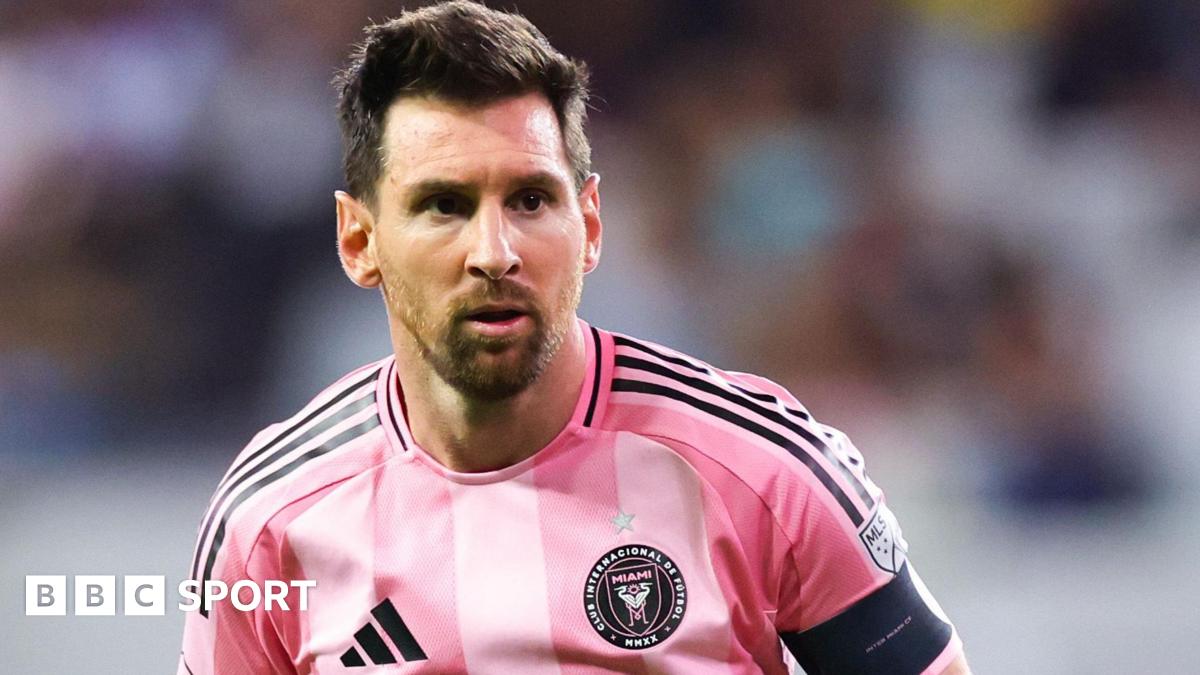
The 100 percent takeover at the doorstep of Barcelona
Five miles. That is the exact distance between the Nou Estadi Municipal de Cornellà and the center circle of the Camp Nou. For Lionel Messi, the acquisition of UE Cornella is not a sentimental investment in a local minnow; it is a calculated entry into the most dense talent corridor in European football. By taking 100 percent control of the club, Messi is effectively securing the primary feeder system for the Llobregat region, an area that has historically functioned as the unofficial backyard of La Masia.
The statistical logic behind this move is hard to ignore. While the club currently competes in the fifth tier of Spanish football, its infrastructure and geographic placement suggest a much higher ceiling. According to Mirror Football, the influence of David Beckham is visible here, but where Beckham built a franchise from scratch in Miami, Messi is buying a century-old foundation in a market he knows better than anyone on earth.
The geography of the Llobregat talent corridor
To understand why Messi chose Cornella, you have to look at the map. The club is situated in a high-density urban pocket where the scouting networks of Barcelona and Espanyol constantly overlap. UE Cornella has managed to thrive in this environment by positioning itself as the elite alternative for players who drop out of the professional academies. They currently manage over 60 teams across various age groups, housing roughly 1,200 young players within a 5-mile radius of the biggest club in the world.
This is the model that produced current Arsenal star David Raya, as Daily Mail correctly notes. Raya’s path from Cornella to the Premier League represents the exact statistical probability Messi is banking on. If a fifth-tier club can produce a starting goalkeeper for a title-contending English side, the underlying scouting data suggests the 'hit rate' for this specific academy is significantly higher than the national average for clubs at this level.
The statistical bottleneck of the Tercera Federacion
Despite the prestige of the new owner, the sporting reality of the Tercera Federacion (fifth tier) is brutal. The league consists of 18 regional groups, with only the top team in each group gaining automatic promotion. For Messi’s new project, the math is daunting: they are currently competing against 17 other teams for a single guaranteed spot. The margin for error is non-existent. In a typical season, a team needs to maintain a points-per-game (PPG) average of at least 2.15 to even sniff the play-off positions.
Messi is entering a league where games are often decided by single-goal margins and set-piece efficiency rather than technical brilliance. Last season, over 40 percent of matches in this group ended in draws or one-goal victories. This is not the highlight-reel football of Inter Miami; it is a low-margin, high-variance environment where even a 100 percent takeover cannot guarantee immediate upward mobility. The 'Messi effect' will draw eyes, but it won't necessarily draw fouls or convert penalties in a muddy away fixture in the Catalan hills.
The post-career pivot and the Ronaldo comparison
The timing of this acquisition is as strategic as a late-game run into the box. As Messi approaches the final chapters of his playing career, he is diversifying his portfolio in a way that mirrors his great rival. As BBC Sport reports, Cristiano Ronaldo has also recently taken his first steps into club ownership, creating a new front in their two-decade-long rivalry. However, while Ronaldo has often targeted established clubs with massive debt and large fanbases, Messi is going for the 'start-up' equivalent.
By owning 100 percent of the equity, Messi avoids the boardroom politics that plagued his final years at Barcelona. He has the freedom to implement a specific technical philosophy without interference. The goal isn't just to win games; it's to create a pipeline. If Messi can improve the transition rate of academy players into the first team by just 15 percent, the resale value of those assets could pay for the club’s entire annual operating budget within three seasons. It is a venture capital approach to a neighborhood football club.
The risk of administrative drift
There is a significant downside to this 4,000-mile management style. Messi is currently contracted to Inter Miami, meaning the day-to-day operations of UE Cornella will be handled by proxies. History shows that when a superstar owner is absent, the technical direction of the club often suffers from a lack of identity. Managing a fifth-tier Spanish side requires a granular understanding of the local market, not just a famous name on the letterhead. The risk is that Cornella becomes a vanity project—a place where Messi’s friends and associates are given jobs regardless of their tactical competence.
The club is currently operating with a stadium capacity of roughly 1,500 spectators. Even with the global interest Messi brings, there is a physical limit to how much revenue can be generated from matchdays. To move the needle, he will need to secure international broadcasting deals or high-value sponsorships that are almost unheard of in the Spanish fifth tier. If the promotion doesn't happen within the first 24 months, the financial drain could become a distraction even for a man with Messi's net worth.
A calculated bet on the Llobregat soil
Ultimately, Messi is betting on the soil. He knows that the 5-mile radius around Cornellà de Llobregat produces more professional footballers per square kilometer than almost anywhere else in Spain. By owning the gatekeeper to that talent, he is securing a legacy that doesn't depend on his ability to beat a defender at 38 years old. It is a move from the pitch to the platform, treating football ownership as a data-driven recruitment exercise rather than a trophy hunt. The numbers suggest the potential is there, but the bottleneck of the Spanish pyramid is a formidable opponent that doesn't care about your eight Ballon d'Or trophies.
Read Next
- Messi is building a Catalan empire five miles from the Camp Nou
- Ronaldinho's bizarre journey from Ballon d'Or to Paraguayan prison
- Vincent Kompany is two games away from making us all look like absolute idiots
- Top 10: The Injury Crisis Deciding the 2026 Season Finish
- 🇦🇷 Argentina World Cup 2026 — Defending Champions Hub
- ⚽ La Liga 2025-26 — Title Race Hub