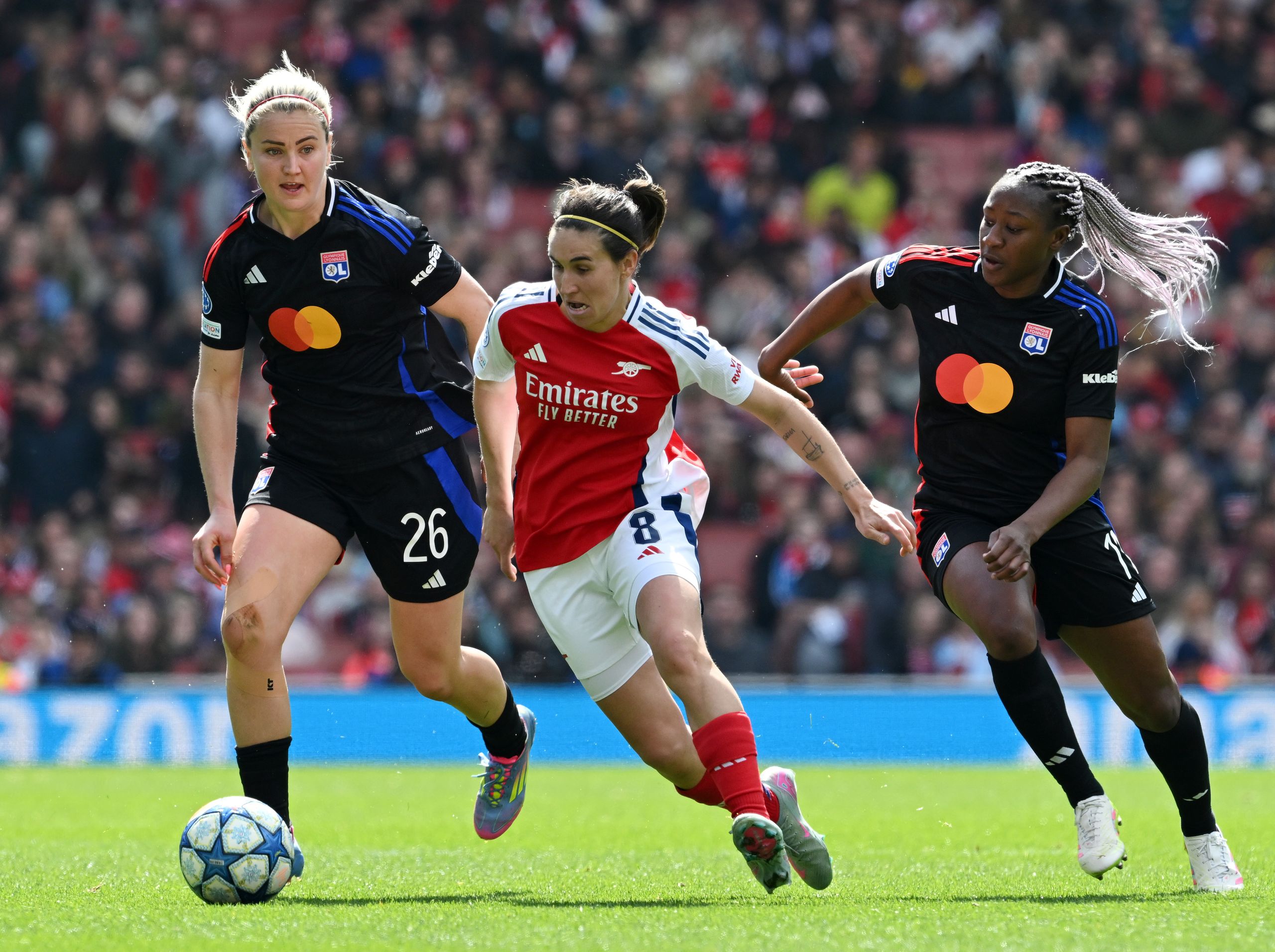
The shadow over North London
When the team sheets are exchanged at the Emirates Stadium on Tuesday evening, the most significant name on the visitors’ list will be one that used to define the home side’s entire attacking identity. Vivianne Miedema’s return to Arsenal in the colours of Olympique Lyonnais is not merely a sentimental subplot; it is the fundamental tactical question of this Champions League semi-final. For Arsenal, the departure of the greatest goalscorer in WSL history to the banks of the Rhône was a pragmatic concession to a new era of high-intensity pressing. For Lyon, it was a declaration of intent to reclaim a European throne they occupied for the better part of a decade.
Arsenal enter this tie in a curious state of evolution. They have become a more cohesive defensive unit under the current regime, moving away from the 'Miedema-dependency' that often saw them struggle when her individual brilliance was shackled. Yet, as they prepare for the first leg, the ghost of that clinical efficiency remains. Lyon are no longer the untouchable force that won five consecutive titles between 2016 and 2020, but they remain the ultimate gatekeepers of continental excellence. They are a team built on physical intimidation and structural rigidity, and in Miedema, they have found the creative bridge that their midfield previously lacked.
The Horan-Little axis of control
The tactical battle will be won or lost in the central ten yards of the pitch. Lyon’s midfield trio — typically anchored by Damaris Egurrola with Lindsey Horan and Danielle van de Donk operating as dual eights — is designed to suffocate. Horan, in particular, has developed into the most complete midfielder in the global game. Her ability to transition from a deep-lying progressor to a late-arriving goal threat is something Arsenal’s double pivot of Kim Little and Lia Wälti must account for. If Little is forced to track Horan deep into her own half, the space behind her will be exploited by Miedema, who has perfected the art of the 'false ten' role at Lyon.
Arsenal’s primary frustration this season has been their inability to bypass elite mid-blocks. Against Chelsea in the league and Barcelona in the group stages, they often fell into a pattern of 'U-shaped' passing — recycling the ball between the centre-backs and full-backs without ever penetrating the central columns. Lyon will encourage this. They are happy to let Leah Williamson have the ball, knowing that if they can isolate her passing lanes to the wingers, Arsenal’s attack becomes predictable. The onus will be on Little to find those needle-threading passes through the first line of the Lyon press, a task that has become increasingly difficult as teams prioritize the 'Zonal 14' area against the Gunners.
The Renard problem and the set-piece deficit
One of the most concerning statistics for Arsenal heading into this semi-final is their vulnerability to the aerial ball. Wendie Renard remains the most dangerous set-piece threat in women’s football history, and Arsenal’s zonal marking system has shown cracks under physical duress. In the quarter-final against PSG, they conceded twice from second-phase set-pieces, failing to clear their lines after the initial header. Against a Lyon side that features Renard, Horan, and Ada Hegerberg, any lapse in concentration during a dead-ball situation will be punished. Arsenal are essentially playing at a height disadvantage in every defensive third scenario.
Hegerberg’s role in this Lyon side has changed but her lethality remains. She no longer chases lost causes for ninety minutes, but her movement in the box is still the gold standard. She thrives on the service provided by Ellie Carpenter and Selma Bacha, two of the most aggressive attacking full-backs in the game. Arsenal’s wingers, Beth Mead and Caitlin Foord, cannot afford to be passengers in the defensive transition. If they fail to track back, Emily Fox and Katie McCabe will be left in 2v1 situations against Lyon’s overlapping runners. It is a grueling physical requirement that often blunts Arsenal’s own counter-attacking potential.
The Russo transition
If Arsenal are to find a way through the Lyon barricade, it will likely come through the industry of Alessia Russo. Unlike Miedema, who preferred to wait for the game to come to her, Russo is a facilitator. Her ability to hold up the ball under pressure from someone as physically imposing as Renard or Gilles will be crucial. Arsenal need Russo to win her individual duels to allow Mead and the late-running Frida Maanum to join the attack. However, the critical observation remains that Russo has yet to show the same cold-blooded efficiency in the 80th minute of a cagey European tie that her predecessor possessed.
There is a lingering sense that Arsenal are still a team that requires 'the perfect goal'. They construct beautiful sequences but often lack the cynical edge required to win ugly. Lyon, by contrast, are masters of the dark arts. They know when to foul, when to slow the tempo, and how to manipulate a referee in a high-pressure environment. If the game becomes fragmented, it suits the French champions. Arsenal must maintain a high ball-in-play time to exhaust a Lyon squad that, while talented, has shown signs of fatigue in the final twenty minutes of matches this season.
Three keys to the Gunners' survival
- The Wälti Shield: Lia Wälti must stay disciplined as the single pivot when Arsenal are in possession. If she gets caught ahead of the ball, Lyon’s transition through Diani and Miedema will be instantaneous.
- Isolation of Bacha: Selma Bacha is Lyon’s primary creative outlet from left-back, but she leaves space behind. Beth Mead must exploit the channel between Bacha and the left centre-back to force Lyon’s midfield to shift laterally.
- Set-Piece Aggression: Arsenal cannot afford to be passive. They must use a blocker system to prevent Renard from getting a free run at the near post, even if it means sacrificing an extra player in the wall.
The atmosphere at the Emirates will be a factor, but Lyon have played in front of 60,000 fans at the Camp Nou and the Groupama Stadium regularly. They are not a team that wilts under noise. Arsenal’s best chance lies in a fast start — an early goal that forces Lyon to abandon their compact shape. If Lyon are allowed to sit in their mid-block and wait for the counter, they will eventually find a way through. The loss of Miedema's goals was meant to be compensated for by a better collective press, but that press must be perfect on Tuesday to stop the greatest playmaker in Arsenal's history from haunting them.
The Final Verdict
Expect a tactical chess match that prioritizes defensive solidity over attacking flair. Arsenal will have the majority of the ball but Lyon will have the clearer chances. Miedema’s return will provide the narrative spark, but it is the physical dominance of the Lyon midfield that will likely decide the outcome of the first leg. Arsenal have closed the gap on the European elite, but Lyon’s pedigree in these specific 'do-or-die' scenarios is ingrained in their DNA. It will be a tight, nervous affair that likely leaves everything to play for in the second leg in France.
Prediction: A 1-1 draw. Arsenal will take the lead through a Mead cross-shot, but Lyon will find an equalizer through a Renard header in the 74th minute. It is a result that keeps the tie alive but leaves Arsenal facing an uphill battle in the return leg.
Read Next
- Celtic's pursuit of Thomas Frank is a gamble that won't pay off
- Chelsea’s structural flaws are about to be exposed by Leeds at Wembley
- Leeds are ready to turn Chelsea’s UCL distraction into a Wembley nightmare
- Arsenal are learning that Lyon still own the Champions League
- ⭐ UCL 2026 — Champions League Quarter-Finals Hub