The mirage of the Emirates victory
Arsenal are 90 minutes away from a European final, but the mood around London Colney should be one of deep concern rather than unbridled celebration. As Sky Sports noted, Renee Slegers praised her side’s character after they battled back to secure a 2-1 victory over Lyon in the first leg. Character, however, is often a polite euphemism for structural flaws that forced a team to suffer in the first place.
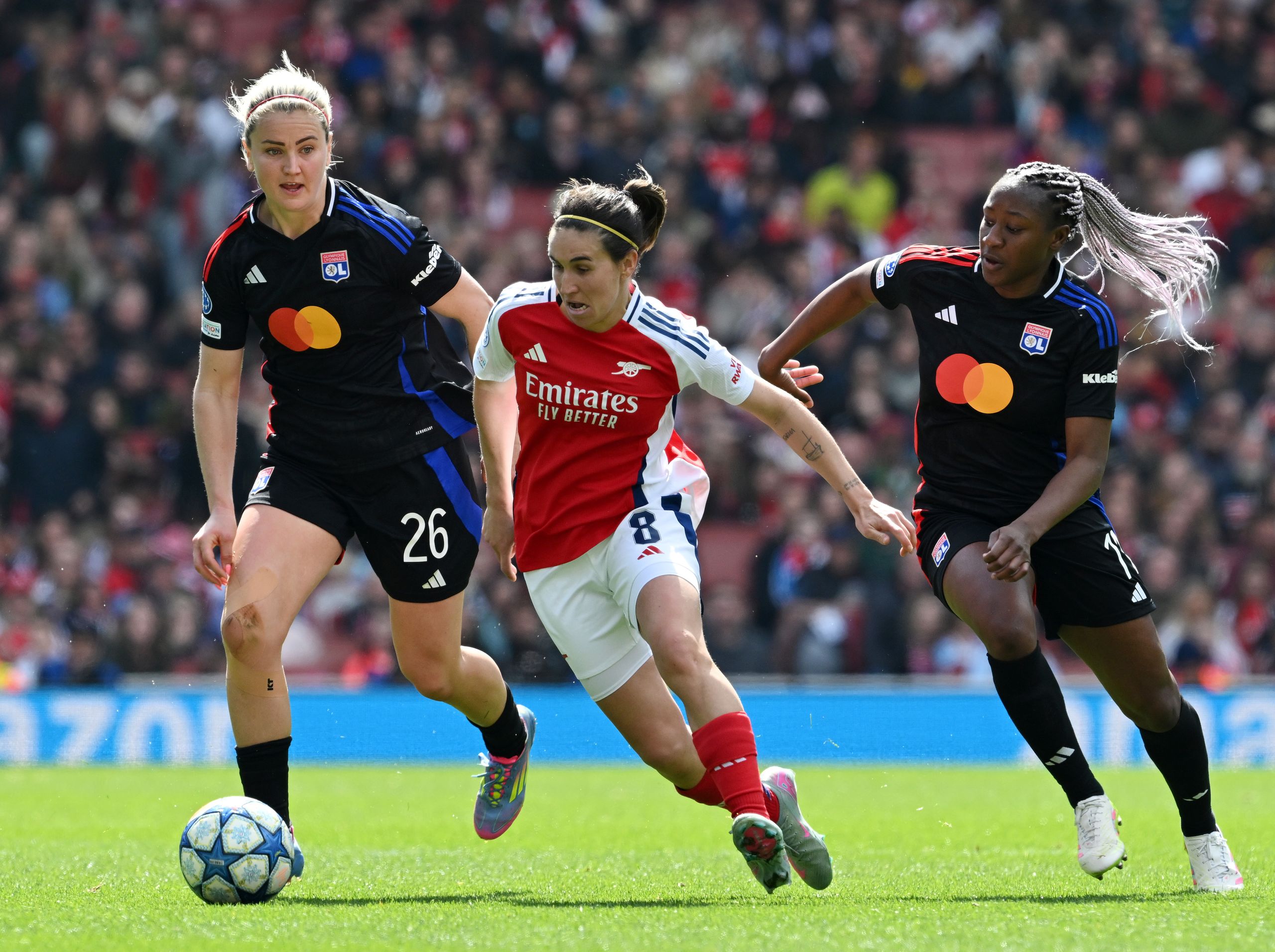
For large portions of the April 26 encounter, Arsenal looked utterly disjointed out of possession. The narrow victory flatters them entirely. They were carved open repeatedly in the opening twenty minutes, relying on last-ditch blocks from Leah Williamson and uncharacteristic Lyon wastefulness before finally finding any semblance of rhythm.
Slegers has built a remarkably resilient group, but resilience is not a sustainable tactical blueprint. When Arsenal travel to France for the return leg, character alone will not be enough to withstand the most ruthlessly efficient attacking machine in European football. The warning signs were flashing bright red at the Emirates, and ignoring them would be managerial malpractice.
We saw an Arsenal team that struggled to implement their usual passing networks under intense pressure. The build-up phase was frantic. Manuela Zinsberger was forced into playing long, hopeful balls toward Alessia Russo, bypassing the midfield entirely.
This direct approach might work against lower-tier WSL opposition. But against a defensive partnership of Wendie Renard and Vanessa Gilles, it was effectively handing possession straight back to the French champions.
Lyon's wide overloads and the Jule Brand problem
The defining tactical pattern of the first leg was Lyon's deliberate, systematic targeting of Arsenal’s right flank. It was a glaring mismatch that Slegers failed to correct until half-time, and it almost cost them the tie.
Emily Fox was repeatedly left isolated against the dual threat of Jule Brand and Selma Bacha. Brand, whose early goal exposed Arsenal's sluggish defensive tracking, was instructed to stay aggressively high and wide, pinning Fox deep into her own defensive third. Bacha then operated inverted in the half-spaces, creating a two-vs-one overload that bypassed Beth Mead completely.
It was a tactical masterclass from the French side in the first half hour. They utilized quick, vertical switches of play from deep midfield, usually orchestrated by Lindsey Horan. Horan found herself with acres of space as Arsenal's double pivot struggled to cover the vast width of the pitch.
Whenever Arsenal attempted to shuffle across to deal with the threat on the right, Lyon quickly recycled the ball through Damaris Egurrola and attacked the under-populated left side, forcing Katie McCabe into uncomfortable one-on-one defending against Kadidiatou Diani. The spacing was brilliant from Lyon, stretching Arsenal's defensive line until the gaps appeared.
If Slegers does not fundamentally adjust her mid-block for the second leg, Lyon will exploit those exact same pockets. The French champions rarely miss the same target twice. Arsenal cannot expect Fox to handle two world-class operators simultaneously without sustained support from the midfield.
Zinsberger's distribution under the microscope
An overlooked element of Arsenal’s struggles against high-caliber European opposition is the unreliability of Manuela Zinsberger’s distribution under pressure. Lyon recognized this early in the first leg, aggressively closing down her passing lanes to the center-backs and forcing her to play directly into contested midfield zones.
When Arsenal are functioning at their best, they build from the back with patient, methodical precision. Zinsberger is usually tasked with finding Lia Wälti dropping deep to receive. But Lyon cut off that specific supply line completely, placing a shadow striker on Wälti and daring Zinsberger to attempt riskier clipped passes to the full-backs.
The result was a high turnover rate in Arsenal's own defensive third. Zinsberger’s completion rate on medium-range passes plummeted under the duress of Lyon’s coordinated front-three press. For Arsenal to survive the inevitable early onslaught in France, they need a secondary build-up structure. If the short passes are marked, Zinsberger must find higher, more accurate diagonals to bypass the first wave of pressure, or Arsenal will find themselves pinned in their own penalty area for agonizingly long stretches.
The pressing disconnect
Much of Arsenal’s defensive vulnerability stems from a fundamental disconnect in their pressing triggers. Alessia Russo works tirelessly from the front, initiating the press with intensity, but the secondary line of pressure is consistently a critical second too late.
When Russo triggers the press on Lyon's center-backs, there is a visible hesitation from the advanced midfielders to jump with her. This hesitation allows Lyon's holding midfielders to receive on the half-turn, get their heads up, and immediately look forward. It is a fatal structural flaw against a team that transitions as rapidly and cleanly as Lyon.
In the first leg, Arsenal frequently found themselves trapped in a tactical no-man's land — neither pressing aggressively enough to win the ball high up the pitch, nor dropping deep enough to condense the space between the lines.
It required a monumental physical effort from Kyra Cooney-Cross to plug the gaps, a desperate sweeping role that is simply unsustainable over another grueling 90 minutes of high-intensity European football.
There is a stark contrast between Arsenal's out-of-possession shape and their domestic form. In the WSL, they can afford to leave spaces because they dominate the ball and counter-press effectively. In Europe, against elite opposition capable of breaking lines with a single pass, those spaces are punished instantly.
Slegers must decide whether to commit to a high press entirely or drop into a low block. The current hybrid approach is a recipe for disaster.
Attacking transitions and the Russo focal point
Despite the glaring defensive frailties, Arsenal remain incredibly dangerous when they manage to break the first line of the counter-press. The second half of the first leg demonstrated their devastating potential on the transition, providing a blueprint for how they can hurt Lyon away from home.
Russo’s role shifted significantly after the break. Instead of playing on the shoulder of the last defender, where she was being marshaled effectively by Renard, she began dropping deeper into the left half-space. This subtle movement dragged Renard out of position and disrupted Lyon's defensive structure.
This opened up vital central avenues for Stina Blackstenius and Mariona Caldentey to exploit with darting runs in behind. By vacating the central striker position, Russo created a vacuum that Lyon's midfield struggled to track.
Arsenal's equalizer came from exactly this pattern. Russo received with her back to goal, drew the foul, and from the resulting quick free-kick, Arsenal bypassed the disorganized Lyon midfield. It was a rare moment of clinical execution in a match defined by friction and missed opportunities.
However, relying solely on transitional moments is a dangerous game when you are holding a narrow lead. Arsenal must find a way to dictate the tempo in the second leg, even in brief spells.
If they sit deep and invite Lyon to attack for 90 minutes, the pressure will eventually break them. They need prolonged periods of possession to relieve the defensive unit and frustrate the home crowd.
Slegers' midfield dilemma
The central midfield battle will unquestionably decide this tie. Slegers faces a complex selection puzzle that could define Arsenal's season. Does she stick with the Wälti-Cooney-Cross axis that finished the game strongly and provided defensive solidity, or does she reintroduce Kim Little for her unparalleled experience and ball retention capabilities?
Little's ability to dictate the tempo, draw fouls, and calm the game down could be absolutely vital in a hostile environment like the Groupama Stadium. Yet, her lack of sheer physical mobility compared to the younger Cooney-Cross could be ruthlessly exposed by Horan and Egurrola in defensive transition.
It is the classic risk-reward scenario. Playing Little offers a measure of control in possession but leaves the backline vulnerable to the counter-attack. Playing Cooney-Cross offers better defensive coverage and ground duels won, but sacrifices the metronomic passing required to break Lyon's high press and establish a foothold in the game.
Slegers’ in-game management was excellent in the first leg, making the necessary tactical adjustments at half-time to stem the bleeding. But she cannot afford to get the initial setup wrong in France. A slow start will be lethal against a Lyon side desperate to overturn the deficit.
The verdict
Arsenal are walking a precarious tightrope. The 2-1 aggregate lead gives them something tangible to hold onto, but their performance at the Emirates was far too chaotic and reactive to inspire genuine confidence heading into the away leg.
Lyon will be ferocious in front of their home crowd. They will target Arsenal's right flank again, knowing the vulnerabilities exist, and they will press relentlessly to disrupt any attempt Arsenal make to play out from the back.
Slegers needs her defense to produce a flawless, concentrated performance, and she needs her forwards to be absolutely ruthless with the few clear-cut chances they manage to create.
Character got Arsenal through the messy first leg. Elite tactical discipline, flawless execution, and a heavy dose of luck must get them through the second.
Prediction: Lyon 2-0 Arsenal (Lyon win 3-2 on aggregate). The French side's superior attacking depth, wide overloads, and structural cohesion will eventually overwhelm an Arsenal team that looks stretched to its absolute tactical limit.
Read Next
- Arsenal face a hostile night in France with their lead hanging by a thread
- Arsenal and City are trapped in a digital pressure cooker
- Arsenal are winning, but the cracks are starting to show
- Manchester United’s 13-player exodus is a mathematical necessity
- ⚽ Ligue 1 2025-26 — PSG, Monaco & the Title Race Hub
- ⭐ UCL 2026 — Champions League Quarter-Finals Hub