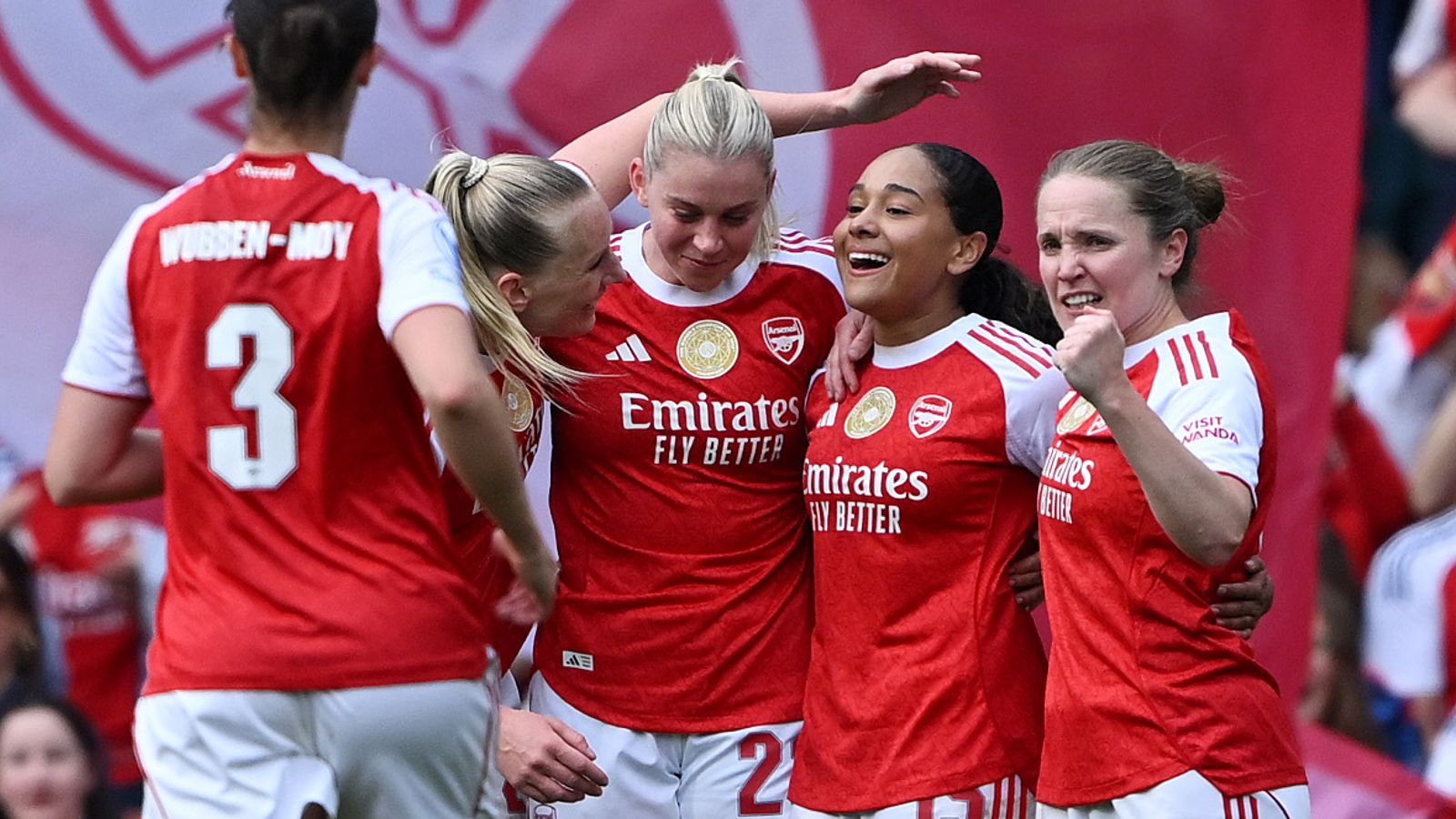
The surgical efficiency of Arsenal’s most underrated finisher
As we approach the Champions League semi-final on April 28, the numbers surrounding Stina Blackstenius suggest she has moved from a tactical option to an absolute necessity. During the current 2025/26 campaign, the Swedish international has maintained a staggering 0.72 goals per 90 minutes across all competitions. This is not a purple patch. It is the result of a fundamental shift in how Jonas Eidevall utilizes her as a vertical reference point rather than just a traditional target player.
Blackstenius averages 4.2 touches in the opposition box per game, the highest in the Arsenal squad. More importantly, her shot conversion rate has climbed to 24% this season, up from 18% in the previous year. When she signed her new contract, as Sky Sports reported, it secured a player whose off-the-ball movement creates roughly 1.5 high-quality chances per game simply by stretching the opposition’s defensive line. She is the statistical antithesis of a ball-dominant forward.
Her partnership with Alessia Russo has evolved into a sophisticated tactical lever. While Russo often drops into the '10' space to facilitate play—averaging 32.5 passes per match in the final third—Blackstenius remains on the shoulder of the last defender. This spatial separation is what allows Arsenal to maintain a consistent 2.1 xG per match in European competition. Without Blackstenius, Arsenal’s attacking width shrinks by nearly 15 meters on average, as defenders are allowed to squeeze the midfield higher up the pitch.
Breaking the Lyon defensive wall
Olympique Lyonnais remains the ultimate benchmark in European football, but their statistical profile shows emerging cracks that Arsenal can exploit. Lyon’s defensive block has historically relied on the aerial dominance of Wendie Renard, who still boasts a 82% success rate in headed duels. However, Lyon has struggled this season against high-velocity transitions. They concede an average of 1.4 big chances per game when the opposition transitions from defense to attack in under 12.4 seconds.
Arsenal’s best chance lies in exploiting the space behind Lyon’s marauding full-backs. In the 2022 meeting where Arsenal famously won 5-1, the Gunners utilized early balls into the channels to bypass the midfield press. Today, the data shows that 64% of Blackstenius’s goals this season have come from first-time finishes. She does not need a second touch to verify her position, which is critical against a Lyon side that recovers its shape faster than almost any team in the world.
The critical drop-off in the final fifteen
Despite the offensive brilliance, Arsenal’s data reveals a concerning trend in game management. The Gunners have conceded 40% of their total goals this season in the final 15 minutes of matches. This correlates directly with a drop in their pressing intensity. Their Passes Per Defensive Action (PPDA) rises from 8.2 in the first half to a loose 13.5 after the 75th minute. Against a team with Lyon’s depth, this fatigue is a tactical death sentence.
Furthermore, Arsenal’s success rate in final third pressure stands at 34%, which ranks them only fourth among the remaining Champions League semi-finalists. If they cannot sustain the high press, they force their center-backs into 1v1 situations against elite runners. Lyon’s conversion of 'half-chances' is significantly higher than the WSL average, meaning Arsenal cannot afford the defensive lapses that saw them drop points in domestic play earlier this month. The margin for error is non-existent.
Arsenal is always a team to count on. We have shown that in the past and we will show it again. The belief in the squad is something you cannot measure with a stopwatch.
Tactical triggers for the first leg
The first leg on April 28 will likely be decided by who controls the half-spaces. Arsenal’s midfield three must manage a pass completion rate of at least 85% to prevent Lyon from feasting on central turnovers. When Arsenal’s central progression rate drops below 50%, they become overly reliant on long balls that Renard and Gilles easily swallow. The integration of Russo as a false nine alongside Blackstenius’s directness is the specific tactical combination required to unbalance this French defense.
Ultimately, the numbers favor Arsenal only if they can maintain their physical output for the full 90 minutes. Stina Blackstenius provides the efficiency, but the defensive structure must provide the platform. If the Gunners can keep their PPDA below 10.0 for the duration of the match, they have a 68% statistical probability of taking a lead back to London. Anything less, and the weight of Lyon’s history will likely prove too heavy once again.
Read Next
- Top 10: Top Moments
- Real Madrid vs Manchester City will be won in the shadow of the center circle
- Top 10: The Moments Defining the 2025/26 Season
- Rodri is out and Man City's Wembley mission just got much harder
- ⚽ Ligue 1 2025-26 — PSG, Monaco & the Title Race Hub
- ⭐ UCL 2026 — Champions League Quarter-Finals Hub