The illusion of a competitive derby
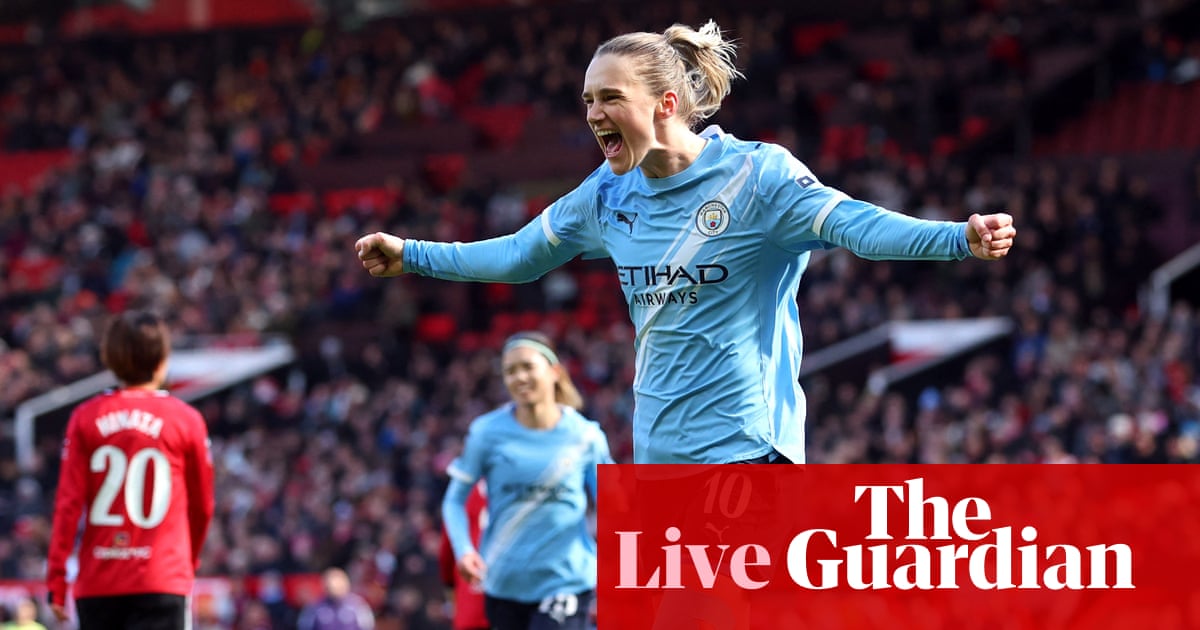
A blue sky emerged over the stadium on Saturday afternoon, but the atmosphere on the pitch was suffocating. As The Guardian's live coverage noted early on, the away supporters were making all the noise. They had every reason to. Manchester City's 3-0 victory over Manchester United was not just a win; it was a tactical dissection. The league leaders did not merely outscore their rivals; they out-positioned them, out-pressed them, and ultimately humiliated them in their own backyard.
We often talk about derbies as great equalizers. The cliché suggests form goes out the window, replaced by pure physical attrition. This game killed that theory dead. City arrived with a blueprint designed to expose structural flaws in United's setup, and the execution was flawless from the 1.30pm kickoff. When a team wins away from home by a three-goal margin in a fixture of this magnitude, you have to look beyond individual errors. You have to look at the system.
The geometry of possession
City’s dominance was rooted in their shape. Operating nominally in a 4-3-3, Gareth Taylor’s side morphed into a fluid 3-2-5 in possession. This isn't a revolutionary concept, but the speed of the transition is what left United chasing shadows. By pushing one fullback high and inverting the other alongside the holding midfielder, City consistently created a 4-v-2 overload in the center of the pitch.
United's double pivot was entirely bypassed. They were asked to cover impossible angles. If they stepped up to press City's deep-lying playmakers, they vacated the space between the lines. If they dropped off, City simply dictated the tempo unbothered. The distance between United’s defense and midfield was routinely stretched to over 15 yards. Against a team that attacks the half-spaces with this level of coordination, leaving a gap that large is tactical suicide.
Look at the spacing of City's center-backs during the first phase of build-up. They consistently maintained a distance of nearly 40 yards from each other, hugging the touchlines to stretch United's first line of pressure. This maximum width forced United's wingers to make a terrible choice: jump to press the center-back and leave the passing lane wide open, or hold their position and allow City to walk the ball into the attacking half. United hesitated, and City punished them.
Suffocation by counter-pressing
But possession is only half the story. What truly separated the two sides was their behavior out of possession. City’s rest-defense—the structure they maintain while attacking to prepare for a turnover—was immaculate. Whenever United managed to intercept a pass or clear their lines, they found themselves instantly surrounded.
City did not retreat. They counter-pressed with violent efficiency. Within seconds of losing the ball, City had two or three players swarming the carrier within a 5-yard radius. United simply did not have the technical quality or the rehearsed passing patterns to play out of this trap. They were forced to hit hopeful, blind clearances that City's defenders easily swept up.
This is where the tactical setup of the home side warrants severe criticism. You cannot invite a team of this caliber into your own 18-yard box and expect to survive for 90 minutes. United’s defensive line dropped deeper and deeper as the game wore on, transforming their defensive third into a shooting gallery for City’s forward line.
The death of the physical midfield
Compare this to the Manchester derbies of the 2023/24 season. Back then, United could turn these fixtures into dogfights. They used tactical fouls to break up City’s rhythm and relied on physical dominance in the middle of the park to force turnovers. That approach is entirely obsolete now. You cannot tackle what you cannot catch.
City moved the ball with one or two touches, constantly altering the angle of attack. The ball did the work. By the time a United midfielder arrived to contest a challenge, the ball was already in the final third. The Guardian’s feed pondered if the glut of derbies might have a diluting effect on the occasion. Perhaps off the pitch, but on it, the gap in quality has never been more concentrated.
The away end recognized what they were watching long before the third goal went in. It wasn't just a victory; it was an exhibition. City controlled the geography of the pitch so completely that United were effectively reduced to spectators in their own stadium.
The transition problem
Let's examine the specific mechanics of United's failure in transition. When a team sets up in a mid-block, the entire strategy relies on exploiting the spaces left behind by the attacking team once possession turns over. But United's transition game was non-existent. Why? Because their starting positions upon winning the ball were completely isolated. When a United center-back won a header or intercepted a through ball, the nearest outlet pass was regularly stationed 20 or 30 yards away, entirely marked by a light blue shirt.
This isolation is a direct consequence of a disjointed pressing structure. Because United’s forward line failed to apply concerted pressure on City’s buildup, the midfield had to drop deeper to compact the space. This meant that upon regaining possession, United's attackers were stranded on an island. There were no rehearsed lay-offs, no third-man runs to break the initial counter-press. It was a purely reactive performance from a team that looked terrified of the ball.
City, meanwhile, used transitions as an offensive weapon. Every time they won the ball back in the middle third, they immediately looked vertically. They didn't just recycle possession for the sake of it; they probed for the immediate kill. The speed of thought was staggering. Before United’s fullbacks could even orient their body shape to defend, City had already played the pass that broke the defensive line.
Structural rigidity vs fluid intelligence
The contrast in player intelligence and tactical flexibility was jarring. City’s players clearly understand not just their own roles, but the roles of their teammates. If a winger dropped deep to receive the ball, a central midfielder instantly made the overlapping run into the vacated space. This level of synchronized movement requires hours of rigorous training ground repetition. It is the hallmark of a well-coached side.
United looked incredibly rigid by comparison. They played in straight lines. Their movements were entirely predictable. If a winger got the ball, they drove down the line. If a midfielder got the ball, they looked for a simple lateral pass. There were no rotations, no attempting to drag City’s defenders out of their designated zones. You do not break down the league leaders by being predictable.
The tactical naivety was perhaps most evident in the second half. Trailing comfortably, you would expect a shift in approach from the home side—perhaps a change in formation, a more aggressive pressing trigger, or committing an extra body forward. Instead, United continued to operate in the same passive shape, seemingly accepting their fate. They allowed City to use the final 30 minutes as a light training exercise.
The reality of the title race
For the league leaders, this result is a massive statement of intent. Taking three points away from home in a derby is always valuable, but doing it with a clean sheet and absolute territorial dominance sends a message to the rest of the division. They are not scraping out results; they are dismantling top-half opposition with ease.
For United, the questions need to be asked immediately. A tactical evolution is desperately required. Relying on transitional moments and deep defensive blocks against elite opposition is a recipe for irrelevance. The top tier of the WSL is moving towards highly structured, possession-heavy systems with aggressive counter-pressing. Teams that fail to adapt to this reality will be left behind.
Saturday was a harsh lesson in modern football geometry. Manchester City drew the lines, controlled the angles, and calculated the spaces perfectly. Manchester United simply couldn't solve the equation. The blue half of Manchester is pulling away, and right now, United don't even have the tools to give chase.