
Palace's 21-second blitz exposes Shakhtar's naive defensive shape
The anatomy of a 21-second strike
Twenty-one seconds. That is all it took. Before the tactical cameras had even fully calibrated the defensive shapes, Crystal Palace had the ball in the back of the net against Shakhtar Donetsk.
As tracked by Sky Sports' live text coverage, the lead was established instantly.
There is a misconception about goals scored in the opening minute. Pundits often chalk them up to a lack of concentration or a freak occurrence. They blame a cold goalkeeper or a center-back still adjusting his shin pads.
But at this level of European football, an opening-minute goal is rarely a fluke. It is almost always the result of a highly choreographed pressing trap or an explicitly drilled kick-off routine.
On Thursday night, Palace demonstrated the former. The structure was clear the moment the referee blew the whistle.
The pressing triggers
Shakhtar Donetsk like to build from the back. Marino Pusic has instilled a rigid adherence to short passing sequences from the goalkeeper. They split their center-backs wide.
They drop a holding midfielder deep to create a numerical advantage. Palace knew this. Oliver Glasner knew this.
Instead of dropping into their standard mid-block to feel out the opposition, Palace initiated a suffocating high press immediately. The triggers were set. As Shakhtar attempted to circulate the ball across the backline, Adam Wharton stepped out of the midfield double pivot.
He did not just press the ball carrier. He angled his run to cut off the passing lane to the near-side fullback. This forced the play centrally. This is exactly where Palace wanted the ball to go.
Shakhtar's structural dogma
The central channel was heavily congested. Eberechi Eze and the opposite winger had inverted, completely ignoring the wide areas. They formed a narrow, aggressive funnel. The moment the Shakhtar center-back played the ball into the midfield, the trap snapped shut.
Three Palace shirts converged on the receiver. The turnover was instant. From there, the transition was brutally efficient.
Glasner’s system thrives on verticality upon winning the ball. There was no lateral passing to secure possession. There was no recycling out wide to set up a crossing angle.
One pass to split the disorganized defensive line. One touch to set the ball. One strike. The 21-second mark flashed on the scoreboard.
This sequence highlights a fundamental flaw in Shakhtar’s European strategy this season. They are entirely too dogmatic in their build-up phase. Playing out from the back is essential in modern football, but doing it blindly against a team built for high-turnover transitions is tactical suicide.
Shakhtar's center-backs lacked the scanning ability to recognize the shifted Palace block. When Wharton jumped out of position, it should have been a massive red flag.
The correct decision was to clip the ball into the channels, bypassing the press entirely. Instead, they played right into Glasner's hands. They trusted the system over the reality of the pitch.
The psychology of an early lead
Palace executed the plan flawlessly. But this early dominance masks a lingering issue with their game management. Scoring within the first minute creates a bizarre psychological dynamic.
The scoring team naturally wants to protect the lead. The conceding team is forced to abandon their initial game plan immediately. Palace often struggles with this exact scenario.
We have seen it before in the Premier League. Palace take an early lead, and instead of using that momentum to bury the opponent, they retreat. The high press that created the goal is quickly replaced by a passive mid-block.
They invite pressure. They allow the opposition center-backs to step out with the ball. They rely entirely on their center-backs to win aerial duels and clear the box. For the remainder of the first half against Shakhtar, Palace showed alarming signs of this regression.
The Wharton isolation problem
After the furious energy of the opening seconds, the intensity plummeted. Eze found himself dropping deeper and deeper, eventually acting as a second left-back rather than an attacking outlet.
This is a structural weakness Glasner must address. A quick goal is spectacular, but if it leads to 89 minutes of defending the edge of your own penalty area, it is hardly a sustainable blueprint for European success.
Wharton’s role is central here. When Palace drop deep, Wharton is tasked with covering an enormous amount of ground laterally. He has the intelligence to read the game, but asking a single pivot player to extinguish fires across the entire width of the pitch is asking for trouble.
Shakhtar began to exploit this space. By overloading the half-spaces, they forced Wharton to commit to one side, leaving massive gaps centrally.
If Shakhtar’s final ball had been sharper, Palace’s early lead would have been erased long before halftime. The contrast between the first minute and the subsequent 40 minutes was stark.
The physical toll of the high press
There is a physiological reality to the high press that often goes unmentioned. Sprinting 20 yards to close down a center-back is exhausting. Doing it repeatedly for 10 minutes drains the legs.
When Palace expend that much energy in the opening sequences, a drop-off is mathematically inevitable. The human body cannot sustain a full-throttle sprint for 90 minutes. Glasner’s challenge is managing those energy levels.
Instead of pressing constantly, elite pressing teams use triggers. They rest in a mid-block, waiting for a specific cue—a poor touch, a pass to a weak foot, a slow ball played backwards.
Palace executed this perfectly for the goal, but they failed to reset their triggers afterward. Once they dropped deep, the triggers disappeared completely. They stopped looking for opportunities to hunt the ball and focused entirely on protecting space.
This is where leadership on the pitch becomes vital. A captain needs to recognize when the team is sinking too deep and push the defensive line up five yards. It is a terrifying prospect against fast forwards, but it is necessary to compress the space in the midfield.
By sitting deep, Palace gave Shakhtar's playmakers a luxury they do not deserve. Time to lift their heads and pick a pass.
The role of the wide overloads
Shakhtar's response to the early deficit was tactically fascinating. Pusic recognized the central congestion immediately. He stopped asking his holding midfielder to receive the ball under pressure.
Instead, he ordered his wingers to stay as wide as mathematically possible, chalk on their boots, stretching the Palace back five. This created massive channels between Palace's wing-backs and their outside center-backs.
To exploit this, Shakhtar began executing wide overloads. Their fullback, winger, and a shifting central midfielder would create a triangle on the flank. They used rapid one-touch passing to drag Palace's defensive block to one side of the pitch.
Once the block shifted, Shakhtar immediately switched the play with a long, raking diagonal ball to the opposite flank. This is a classic Pep Guardiola principle, executed effectively by a team trailing away from home.
The isolated Palace wing-back on the far side was repeatedly caught in two minds. Step out to confront the receiver or stay tucked in to protect the penalty box.
A failure of transition
When the Palace wing-back chose to step out, a gap appeared in the defensive line. Shakhtar exploited this with underlapping runs from their central midfielders. It was a rigorous test of Palace's defensive coordination.
The communication between the wing-backs and the center-backs had to be flawless. The only way to stop this switching of play is to apply pressure to the ball carrier before he can hit the long pass.
But as established, Palace had completely abandoned their press. They were allowing the Shakhtar midfielders to pivot and spray passes at will. It was a dangerous tightrope to walk.
Furthermore, Palace's offensive transitions broke down completely. When they did manage to win the ball back on the edge of their own area, the out-ball was non-existent.
Mateta was fighting a lone battle against two physical center-backs. He won a few aerial duels, but there was no secondary runner to pick up the loose ball. Eze and the other advanced midfielders were too busy defending their own penalty area to support the striker.
This resulted in a depressing cycle. Defend desperately, clear the ball, lose the aerial duel, and start defending again. It is a grim way to play football, especially for a team that had demonstrated such attacking verve just moments earlier.
Dictating the terms of engagement
To win in Europe, a team must control the tempo. Scoring an early goal should dictate the terms of engagement. The opposition must overcommit, leaving space in behind for counter-attacks. Palace failed to utilize this advantage.
Instead of launching quick counters into the vacated space, they opted for low-percentage long balls. The ball kept coming straight back.
This tactical passivity is frustrating because the opening sequence proved Palace have the physical and tactical tools to dismantle a team like Shakhtar. The pressing trap was elite. The execution was ruthless. But football is played over 90 minutes.
Glasner needs to find a mechanism to maintain offensive threat while defending a lead. Perhaps it involves keeping the wingers higher up the pitch, forcing the opposition fullbacks to stay honest.
Or maybe it requires the double pivot to be staggered, allowing one midfielder to support the counter-attack. Whatever the solution, sitting back and absorbing pressure for an entire match is a dangerous game.
The reality of the low block
Defending a 1-0 lead by sitting deep is a statistically questionable strategy. The sheer volume of crosses and shots a team must absorb inevitably leads to mistakes. A deflection, a loose second ball, a momentary lapse in marking.
These are the realities of spending hours camped in your own defensive third. The modern elite teams defend leads by keeping the ball. They use possession as a defensive tool.
Palace, however, seem incapable of this. Their pass completion rate plummets the moment they take a lead. They treat the ball like a live grenade, launching aimless clearances that simply invite another wave of attacks.
We saw this against Shakhtar. Every clearance was swallowed up by the Shakhtar center-backs, who simply recycled possession and started again. It was a relentless siege.
The early goal changed the tactical complexion of the match entirely. It forced Pusic to adjust his shape, pushing his wing-backs higher to stretch the Palace block. This, in turn, pinned Tyrick Mitchell and Daniel Muñoz back.
It became a battle of attrition. Palace's defensive solidity is commendable. Relying on your center-backs to make last-ditch blocks and desperate clearances is a flawed strategy, even if it occasionally works.
The second half adjustment
When a team scores early, they haven't actually established dominance. They haven't worn the opponent down physically or mentally. They simply caught them cold.
The real test is what happens next. Can you establish control? For Palace, the answer was a mixed bag. The pressing trap was a masterclass in preparation.
The subsequent retreat was a lesson in tactical vulnerability. As the match progresses, Glasner faces a massive decision.
Does he instruct his team to sit deep and protect the lead, hoping to catch Shakhtar on a late counter? Or does he demand a return to the aggressive pressing that yielded the opening goal?
The latter is riskier, but it is also the only way to truly control the tie. Shakhtar will inevitably throw numbers forward. If Palace can bypass the initial counter-press, the spaces will be massive.
The opening goal is already etched into the history of Palace's European campaign. But whether it is remembered as the catalyst for a dominant performance or a false dawn in a fraught encounter depends entirely on how Glasner manages the rest of the game.
The tactical battle lines are drawn. Shakhtar must find a way through the dense Palace block. Palace must find a way to escape it. The opening seconds gave us fireworks. The rest of the match will give us a chess match.
SKLZ Star-Kick Hands-Free Solo Soccer Trainer
Master your touch and control without ever chasing the ball.
More Coverage
Manchester United are chasing ghosts with the Leao pursuit
2 hours ago
Why England must fear Panama's disciplined low block
3 hours ago
Arsenal vs PSG: Why tactical rigidity will determine the European champion
4 hours agoLincoln City just entered the weirdest experiment in League One history
6 hours ago
Arsenal’s title win has changed the math for London football
8 hours ago
Emily Cassap represents a shift in Northern Ireland's tactics
12 hours agoMore Analysis
Crystal Palace are blitzing Europe and Shakhtar won't survive
4 weeks, 1 day agoCrystal Palace just broke Shakhtar in 21 seconds
4 weeks, 1 day agoCrystal Palace's European dream faces a brutal reality check against Shakhtar
1 month agoCrystal Palace are ninety minutes away from a dream that defies logic
4 weeks, 1 day ago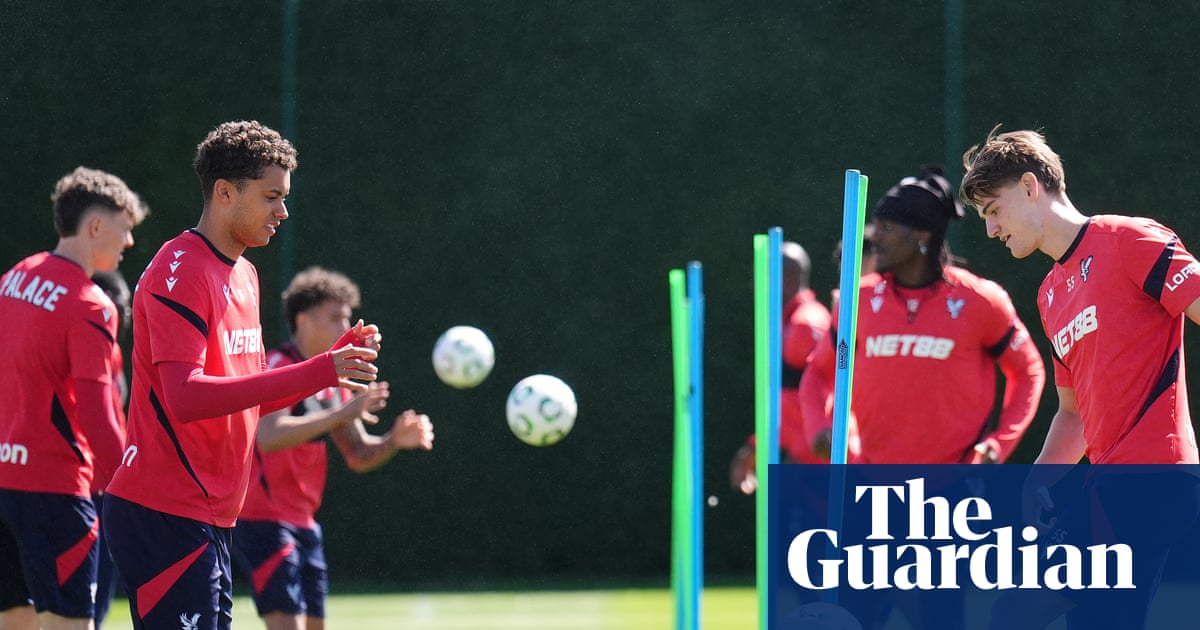
Palace face their biggest test yet against Shakhtar's European pedigree
1 month ago